

Arthur Katcher retweeted


Another sandbox startup launch. Ah sh*t, here we go again.
Introducing Kubi: cloud desktops for AI agents.
> Its own Debian desktop (Windows / Mac coming)
> $20/mo or $0.035/h for 4 CPU and 8 GB RAM (cheapest in the game)
> Screen control over MCP, SDK or raw API
> Full disk & proxy control
Grab a $20 screen while I can still lowball my competitors. Early users keep that price for life.
trykubi.com
Sign up, dm me or comment, and I'll let you in.
Arthur Katcher retweeted
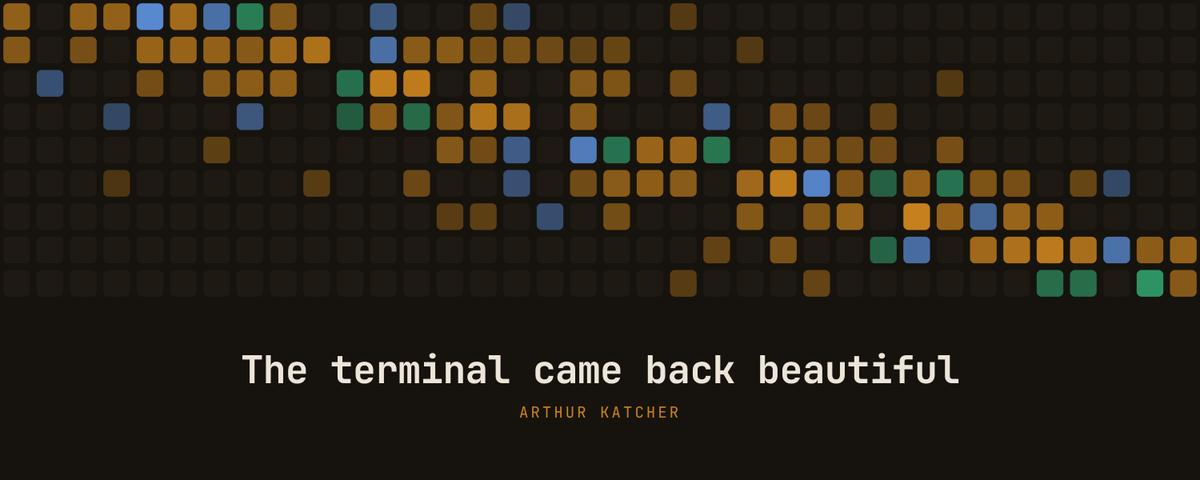
doesn't it shock you that we went back from complex web UIs to terminal apps?
i tried to understand why, and along the way mapped how the top AI harnesses design their TUIs in 2026
check it out ↓
Arthur Katcher retweeted

Using Grok agents in background mode


Arthur Katcher retweeted
One thing I can't get enough of Grok Build - the comment feature in the plan review mode.
You can just type your own comment on every line of the plan, and Grok will adjust it accordingly with the context.
This is literally UX gold. Claude Code should implement this.

Arthur Katcher retweeted

Prime Intellect engineer:
"everyone's bragging about a million-token context. here's what they don't tell you.
at 256k tokens GPT-5.5 scores 80% on retrieval. push it to a million and it drops to 36%. the model accepts the context, it just can't reason across it. people call it context rot."
in a 20-minute talk he explains why bigger context windows won't save your agents.
continual learning + training on your own traces + real environments - that's the fix.
Watch the talk, then save!

Andrew Ng just dropped a free course on Claude Code from scratch, taught with the Anthropic team:
00:00 - why Claude Code is so agentic
04:00 - shockingly simple architecture
12:00 - point it at any codebase
this short watch will replace 10 paid coding agent courses.
Andrew Ng calls it his personal favorite coding assistant right now.
Watch it today, then read how to engineer your own agent loops in the article below
Arthur Katcher retweeted

Announcing Robostral Navigate, our first model for embodied navigation: an 8B robotics navigation model that guides robots to autonomously perform tasks specified with natural language. Single RGB camera. State-of-the-art on R2R-CE.
Arthur Katcher retweeted

How to Earn a Billion Dollars: paulgraham.com/earn.html
Arthur Katcher retweeted

I went to Miami to chat with @thdxr, co-founder of OpenCode.
We talked about the future of software engineering, coding agents, and why open source matters more now than ever.
Timestamps:
0:00 Intro
5:30 Miami vs San Francisco tech scene
15:05 OpenCode origin story, scaling while open-source
25:03 OpenCode vs. Anthropic: owning models, open-source AI
33:36 AI hardware shortages, predicting the future
42:15 The bet of open-weight models, China vs. US
48:34 Why inference is hard, economics of intelligence
55:36 Will developers be automated? Software engineering as a craft
1:11:02 Advice to founders, building in public, marketing
I had so much fun making this with @ad0rnai. Enjoy!

Arthur Katcher retweeted

CHINA JUST LEAKED THE FUTURE OF WEB APPS.
Alibaba open-sourced PageAgent and 99% of SaaS founders are sleeping on this.
It's a JavaScript AI agent that lives INSIDE your webpage. Users control your entire interface with natural language.
↳ No browser extensions needed, screenshots or multi-modal LLMs, headless browser setup, and also no backend rewrite required
Just drop it in your HTML with ONE line of code. What took 20 clicks now takes one sentence.
"Click login, fill in my credentials, submit the form"
Done. This is not a demo, it is production-ready.
↳ Turn any SaaS into an AI copilot in minutes
↳ Smart form filling for ERP, CRM, admin systems
↳ Voice commands and accessibility built in
↳ Multi-page agent tasks via Chrome extension
↳ MCP server support for external control
↳ Bring your own LLM (Qwen, GPT, Claude, anything)
Every founder building AI features just got a shortcut.
Every developer manually building copilots just got replaced.
The integration looks like this:
<script src="CDN_URL" crossorigin="true"></script>
That's it. Your app now has an AI agent.
Arthur Katcher retweeted

FABLE 5 CAME BACK NERFED.
We re-ran the July 1st version of Claude Fable 5 on BridgeBench.
The results are brutal:
Debugging: 86.2 → 25.9
Refactoring: 73.6 → 38.4
Hallucination: 75.9 → 61.7
The new guardrails are kicking in on way too many tasks and falling back to Opus 4.8.
This is not the model that got banned.
Anthropic owes everyone an explanation.

Arthur Katcher retweeted

The deployment of AI in the enterprise beyond just interacting with a chatbot will unequivocally take real work to align AI systems to the underlying business processes they’re involved in and drive the desired outcomes.
Most workflows weren’t designed for AI agents to just drop into. Workflows today in the enterprise deal with fragmented data, legacy software systems that agents can’t connect with, institutional instead of documented knowledge, and more.
To deploy agents reliably at scale you need to get data cleaned up, modernize IT systems, figure out evals, drive change management for the new end state process, and so on. This also involves designing where humans remain in the loop (which will mean entirely new ways people interact with the workflows), and figuring out what a company’s new IP looks like.
This is why so many applied AI companies are expanding FDE efforts and launching deploycos, and why the FDE role will be one of the most critical jobs in tech going forward. There’s a tremendous amount of work to be done on this front.

Arthur Katcher retweeted

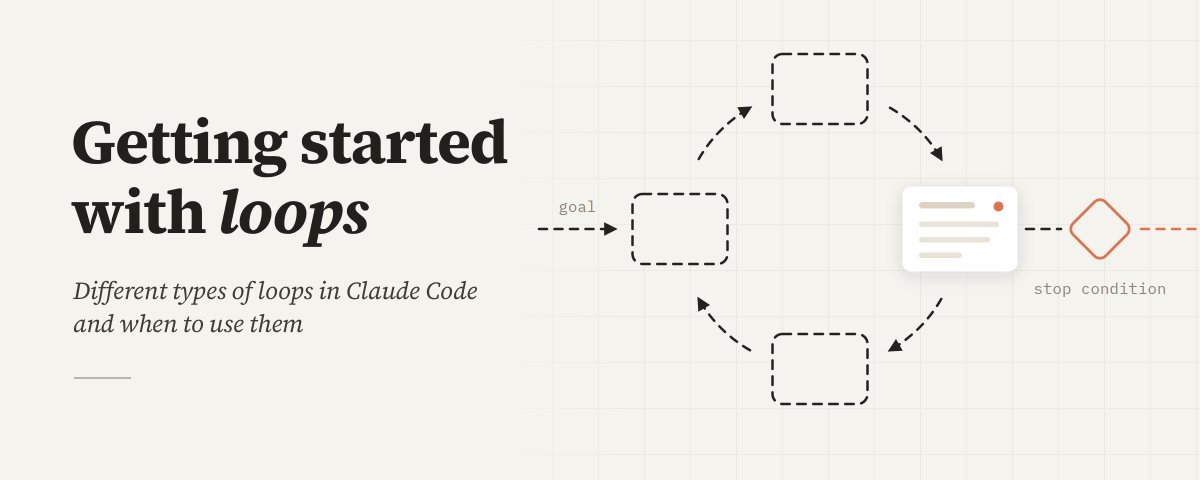
“Loop engineering” is a hot buzzphrase after mentions of it by Boris Cherny (Claude Code’s creator) and Peter Steinberger (OpenClaw's creator) went viral on social media. Loops are now a key part of how we get AI agents to iterate at length to build software. In this letter, I’d like to share my 3 key loops, shown in the image below, for building 0-to-1 products. These loops guide not just how I build software, but also how I decide what software to build.
Agentic coding loop: Given a product specification and optionally a set of evals (that is, a dataset against which to measure performance), we can have an AI agent write code, test its work, and keep iterating until the code is bug-free and meets its specification. This idea of closing the loop took off around the end of last year, and it has been a game changer in enabling coding agents to work longer productively without human intervention. For example, over the weekend, I was building an app for my daughter to practice typing, and my coding agent could easily work for around an hour, using a web browser to check what it had built multiple times before getting back to me, without needing my intervention.
The engineering loop executes quickly. Every few minutes, the coding agent might build and test a new version of the software. I hear frequently from developers who are finding new ways to engineer more effective engineering loops. This is an active area of invention!
Developer feedback loop: In this loop, a developer examines the current product and steers the coding agent to improve it. Last year, a lot of developers (including me) were acting as the QA (quality assurance) function for our coding agents, manually finding bugs and then asking the agent to fix them. But with coding agents much more able to test their own code, the amount of time we need to spend on this function has decreased significantly. This allows us to make higher-level product decisions, such as what key features to offer, where the UI needs improvement, and so on.
The developer-feedback loop operates over time intervals between tens of minutes and hours — that's how frequently a developer might review a product and give feedback. In the case of the typing app, I changed my mind a few times about the visual design, what cat costumes she can unlock as she learns (she loves cats), and the user flow for a grown-up to log in and steer the child's learning experience.
When a developer has a clear vision for what to build, it is still a lot of work to translate that vision into a specification for a coding agent to implement. Further, after the developer has seen an implementation, they might update (or perhaps clarify) the spec to steer it toward what they want. If you find that the system repeatedly runs into certain problems, building a set of evals for the agent becomes useful.
AI-native teams are increasingly using AI to help shape product direction, for example, automating the gathering and analysis of usage data, summarizing written and verbal customer feedback, or carrying out competitive analysis. However, for pretty much all the products I’m involved in, I see humans as having a significant context advantage over current AI systems — we know a lot more than the AI system about the users and the context the product has to operate in — and thus humans play a critical role. Many people describe this human contribution as “taste,” but I prefer to think of it as humans having a context advantage, since that gives us a clearer path to helping AI systems get better. This also speaks to why this step can’t be automated: So long as the human knows something the AI does not, human-in-the-loop is needed to to inject that knowledge into the system.
External feedback loop: This includes a wide range of tactics like asking a few friends for feedback, launching to alpha testers, or putting the code into production with A/B testing. These tactics are usually slow, rarely taking less than hours and sometimes taking days or even weeks. This data informs the developer vision, which in turn continues to drive the detailed product spec, which in turn drives the coding agent.
With coding agents speeding up software development, more engineers are starting to play a partial product management role. For many engineers who are growing into this role, the hardest part is shaping the product vision and striking a balance between building (bridging the gap between vision and spec) and getting user feedback to evolve the vision. It is important to do both!
I will write more about how to do this in future posts, but for now, I find it encouraging that engineers are playing an expanded role (just as product managers and designers now do more engineering).
[Original text: The Batch]


Arthur Katcher retweeted

In the last 24 hours, I have had 5 founders message me of varying-sized companies; some 10-person startups and one $200BN public company.
All of them stated they have been able to cut inference spend by 75% or more with little effort, no performance change and better latency.
The times they are a changing.
Arthur Katcher retweeted

Everyone is writing about agent loops right now. Including us at Cursor, because they're so powerful. But here's a prediction: a year from now, nobody will be talking about them.
Not because they weren't useful. Because they'll work right out of the box. Batteries included. No instructions necessary.
Feels a lot like prompt engineering two years ago. It was incredibly important. People wrote courses on it. Now you just talk to your agent like a normal person.
That's the strange thing about AI right now. You learn something critical, get huge gains, and before long it's the new normal and something else is the bottleneck. So the alpha isn't what you know. It's how fast you learn it, and how easily you can let it go.
Arthur Katcher retweeted
It should be 100% obvious that there will soon be mythos level models on cyber security that are open and available to anyone. As a byproduct of this, alternative tech stacks will emerge that also drive more economic value and control away from the US’s tech stack.
This is what should be considered when thinking through the gate keeping you want to have in AI. If advanced models will become open and available regardless, then by not allowing the release of models you’re neither more secure nor better off strategically.
So much of the regulatory approach to AI has to assume China can’t catch up, when all current evidence suggests they can and are. And further, hard to imagine a higher priority than winning in AI for China; so you’re basically betting against their long term ingenuity, talent and motivation. Seems like a bad bet.
So your options are either to create gates around your best models, which means you’re asymmetrically disadvantaging yourself, or you work to ensure you’re always at the frontier and driving the future architectures of AI.

Arthur Katcher retweeted

Good new first: Sol is a smart, efficient, and a significant step forward. It is the same price as GPT-5.5. Also launching in the GPT-5.6 family is Terra, with 5.5-level performance at half the price.
Bad news: at the request of the US government, it is launching today in limited preview instead of the open access launch we were planning on. We are working with the government to get to general availability as fast as we can.
I think it is quite reasonable to roll out models--especially as they reach significant new levels of capability--in this way. It fits with our long-held strategy of iterative deployment. But this isn't quite the process that we think is optimal.
Now we will with the government to attempt to get to a transparent, reliable process for early access, and to ensure that as long as our safeguards work as intended we can release widely. We want to be a reliable, dependable partner that works with all stakeholders, and we also want to live by our mission of benefiting all of humanity. I believe the government shares most of our goals, and that they are overall doing a good job in a very difficult situation.
We will work as quickly as we can to get this model in your hands and we hope you will love it.
Arthur Katcher retweeted

New Loopy (aka Loop Library skill) feature:
🔸Interview you to help craft a loop
🔸Run loops itself to help monitor them
🔸Review loop runs to debug issues
Loop it up: github.com/Forward-Future/lo…

Arthur Katcher retweeted

A senior Anthropic engineer just dropped 11-page PDF on "Loop Engineering" for agentic systems.
The shift: you stop prompting the agent. You build the system that prompts it instead.
Schedule → Discover → Build → Verify → Repeat
Every loop runs one turn, five moves:
• Discovery: it finds its own work - failing CI, open issues, recent commits - instead of being handed a list.
• Handoff: each task gets an isolated git worktree so parallel agents don't collide.
• Verification: a second agent, told to assume the code is broken, reviews the first. The "thing that can say no."
• Persistence: results get written to disk, never left in a context window that gets flushed.
• Scheduling: an automation wakes it on a timer. That's what makes it a loop.
The key insight: an agent grading its own work always praises it.
This 11-page PDF changed how I'm building agentic systems today.
Read it now, then explore the article below.


