

Latest in computational #Catalysis, #greenergy, #greenhydrogen, and science. Opinions are my own.
Stanford, CA
Joined November 2022
- Tweets152
- Following361
- Followers330
- Likes189




Another paper released in 2026: doi.org/10.1021/acs.jpcc.6c0…
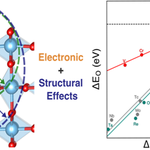
Descriptor of Nonlocal Effects in Oxidative Adsorption on Metal Oxides

3
289
new QMC paper alert! doi.org/10.1103/cgmx-p5n9
The error for DFT is much larger for OOH* but reduced/reversed in QMC

66
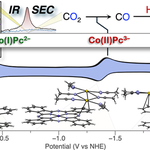
new JACS alert under @LiSA_Hub_DOE doi.org/10.1021/jacs.6c06970
Collab with Cliff Kubiac and Amy Cordones-Hanh

1
193
Our new paper alert! doi.org/10.1021/acs.jpcc.6c0…
A Hybrid Pourbaix diagram for an electrocatalysis that can capture dissolution and activity. Also applied to doi.org/10.1039/d6ee04309g.

Our new paper alert! doi.org/10.1039/d6ee04309g
This work demonstrates the non-nerstian pH effects in OXR of a-KMnO2.

bajdichcatalysis retweeted

NEW: Students go nuts after donor announces during his commencement speech that he is paying off all of their senior year debts.
Anil Kochhar and his wife decided to give the gift to all ~200 graduates in N.C. State's family.
Kochhar is the son of Prakash Chand Kochhar, an immigrant from India who studied textile manufacturing in Raleigh.
"My father found not just an education, but an opportunity that allowed him to build a life, support his family, and begin a legacy that continues today. And it will never stop, never," Kochhar said.
bajdichcatalysis retweeted

Online now!
A Comment from Raffaella Buonsanti and colleagues examines the in situ regeneration of CO2 electroreduction metal catalysts as a tool to achieve operational stability.
Link ($): nature.com/articles/s44286-0…
Free PDF: rdcu.be/fhhEs

bajdichcatalysis retweeted

Ion-Electron Coupling-Driven Redox Behavior in Metal–Organic Frameworks | Journal of the American Chemical Society pubs.acs.org/doi/10.1021/jac…

bajdichcatalysis retweeted

Where descriptors hold and where they don't: ML catalyst screening meets real alloys
ML pipelines for catalyst discovery rest on a simple bet: a handful of electronic-structure descriptors — typically d-band centre and work function, or their theoretical cousins CO adsorption energy and potential of zero charge — stand in for the full free-energy landscape of a reaction. Activity volcanos built on these descriptors guide screening across millions of candidates. But the bet was made on clean, single-element surfaces. How well does it hold on the messy alloys one would actually synthesize?
Beomil Kim and coauthors build the uniform dataset this question has been missing. Co-sputtering Au–Ag–Pd binary and ternary alloys onto PTFE membranes yields single-phase FCC films with near-identical morphology and continuously tunable d-band centre (−5.4 to −1.6 eV) and work function (4.46 to 5.17 eV). Every alloy is run through CO₂ electrolysis in a flow cell at three potentials, giving a clean activity map across the two-descriptor plane.
The descriptors hold — partially. CO production tracks the d-band centre cleanly (R² ≈ 0.86–0.89). For HCOO⁻ and H₂, the work function becomes a necessary second axis, producing a two-dimensional volcano. So far, so screenable.
Then the informative failure: they engineer Au₁.₅Ag₁Pd₃ and Au₃Ag₁Pd₃ with d-band centre and work function essentially matching Cu — the metal famous for C–C coupling to ethylene, ethanol, propanol. The descriptor model predicts C₂₊ products. Experiment delivers none, at any potential. Charge-dependent DFT explains why: on the heterogeneous alloy surface, different sites fail at different steps — CO₂ adsorption, CO retention, OCCO coupling — and Cu's gift is avoiding all three at once, something two global descriptors cannot encode.
The lesson for ML models built on adsorption-energy features: single-site descriptors work for single-step products but silently break on multi-step pathways where site heterogeneity and coverage matter. Volcano-based screens remain useful for CO, formate and H₂ targets in electrocatalysis and clean-energy R&D, but C₂₊ fuel discovery and complex hydrogenations need richer representations — site-resolved features, coverage-aware models, learned potentials — before industrial pipelines trust the predictions.
Paper: Kim et al., Nature Catalysis (2026) — Journal license | nature.com/articles/s41929-0…

bajdichcatalysis retweeted

The role of the Helmholtz potential on electrocatalytic activity nature.com/articles/s41467-0…

bajdichcatalysis retweeted

Our chemistry from the recent print issue of @J_A_C_S: six-electron activation of dinitrogen enabled by a uranium bis(anilido)xanthene complex. Was enjoyable to explore this unusual reactivity together with @YPYuePang! @EPFL_CHEM_Tweet
pubs.acs.org/doi/full/10.102…

ALT The image is a schematic showcasing one of the reactions from the paper: uranium(IV)/uranium(IV) bridging hydride complex updakes the molecule of dinitrogen, delivering six electrons and two protons, which results in the formation of a bis-imido diuranium(IV) complex. Uranium atoms are green, hydrogen atoms are purple, and nitrogen atoms are blue. Reduced arene rings of the hydride complex are represented with pink (mono-reduced) and light-blue (di-reduced) colour fills.
New paper ⚠️ on High Entropy Oxides nature.com/articles/s41467-0… with Xiaolin Zheng @StanfordEnergy and Jinghua Guo @LBNL thanks Jihyun Baek Kiran Hamkins and others

97


Dear @ACSPublications Big miles stone reached, can I get a small recognition please?


What's behind the oxo wall in catalysis? advanced.onlinelibrary.wiley… aging work @PoojaBaser78140 100% @SLAClab @SUNCAT_Center @LiSA_Hub_DOE

Nice illustration of spin effect on catalysis. @SUNCAT_Center @SLAClab

Spin State Modulation in M–N–C Single-Atom Catalysts for Oxygen Electrocatalysis | ACS Catalysis pubs.acs.org/doi/full/10.102…
