

Calcutta born, Darjeeling raised, Bangalore claimed. Content with nothing more than fresh air, cloud‑laden skies, solitary roads, filter kaapi, and dreamy hills
Joined January 2010
- Tweets4.6K
- Following2.2K
- Followers182
- Likes39.4K





ಭಾಸ್ಕರ್ retweeted

Days shut in a year:
Hospital: 0
Border post: 0
Police station: 0
High court: 155
Supreme court: 159
ಭಾಸ್ಕರ್ retweeted

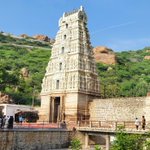
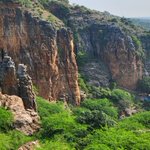
A hill, an ancient Shiva shrine and a fascinating Mahabharata connection!
Seege Gudda in Hassan is associated with the legend of Lord Shiva appearing before Arjuna as Kirata and blessing him with the divine Pashupatastra.
Even today, the sacred Male Malleshwara Temple attracts devotees to this beautiful hilltop destination.
#SeegeGudda #Karnataka
ಭಾಸ್ಕರ್ retweeted

11th Century Arulmigu Peruvudaiyar Thirukovil (Gangaikonda Cholapuram Temple): The Living History of Chola’s in Stone and an Architectural Marvel


ಭಾಸ್ಕರ್ retweeted

A Shiva temple in Andhra Pradesh, located on the banks of the Penna River, where a perennial underground stream flows behind the Shiva Lingam, giving the temple it's name.
Bugga Ramalingeswara Swamy Temple in Tadipatri.
An important settlement in Gandikota province of Vijayanagara, also known as Tatipatri and Tativanam.
It's name is believed to have originated from the abundance of palm trees in the region. In Telugu, Tati means palm tree.
There is also a popular local legend that the place got its name from Tataki, the demoness whom Shree Rama is believed to have slain here.
While the settlement was founded around 1336-37 CE by a Brahmin named Naryana Bhatta, encouraged by Vidyaranya Swamy, it developed under the Pemmasani Nayakas of Gandikota.
The town is also famous for the Chintala Venkataramana Swamy temple built between late 15th and early 16th centuries.
While Pemmasani Ramalinga Nayaka, the commander of Vijayanagara Army got the Bugga Ramalingeswara temple built, his son Timma Nayaka got the Venkataramana Swamy temple built.
As per the temple records, a sculptor named Yellanchari was brought from Kashi to construct the temple. Local tradition also holds that the temple was consecrated at the very spot where Sage Parashurama had performed penance.
The temple is a fascinating blend of Chalukyan, Chola and Vijayanagara influences, renowned for its exceptionally rich stone sculptures and intricate carvings.
The walls are virtually a stone canvas, depicting episodes from the Shiva Purana, Ramayana and Mahabharata.
One of the striking features of the Bugga Ramalingeswara Swamy Temple is its unfinished northern gopuram, which, despite remaining incomplete, is richly adorned with intricate sculptures.
Another interesting feature is the shrine of Devi located towards the Penna River. Local folklore holds that if the river water ever rises to reach Devi's navel, the entire town of Tadipatri will be submerged beneath the river.
The Chintala Venkataramana Temple has an interesting Sthala Puranam, where it's believed Pemmasani Timma Nayaka, had a dream while resting here in which Shree Venkateswara appeared and instructed him to build a temple here.
The vigraham was also revealed to him as being located inside the tamarind tree, which is called Chinta Chettu in Telugu.
Owing to the abundance of tamarind trees in the area, the presiding deity came to be known as Chintala Thiruvengalanadha Swamy, a name that gradually evolved into Chintala Venkataramana Swamy.
The main deity here is 10 feet tall and one remarkable feature is on Mukkoti Ekadasi when for 3 consecutive days, the rays of the rising sun fall directly on the feet of the deity, entering the temple through an alignment involving the stone chariot (Ratha) located within the temple complex.
The town is also known for it's granite cutting industry, the famous Kadapa granite is processed here. It also has many prominent cement manufacturers like UltraTech and Penna.
It is also the birth place of two legends associated with cinema and theater.
KV Reddy Gaaru director of the classic Mayabazaar, considered the greatest Telugu cinema director to date is from here.
And Bellary Raghava Gaaru, a pioneer of modern Telugu theater.


ಭಾಸ್ಕರ್ retweeted

For years, appliances and inverters in our HSR Layout home kept failing without explanation. Every time, we were told the problem was our internal wiring.
A ₹1,000 plug-in digital voltage protector proved otherwise.
Over four days this week, our real-time monitor caught incoming grid voltage hitting 258V to 261V against India's standard 230V domestic supply. Here is how the four-day resolution played out, what worked well, and what ground teams need to fix across Bengaluru:
1. The Control Room vs. Ground Reality
Once we logged a ticket on the 1912 helpline and with the local Junior Engineer (JE), the BESCOM control room followed up regularly. However, field staff appeared stretched and arrived unprepared—showing up on Day 1 without a multimeter, forcing a repeat visit the next day.
2. Treating Street Faults as "Individual House Issues"
On Day 2, linemen tightened neutral wires on the street pole and our DB. Voltage dropped briefly to 244V, then jumped back to 254V within two hours. Ground crews are constantly in a hurry and default to blaming a resident's internal wiring. It took persistent convincing over the phone and in person before a technician checked neighboring houses on Day 3 and realized the entire street was facing dangerous over-voltage.
3. Midnight Escalation and Transformer Replacement
When voltage crossed 261V after 10:00 PM on Day 3, we shared live photos of the digital voltage display in our neighborhood WhatsApp group alongside BESCOM officials. They dispatched an emergency team at 10:30 PM to adjust the transformer tapping. The tap-changing rod was missing, so they returned first thing on Day 4 morning and replaced the entire transformer. Voltage dropped immediately to a safe 227V–229V.
Two Fixes BESCOM Needs on the Ground:
* Make testing 2–3 neighboring houses mandatory on every voltage complaint before blaming consumer wiring.
* Equip every field crew with working multimeters so complaints do not take multiple visits.
Two Habits Every Bengaluru Resident Should Adopt Today:
* Install a plug-in digital voltage protector (₹800–₹1,200): Standard spike busters do not stop sustained 260V surges. A voltage monitor cuts power automatically and gives you undeniable visual proof for BESCOM.
* Switch your home inverter from ECO mode to UPS mode: In ECO mode, raw 260V power passes straight into your TV, router, and computers. In UPS mode, the inverter detects high voltage above ~248V and switches safely onto battery backup.
Copief From @zahidjavali

ಭಾಸ್ಕರ್ retweeted

Because of my interests in Pala-Sena art, I would dearly love to visit the Varendra Research Museum in Rajshahi one day. One day.
Photographs from Art of the Ganges delta, edited by Vincent Lefevre & Marie-Francoise Boussac of Musée Guimet, originally written in French.


ಭಾಸ್ಕರ್ retweeted

Located in Bamunara village of Durgapur in Burdwan district of West Bengal, the Rudreswar Temple dates to the 15th–16th century CE.
Facing west, the temple is built on raised ground and follows a cruciform plan. It consists of a sanctum and an antarala, approached through an arched entrance topped by a pyramidal roof. The sanctum follows a pancharatha plan, with a plain jangha and a stepped pyramidal shikhara. A cell above the vestibule is presently vacant, while the sanctum houses a linga. The temple is constructed using both laterite and sandstone.


ಭಾಸ್ಕರ್ retweeted
You have not seen Bengaluru like this!
Taking off from the top of the iconic World Trade Center.
ಭಾಸ್ಕರ್ retweeted

Truth is I have uploaded multiple violations in that app. And no results in that. We are loosing hope in that app. We suffer headache from such people everyday in that road and shakarnagar main road.
ಭಾಸ್ಕರ್ retweeted

अवैध नूरी माजिद आज़ादपुर मंडी
सरकारी ज़मीन पर खड़ी है, अकेला लड़ रहा हूँ गिरेगी जरूर
आपका 1 रीट्वीट @LtGovDelhi तक शिकायत पहुँचा सकता है।

ಭಾಸ್ಕರ್ retweeted

BHAVANI PATHAK AND THE KALI TEMPLE OF SHIKARPUR
THE SANNYASI RESISTANCE AND THE BRITISH RECORDS OF 1787
Shikarpur, Jalpaiguri, North Bengal | 18th Century
Deep within the forests of Baikunthapur, in present day Jalpaiguri, stands a temple associated with Bhavani Pathak, an armed leader remembered in connection with the 18th century Sannyasi resistance against the East India Company.
According to local tradition, Bhavani Pathak was a devotee of Maa Kali who established the practice of Kali Puja at Shikarpur. Idols representing Pathak and Devi Chaudhurani are also worshipped at the shrine.
But Bhavani Pathak and Devi Chaudhurani were not merely creations of Bankimchandra Chattopadhyay's imagination.
Their names appear in British colonial records dating back to 1787.
In June 1787, Lieutenant Brennan dispatched an Indian officer with 24 sepoys against Bhavani Pathak and approximately 60 followers travelling in boats in the Rangpur region.
According to the British account, Pathak and three of his associates were killed, eight wounded and 42 taken prisoner.
The same account mentions a woman named Devi Chaudhurani, described as an associate of Pathak who maintained armed retainers, operated from boats and received a share of his plunder.
On 12 July 1787, the Collector of Rangpur wrote to Brennan concerning this woman, stating that further orders regarding her apprehension would depend on examining the Bengali documents submitted by the lieutenant.
These records establish that Bhavani Pathak and Devi Chaudhurani were known to British authorities nearly a century before Bankimchandra published his celebrated novel Devi Chaudhurani in 1884.
Bankim transformed these historical names into literary figures, giving them a place in Bengal's imagination of resistance and sacrifice.
At Shikarpur, their memory survives through the worship of Maa Kali. The older temple was destroyed by fire in 2018 and subsequently reconstructed.
The British records preserve Bhavani Pathak's armed struggle. The Shikarpur temple preserves the tradition of his devotion to Maa Kali.
Pictures:
1. Bengali title page of Devi Chaudhurani.
2. Historical introduction, page 10, reproducing the 1787 British accounts of Bhavani Pathak and Devi Chaudhurani.
3. Older photograph of the Shikarpur temple associated with Bhavani Pathak and Maa Kali.
4. Idols traditionally identified as Devi Chaudhurani (left) and Bhavani Pathak (right).


ಭಾಸ್ಕರ್ retweeted

One minute of silence for secular Hindus who still believe in Ganga-Jamuna tehzeeb🤡

ಭಾಸ್ಕರ್ retweeted
WHEN BENGAL'S REVOLUTIONARIES TOOK THEIR OATH BEFORE MAA KALI
Ramna Siddheswari Kalibari, Dacca
It was Mahalaya, just before Durga Puja. At the Ramna Siddheswari Kali Temple in Dacca, a small group of young Bengali revolutionaries gathered before Maa Kali.
Among them were Priya Nath Acharji, Ramesh and several other members of the Dacca Anushilan Samiti. There were ten or twelve of them.
Their initiation was conducted by Pulin Behari Das, the revolutionary leader who had organised the Dacca Anushilan Samiti in 1906.
Pulin Das performed worship before Maa Kali. The young men then read their revolutionary vows, pledging secrecy, discipline, obedience and dedication to the Samiti.
For the special oath, each revolutionary knelt on his left knee before the Goddess, with a sword and the Bhagavad Gita placed upon his head.
The posture was described as that of a lion preparing to spring upon its prey.
This extraordinary ceremony was recorded in the testimony of Priya Nath Acharji and subsequently reproduced in the British Government's Sedition Committee Report of 1918.
The report also records another initiation in Comilla in 1914, when young recruits gathered at a cremation ground on Kali Puja night. Two revolvers were placed at the feet of Maa Kali's image, and the recruits swore loyalty to the revolutionary organisation.
For these young Bengali Revolutionaries, Maa Kali was not merely a symbol of divine destruction. Before Her, they pledged their lives to the revolutionary cause.
REFERENCE: Sedition Committee Report, 1918 (Rowlatt Committee), Chapter V, printed pages. 94 - 95, particularly the testimony of Priya Nath Acharji and the account of the Comilla initiation of 1914.
Pic: Pulin Behari Das and pages 94 - 95 of the original British Government report.


ಭಾಸ್ಕರ್ retweeted

When you're the size and weight of a bull forest elephant, even the rapids at Kongou Falls can't stop you.
ಭಾಸ್ಕರ್ retweeted

Yes, I am proud to be Panje Mangesh Rao’s great-grandson. Kannada is a global language & Kannadigas are a proud, talented people. They don’t need “activists”. Your parochial duplicity will be called out.

And @ShivAroor you are grandson of a Kannada literary figure. Great to see you speaking against Kannada, Kannadiga and Karnataka without evidence.
ಭಾಸ್ಕರ್ retweeted

🚨 Bengaluru bus commuters face up to 67% hike on short rides as BMTC minimum fare matches Metro at Rs 10
@CMofKarnataka @byrathi_suresh
@OfficialBMRCL @BMTC_BENGALURU
moneycontrol.com/news/india/…


Ready to reduce bus fares if Centre cuts petrol, diesel prices: CM DK Shivakumar
moneycontrol.com/news/india/…

ಭಾಸ್ಕರ್ retweeted
If anyone chooses public transport in Bengaluru, punish them with fare hikes of up to 71% in Metro & 67% in BMTC buses.
Relocate bus shelters away from convenient locations, delay Metro projects & insist on end-to-end double-decker flyovers. Is this how Bengaluru plans to encourage public transport? @CMofKarnataka

ಭಾಸ್ಕರ್ retweeted

Strongly condemn the personal attacks and unwarranted remarks against Shri @TVMohandasPai.
Disagreement on public policy is legitimate, but branding respected entrepreneurs with derogatory labels is unacceptable.
TV Mohandas Pai is a distinguished entrepreneur, former Infosys CFO and an influential voice in India's business and economic ecosystem. His contributions to entrepreneurship, employment generation, education and India's global economic standing deserve recognition and respect.
Karnataka's growth is not possible by disrespecting those who contribute to its progress.
One may disagree with his views on language policy or employment reservations, but disagreement should never become personal vilification.
Kannada pride and Karnataka's interests must be protected, but so must the dignity of individuals who have contributed to the state's development.
We need more entrepreneurs, more investment, more employment and constructive dialogue — not personal attacks and divisive rhetoric.
Karnataka should be a state that welcomes achievement, respects enterprise and encourages everyone to contribute to its progress.
We stand with those who build Karnataka, create opportunities and strengthen India's future!
@TVMohandasPai
#WeSupportPai #KarnatakaFirst #RespectEntrepreneurs #BuildKarnataka


