

Design new binders and medicines from a prompt and hand it to the robo lab.
Joined January 2026
- Tweets167
- Following16
- Followers1.4K
- Likes235


Pinned Tweet
RFD4-Proteina now runs locally on a MacBook.
Introducing BIOS’s Mac port: generate candidate protein binders and screen their predicted structures locally.
Built with MLX and custom Metal kernels.
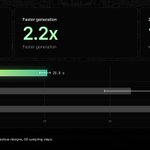
• 2.2× faster generation than stock PyTorch-MPS at its default precision
• 20 designs generated and screened → 10 ranked candidates in about 12 minutes on GLP-1R (M5 Pro)
We believe more researchers should be able to run AI experiments on their own hardware. Test ideas locally, keep your research private, and scale to NVIDIA GPUs when you’re ready. After setup, the workflow runs offline.
Watch it run below. ↓


BIOS retweeted

Busy generating a protein for selective synaptic pruning rn

RFD4-Proteina now runs locally on a MacBook.
Introducing BIOS’s Mac port: generate candidate protein binders and screen their predicted structures locally.
Built with MLX and custom Metal kernels.
• 2.2× faster generation than stock PyTorch-MPS at its default precision
• 20 designs generated and screened → 10 ranked candidates in about 12 minutes on GLP-1R (M5 Pro)
We believe more researchers should be able to run AI experiments on their own hardware. Test ideas locally, keep your research private, and scale to NVIDIA GPUs when you’re ready. After setup, the workflow runs offline.
Watch it run below. ↓
BIOS retweeted

The future is local.
RFD4-Proteina now runs locally on a MacBook.
Introducing BIOS’s Mac port: generate candidate protein binders and screen their predicted structures locally.
Built with MLX and custom Metal kernels.
• 2.2× faster generation than stock PyTorch-MPS at its default precision
• 20 designs generated and screened → 10 ranked candidates in about 12 minutes on GLP-1R (M5 Pro)
We believe more researchers should be able to run AI experiments on their own hardware. Test ideas locally, keep your research private, and scale to NVIDIA GPUs when you’re ready. After setup, the workflow runs offline.
Watch it run below. ↓

Use BIOS’s RFD4-Proteina port to generate binders on your local machine for the @adaptyvbio × Anthropic protein design competition.
Submit on proteinbase.com/competitions… until November 8th.

BIOS retweeted

Last night an AI agent performed brain surgery on a mouse.
We gave it 19 gene therapy vectors in a spreadsheet, a mouse model of epilepsy, access to a motorize surgery rig with cameras and one goal: reduce seizures.
It picked the drug. It picked the brain region. It derived the coordinates from three papers. Then it drove the stereotaxic arms into the brain and injected 250 nanolitres while watching the entry site through the rig camera for bleeding.
A licensed vet gated every irreversible step and held a physical kill switch to stop the AI agent.
Thread on what it decided, what it saw, and the moment it refused to let me override it.
[Writing this on the spot out of excitement, but I've been 18hrs in front of my laptop coding and coordinating this, so keeping it brief and descriptive, more cohesive thoughts on this soon...]

BIOS retweeted

Decentralized science is coming to Mumbai 🇮🇳
The Bio community is bringing researchers, founders and builders together for an afternoon of DeSci + AI with the first live demo of our lab robot, Robios.
Join us November 5 on the same grounds as @EFDevcon.
Sign up to attend and meet IRL ↓
AI co-scientists still need humans steering the work.
BIOS helps researchers move from a question to a candidate worth testing.
It searches literature, analyses data and designs candidate protein binders, then filters them into a computational shortlist.

Artificial-intelligence systems can generate hypotheses, design experiments and analyse data — but humans still need to decide what makes sense
go.nature.com/4rPJHYl


More researchers should be able to help design potential drug candidates.
Anthropic × Adaptyv’s protein design competition is an invitation to do that.
It’s why we’re building BIOS: to help researchers design and shortlist computational binders for testing in the lab.

We’re partnering with @Anthropic to launch the biggest Protein Design Competition in the world, challenging people around the world to use AI to design new potential drug candidates for diseases that affect millions of lives.
The competition will feature five challenges, each focused on a specific disease or biological mechanism. Compared to previous competitions, it will be a big step-up in complexity and scale to push the boundaries of AI-driven protein design.
Together with Anthropic, we’re sponsoring over $1 million in experimental validation, making it possible to test more than 5,000 protein designs in our automated lab at no cost to participants. Anthropic is providing an additional $1 million in Claude credits.
All experimental results will be published openly on @Proteinbase, including designs that didn’t work, so anyone can access the data and build on what we learn.
The competition is open to everyone and free to enter. It will feature 3 tracks:
- Track 1 is aimed at expert protein designers, with up to 20 teams to be selected.
- Track 2 is targeting life science academics and industry researchers.
- Track 3 is open to everyone from tech enthusiasts to high-school students.
By combining Anthropic’s models with access to our automated lab, we want to make it possible for anyone with a laptop and an internet connection to join the global effort to advance human health with AI.
A big thanks to @Modal for contributing compute for protein design and to @TwistBioscience for contributing the DNA for the experimental validation!
Sign up link below -
BIOS retweeted

How good is Claude at protein design?
Anthropic benchmarked their newest Claude models on protein engineering tasks, and we ran the wet lab work behind it.

🫡

BixBench3 is out! Our latest eval for biology capabilities in language models. Essentially requires agents to reproduce all work needed to write a paper from raw data. OpenAI is in the lead with 5.6-Sol at 48%, Anthropic is in 4th with Opus 4.8, after Kimi and GLM. Opus 5 has weird instruction following problems that severely degrade its performance. I’m sure Fable is great but can't be evalled on this. Read more below.
Also lest we miss the forest for the trees, we’re in a position now where the models can essentially reproduce entire papers ~50% of the time. Crazy time to be alive.

BIOS retweeted

There is a child with a rare disease who is currently suffering and struggling to manage his symptoms. Rare as this is, you can directly help him.
Today we are launching the "Rare Disease, Real Kid" Hackathon, and there are $50,000 in prizes from @AnthropicAI and @awscloud.
We (@huggingface & @Sagebio) are helping this child open his genome and clinical data to the community, so that we can find what's caused his disease and what currently-approved drugs could help him.
I doubt I need to motivate this much further or explain how rare it is for a family to share their child's genome and clinical data, but if you're not sure, consider this:
Until very recently, it wasn't feasible for patients like this to get treatment because their disease was so rare that the economics could never justify the investment. Now, as we've seen, people with rare diseases are starting to be able to find the answers themselves (with the help of AI tools, cheaper sequencing, etc). This kid is not able to do that for himself and neither are his parents, so we're asking you for help. Both for this kid and to prove that it's possible for everyone else suffering from a rare disease.
More details in 🧵.
sagebio-rare-disease-real-ki…
BIOS retweeted

This is freaking huge: For the first time, a AI-assisted personalized mRNA cancer treatment has succeeded in a Phase 3 trial.
Moderna and Merck sequence each patient’s tumor and compare it with their healthy DNA. AI then helps identify which of the tumor’s mutations are most likely to trigger an immune response.
From those targets, Moderna produces an individual mRNA treatment encoding up to 34 neoantigens, The earlier Phase 2 trial followed patients with surgically removed high-risk melanoma for five years:
- 68.8% remained cancer-free, compared with 49.1% on Keytruda alone
- 49% lower risk of recurrence or death
- 59% lower risk of distant metastasis or death
Now the much larger Phase 3 trial involving 1,137 patients has also succeeded.
Absolutely incredible. Dario was right: cancer will be cured in just a few years!


The demand for automated wet-lab validation will increase significantly.

Using NVIDIA Proteina-Complexa, @muni_bio's autoresearch agent explored nearly 14,000 protein designs.
@adaptyvbio validated nine TREM2 binders, three with sub-nanomolar affinity.
The results show how agents can connect computational design with wet-lab feedback to improve the next round of discovery. 📘muni.bio/research/closing-th…

Why scientists should lead the shift away from AI mega data centres?
The article by @stokel for @Nature makes the case for publicly available models and local infrastructure that give researchers more control over the tools they use.
That focus on access and researcher control also sits behind our work on BIOS: opening the binder-design workflow so researchers can run it themselves, from target structure to ranked candidates.
An AI model has revealed that some trusted numbers in one reference database have been wrong all along
go.nature.com/45KjsIe
