

I do stuff with computers. CTO & Co-founder @evalmeeHQ - @daily_ruby_tips
Paris
Joined November 2015
- Tweets2.1K
- Following689
- Followers554
- Likes2.9K








Pinned Tweet
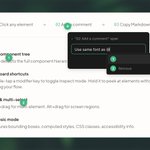
Porting @benjitaylor's agentation.dev to Vue.js 👀
Annotate your UI, get Vue component names + context, ready to paste to your AI agent.
No more screenshots eating your token budget.

Dorian Becker retweeted

Le réveil risque d’être brutal...
Je viens de regarder une audition de Luc Ferry, Laurent Alexandre et Olivier Babeau sur l’IA, l’école, le travail et ce qui nous attend...
Je ne prends pas toutes leurs prédictions pour des certitudes, personne ne sait exactement à quoi ressemblera le marché du travail dans 5 ou 10 ans.
Mais sur le fond, je partage totalement leur inquiétude : on est beaucoup trop lents...
Ca fait plus de 30 ans que je travaille sur le terrain. Commerce, distribution, restauration, immobilier. J’ai recruté, formé, managé, vendu, dirigé des équipes, vu des organisations fonctionner et d’autres se planter.
Et ce que je vois aujourd’hui avec l’IA n’a rien d’un simple changement d’outil.
Le problème, ce n’est déjà plus de savoir si ChatGPT, Claude ou autre peut nous faire gagner du temps.
Le problème, c’est que les capacités progressent plus vite que notre capacité à adapter les métiers, les entreprises, l’école et parfois même notre manière de réfléchir.
Pendant longtemps, on a répété : "l’IA ne remplacera pas les humains, les humains qui utilisent l’IA remplaceront ceux qui ne l’utilisent pas".
J’ai moi-même souvent défendu cette idée.
Aujourd’hui, j’y mets une énorme nuance.
Utiliser une IA ne suffit pas.
Appuyer sur un bouton ne crée pas de valeur.
Donnez exactement le même outil à deux personnes. L’une saura poser le bon problème, donner le contexte, détecter une incohérence, challenger la réponse, la remettre dans la réalité du terrain et décider. L’autre recopiera ce qui sort.
Même IA. Deux résultats complètement différents.
Et c’est là que je trouve le sujet de l’éducation inquiétant.
Si on apprend à nos gamins à déléguer leur réflexion avant même de leur avoir appris à réfléchir, on ne crée pas une génération augmentée par l’IA.
On crée une génération dépendante de l’IA.
Lire. Écrire. Comprendre réellement un texte. Argumenter. Avoir de la culture générale. Savoir reconnaître quand quelque chose paraît absurde. Savoir poser une bonne question parce qu’on comprend le problème.
Tout ça devient encore plus important quand une machine peut vous produire en quelques secondes une réponse brillante en apparence.
Plus l’outil devient puissant, plus le discernement devient précieux.
Et sur le travail, on continue à se rassurer avec l’histoire des précédentes révolutions industrielles.
"Des métiers vont disparaître, mais d’autres seront créés."
Peut-être.
Mais cette fois il y a une différence énorme : l’IA ne touche pas seulement des tâches répétitives ou physiques, elle touche directement des tâches cognitives qu’on pensait réservées aux gens formés, diplômés, expérimentés.
Traduction. Développement. Graphisme. Analyse. Rédaction. Recherche. Conseil. Juridique. Médecine. Stratégie.
Et il faut arrêter de croire que les nouveaux métiers créés autour de l’IA seront automatiquement protégés. L’IA suivante pourra aussi venir en automatiser une partie.
Ça ne veut pas dire que tout le monde sera au chômage dans cinq ans.
Je n’en sais rien et personne ne le sait.
Mais croire que tout cela aura un impact marginal sur l’emploi me paraît tout aussi déconnecté.
La vraie question, c’est : qu’est-ce qu’on apprend encore à faire nous-mêmes, qu’est-ce qu’on délègue, et surtout comment on reste capable de comprendre, contrôler et décider quand la machine fait une part croissante du travail ?
Et là, notre lenteur devient dangereuse.
Parce que la technologie n’attendra pas que l’Éducation nationale ait fini de réécrire ses programmes.
Elle n’attendra pas que les entreprises aient terminé leurs comités de réflexion.
Elle n’attendra pas que les politiques aient compris ce qu’est un agent IA.
Elle avance.
Avec nous ou sans nous.
Il y a aussi un problème européen derrière tout ça.
On adore parler réglementation.
Très bien. Il faut des règles.
Mais pendant ce temps-là, les modèles, les puces, les infrastructures et une énorme partie de l’innovation sont développés ailleurs.
Réglementer une technologie que d’autres possèdent, développent et maîtrisent mieux que nous, ce n’est pas être souverain.
C’est être dépendant avec un règlement intérieur.
Et au milieu de tout ça, je reste convaincu d’une chose : l’humain garde quelque chose que la machine n’a pas.
Les valeurs.
La responsabilité.
Le choix.
La décision.
Une IA peut produire une réponse. Elle peut argumenter. Elle peut simuler une position morale. Elle peut même être meilleure que moi sur énormément de tâches.
Mais elle ne vit pas avec les conséquences de la décision.
Moi, oui.
C’est pour ça que je refuse autant le discours "l’IA va tout régler" que le discours "il faut protéger l’humain de l’IA".
Il faut surtout préparer l’humain à vivre et travailler avec quelque chose qui devient extraordinairement puissant.
Et ça demande beaucoup plus que trois prompts trouvés sur LinkedIn.
Ça demande de la culture, du travail, de la curiosité, de l’esprit critique, la compréhension du réel, et surtout la capacité à décider.
Avec mes 30 ans de terrain, c’est probablement ça qui me frappe le plus aujourd’hui.
Je ne vois pas une technologie qui supprime l’expérience.
Je vois une technologie qui rend l’expérience encore plus exploitable pour ceux qui en ont, et qui peut devenir un piège énorme pour ceux qui délèguent avant d’avoir appris.
Je me fiche de savoir quel modèle est numéro 1 cette semaine.
Le vrai sujet, c’est : est-ce qu’on apprend assez vite ?
Et là, j’ai de sérieux doutes.
Le réveil risque d’être brutal.
Pas parce que l’IA va nous attaquer.
Parce qu’elle avance beaucoup plus vite que notre capacité collective à comprendre ce qu’elle change.
Vidéo complète en lien.
Elle est longue, parfois provocatrice, certaines prédictions sont discutables.
Mais elle mérite d’être regardée.
Surtout si vous n’êtes pas d’accord...
Dorian Becker retweeted

People keep asking how companies like Ramp, Linear, and Anthropic ship so much software with agents.
There is no new SDLC or secret set of tools. The tools are increasingly available to everyone. You can build your own, use Linear, Claude, or whatever works.
The bigger difference is ambition. These companies encourage their teams to build more, experiment more, and let agents do more of the work. That's the main different between "AI native" or not. You try to use the technology to the max.
But don't get there by adopting a tool. You get there by changing what you believe your teams are capable of.
So in the very simplest way:
- let agents build
- make it easier and faster to contribute
- increase the ambition of what your teams attempt.
In practice, that means things like:
- Standardize around cloud agents. Most of our code (5M lines last quater) is now written in Linear with our Linear cloud coding agent. Cloud sandboxes make standardizing the system and environment easier for everyone and enables faster contributions
- Linear agent (with code access and cloud agent) operates in Slack too. If there is a discussion or someone notices a problem just say "@linear fix this" (decrease the time from something noticed to fixed)
- As bugs, errors etc arrive in Linear, send them to Triage, and have Loop to auto-investigate (connect to tools like Sentry, Datadog), and write a fix
- Let designers, PMs, non-technical people contribute code where useful. If they notice a problem, tell them they can submit a fix. If they want to try something, ask them to build a prototype.
- Set up code review agent and system to make sure PRs are safe to merge.
- Run security as an automation, have agents constantly try to find security issues in your codebase, as they find, send it to a coding agent
- Instead of working on issue level, increase ambition, make a whole project, ask the agent to ask questions, investigate code base, create issues and have the agent work on the whole project at once. Set up goals like "give me proof that what you build works". All our PRs now come with screenshots and videos and preview build you can
- Bring customer feedback to the system like Linear, and make it available for your team. At Linear every project now starts with 10-500 customer notes that influence the direction of the work, and which customers we should ask to test the solution first.
- Set up Loops/automations to constantly update reference documents for agents, like product area/code owners so work can be routed to right humans
Then what is left is how do you set direction for your teams (initiatives, projects they should work on) and how do you review results (better code review, Linear does it with Guided Reviews), how you maintain quality/cohesion which is not a new problem either.
Basically most of the problems you always had remain, but the execution bit is now more and more solved.
At @linear we can help with automation, cloud agents, and code review, customer feedback and planning bits.
But we can't change your mindset or how your company operates.
If your company is still spending energy debating jira workflow steps, you're probably solving the wrong problems.

Dorian Becker retweeted
New on the blog:
— Our organizations are being DDoSed from the inside
I’ve written before that you can outsource work, but not your understanding. As a CEO, I’m finding that harder to live up to.
It feels like our organizations are being DDoSed from the inside. Nobody is trying to overwhelm the company. Everyone is doing something they think is useful.
Leaders never saw every piece of work. But now the work can change the company’s direction faster than anyone can follow. It’s like a car speeding up until it becomes impossible to steer.
I think lot of leaders are stepping back now and letting the things happen. But stepping back doesn’t remove my responsibility for where this all leads.
Are other leaders feeling this? How do you deal with it?

Dorian Becker retweeted

À force de déconstruire la hustle culture, on a presque réussi à rendre honteuse l'idée qu'une ambition extraordinaire puisse demander un effort extraordinaire.
Et je trouve ça assez amusant.
Il y a quelques années, on glorifiait le travail jusqu'à l'absurde.
Dormir quatre heures.
Travailler tous les week-ends.
Répondre à ses mails à 2h du matin.
Faire du burn-out un signe extérieur d'ambition.
C'était débile.
Alors on a corrigé.
Et comme souvent, on a corrigé trop fort.
Aujourd'hui, on parle de leverage.
De systèmes.
De talent.
De réseau.
De chance.
D'IA.
Tout ça compte énormément.
Mais rien de tout ça ne change une réalité assez inconfortable : il n'existe probablement aucune version de votre vie où vous accomplirez quelque chose d'extraordinaire sans travailler extraordinairement dur.
Le problème, c'est qu'on confond travailler dur et travailler beaucoup.
Ce n'est pas la même chose.
Vous pouvez travailler 100 heures par semaine sur le mauvais problème.
Vous aurez énormément travaillé.
Vous n'aurez pas nécessairement travaillé dur.
Travailler dur, c'est rester sur un problème quand la réponse évidente ne fonctionne pas.
Recommencer quelque chose que vous pensiez avoir terminé parce que ce n'est pas assez bon.
Apprendre ce que vous ne savez pas faire.
Accepter que votre première idée était mauvaise.
Répéter.
Corriger.
Et rester assez longtemps pour devenir bon.
Je me suis toujours demandé si les gens exceptionnellement intelligents pouvaient accomplir de grandes choses sans vraiment travailler dur.
Et après avoir passé ma vie entouré de gens exceptionnellement intelligents, mon constat est assez simple : non.
Le talent aide.
L'intelligence aide.
Le réseau aide.
La chance aide énormément.
Le leverage multiplie votre travail.
L'IA aussi.
Mais pour multiplier quelque chose, il faut d'abord qu'il y ait quelque chose à multiplier.
Et ceci ne veut pas dire glorifier la souffrance.
Être épuisé n'est pas une preuve d'ambition.
Être occupé n'est pas une preuve de travail.
Et travailler énormément sur le mauvais problème reste une très mauvaise idée.
Mais l'excès inverse est tout aussi absurde.
Si vous voulez accomplir quelque chose que très peu de gens accomplissent, il faudra probablement accepter de faire des efforts que très peu de gens acceptent de faire.
Le travail ne garantit pas le succès.
Mais pour certaines ambitions, il reste le prix d'entrée.
Dorian Becker retweeted

The idea of "one shotting" an app using AI is a fugazi.
If you had to describe my app and all the edge cases I have solved over the years, it would be a prompt the size of a small book, and my app isn't even that complicated.
The people promoting creating a business overnight with AI are just selling a get rich quick pipedream. Those grifters are present in every cycle.
AI has completely transformed how I work, but you can't push a button and make money. Doesn't work like that.

Talking to smarter folks than me, I'm convinced many of the AI folks in my timeline are full of shit.
Nobody is "running 20 agents over night" and building stuff for actual users. Maybe some are building internal tools or disposable software. Maybe.
But building software people like using? That doesn't get hacked on day one or blow up after the 3rd user? Nope.
I don't even understand what that's supposed to look like. Do you work out a 57 pages document that perfectly describes what you want to build and then summon 14 agents and have them run wild for 6 hours? And what comes out on the other end isn't a broken pile of shit?
Nope. Not buying it.
PS: it may also be that I have an IQ of 82 and can't figure it out.




Claude Code just crushed a complex query I was building for a new feature:
I handed it a realistic dataset + the ability to run real queries itself.
Instructed it to loop, test multiple strategies, and build comparison tables.
It iterated until it found the winner.
50x performance gain.
I didn’t optimize the query. I just gave the AI the keys to the lab.
89
Here’s the dictation hack that removed the awkwardness for me:
I’ve never enjoyed using voice tools because speaking aloud to my computer in public felt strange.
@WisprFlow + a simple lavalier mic on my collar made it click. Whisper or speak normally, it just works incredibly well.

1
1
197


Dorian Becker retweeted

Every step has been predicted by ai-2027.com for more than a year
Now, there’s one more


Introducing Project Glasswing: an urgent initiative to help secure the world’s most critical software.
It’s powered by our newest frontier model, Claude Mythos Preview, which can find software vulnerabilities better than all but the most skilled humans.
anthropic.com/glasswing


Here’s what changed:
Refactoring, edge-case hunting, and migrating legacy code to the winning pattern used to cost a fortune in time.
Now?
A fraction of what it did.
The best builders are cashing in, not to ship faster, but to ship better:
cleaner, more reliable products that users trust and keep coming back to.
The era of ‘fast and fragile’ is over.
The era of affordable excellence for users just began.

sent this to the team today
everything great comes from being able to delay gratification for as long as possible
and it feels like we're collectively losing our ability to do that

215
Dorian Becker retweeted
I think we have lost some sense of judgment and moderation when it comes to product building currently.
The moment you turn something into a universally celebrated metric, whether that is token burn, prototype count, or percentage of agent-written code, you start losing sight of what actually matters.
I have felt the same way for a long time about overusing data and A/B testing to build products. The moment you reduce product quality or productivity to a metric, you stop shipping value and start shipping numbers.
A lot of what people are doing with AI makes directional sense. The missing piece is counterbalance:
1. AI should help engineers build better products. Leaderboards and adoption metrics can be useful as directional signals. They do not tell you what is being built, whether it is good, or whether it should exist at all.
2. Users do not care what percentage of your code was written by agents. They care about the outcome. Faster output is useful. Like usually, faster doesn't seem to add to quality, clarity, or stability of products. Power to build should not become an excuse to lower quality bars.
3. LLM-generated prototypes can feel like late-night whiteboarding sessions. They look exciting in the moment and feel productive very quickly. Then a few days later you realize the idea was shallow, distracting, or simply wrong. The same trap shows up in jumping straight to code and solutions more broadly. You may just be building the wrong thing more efficiently. Prototyping has its place. So do clear thinking, good design, and a real understanding of the user’s problem. In terms of activities or momentum, the main quest and the side quest can both feel productive but only one actually moves the mission forward.
4. Adding more to products is still dangerous as ever even if time or effort to add it has gone down. Every addition creates complexity, maintenance cost, and user confusion. New features should be pushed back unless they clearly show it should exist and how it improves the product.
5. Not everything needs to be an agent shaped. A simple scheduled task does not need a full LLM sandbox. Making something agentic because it feels current or impressive does not make it right-sized, correct, or effective.
The core ideas are:
- even if you can, maybe you should not.
- more power we have to build should not reduce our need to think, it should increase it.