


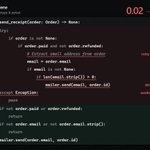



this is how the model sees a file.
no tokenizer, no parser. sees code as a 128-column grid of bytes, the way a vision model reads pixels.


codehygiene - a weight-space compiled System One model for code readability and hygiene.
428K ternary params (1.58-bit), zero gradients or training, 10 ms latency on CPU. 11 KB.
npx skills add brianbell-x/codehygiene -g

1
12
683

using this as a skill is probably the worst way to use it. needs to be a hook in a harness.
codehygiene - a weight-space compiled System One model for code readability and hygiene.
428K ternary params (1.58-bit), zero gradients or training, 10 ms latency on CPU. 11 KB.
npx skills add brianbell-x/codehygiene -g
1
6
265
Across 9/9 live Linux ransomware and wiper attacks over QEMU NVMe, every attack was contained with 0 bytes lost. Heavy builds and databases triggered 0 false lockdowns, and all 7/7 Z3 safety proofs pass.
open source:
github.com/brianbell-x/ssd-r…

point your agent at this skill and look at the difference after.
github.com/brianbell-x/codeh…


stop paywalling agent context
orcarouter.ai/orcacyber-ultr…


stop ai slop in your ui
palletism.art

1
1
174