
Assistant Professor at @Stanford Statistics and @StanfordData | Prev postdoc @UWproteindesign and @Columbia. PhD from @MIT.
Stanford, CA
Joined December 2016
- Tweets123
- Following518
- Followers2.1K
- Likes458


Pinned Tweet
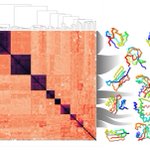
🚨New paper! Generative models are often “miscalibrated”. We calibrate diffusion models, LLMs, and more to meet desired distributional properties.
E.g. we finetune protein models to better match the diversity of natural proteins.
arxiv.org/abs/2510.10020
github.com/smithhenryd/cgm
Brian L Trippe retweeted

New preprint arxiv.org/abs/2606.19496 with @brianltrippe : kernel Calibrating Generative Models (kCGM). kCGM is a way to post-train generative models so their samples match a target distribution of user-chosen features e.g. molecular fingerprints or regulatory activity profiles 🧵
Brian L Trippe retweeted

The authors explain their paper "Calibrating Generative Models to Distributional Constraints" youtu.be/qGhkxzWJHMA
Very fun and informative reading group session with @smithhenryd
and @nate_diamant (from @brianltrippe group at Stanford) 🤗

Brian L Trippe retweeted

Thanks for the opportunity @HannesStaerk to talk about our work (w/ @nate_diamant @brianltrippe) and for the great discussion!

Join our reading group session now about "Calibrating Generative Models to Distributional Constraints" arxiv.org/abs/2510.10020 :)
On zoom: portal.valencelabs.com/stark…

Brian L Trippe retweeted
Super excited to share this preprint with @nate_diamant and my advisor @brianltrippe on how we can fine-tune diffusion models, language models, and more to match known distributional properties.
Check it out!👇

🚨New paper! Generative models are often “miscalibrated”. We calibrate diffusion models, LLMs, and more to meet desired distributional properties.
E.g. we finetune protein models to better match the diversity of natural proteins.
arxiv.org/abs/2510.10020
github.com/smithhenryd/cgm
For language models: CGM reduces profession-specific gender bias 5× more than prior methods.
Bias reduction generalizes somewhat to held-out professions – though model extrapolation remains a challenge.

This is a first paper from my group, joint with @smithhenryd and @nate_diamant .
Paper: arxiv.org/abs/2510.10020
Code: github.com/smithhenryd/cgm
If you’re interested to try it out on a new problem together, or have ideas for how to improve the method, please reach out!

Super excited about this progress and next steps! Come chat with us at our poster tomorrow morning if you’re at #ICML2025

Predicting how mutations affect protein binding is key for drug design—but deep learning tools lag behind physics.
StaB-ddG closes the gap: combining stability models + smart pretraining to match FoldX accuracy at >1000× the speed.
Paper: arxiv.org/abs/2507.05502
Code: github.com/LDeng0205/StaB-dd…
@brianltrippe and @karstenhouse_14 will be presenting this paper at #ICML2025 next week in Vancouver
Contact: [email protected]
Brian L Trippe retweeted

Actually happening at **11 AM ET** !

Next Tues (4/22) at 4PM ET, we will have @Zhuoqi_Zheng present "MotifBench: A standardized protein design benchmark for motif-scaffolding problems"
Paper: arxiv.org/abs/2502.12479
Sign up on our website for zoom links!
Brian L Trippe retweeted

Interested in functional protein design or motif-scaffolding? We propose a standardized protein design benchmark, MotifBench aimed at tackling key challenges in the field.
Preprint: arxiv.org/abs/2502.12479
Code: github.com/blt2114/MotifBenc…
(1/N)

Brian L Trippe retweeted

Have a look at our shiny new benchmark for motif-scaffolding in computational protein design! New (and harder) tasks, including a reproducible evaluation pipeline
🔥 Benchmark Alert! MotifBench sets a new standard for evaluating protein design methods for motif scaffolding.
Why does this matter? Reproducibility & consistent evaluation have been lacking—until now.
Paper: arxiv.org/abs/2502.12479 | Repo: github.com/blt2114/MotifBenc…
A thread ⬇️

Brian L Trippe retweeted

We made a new, reproducible, fair, (and much harder) motif scaffolding benchmark!
With Zhuoqi Zheng, Bo Zhang, @DidiKieran @json_yim @_JosephWatson Hai-Feng Chen, @brianltrippe

🔥 Benchmark Alert! MotifBench sets a new standard for evaluating protein design methods for motif scaffolding.
Why does this matter? Reproducibility & consistent evaluation have been lacking—until now.
Paper: arxiv.org/abs/2502.12479 | Repo: github.com/blt2114/MotifBenc…
A thread ⬇️
This has been a big team effort – with contributions across 5 timezones 🌍. This is thanks to my fantastic coauthors on our whitepaper: arxiv.org/abs/2502.12479
Surprise: A modern baseline (RFdiffusion) fails on motifs scaffolded into de novo enzymes 15 years ago 🤯
This suggests modern deep learning methods aren’t always better than past methods, and there is much room for progress!
