

When predictive value is replaced by consensus, science becomes nonsense. Let’s start with the Truth. Cofounded by Greg Glassman & Emily Kaplan
Joined June 2023
- Tweets1.8K
- Following103
- Followers2.9K
- Likes428
The Broken Science Initiative retweeted

“Sugar rationing cut cancer by up to 69 percent.” That is the headline. But the same study reports a 41% lower lung-cancer hazard—a result that makes the paper’s causal assumptions especially important.
Childhood sugar intake was not measured person by person; exposure was inferred from a historical rationing cutoff.
Today’s column: the number that stress-tests the claim.
The Broken Science Initiative retweeted

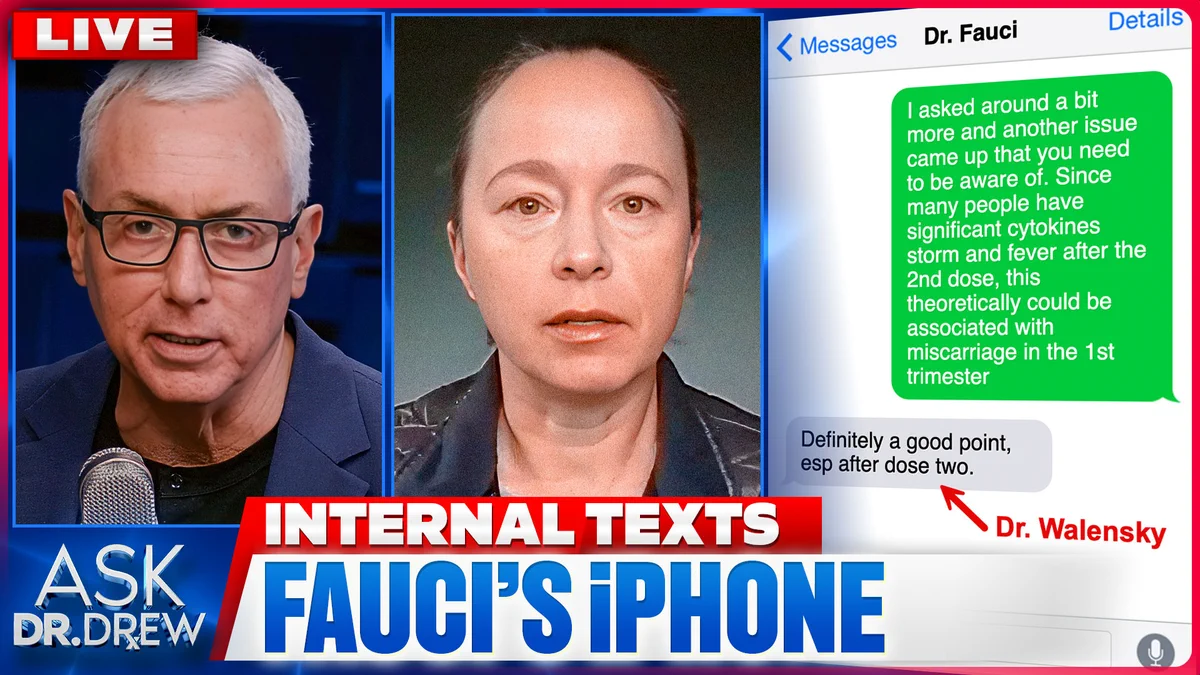
Texts extracted from Dr. Fauci's iPhone include a 2021 thread admitting a 2nd COVID vaccine "theoretically could be associated with miscarriage." But is this really a smoking gun? @sasha_latypova @emilykaplanx & @dryostradamus join me LIVE at 7et nitter.cf/i/broadcasts/1jGXgBgnO…
The Broken Science Initiative retweeted

The value of a burpee.
Three months ago when Barb started training, she was using a walker. She is training for a cruise 🚢 in November, but has said she’ll now continue afterward.
She has also given up donuts 🍩 and has vowed to walk the grocery store (vs motor cart). – at Ottawa, Ontario
The Broken Science Initiative retweeted
We saw during Covid just how corrupted by ideology the whole sector is...the mask is off.

The editors of the world's most prestigious medical journals are sounding the alarm, and nobody is listening.
"We have peer reviewed, high impact editors in most of the journals that are the most high impact, saying that they don't believe what is being published in those journals is trustworthy anymore."
"The BMJ, The Lancet, all of those editors have come out and said, we have a huge problem. We can't replicate this research and we actually don't even know who did the research."
"Everywhere we've looked for corruption, we've found it."
Emily Kaplan, co-founder of the Broken Science Initiative.
@broken_science
The Broken Science Initiative retweeted

世界で最も権威ある医学ジャーナルの編集者らが警鐘を鳴らしている。
「BMJ、ランセットすべての編集者らが声を上げている重大な問題は、これらの査読済み研究は再現できず、実際に誰がその研究を行ったのかさえ不明なのです。」
ブロークン・サイエンス・イニシアチブ共同創設者、エミリー・カプラン。
@broken_science
The editors of the world's most prestigious medical journals are sounding the alarm, and nobody is listening.
"We have peer reviewed, high impact editors in most of the journals that are the most high impact, saying that they don't believe what is being published in those journals is trustworthy anymore."
"The BMJ, The Lancet, all of those editors have come out and said, we have a huge problem. We can't replicate this research and we actually don't even know who did the research."
"Everywhere we've looked for corruption, we've found it."
Emily Kaplan, co-founder of the Broken Science Initiative.
@broken_science
The Broken Science Initiative retweeted

Emily Kaplan is absolutely correct. The scientific journals have become totally captured by Leftists. The Lancet has been nothing more than activist scholarship. Total slop. nitter.cf/MAHA_Action/status/207…

The Broken Science Initiative retweeted
Amazing talk from @emilykaplanX at the Unbreakable Health Retreat in Miami this month.
If you’re wondering what we are up to at @MetFixByBSI, you’ll enjoy this.
youtu.be/yspgw5buIV8?si=-Py2…

The Broken Science Initiative retweeted

This isn't actually news.
This is history.
Most people are just catching up to it.
The editors of the world's most prestigious medical journals are sounding the alarm, and nobody is listening.
"We have peer reviewed, high impact editors in most of the journals that are the most high impact, saying that they don't believe what is being published in those journals is trustworthy anymore."
"The BMJ, The Lancet, all of those editors have come out and said, we have a huge problem. We can't replicate this research and we actually don't even know who did the research."
"Everywhere we've looked for corruption, we've found it."
Emily Kaplan, co-founder of the Broken Science Initiative.
@broken_science
The Broken Science Initiative retweeted

What does alcoholism have to do with your gut?
Maybe more than we realize.
This RCT of 54 men with alcoholism and liver disease assigned half to standard treatment and the other half to standard treatment plus one fecal microbial transplant.
AT 3 months, 22% of those in the transplant group were completely abstinent vs. none in the standard treatment group.
medscape.com/viewarticle/fec…
The Broken Science Initiative retweeted
@2brainbusiness summit in Chicago. Lots of energy. Lots of coaches and owners with a passion for service to their communities.
The Broken Science Initiative retweeted

Tried not to fangirl too hard over Professor Seyfried at the Unbreakable Health Retreat... but I may have. What a weekend. Thank you Emily and @broken_science. The best part was knowing we are not alone. @ArtRodAZ @drdrew @tnseyfried – at Coral Gables, FL

ALT Professor Thomas Seyfried at the Unbreakable Health Retreat.

ALT Dr. Drew Pinsky at Unbreakable Health Retreat 2026

ALT Maggie and Arturo Rodriguez whygki.com at Unbreakable Health Retreat.

ALT Maggie Rodriguez and Professor Thomas Seyfried.
The Broken Science Initiative retweeted
Yesterday I enjoyed hosting another @broken_science journal club with @bobkaplan
We looked at this 2016 paper on redox biology. More specifically, CoQ saturation and its influence on complex I in the electron transport chain.
cell.com/cell-reports/fullte…

The Broken Science Initiative retweeted

If you're looking for advanced education in fitness and health this is your start. Our new FREE online course is available in multiple languages. Access the course here:
whatis.metfix.org
The Broken Science Initiative retweeted
This is a very common experience among athletes who switch to this way of eating. Unfortunately, it's also common for them to experiment after they retire, when they are more willing to try new approaches to their nutrition.
More pro athletes should try this way of eating and reap the benefits when it matters most!

I can play tennis for 3 hours, hit the gym, or hike all day on zero carbs, zero caffeine, and sometimes completely fasted. No energy crashes. No pre-workout. No gels. Just steak.
If I were grinding 5-set matches every day on the tour? Maybe I'd add some fruit for acute explosive power. But for 99% of intense daily training, animal fat is endless, stable fuel. Sometimes I don't even need to eat at all to perform.
Carnivore doesn't kill your performance. It just removes everything that was faking it.
What about you, do you still think you need carbs to train hard? 👇
Beef. Salt. Water. 🥩🎾
The Broken Science Initiative retweeted

youtube.com/shorts/IlmaB9YCh…
More on broken science!

The Broken Science Initiative retweeted
Don’t Obey. Comment “Resist” for info on our next big metabolic rebels meet up in Miami 💪
You’ll often hear Emily Kaplan @emilykaplanX site the most rebellious act you can pull off in a system designed to make us sick — health!
This summer all of us at BSI and MetFix are getting together with a group of rebels in Miami at the Unbreakable Health Retreat. We’d love to see you there.
May 30-31st | A jam packed weekend with 20+ lectures, workouts and workshops. 2 full days at the ritz Carlton, Miami.
Lots of community and conversation around taking health back.
Join @emilykaplanX , Greg Glassman, @drdrew , @tnseyfried and more.

The Broken Science Initiative retweeted
This is wild and exactly why @broken_science exists. To shed light on the corruption in the medical sciences.
Completely unacceptable.
I am excited to hear @realDaveFeldman speak at the @broken_science Unbreakable Summit in Miami later this year.

I want to share a crucial update on our study, KETO-CTA.
(The video for this article is in the next tweet)
Our study recruited 100 participants, each undergoing two high-resolution heart scans, known as CT angiograms, one year apart. (For more background on this study design, see preprint in the following tweet)
There are now four analyses of those same 200 scans. But one of those analyses stands out — and I have some new developments to report.
For a quick background, the first quantitative analysis was from an AI company, Cleerly. We published their analysis of our scans last year.
After the paper was published, the Citizen Science Foundation was free to look at the raw Cleerly data, and we found a number of patterns that appeared different from what is typically seen in other coronary plaque studies.
For example, in Cleerly's analysis, not one of the participants showed lower plaque levels at follow-up — even though CTA scans typically show some natural variation in both directions, especially in people who start with very little plaque.
For another example within their data, people with no detectable calcium in their scans appeared to have several times more plaque progression than those who already had some calcium present. This runs counter to what many in cardiology call the "power of zero" — the well-established finding that having no coronary calcium is typically associated with lower risk and slower disease progression.
Another major development: shortly after publication, we learned that the scans Cleerly was analyzing were not fully blinded. In studies like this, the order of scans is typically kept unknown to the analyst to help prevent any potential for bias. But in this case, the chronological order was available in the scans. We therefore asked Cleerly to repeat their analysis using a properly blinded set of scans, which is standard practice in longitudinal studies. Cleerly declined to perform a blinded reanalysis.
Because of this, we commissioned an additional, independent analysis from Heartflow. Heartflow has been a leader in this space and is the most extensively validated AI platform for coronary CTA analysis.
The Heartflow analysis was conducted with full operational blinding and completed right before the prespecified third, and final quantitative analysis, which uses Medis QAngio. These two independent platforms were consistent with each other, yet both differed substantially from the Cleerly results.
As these independent results became available, we shared them privately with Cleerly and again requested a blinded reanalysis of their original work. We offered to cover any costs involved just in case this was the barrier to reanalysis. Cleerly again declined.
However, a new development emerged. Several participants requested their scans from the study and submitted them directly through their own, personal cardiologist. Any cardiologist with a proper Cleerly account can appropriately submit scans on their patient's behalf.
So in a sense, our participants themselves were able to provide a portion of the blinded analysis we were originally requesting. This was then shared with me on behalf of the Citizen Science Foundation. In total, there are 19 of these individual submissions — about 10% of the total scans in our study so far.
Individual Submissions vs. Study Data
We focused on the 8 participants who have both a baseline and a follow-up individual submission of their scans (the other 3 submissions are unpaired).
[Please Note: These data are preliminary]
Figure 1 compares the change in soft plaque (Non-Calcified Plaque Volume or NCPV) reported by the original Cleerly study analysis against the results from each participant's individual submission. [See Figure 1]
Of the 8 participants, four showed an increase in soft plaque in both datasets — but in three of those four cases, the individual submissions reported substantially less progression than the study data. The remaining four participants all showed progression in the study data, yet every one of their individual submissions showed a decrease — a complete reversal of direction. The largest discrepancy was a single participant whose study data reported an increase of 32 mm³, while their individual submission showed a decrease of 48 mm³ — a reversal of approximately 80 mm³.
The median change in soft plaque for these 8 participants was +20.6 mm³ (a 31% increase) in the original study data, compared to just +0.7 mm³ (about a 2% increase) from their individual submissions (Figure 2).
The mean average is even more pronounced: the study data shows an average increase of +20.9 mm³ (42% from baseline), while the individual submissions show an average decrease of 5.1 mm³ (an 8% decline). In other words, the study data says plaque went up; the individual submissions say it went down (Figure 3).
Direction of Change Across Platforms
To put these individual submissions in broader context, Figure 4 compares the direction of soft plaque change across three analyses of these same scans.
On the left is the original Cleerly study analysis — 99 participants after excluding one who had a procedure between scans. 98% showed an increase in soft plaque. Only 2 showed no change. Zero showed regression.
In the middle are the 8 individual submissions, split right down the middle: 50% showing progression and 50% showing regression. On the right is the full Heartflow analysis across 95 participants.
While 8 is a small sample size, the direction-of-change in these individual submissions is far closer to the Heartflow analysis than the original Cleerly analysis. It is worth emphasizing: 4 out of the 8 participants — fully half — received individual submission results showing less plaque in their second scan than their first. But after accounting for the single exclusion mentioned above, not one of the 99 participants in the original Cleerly study analysis showed plaque regression.
We are not sure what happened with the original Cleerly analysis. We just know the other analyses are largely consistent with each other — and now, that includes these individual submissions to Cleerly as well.
Next Steps
We have already taken steps regarding last year's paper that contained the original Cleerly analysis. We are working with the journal on that now, and we expect news on this very soon.
In the meantime, the preprint of our current paper with both Heartflow and QAngio results is available at the link below.
Importantly, the two principal findings reported in the original paper have been reproduced in both the Heartflow and QAngio analyses:
(1) baseline plaque strongly predicts future plaque progression, and
(2) ApoB was not associated with plaque progression
I want to once again thank Dr. Budoff and the Lundquist team for providing these scans to study participants who request them.
If you are a participant in our study and interested in sending in your scans through your cardiologist, we now have a budget to help cover the cost of that submission. You can contact us at [email protected] for more details.
Thank you again to everyone for your support. 🙏
cc @nicknorwitz @AdrianSotoMota


