

love is a doing word
cambridge, ma
Joined June 2022
- Tweets100
- Following204
- Followers56
- Likes750


🚨 New paper on sanctions, joint with @JanTMorgan :)

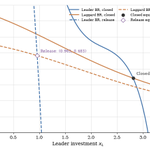
How should sanctions be implemented when unaligned countries have significant market power and can bargain with both sides?
In a new paper with @bryantxia22, “Bystander on the Fence: Sanctions in a Multipolar World,” we study how the incentives of these countries shape the effectiveness of sanctions.
A paper thread [1/12]

7
226
Anchi Xia retweeted

🚨✨ OFFICIAL: Ballon d’Or announce Cristiano Ronaldo 2008 has been voted as the BEST BALLON D’OR OF ALL TIME. 🌕

Anchi Xia retweeted

New paper alert! How should a principal optimally train an agent—human or AI—who endogenously chooses their utility (values)?
Alex Wolitzky and I build a framework of Training for Alignment: economics.mit.edu/sites/defa…


If AI's capabilities >> the "very best humans in every field," then conclusions from Acemoglu's "Simple Macro of AI" paper could not be further from the truth.
Hulten+back-of-the-envelope calibration won't cut it when it comes to analyzing AI. Economists need to do a lot more.

Nobel Prize-winning economist Daron Acemoglu fears humanity could enter a new era if artificial general intelligence, or AGI, surpasses even the “very best humans in every field.”
“We've never had something like that where most of us feel we're dispensable,” he says.
4
210
RT @pmbruera: Excited to share our paper with @ojblanchard1 and @GonHuertas on sovereign debt and multiple equilibria!
…
This quoted post is unavailable.
next to flo balogun and tyrese maxey, this list has to be a joke...

Truly honored and grateful to be included in the #TIME100Next list alongside so many inspiring people. Thank you @TIME. This recognition belongs just as much to my amazing coauthor @drkaenzig. The work continues!
2
257


Anchi Xia retweeted

In endogenous growth models with both research and entry margins, restricting entry actually accelerates growth (by cutting research duplication), and leads to fat profits for incumbents.
If Dario really wanted to slow AI development, then he would be encouraging entry (e.g. Chinese models). AI prices get driven to near marginal serving costs, research incentives evaporate, and OpenAI and Anthropic probably declare bankruptcy.

We Must Pace the Frontier: I’ve written a new essay on why the AI industry should slow down, with a three-part plan for doing so.
Anthropic is unilaterally committing to the first of these steps. We’ll provide third-party evaluators with permanent, employee-level access to our systems, so that they can verify adherence to our safety measures, report on incidents, and assess models’ alignment during training.
You can read the full post here: darioamodei.com/post/we-must…

Kimi K3 was recently released, with benchmark results rivaling those of Claude Fable and GPT-5.6. Yet the model is open-weight—something neither Anthropic nor OpenAI has done with a flagship model.
Unless Moonshot AI and others are simply giving away the store, what gives? Can a profit-maximizing lab ever find it optimal to release its model weights? Jan Morgan (@JanTMorgan) and I argue that the answer is yes. A thread. [1/10]

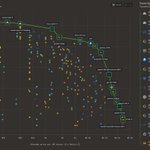
ALT https://arena.ai/leaderboard/text/overall/pareto
Finally, what does all this mean for welfare? On the one hand, open-weight models reduce incentives to invest in frontier research. On the other, they drive down LLM prices by increasing competition. Which force dominates in equilibrium? A lagging lab’s incentive may be misaligned from the societal perspective, creating a welfare externality. Whether that externality is positive or negative depends on how consumers value improvements in inference quality relative to lower prices—and, more provocatively, on whether slower frontier progress carries safety benefits. [9/10]
1
5
304
This thread came out of a lunch time discussion with @JanTMorgan. We’re posting since we haven’t seen this particular angle on Econ Twitter. Tagging a few people who may find this interesting: @andrewjkoh, @pmbruera, @alexolegimas, @pawtrammell, @ChadJonesEcon, @dwarkesh_sp, @f_paternollo, @gaoooric. We have benefited from reading many thoughtful AI related discussions on Econ twitter and from conversations with @Jean_Tirole. Hope to continue the discourse! [10/10]
6
372