

Teaching young minds Physics, Astronomy, and Computational Science. Researcher of stellar activity in exoplanet systems . All round nerd. MSc, BEd, etc.
Parksville B.C. CANADA
Joined October 2013
- Tweets1.5K
- Following1.3K
- Followers655
- Likes3.3K
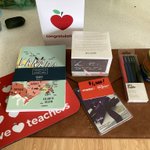


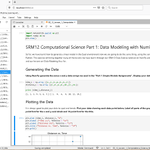



Big thank you to Staples Canada for the wonderful prizes. It wonderful that you recognize the great work teachers do with this prize. Keep up the great work and congrats to all the other winners.
@StaplesCanada


268


Who knew that using @ProjectJupyter with @ThePSF in your High School Physics and Science Research Methods classes would have led to this
tinyurl.com/5ynmxstj
They also give your students valuable skills.
#Jupyter #DataScience #Python #STEM @ScienceCdn @ISED_CA

Becoming a good teacher starts with supportive admin and colleagues. This allows you to build student success by going outside the box. Having students willing to come along for the journey also helps.
tinyurl.com/5ynmxstj
#STEM @ScienceCdn @ISED_CA @Ballenas5 @SD69Qualicum


This is something we, in the sciences, have been hoping for a long time, Open Science. Let's hope other journals follow.
For Astronomy, it starts on Jan. 1, 2022.
youtube.com/watch?v=RnhOWOGg…
@openscience @Open_Astronomy @_OScience
I have been neglecting the first point lately, it’s time to make some changes.

• Do what interests you the most.
• Spend time with nature.
• Ask questions.
• Never stop learning.
• Don't pay attention to what others think of you.
• Read everyday.
• Study hard.
• Teach others what you know.
• Make mistakes and learn.
• It's Okay to not know things!

1
Thanks to @SchulichLeaders one of our students at @Ballenas5 has a #lifechanging scholarship enabling them to attend university next year for biomedical engineering.
A big thank you for the amazing work Schulich does for our youth.
#STEM #Science #Parksville #oceanside
This is why all of my Science Research Methods students are expected to do a year-long research project. It also builds connections in lab courses.

2
Ideas I try to get my students to live by.
• Study hard.
• What others think of you is none of your business.
• It's OK not to have all the answers.
• Experiment, Fail, Learn and Repeat.
• Knowledge comes from experience.
• Imagination is important.
• Do what interests you the most.
• Stay curious.
1
All of these mini-missions look interesting but Pandora interests me the most. Low dollar (relativity speaking) science that could have a profound effect on our understanding of the universe.

In order to enable new platforms for exploring cosmic phenomena such as galaxy evolution, exoplanets, high-energy neutrinos & beyond, we’ve chosen 4 small-scale astrophysics missions for concept development in a new program called Pioneers.
🌟 Learn more: go.nasa.gov/38nYJNG

ALT Animation showing the shrinking orbit and explosive merging of two neutron stars
1

Christmas is coming early this year!

Mission Update: #TESS Sector 31 ingest has begun. Light curve, target pixel, and data validation files should begin appearing over the next 1-2 days in Portal/astroquery. The Data Release Notes are available now: archive.stsci.edu/tess/tess_…. Check outerspace.stsci.edu/display… for status.

What an amazing image showing the power of gravity and dark matter.
The warped light in this @NASAHubble image is a prime example of gravitational lensing, which occurs when gravity from an object (in this case, a galaxy cluster) bends the light from a background galaxy before the light reaches the observer: go.nasa.gov/3pbLLIB

ALT Hubble image showing a distorted galaxy.
1
Now that’s cool!

This photo of the sun might not look too impressive... until you realize it was taken at night – not looking up but looking down, through the entire Earth, using neutrinos rather than light. Amazing! apod.nasa.gov/apod/ap980605.…

5