

Software engineer: backend-focused, full-stack capable. Web3 and beyond. Building @predictionxray and @devbyline
Multi-chain
Joined May 2026
- Tweets78
- Following196
- Followers56
- Likes97
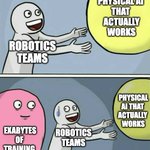



👍 Good news: the robots are coming 🤖
👎 Bad news: first somebody has to feed them exabytes of data 🫠
That was my main takeaway from the "Toronto Physical AI Workshop and Meetup", hosted by @Voxel51 and @nebiusai at the University of Toronto last week.
I went there thinking about robo-arms, robo-dogs and a robo-Bruce-Lee with nunchucks 🥷
But I left with a simpler thought (no less interesting, though): no data, no robots.
Some numbers:
- one autonomous vehicle can generate terabytes of sensor data per day
- one North American automaker ingests 6+ petabytes of new fleet data every day (per a MinIO case study)
- investors estimate that leading robotics labs need 100M to 1B hours of first-person video in the next 2-3 years. The largest public dataset of this kind today has about 1M hours
And it is not just "a lot of files" One robot recording combines cameras, sensors and robot state on one timeline, and everything must stay in sync. A pretty crazy combo, if you think about it. The workshop showed this well: a real robot recording in one MCAP file, with video, sensor data and language instructions played back together in Voxel51.
My conclusion as someone who has worked with data for 4 years: Physical AI is a data infrastructure problem, and it’s a big one.
Thanks Daniel Gural, Harpreet Sahota and @DhruvDiddi for the workshop, and @andreib and David Katz for the talks!

2
79
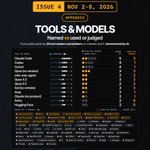
26 of the people we follow named 77 different AI tools and models last week (Nov 2-8). Only 12 of them were named by two or more people (16 the week before). Each of the other 65 was named by just one person.
The most named was Claude Code, by 5 people. Two of them used or judged it. Codex and Cursor were each named by 4 and used or judged by 1. Opus with no version number was named by 3, and all 3 used or judged it. In total, 14 people used or judged a tool, down from 17 the week before.
Issue 4 appendix: AI tools and models in numbers.
What the 14 people who used or judged a tool said:
- Andrej Karpathy, on TristanTube: "One-shotted with Claude Code in 3 minutes"
- DHH: "TensorFold is awesome!" On running Nemotron 3.5 Bolt offline: "feels like the future"
- Graham Neubig, on Inkling 2 Small: "Awesome release, love the focus on customizability!"
- Guillermo Rauch (LinkedIn), on Gemini: "it's doing great." On Slack MCP: "It's at the center of how we work at Vercel."
- Kilian Lieret, on a harness comparison: "super happy to see mini-swe-agent on the top"
- Mihail Eric (LinkedIn): "Once Opus 4.5 made long-horizon agent work practical"
- Ofir Press: "mini-swe-agent is 130 lines of code and it keeps on winning in harness comparisons."
- Paul Gauthier: "Sol made it easy to riff on variations in 3D."
- Santiago, on Haiku with Zep Agent Skills: "It takes 7 minutes with Opus 5.5. Only 59 seconds with Haiku."
- Simon Willison, on a paper about model weights: "I tried it with Qwen 3.8 27B on my laptop"
- swyx, on Ripple-65B Preview: "this is like the avengers of open model SOTA"
- Theo Browne: "The $200 Claude sub is the best money you can spend as an engineer right now."
- ThePrimeagen, on Opus reasoning traces: "how dumb opus is acting, but then the output is good."
- Walden Yan, on Devin and Devin Review: "Makes cloud dev feel so much closer to home"
How to read the image:
- We count people, not posts. Five posts from one person count once.
- "Named": the name is in the post text, in any context, including own-product posts, job posts and sponsor blocks.
- "Used or judged": they described using it, said what they think of it, or tested it.
- "(no product)", "(no version)": "Claude", "Opus" or "Sol" with no product or version named.
- These are small numbers about who talked, not about which tool is better.
- We follow different people on each platform, so the LinkedIn and X bars compare those two groups, not the platforms themselves.
How this is made: public posts by 26 tech leaders and builders on LinkedIn and X, collected with @stanleybystan and summarized by AI (Claude). We read every post for tool and model names. No opinions added. Some posts may be missing: George Hotz and Paul Gauthier on X (Nov 7-8); Abi Noda (Nov 7-8), Armin Ronacher (Nov 5, 7, 8), Gene Kim and Nicole Forsgren (Nov 6-8) on LinkedIn.
Links to the source posts on request.

1
171
The full Issue 4 (Nov 2-8): building with agents, engineers' judgment, and working with agents. 👇

Andrej Karpathy one-shotted TristanTube, 47K videos, with Claude Code in 3 minutes.
Last week (Nov 2-8), 12 people posted about building with agents.
🔥 On X, Thorsten Ball (@thorstenball ) sent one "sloppily typed prompt" to Amp, and it rebuilt his two book sites in 52 minutes: "I didn't do anything."
🔥 On LinkedIn, Guillermo Rauch wrote that most human-made software was slow, vulnerable and under-specified: "AI will rewrite it all. Many times."
1️⃣ Building with agents (10 on X, 2 on LinkedIn): one-prompt builds, producing vs. shipping
On X:
- Side projects: Brian Lovin wrote that a day of his pre-AI work now takes four minutes.
- Gatekeepers: DHH (@dhh ) wrote that agents let you route around insufferable gatekeepers.
- Churn era: Theo Browne will "slop up a replacement" for vendors that charge too much; swyx shared a team building its own Mixpanel.
- 110 fixes: Dax Raad (@thdxr ) wrote that his team's automated system made 110 fixes to hex in a week.
- Software factories: Dax Raad wrote that their sellers produce little software. ThePrimeagen doesn't know how to set one up; Graham Neubig demoed building one in a single prompt.
- Shipping: Santiago shared a video's numbers: lines of code up 2,450%, releases up 30%.
On LinkedIn: Mihail Eric shared Eno Reyes' numbers: Factory's core team ships tens of thousands of lines per person a day, so "the checks are what define the product."
2️⃣ Engineers' judgment (8 on LinkedIn, 3 on X): critical thinking, fundamentals, people skills
On LinkedIn:
- Surrender: Addy Osmani wrote that letting the AI's output quietly become your own builds comprehension debt.
- CS degree: Gregor Ojstersek now recommends one: "fundamental knowledge is what enables you to do great (automated) work".
- Understanding: Guillermo Rauch: "Use AI to know and understand." Kent Beck sees it as a goal for genies; Jo Van Eyck asked if our judgment is going soft.
- Grief: Annie Vella hears daily from developers "grieving the loss of the job they once had." Luca Rossi wrote about identity, Mihail Eric about taste.
On X:
- People skills: DHH wrote that agents will be amazing for most programmers, but hard on cantankerous ones.
- Doers: Thorsten Ball wrote: "We no longer need thinkers, we need doers," with exceptions. Dax Raad: some are mad their identity is co-opted.
3️⃣ Working with agents (5 on X, 1 on LinkedIn): team threads, async subagents, browsers
On X:
- Team chat: Amjad Masad wrote that Replit is the only collaborative AI coding system; Thorsten Ball shared Amp's new way to work with agents.
- Background: Harrison Chase wrote that long tasks shouldn't block the chat, and browsers are the new terminal.
- Browsers, threads: Dax Raad shared OpenCode Browse; Theo Browne runs 22 threads with nothing in his inbox.
On LinkedIn: Guillermo Rauch believes generative UI in Slack and Teams will become the dominant way to work with agents.
Collected with @stanleybystan , summarized by AI (Claude). Full issue and sources: link in the first reply.

9
Andrej Karpathy one-shotted TristanTube, 47K videos, with Claude Code in 3 minutes.
Last week (Nov 2-8), 12 people posted about building with agents.
🔥 On X, Thorsten Ball (@thorstenball ) sent one "sloppily typed prompt" to Amp, and it rebuilt his two book sites in 52 minutes: "I didn't do anything."
🔥 On LinkedIn, Guillermo Rauch wrote that most human-made software was slow, vulnerable and under-specified: "AI will rewrite it all. Many times."
1️⃣ Building with agents (10 on X, 2 on LinkedIn): one-prompt builds, producing vs. shipping
On X:
- Side projects: Brian Lovin wrote that a day of his pre-AI work now takes four minutes.
- Gatekeepers: DHH (@dhh ) wrote that agents let you route around insufferable gatekeepers.
- Churn era: Theo Browne will "slop up a replacement" for vendors that charge too much; swyx shared a team building its own Mixpanel.
- 110 fixes: Dax Raad (@thdxr ) wrote that his team's automated system made 110 fixes to hex in a week.
- Software factories: Dax Raad wrote that their sellers produce little software. ThePrimeagen doesn't know how to set one up; Graham Neubig demoed building one in a single prompt.
- Shipping: Santiago shared a video's numbers: lines of code up 2,450%, releases up 30%.
On LinkedIn: Mihail Eric shared Eno Reyes' numbers: Factory's core team ships tens of thousands of lines per person a day, so "the checks are what define the product."
2️⃣ Engineers' judgment (8 on LinkedIn, 3 on X): critical thinking, fundamentals, people skills
On LinkedIn:
- Surrender: Addy Osmani wrote that letting the AI's output quietly become your own builds comprehension debt.
- CS degree: Gregor Ojstersek now recommends one: "fundamental knowledge is what enables you to do great (automated) work".
- Understanding: Guillermo Rauch: "Use AI to know and understand." Kent Beck sees it as a goal for genies; Jo Van Eyck asked if our judgment is going soft.
- Grief: Annie Vella hears daily from developers "grieving the loss of the job they once had." Luca Rossi wrote about identity, Mihail Eric about taste.
On X:
- People skills: DHH wrote that agents will be amazing for most programmers, but hard on cantankerous ones.
- Doers: Thorsten Ball wrote: "We no longer need thinkers, we need doers," with exceptions. Dax Raad: some are mad their identity is co-opted.
3️⃣ Working with agents (5 on X, 1 on LinkedIn): team threads, async subagents, browsers
On X:
- Team chat: Amjad Masad wrote that Replit is the only collaborative AI coding system; Thorsten Ball shared Amp's new way to work with agents.
- Background: Harrison Chase wrote that long tasks shouldn't block the chat, and browsers are the new terminal.
- Browsers, threads: Dax Raad shared OpenCode Browse; Theo Browne runs 22 threads with nothing in his inbox.
On LinkedIn: Guillermo Rauch believes generative UI in Slack and Teams will become the dominant way to work with agents.
Collected with @stanleybystan , summarized by AI (Claude). Full issue and sources: link in the first reply.
Full issue with all sources: maxkravchuk.substack.com/p/a…
How this is made: public posts by 31 tech leaders and builders on LinkedIn and X, collected with Stanley and summarized by AI (Claude). Facts and quotes come only from those posts. No opinions added.
We follow different people on each platform, so this compares those two groups, not the platforms themselves.
9
I wanna add my drop to the chalice of doomposting about how AI is transforming the software industry 🫨
Let's skip all the details about models, tools and practices and go to a more abstract level.
Software engineers are not gods or some special kind of species, and this industry is affected by market processes like any other.
For instance, before automation, carpenters crafted stuff by hand and at a tiny scale. This allowed them to combine the job they loved (if they loved it) with market demand. Nowadays, if you like carpentry, you can definitely do it by hand and get your dopamine from crafting stuff. You can even sell it at a higher price as handmade goods. But market demand is covered by big automated manufacturing with a minimum of humans in the process. And that's fine, because the goals and wishes of a person and a business are mostly different: a craftsman needs crafting, a business needs efficiency and money.
What do we have in the software industry? In the pre-AI era, software was produced mostly by manual crafting. Sure, with different levels of automation, but still, meat bags did most of the work. AI allowed us to dramatically automate this manual labor and leave only machine operators in the shop. Planing boards by hand is like writing code by hand: it's a solved problem in both industries. So craftsmen can go to their workshops and satisfy themselves with handmade clean code. Sometimes it's a bit painful for such specialists, and they resist this shift.
And I felt it myself: I was a craftsman my whole career, and now I'm operating machines (which I find satisfying in a different way 🤌). But when I ruminate on this thought, I can see the business point of view as well. Business doesn't care (and probably should not) about my wish to solve hard tasks by hand just because dopamine tickles my brain in the process. And if AI gives speed and efficiency, there is nothing wrong with choosing AI as a tool. That's a fair decision. Why should business pay for my dopamine?
So I see a huge similarity with carpentry or any other automated industry. But an attentive reader will notice one important difference. A handmade table can cost 10x more than a machine-made one, and the customer will be proud to eat his delivered parmesan fries on it. But will handmade code cost 10x, or cost anything at all?🤨
🤖 Made with AI

82
At Anthropic, Felix Rieseberg dropped coding interviews for his teams, Addy Osmani wrote.
Last week (Oct 26-Nov 1), 10 tech leaders and builders posted about engineers keeping up with AI.
🔥 On LinkedIn, Gergely Orosz senses a divide: people thriving with AI, and people frustrated waiting for guidance.
🔥 On X, @dhh wrote that people who refuse company strategy should be fired. Peter Steinberger ( @steipete ) sympathized with engineers' loss of identity, but backed Proton's CEO.
1️⃣ Engineers adapting to AI (7 on LinkedIn, 3 on X): the divide, mandates, hiring
On LinkedIn:
- Compounding: Luca Rossi wrote that time on AI tools compounds, and a month away lets your intuition drift.
- Hiring bar: Gregor Ojstersek sees LeetCode used less. Jo Van Eyck wrote that Amazon rewrote what it expects from developers.
- Identity: Cat Hicks tied Overproduction Pressure to AI identity threat and burnout risk. Martin Fowler shared Rachel Laycock's question on why good developers are wary of agents.
On X: ThePrimeagen wrote that only output and quality should count, not your AI use.
2️⃣ Code review and other practices (9 people): automate, or choose deliberately
On LinkedIn:
- Black box: Annie Vella wrote that black-box testing alone misses subtle bugs, and a bank engineer can't cut review overnight.
- CI: Mihail Eric wrote that engineers can't review all agent code, so CI establishes trust.
- No line review: Luca Rossi shared Benedikt Stemmildt's view that code reviews need to go.
- Verification: Will Larson shared his company's verification loop. Charity Majors shared Jessica Kerr's piece on rigor as the affordable default.
On X:
- Automate review: Santiago wrote that everyone should focus on automating code reviews.
- Push to main: Thorsten Ball argued that you don't need branches: agents make working on main 10x easier.
- Every line: DHH called thinking "humans still need to review every line" the real AI psychosis.
- Either way: Dax Raad wrote that AI made debates like monorepo vs. multi-repo stop mattering.
3️⃣ Building with agents (6 on X, 2 on LinkedIn): weekend apps, building blocks
On X:
- HackerTube: Andrej Karpathy had Claude filter 43M HN comments to 6,454 videos, and built it in ~2 hours with Opus 5.5.
- Vibe coded: Dax Raad wrote that his team's voice app hex was fully vibe coded.
- One prompt: Mario Zechner said his JSON schema library took "a single informed prompt".
- Fun games: Simon Willison wrote that Opus 5.5 can now build fun video games.
- Rust rewrite: swyx shared a post: Claude rewrote Anthropic's Messages API in Rust, and CPU fell 40-50%.
- Building blocks: John Carmack argued that building "from scratch" isn't the fastest way: "Good building blocks matter."
On LinkedIn:
- Fast builds: Addy Osmani and Opus built a 3D browser game in one HTML file. Guillermo Rauch wrote that agents ship software faster than we can yap about it.
Collected with @stanleybystan , summarized by AI (Claude). Full issue and sources: link in the first reply.

AI tools and models in numbers 👇
31 of the people we follow named 70 different AI tools and models last week (Oct 26-Nov 1). Only 16 of them were named by two or more people (11 the week before). Each of the other 54 was named by just one person.
The most named was Claude Code, by 9 people. One of them described using it. Codex was named by 8 and used or judged by 2. Opus 5.5 was named by 6 and used or judged by 4. In total, 17 people used or judged a tool, up from 10 the week before.
Issue 3 appendix: AI tools and models in numbers.
What the 17 people who used or judged a tool said:
- Amjad Masad, on a prompt-to-app benchmark: "GPT 6.1 Sol takes the lead."
- Andrej Karpathy: "I use Claude Code (desktop app for Mac), Opus 5.5 on Medium effort"
- Dax Raad: "openrouter is the most successful model router"
- DHH: "Windows Copilot was so terrible"
- Greg Brockman: "computer use with terra has crossed a qualitative threshold"
- Hamel Husain, a Codex tip: "Tell codex to rename all the tasks in your project"
- Harrison Chase, Hex 4.0: "the hex team consistently gets what it means to build agents"
- Jay Hack: "Incredibly long on browserbase"
- John Yang, Gemini 4 Carbon on SWE-sweep: "the fantastic numbers"
- Kilian Lieret, on Gemini: "SoTA on SWE-sweep, scoring 9.6% (narrow leaderboard over Astra 6)"
- Luca Rossi (LinkedIn), on showing a friend how he works with Grok Bot: "He looked at me like I came from the year 3000."
- Mitchell Hashimoto: "Siri is still bad, like really really bad."
- Ofir Press: "Congrats to the Anthropic team on the new Opus 5.5 high score on ProgramBench!!"
- Santiago, on a voice benchmark: "The best model right now at fooling people: Gemini 3.8 Flash TTS."
- Simon Willison: "Claude Opus 5.5 can now build video games that are actually fun"
- ThePrimeagen: "Google cooked with Argon 4"
- Theo Browne, on Opus 5.5 at high instead of extra high: "This is better almost all of the time." On Codex plans: "looking pretty good!"
How to read the image:
- We count people, not posts.
- "Named": the name is in the post text, in any context, including own-product posts, job posts and sponsor blocks.
- "Used or judged": they described using it, said what they think of it, or tested it.
- These are small numbers about who talked, not about which tool is better.
- We follow different people on each platform, so the LinkedIn and X bars compare those two groups, not the platforms themselves.
How this is made: public posts by 31 tech leaders and builders on LinkedIn and X, collected with @stanleybystan and summarized by AI (Claude). We read every post for tool and model names. No opinions added. Some X posts by Santiago (Oct 29, 30 and Nov 1) and Peter Steinberger (Oct 30) may be missing. Links to the source posts on request.

17
31 of the people we follow named 70 different AI tools and models last week (Oct 26-Nov 1). Only 16 of them were named by two or more people (11 the week before). Each of the other 54 was named by just one person.
The most named was Claude Code, by 9 people. One of them described using it. Codex was named by 8 and used or judged by 2. Opus 5.5 was named by 6 and used or judged by 4. In total, 17 people used or judged a tool, up from 10 the week before.
Issue 3 appendix: AI tools and models in numbers.
What the 17 people who used or judged a tool said:
- Amjad Masad, on a prompt-to-app benchmark: "GPT 6.1 Sol takes the lead."
- Andrej Karpathy: "I use Claude Code (desktop app for Mac), Opus 5.5 on Medium effort"
- Dax Raad: "openrouter is the most successful model router"
- DHH: "Windows Copilot was so terrible"
- Greg Brockman: "computer use with terra has crossed a qualitative threshold"
- Hamel Husain, a Codex tip: "Tell codex to rename all the tasks in your project"
- Harrison Chase, Hex 4.0: "the hex team consistently gets what it means to build agents"
- Jay Hack: "Incredibly long on browserbase"
- John Yang, Gemini 4 Carbon on SWE-sweep: "the fantastic numbers"
- Kilian Lieret, on Gemini: "SoTA on SWE-sweep, scoring 9.6% (narrow leaderboard over Astra 6)"
- Luca Rossi (LinkedIn), on showing a friend how he works with Grok Bot: "He looked at me like I came from the year 3000."
- Mitchell Hashimoto: "Siri is still bad, like really really bad."
- Ofir Press: "Congrats to the Anthropic team on the new Opus 5.5 high score on ProgramBench!!"
- Santiago, on a voice benchmark: "The best model right now at fooling people: Gemini 3.8 Flash TTS."
- Simon Willison: "Claude Opus 5.5 can now build video games that are actually fun"
- ThePrimeagen: "Google cooked with Argon 4"
- Theo Browne, on Opus 5.5 at high instead of extra high: "This is better almost all of the time." On Codex plans: "looking pretty good!"
How to read the image:
- We count people, not posts.
- "Named": the name is in the post text, in any context, including own-product posts, job posts and sponsor blocks.
- "Used or judged": they described using it, said what they think of it, or tested it.
- These are small numbers about who talked, not about which tool is better.
- We follow different people on each platform, so the LinkedIn and X bars compare those two groups, not the platforms themselves.
How this is made: public posts by 31 tech leaders and builders on LinkedIn and X, collected with @stanleybystan and summarized by AI (Claude). We read every post for tool and model names. No opinions added. Some X posts by Santiago (Oct 29, 30 and Nov 1) and Peter Steinberger (Oct 30) may be missing. Links to the source posts on request.
Issue #3 👇
At Anthropic, Felix Rieseberg dropped coding interviews for his teams, Addy Osmani wrote.
Last week (Oct 26-Nov 1), 10 tech leaders and builders posted about engineers keeping up with AI.
🔥 On LinkedIn, Gergely Orosz senses a divide: people thriving with AI, and people frustrated waiting for guidance.
🔥 On X, @dhh wrote that people who refuse company strategy should be fired. Peter Steinberger ( @steipete ) sympathized with engineers' loss of identity, but backed Proton's CEO.
1️⃣ Engineers adapting to AI (7 on LinkedIn, 3 on X): the divide, mandates, hiring
On LinkedIn:
- Compounding: Luca Rossi wrote that time on AI tools compounds, and a month away lets your intuition drift.
- Hiring bar: Gregor Ojstersek sees LeetCode used less. Jo Van Eyck wrote that Amazon rewrote what it expects from developers.
- Identity: Cat Hicks tied Overproduction Pressure to AI identity threat and burnout risk. Martin Fowler shared Rachel Laycock's question on why good developers are wary of agents.
On X: ThePrimeagen wrote that only output and quality should count, not your AI use.
2️⃣ Code review and other practices (9 people): automate, or choose deliberately
On LinkedIn:
- Black box: Annie Vella wrote that black-box testing alone misses subtle bugs, and a bank engineer can't cut review overnight.
- CI: Mihail Eric wrote that engineers can't review all agent code, so CI establishes trust.
- No line review: Luca Rossi shared Benedikt Stemmildt's view that code reviews need to go.
- Verification: Will Larson shared his company's verification loop. Charity Majors shared Jessica Kerr's piece on rigor as the affordable default.
On X:
- Automate review: Santiago wrote that everyone should focus on automating code reviews.
- Push to main: Thorsten Ball argued that you don't need branches: agents make working on main 10x easier.
- Every line: DHH called thinking "humans still need to review every line" the real AI psychosis.
- Either way: Dax Raad wrote that AI made debates like monorepo vs. multi-repo stop mattering.
3️⃣ Building with agents (6 on X, 2 on LinkedIn): weekend apps, building blocks
On X:
- HackerTube: Andrej Karpathy had Claude filter 43M HN comments to 6,454 videos, and built it in ~2 hours with Opus 5.5.
- Vibe coded: Dax Raad wrote that his team's voice app hex was fully vibe coded.
- One prompt: Mario Zechner said his JSON schema library took "a single informed prompt".
- Fun games: Simon Willison wrote that Opus 5.5 can now build fun video games.
- Rust rewrite: swyx shared a post: Claude rewrote Anthropic's Messages API in Rust, and CPU fell 40-50%.
- Building blocks: John Carmack argued that building "from scratch" isn't the fastest way: "Good building blocks matter."
On LinkedIn:
- Fast builds: Addy Osmani and Opus built a 3D browser game in one HTML file. Guillermo Rauch wrote that agents ship software faster than we can yap about it.
Collected with @stanleybystan , summarized by AI (Claude). Full issue and sources: link in the first reply.
27
Full issue with all sources: maxkravchuk.substack.com/p/a…
How this is made: public posts by 32 tech leaders and builders on LinkedIn and X, collected with Stanley and summarized by AI (Claude). Facts and quotes come only from those posts. No opinions added.
We follow different people on each platform, so this compares those two groups, not the platforms themselves.
32
31 of the people we follow named 48 different AI tools and models last week (Oct 19-25). 37 of those names came from just one person.
The most named was Claude Code, by 9 people. Two of them said what they think of it. Opus 5.5 and Astra were named less often, but 4 people each used or judged them.
Issue 2 appendix: AI tools and models in numbers.
What the 10 people who used or judged a tool said:
- Dax Raad, Claude Code: "people doing great work can do it in vanilla claude code"
- Graham Neubig, DeepSeek: "absurdly good+cheap" inference.
- Kilian Lieret, SWE-sweep: "Astra is the best model, but still finds less than 10% of all real-world bugs tested."
- Luca Rossi (LinkedIn), Codex: "About 30 mins later Codex had shipped an OTA fix."
- Mario Zechner, Opus: "ttft of opus sucks, but pretty effective otherwise."
- Ofir Press, Astra: "a huge jump on SWE-sweep with Astra"
- Simon Willison: built a browser game "mainly using Claude Opus 5.5". Kimi K3.1 is the "first time an open weights (well, soon-to-be open weights) model has competed this credibly with the current frontier".
- swyx: Opus 5.5 is "the best work estimator model i've ever used". Claude Code is "a malleable, general purpose hardened harness".
- Theo Browne: Astra "may have been the most disappointing release of the year". "Opus 5.5 is proof that the world does actually need smarter models." "Gemini is a straight up liability in your stack." He also reported an Agents SDK bug and used Codex.
- Walden Yan: built his code-review skill with Devin and "a Fable/Astra subagent".
How to read the image:
- We count people, not posts. Five posts from one person count once.
- "Named": the name is in the post text, in any context, including posts about their own product, job posts, sponsor blocks and posts on other topics.
- "Used or judged": they described using it, said what they think of it, or tested it.
- "Claude (no product)": the post said "Claude" without naming a product like Claude Code.
- These are small numbers about who talked, not about which tool is better.
- We follow different people on each platform, so the LinkedIn and X bars compare those two groups, not the platforms themselves.
How this is made: 62 public posts by 31 tech leaders and builders on LinkedIn and X, collected with @stanleybystan and summarized by AI (Claude). Names come from a text search of each post's own text. "Used or judged" comes from reading each post. No opinions added.

3
2
260
Theo Browne compared caring about agent harnesses to tabs vs spaces. Last week (Oct 19-25), nine people split on how much to build around them.
🔥 Addy Osmani reported that his team's new Claude multi-agent workflows found 66 of 70 planted bugs in each of 3 runs. A single agent found 14, 15 and 27.
🔥 On X, Dax Raad argued that what matters is how you use your tools, not the "cutting edge": people doing great work can do it in vanilla Claude Code.
1️⃣ Agent harnesses (6 on X, 3 on LinkedIn): build it up, or keep it simple
On X:
- Simpler setups: Graham Neubig wrote "Don't sleep on single agent systems".
- In-house platforms: Thorsten Ball asked who works at a 2010s SaaS company whose own agent platform no one wants to use.
- Building on a harness: Harrison Chase advised starting with a harness, then adding skills and tools. swyx called Claude Code a general-purpose harness you can repurpose.
On LinkedIn:
- In-house: Sam Newman asked if platform teams curate their colleagues' AI coding tools.
- Durability: Guillermo Rauch's team is bringing durability to all harnesses, like Pi and OpenCode.
2️⃣ AI and security (6 on X, 2 on LinkedIn): finding bugs faster, patching at scale
On X:
- Found with AI: Peter Steinberger wrote that the PHP vulnerability was found with GPT-5.6 Sol. Greg Brockman wrote that cyber models secured his team far beyond what it could do unassisted.
- Benchmark: Kilian Lieret reported that OpenAI and Anthropic models doubled bugs found on SWE-sweep, but the best, Astra, finds less than 10% of bugs tested. Ofir Press hopes it leads to proactive agents and fewer vulnerabilities.
- Response: swyx wrote not to blame AI for finding bugs, but to clear them fast. Theo Browne wrote that agents triaged the outages and security issues.
On LinkedIn:
- Security costs: Gergely Orosz wrote that AI sped up CVE discovery ~10-100x and security will cost a lot more.
- Proofs: Addy Osmani described Claude proving 123 open-source libraries never crash under specified conditions.
3️⃣ The engineer's job (6 on LinkedIn, 2 on X): juniors, demand, identity
On LinkedIn:
- Paid to adapt: Gergely Orosz wrote that the field pays a premium because it changes fast.
- New job: Annie Vella expects many engineers to shift to "supervisory engineering".
- Juniors: Farhan Thawar called "let's hire less juniors" short-sighted. Rob Bowley wrote that a common theme at a summit was that the industry seems to be going backwards, with almost nobody hiring juniors.
- Identity: Cat Hicks wrote that our skills are deeper than we give them credit for.
- The #0 skill: Guillermo Rauch looks for how well you guide the AI.
On X:
- Tokens: Thorsten Ball told a junior engineer to get to a company that lets them use as many tokens as possible.
- 20 years: Ofir Press thinks humans will stay SWEs for 20 more years.
Collected with @stanleybystan , summarized by AI (Claude). Method and sources in the first reply.

2
178
How this is made: 46 public posts by 30 tech leaders and builders on LinkedIn and X, collected with Stanley and summarized by AI (Claude). Facts and quotes come only from those posts. No opinions added.
We follow different people on each platform, so this compares those two groups, not the platforms themselves.
Sources:
1️⃣ Agent harnesses: build it up, or keep it simple
- Addy Osmani: linkedin.com/posts/addyosman…
- Dax Raad: nitter.cf/thdxr/status/211396787…
- Theo Browne: nitter.cf/theo/status/2113170687…
- Graham Neubig: nitter.cf/gneubig/status/2114045…
- Thorsten Ball: nitter.cf/thorstenball/status/21…
- Harrison Chase (harness first): nitter.cf/hwchase17/status/21124…
- Harrison Chase (Ramp's harness): nitter.cf/hwchase17/status/21126…
- swyx: nitter.cf/swyx/status/2113003628…
- Sam Newman: linkedin.com/feed/update/urn…
- Guillermo Rauch: linkedin.com/feed/update/urn…
2️⃣ AI and security: finding bugs faster, patching at scale
- Peter Steinberger: nitter.cf/steipete/status/211291…
- Greg Brockman (php2shell): nitter.cf/gdb/status/21129215296…
- Greg Brockman (cyber models): nitter.cf/gdb/status/21137242687…
- Greg Brockman (compression library): nitter.cf/gdb/status/21137737902…
- Kilian Lieret: nitter.cf/KLieret/status/2113272…
- Ofir Press: nitter.cf/OfirPress/status/21132…
- swyx: nitter.cf/swyx/status/2113359027…
- Theo Browne: nitter.cf/theo/status/2113206819…
- Gergely Orosz: linkedin.com/posts/gergelyor…
- Addy Osmani: linkedin.com/posts/addyosman…
3️⃣ The engineer's job: juniors, demand, identity
- Gergely Orosz: linkedin.com/posts/gergelyor…
- Annie Vella (supervisory engineering): linkedin.com/posts/annievell…
- Annie Vella (keynote): linkedin.com/feed/update/urn…
- Farhan Thawar: linkedin.com/posts/fnthawar_…
- Rob Bowley (summit): linkedin.com/feed/update/urn…
- Rob Bowley (sense of loss): linkedin.com/posts/robertbow…
- Cat Hicks: linkedin.com/feed/update/urn…
- Guillermo Rauch: linkedin.com/posts/rauchg_th…
- Thorsten Ball (advice to a junior): nitter.cf/thorstenball/status/21…
- Thorsten Ball (what juniors should learn): nitter.cf/thorstenball/status/21…
- Ofir Press: nitter.cf/OfirPress/status/21140…
Also in the article
- Walden Yan: nitter.cf/walden_yan/status/2112…
- Mihail Eric: linkedin.com/posts/mihaileri…
- ThePrimeagen: nitter.cf/ThePrimeagen/status/21…
- DHH: nitter.cf/dhh/status/21122099653…
- Steve Yegge: linkedin.com/posts/steveyegg…
- Kent Beck: linkedin.com/feed/update/urn…
- Laura Tacho: linkedin.com/posts/lauratach…
- Luca Rossi: linkedin.com/posts/lucaronin…
- Theo Browne (Astra): nitter.cf/theo/status/2112721851…
- Theo Browne (Opus 5.5): nitter.cf/theo/status/2112671665…
- swyx: nitter.cf/swyx/status/2113283272…
- Simon Willison: nitter.cf/simonw/status/21136914…
- Santiago: nitter.cf/svpino/status/21129468…
- Hamel Husain: nitter.cf/HamelHusain/status/211…
- Satya Nadella: linkedin.com/posts/satyanade…

I've been looking into public benchmarks and am astounded by the poor quality vs. how much we rely on them as an industry.
@xeophon pointed me to this excellent site epoch.ai/benchmarks/ which is an independent third party which scrutinizes benchmarks and "looks at the data" 💪
For example, here are some popular benchmarks we all rely on. Before trusting a benchmark its worth running them and inspecting examples the grader failed carefully, to get a sense of the quality.
I'm continuing to look more into this, and will write something up eventually once I've collected more data, but I think this is an important subject.

65
How did I end up building a weekly digest of what engineering leaders say about AI in software engineering?
Kind of by accident 🤷♂️
I was preparing for a call and used Stanley to catch up on one person's recent posts and summarise them. It worked damn well 🤌 Then I thought: if Stanley can pull the post history of any account, why stop at one person? Why not a whole group of engineering leaders, every week? And yeah, why not join the holy war and compare LinkedIn with X. Sweet!
My first try was the obvious one:
1️⃣ open Stanley chat
2️⃣ drop "Hey buddy! Guess what genius idea I had today? ..."
3️⃣ watch it skip the posts and go to web search for blogs and other open sources (not obvious to me, but somehow obvious to Stanley)
It took me an hour or two of back and forth to make it stick to raw data from LinkedIn and X. That's when I decided the fetching should be code, not a chat (a full week in one chat just timed out anyway).
So I built a small pipeline with Claude and Stanley's MCP. I picked an initial list of authors, and a NestJS app (just because I like this framework) asks Stanley for one person's posts from one day, saves the raw reply in Postgres, and moves to the next person. Collecting a full week takes about 6 hours now, but it's the app's time, not mine. Then I crafted the report itself with Stanley and Claude together.
A few things I learned along the way:
🤔 Stanley did the heavy lifting. It reads public posts from the accounts I ask for and returns full text, real links, timestamps and engagement as JSON. It even pointed out accounts that had moved or gone inactive (a few handles on my list were simply wrong).
🤔 ask for less, get more. All accounts in one request gave me 16 posts for one day. One request per account gave me 59 in total for the same day.
🤔 check AI output against something it can't fake. Post IDs on X and LinkedIn encode the exact time a post was created, so the app decodes every ID and compares it with the timestamp Stanley returned. Boring, but it works.
🤔 writing and fact-checking are different jobs. Stanley's drafts read better, but it didn't have my full dataset, so some facts and numbers were off. Claude, connected to the whole database, checked every fact, number and quote. The final report is a mix: Stanley's writing, Claude's facts.
💬 [everyone who's read this far]: - But why not fully automate it?
💬 [me]: - I wanted to validate the idea fast and play with the raw data first. So only the most monotonous part went to code. The rest (going back and forth with the models and comparing versions of each post) is still on me, at least for now.
There are a lot more fun details (like splitting the busiest posters into 3-hour chunks), but this story is already too long, and I don't wanna bother you or the algorithm.
The first issue is linked in the reply below.
What would you want a digest like this to track?
Thanks to the @stanleybystan team, this whole thing wouldn't exist without your MCP.

3
1
166
Last week, engineering leaders on LinkedIn and builders on X split on one question: how do you review code that agents write?
🔥 Addy Osmani described how, for Claude Code, merged PRs more than doubled from June to September while the share of reverted PRs fell by more than 40%, after most of the review reading moved to machines.
🔥 Will Larson reported PRs per engineer per week up 10x on some teams, and described a "small-change" approach to reduce review friction.
🔥 On X, Thorsten Ball asked why teams still use pull requests at all. His team pushes to main, ships behind feature flags and has no mandatory code review.
Here is what stood out from 22 tech leaders and builders on LinkedIn and X last week (Oct 12-18, 2026):
1️⃣ Code review when agents write the code
On LinkedIn, Addy Osmani and Will Larson described review processes rebuilt for agent volume. For Claude Code, a second agent reviews each diff before any human sees it, automated bug-hunting and security scans check every PR, and a classifier sets how much human approval a change needs. On X, Thorsten Ball questioned whether teams still need pull requests, and DHH said PRs are mostly proofs of concept now.
2️⃣ Measuring AI impact: output vs. real results
This debate happened only on LinkedIn. Kent Beck compared measuring AI coding by lines of code to counting ore from a mine instead of the gold. Laura Tacho described an AWS team averaging 15 deploys per developer per week by applying AI to coordination between stages, not just to coding. Gergely Orosz sided with a manager who set an AI token usage KPI, and in a separate post wrote that the whole industry is changing its dev tools and processes without settled best practices.
3️⃣ Builders rank the new frontier models
On X, builders compared the new models in public. Theo Browne put Opus 5.5 and Muse Wonder in his top tier, with GPT-6.1 Sol one tier below. Peter Steinberger wrote that GPT-6.1 Sol ultrafast is far ahead of 6 Astra at about the same cost. DHH said he shipped two Omarchy PRs built with Muse Wonder. On LinkedIn, only Steve Yegge mentioned models.
Top quotes of the week:
"I actually care how much gold results. My 10x increase in ore resulting from automation may or may not increase gold production."
Kent Beck, LinkedIn
"With agents you can now move 10x faster, you can finally do real continuous integration, and get more confidence in the changes the agent made."
Thorsten Ball, X
"We didn't entirely eliminate review - we shifted most of the reading to machines, optimized human time and attention as our scarcest resource and made it effortless to undo mistakes."
Addy Osmani, LinkedIn
⚙️ ⚙️ ⚙️
How this is made: public posts by 22 tech leaders and builders on LinkedIn and X, collected with @stanleybystan and summarized by AI (Claude). Facts and quotes come only from those posts. No opinions added. Source links in the first reply.

38
Last week, engineering leaders on LinkedIn and builders on X split on one question: how do you review code that agents write?
🔥 Addy Osmani described how, for Claude Code, merged PRs more than doubled from June to September while the share of reverted PRs fell by more than 40%, after most of the review reading moved to machines.
🔥 Will Larson reported PRs per engineer per week up 10x on some teams, and described a "small-change" approach to reduce review friction.
🔥 On X, Thorsten Ball asked why teams still use pull requests at all. His team pushes to main, ships behind feature flags and has no mandatory code review.
Here is what stood out from 22 tech leaders and builders on LinkedIn and X last week (Oct 12-18, 2026):
1️⃣ Code review when agents write the code
On LinkedIn, Addy Osmani and Will Larson described review processes rebuilt for agent volume. For Claude Code, a second agent reviews each diff before any human sees it, automated bug-hunting and security scans check every PR, and a classifier sets how much human approval a change needs. On X, Thorsten Ball questioned whether teams still need pull requests, and DHH said PRs are mostly proofs of concept now.
2️⃣ Measuring AI impact: output vs. real results
This debate happened only on LinkedIn. Kent Beck compared measuring AI coding by lines of code to counting ore from a mine instead of the gold. Laura Tacho described an AWS team averaging 15 deploys per developer per week by applying AI to coordination between stages, not just to coding. Gergely Orosz sided with a manager who set an AI token usage KPI, and in a separate post wrote that the whole industry is changing its dev tools and processes without settled best practices.
3️⃣ Builders rank the new frontier models
On X, builders compared the new models in public. Theo Browne put Opus 5.5 and Muse Wonder in his top tier, with GPT-6.1 Sol one tier below. Peter Steinberger wrote that GPT-6.1 Sol ultrafast is far ahead of 6 Astra at about the same cost. DHH said he shipped two Omarchy PRs built with Muse Wonder. On LinkedIn, only Steve Yegge mentioned models.
Top quotes of the week:
"I actually care how much gold results. My 10x increase in ore resulting from automation may or may not increase gold production."
Kent Beck, LinkedIn
"With agents you can now move 10x faster, you can finally do real continuous integration, and get more confidence in the changes the agent made."
Thorsten Ball, X
"We didn't entirely eliminate review - we shifted most of the reading to machines, optimized human time and attention as our scarcest resource and made it effortless to undo mistakes."
Addy Osmani, LinkedIn
⚙️ ⚙️ ⚙️
How this is made: public posts by 22 tech leaders and builders on LinkedIn and X, collected with @stanleybystan and summarized by AI (Claude). Facts and quotes come only from those posts. No opinions added. Source links in the first reply.
Sources:
Code review
- Addy Osmani: linkedin.com/posts/addyosman…
- Will Larson: linkedin.com/posts/lethain_s…
- Thorsten Ball: nitter.cf/thorstenball/status/21…
- DHH (agent PRs): nitter.cf/dhh/status/21097835810…
Measuring AI impact
- Kent Beck: linkedin.com/posts/kentbeck_…
- Laura Tacho: linkedin.com/posts/lauratach…
- Gergely Orosz: linkedin.com/posts/gergelyor…
- Gergely Orosz (second post): linkedin.com/posts/gergelyor…
Models
- Theo Browne: nitter.cf/theo/status/2109724741…
- Peter Steinberger: nitter.cf/steipete/status/210973…
- DHH (Muse Wonder): nitter.cf/dhh/status/21098403623…
- Steve Yegge: linkedin.com/posts/steveyegg…


Just 12 hours from “no pitch plan and video” to final submission 🫣
But it was possible only with @SuperteamCAN 🫡

2
76