


c4ndu retweeted

Don't be afraid , guys
October 10th this year is not like October 10th last year.
Last year, everyone was FOMO and opened massive leveraged positions, which led to a sharp market crash.
This year, however, everyone is being very cautious, and there is currently no FOMO


c4ndu retweeted

I don't recommend anyone scramble to move their funds to new wallets today. But we should take the risks to cryptography from AI-accelerated math seriously, and minimize our exposure to not just quantum-vulnerable cryptography, but also potentially AI-vulnerable cryptography.
The core new area of risk from this viewpoint is, unfortunately, ML-DSA / FHE / lattices.
(and it's also another reason, along with quantum, why ECDSA might fall even faster than expected, hence the "fresh address" recommendation)
So far most people have been in the mode of thinking "elliptic curves broken, hashes safe, lattices safe". But there is a good chance that the concrete security of lattices will take serious hits from the next two years of AI math.
The basic threat model is: factoring is something that naively takes 2^(n/2) time, but over decades smart people have found and optimized number field sieves, and degraded that to 2^O(n^(1/3)), which is why RSA keys and signatures need to be ~400 bytes (and not 64 bytes). What if there are skeletons in the closet like that, both for elliptic curves and lattices, that we are simply not smart enough to discover - but bots soon will be?
This is a major part of the reason why for the past year ethereum's lean roadmap has been going in the "hash-only" direction: no lattices, no ML-DSA, no Falcon, no lattice-based commitments inside ZK proofs, etc. Signatures in lean ethereum are all hash-based, either WOTS or SPHINCS-.
For signatures and proofs, we already know how to go hash-only. The bigger challenge is for *public-key encryption* - and this goes far beyond blockchains. Secure communication, anonymizing protocols, lots of things need public-key encryption.
And unfortunately there are long-standing mathematical theorems showing why public-key encryption cannot be done with hashes alone. You have to have some kind of trapdoor object that has at least one form of usable "structure" - either group theory (incl. isogenies) or lattices or code-based or potentially in the future even more newfangled and spooky things (local mixing?). But for anything that has structure, you should assume that AI will make at least some progress in breaking that structure. Here, one reasonable inference is that if you want to make something plausibly long-term secure, multiply the key sizes by 10.
To me that's a very plausible world and something not at all extreme to predict. If AI will bring us 50 years of math in 2 years, then that 50 years of math may very plausibly include a "naive factoring -> GNFS" level of improvement to our ability to break lattices. In that world, lattices will still exist, but they will have to be significantly bigger to guarantee the same level of safety.
And at those new larger sizes, hash-based constructions will beat lattice-based constructions on concrete efficiency in every use case where hash-based constructions are possible at all.
Theoretically, of course it's possible that hashes are broken too (eg. P = NP would imply that). But I think P = NP is very unlikely. And intuitively, it's much more likely that a mathematical object has exactly no exploitable structure (like hashes are intended to), than that a mathematical object has exactly ~3 forms of exploitable structure (for elliptic curves: associativity, Schoof, pairings) and not some secret fourth form of structure we have not yet discovered that greatly degrades its security (for elliptic curves, ECDLP and pairing security). Similar for LWE, SVP, RLWE and the zoo of lattice problems.
For this reason, we do not yet see any reason to worry and start padding the byte size of hashes (if we start to worry more, we would pad the round count first before doing anything to the byte size).
Concrete TLDR, my own personal views:
* Hash-based > lattice-based, in those situations where hash-based is possible at all
* For anything lattice-based, be much more paranoid on param sizes. Remember that blockchains are only a small portion of the cryptography story; this point goes far beyond blockchains and applies to eg. access to websites, secure messaging, Tor / VPNs ...
* For privacy protocols, strongly favor NOT putting encrypted notes onchain. Instead, send them offchain through some third-party mechanism.
* If it's not difficult for you, keeping your funds in addresses which have not yet been used to make a transaction is a good idea. If it's easy for you, do it. **But be careful about migrations; I personally have lost more money in botched migrations than I have lost in all hacks combined**.
* For multisig wallets, doing confirmations offchain is better than onchain, because this way the signatures of signer wallets do not get exposed to the public, so if ECDSA falls to AI much faster than expected, at least the multisig "gracefully degrades" to a 1-of-1 where the 1 is whoever was gathering the signatures - a much better place to be than "anyone can take the money"
firefly.social/post/x/210783…
c4ndu retweeted

1/ Huge respect for Dragonfly continuing to invest in the bear market.
But I'm morally obliged to call out sketchy projects gaining momentum.
As a community we must preempt large scale implosions like #FTX or #LUNA that set the industry back years
Bitget may be the next FTX 🧵

I'm thrilled to announce @dragonflyvc's investment in @BitgetGlobal.
Bitget is making crypto more accessible with its innovative derivatives products and a user-centric approach, and we're proud to support their mission and growth.
theblock.co/post/224702/drag…

c4ndu retweeted

Anies Baswedan tolak RUU Perampasan Aset Dan Hukuman Mati Koruptor:
> Anies secara terbuka nyatakan gak setuju hukuman mati dan minta publik hati-hati soal wacana perampasan aset
> menurutnya, uu penyitaan aset baru boleh diterapkan kalau integritas dan mental penegak hukumnya sudah benar-benar bersih.
> kalau kualitas penegakan hukum masih buruk, undang-undang ini sangat rawan disalahgunakan jadi alat politik.
> lawan politik yang cuma modal dicurigai bisa langsung dihancurkan dan dikuras habis seluruh asetnya tanpa dasar yang kuat.
> di tengah praktik penuntutan yang belum pasti, aturan ini malah cuma bakal menciptakan iklim ketakutan yang masif.
> anies pun memberi sentilan penutup 'saat undang-undang masih dijadikan alat penguasa, perampasan aset itu bahaya banget.'

c4ndu retweeted

我又整理了一份地址证明合集,方便注册U卡过KYC
1)1stbills.com 人工定制各国账单
2)1poa.org 支持多国家
3)docs.mimicland.click 英国、澳洲、新加坡等地区
4)addrs.xyz 覆盖多个国家及地区
5)windx.co.uk 全球水电燃气账单模板库
提醒一句:
这些工具只适合解决 注册过程中遇到的限制问题
但不要为了一个空投
到处提交资料
资产安全永远排第一


整理了一份无需KYC的Visa卡清单
1)@solcard 只需要邮箱,虚拟 Mastercard
2)@xhypeofficial 只需要邮箱,支持虚拟Visa/MC
3)@LasoFinance 注册免费,每日额度约 $1,000
4)@TrocadorApp 注册费 $2,每日额度约 $1,000
5)@pintopay_me 注册费 $35
6)@kardpay 注册费 $28
7)@offgridcash $49/年,每日额度约 $1,000
8)@MaxSwapSocial 注册费:$50 | 虚拟卡
Visa支付、消费、日常使用场景,是未来 Web3 普及的重要一步
不过提醒一句:
不用 KYC ≠ 没有风险
小额测试,了解规则,再做决定

c4ndu retweeted

Sekedar Tips buat yang suka trade cepet (fast trade)
mungkin bisa coba GMGN di bagian trending dan pake yang 1 Menit
disitu muncul token-token yang volnya kenceng di menit menit awal, jadi enak buat nyari earlyan apalagi yang new pair, tinggal sesuaiin aja kalian maennya kaya gimana, kalo main tech tinggal cari token-token tech disitu, begitu juga buat meme
dan biasanya meme meme old yang tiba-tiba ada vol juga muncul disini
Aku pribadi sering banget pake metode screening yang ini, tinggal dipaduin sama style trade masing-masing
dan untuk Filternya ada di bawah postingan ini:

c4ndu retweeted

One of my favorite DeFi strategies lately has been prediction market arbitrage.
It's a great way to make solid profits while also farming Polymarket's upcoming airdrop.
Here's how it works:
• Go to @opinionlabsxyz or Polymarket
• Find an identical prediction market that is available on both platforms
• Check if there's a spread difference between the odds for that market on the two platforms
• If you can buy YES + NO shares for less than 99.9c, then do it to lock in a profit
When that prediction market expires, it's guaranteed that each 1 YES + 1 NO share will be worth $1 regardless of the outcome.
Here's an actual example:
On Polymarket, you can bet that Apple will release a new product line before 2027 by buying YES shares at 85c.
On Opinion, you can buy NO shares for the exact same market at 11.4c.
Buy the same number of YES shares on Polymarket and NO shares on Opinion, and you will lock in a profit as 85c+11.3c=96.4c and is less than $1.
If you invest $1000, you'll make $36.
Now ideally, you want to use this strategy only for markets that expire soon (within 2-3 months at most), so you don't have to wait too much until you can collect your profit.
You can read the market rules to see the end date.
You can find opportunities like this in 2 ways:
• Manually - search the identical markets on Polymarket and Opinion, and see if there's any arbitrage opportunity
• Automatically - A tool like AlertPilot dot io built by @securezer0 uses AI to automatically find prediction market arbitrage opportunities
In this example, AlertPilot requires paying a subscription, but if you want to do arbitrage with significant capital, it might be worth it.
Why do I believe that arbitraging prediction markets is a good idea?
Because with this strategy, you not only make a decent profit, but also farm Polymarket and Opinion.
If Polymarket launches a token, it could easily do the biggest airdrop of 2026. The valuation of Polymarket's latest funding round is $9 billion.
Let's say that its token has a $10b FDV at launch and there's only a 5% token airdrop allocation. Its airdrop will still be worth $500M.
A $500M airdrop would be massive given that Polymarket TVL is only $353M at this moment.
And I think that Opinion airdrop will also be pretty good.
I strongly believe that farming prediction market platforms will pay off tremendously.


c4ndu retweeted

ETH 本轮三大多头
Tom Lee 的 Bitmine,成本价 3849 美金,但没有加杠杆,无清算压力。
易理华的 Trend Research,清算价 1800 美金附近,因抵押了 ETH 买入更多,随时会触发清算,当前价格再跌 20%,即会爆仓。
Garrett Jin 的链上基金,已爆仓,亏损 2.5 亿美金,社交账号已停止更新。

c4ndu retweeted

Lowongan Pekerjaan!
AI sedang membuka lowongan kepada umat manusia.
Karena AI tidak punya tangan & tubuh. Pekerjaan ini akan di-outsource ke manusia.
Dibayar pakai stablecoin.
Siapa mau jadi “body for rent” buat robot? Apply sini 👇
rentahuman.ai


c4ndu retweeted

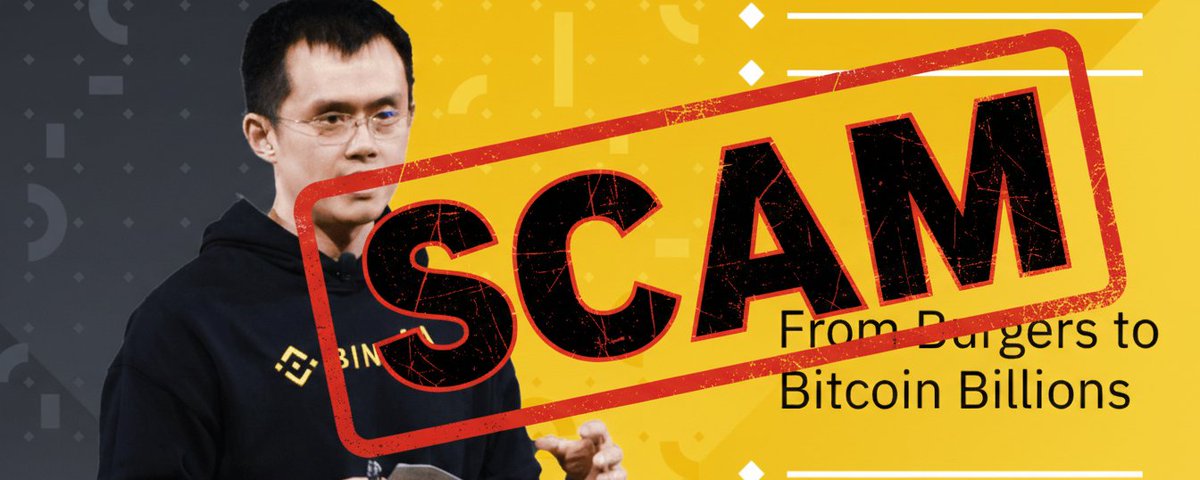
Fantastic market comeback so far.
Truly amazing @cz_binance
Binance once again trapping their users and market participants to max extract and ruin the market.


c4ndu retweeted

i've been tracking 10,000+ wallets on Solana and EVM chains every month for a year now. this is what i learned:
> normies think they can find crime wallets and start blind aping whatever they buy. in fact, tracking insider wallet is a myth because:
1) there are public wallets built for luring copy traders. so the devs can get enough organic volume to trigger most of signal bots in this market. +1 exit liquidity
2) it's hard to track the real crime if you don't specifically know its behavior, avg size per trade, avg holding time, active time zone, etc. after doing this long enough, you will see what odds and size in accordingly
3) cabal use fresh wallets & washed wallets (they clear the fresh tag on trading terminals) to push their coins. you saw that in $moonpig $NOBODY $wojak
4) most big pnl wallets sizing in early have an active trading behavior, they trade everyday and buy 1-2% of the supply in fresh launches that meet their criteria. It's hard to tell if they are insiders or just active traders
> most people track wallets in the wrong way:
1) they track public KOL wallets
2) they track wallets having inconsistent wins
3) they track wallets having high winrate
4) they only track top traders in hot pairs
that's why they ended up being exit liquidity
do this instead:
> study wallet behavior:
1) avg size 2) avg holding time 3) active time zone 4) conviction buyer or trencher 5) tech players or memecoin bagworker 6) see if it matches the meta
> find correlation across multiple wallets
> group them by your own preset
this small change in mindset will help you to be a good onchain trader

c4ndu retweeted

No complexity. No accident.
10/10 was caused by irresponsible marketing campaigns by certain companies.
On October 10, tens of billions of dollars were liquidated. As CEO of OKX, we observed clearly that the crypto market’s microstructure fundamentally changed after that day.
Many industry participants believe the damage was more severe than the FTX collapse. Since then, there has been extensive discussion about why it happened and how to prevent a recurrence. The root causes are not difficult to identify.
⸻
What actually happened
1.Binance launched a temporary user-acquisition campaign offering 12% APY on USDe, while allowing USDe to be used as collateral with the same treatment as USDT and USDC, and without effective limits.
2.USDe is a tokenized hedge fund product.
Ethena raises capital via a so-called “stablecoin,” deploys it into index arbitrage and algorithmic trading strategies, and tokenizes the resulting fund. The token can then be deposited on exchanges to earn yield.
3.USDe is fundamentally different from products such as
BlackRock BUIDL and Franklin Templeton BENJI, which are tokenized money market funds with low-risk profiles.
USDe, by contrast, embeds hedge-fund-level risk. This difference is structural, not cosmetic.
4.Binance users were encouraged to convert USDT and USDC into USDe to earn attractive yields, without sufficient emphasis on the underlying risks. From a user’s perspective, trading with USDe appeared no different from trading with traditional stablecoins—while the actual risk profile was materially higher.
5.Risk escalated further as users:
•converted USDT/USDC into USDe,
•used USDe as collateral to borrow USDT,
•converted the borrowed USDT back into USDe,
•and repeated the cycle.
This leverage loop produced artificial APYs of 24%, 36%, and even 70%+, widely perceived as “low risk” simply because they were offered by a major platform. Systemic risk accumulated rapidly across the global crypto market.
6.At that point, even a small market shock was sufficient to trigger a collapse.
When volatility hit, USDe depegged quickly. Cascading liquidations followed, and weaknesses in risk management around assets such as WETH and BNSOL further amplified the crash. Some tokens briefly traded near zero.
The damage to global users and companies—including OKX customers—was severe, and recovery will take time.
⸻
Why this matters
I am discussing the root cause, not assigning blame or launching an attack on Binance. Speaking openly about systemic risks is sometimes uncomfortable, but it is necessary if the industry is to mature responsibly.
I expect there may be significant misinformation and coordinated FUD directed at OKX in the near future. Even so, speaking honestly about systemic risk is the right thing to do—and we will continue to do so.
As the largest global platform, Binance has outsized influence—and corresponding responsibility—as an industry leader. Long-term trust in crypto cannot be built on short-term yield games, excessive leverage, or marketing practices that obscure risk.
The industry needs leaders who prioritize market stability, transparency, and responsible innovation—not a winner-take-all mentality where criticism is treated as hostility.
Crypto is still early.
What we choose to normalize today will determine whether this industry earns lasting trust—or repeats the same mistakes again.


