

CS Ph.D. candidate at UIUC | AI4Science | Former intern at @MSFTResearch AI4Science & @ai4s_protenix at ByteDance | Current intern at NIVIDIA GenAIR @NVIDIAAI
Joined August 2020
- Tweets27
- Following75
- Followers172
- Likes85





Pinned Tweet
We have made variable-length generative modeling work for protein design. Not on a single task, but 𝟝 across structure/sequence design, their corresponding motif scaffolding, and peptide codesign. Not on a single modality, but continuous, discrete, Riemannian, and their mixes.


RT @FanJiajun67938: A language model can rewrite its own weights, by its own reasoning, and get better.
No gradients. No training. No larg…
Chaoran Cheng (🛫NeurIPS 26 Syndey) retweeted

💎⛏️We built a multimodal memory system that enables continual learning across lives—taking an AI agent in Minecraft from bare hands to mining diamonds, then into the Nether to fight Blazes. 🧵 1/13
We introduce MFM (Multimodal Filesystem Memory). Starting from only raw keyboard/mouse actions, our agent works through 21 of the 24 Ender Dragon milestones:
🌲 punches trees, smelts iron & crafts diamond tools
🟣 bridges across lava to mine obsidian & enters the Nether
🔥 hunts Blazes for blaze rods, kills Endermen for ender pearls & crafts blaze powder
⚡ continually learns across lives, reaching iron and diamonds in half the steps in life 2
How?
🖼️ Multimodal memory: it saves the frames it sees and looks back at them whenever it needs to.
🔄 Continual learning with memories: it writes, debugs, and inherits its own reusable skills from life to life—with the base model completely frozen.
This project was co-led by Chloe Su (@Huangyu58589918)—follow her for more deep dives and insights on MFM soon! Alongside Zhenting Qi (@ZhentingQi), Chaoran Cheng (@ccr_cheng), Haoyu Chen (@TonyC56348978), Sejoon Jun (@SejoonJun02), Weirui Ye (@Weirui_Ye) & Yilun Du (@du_yilun).
Check out the paper at arxiv.org/abs/2607.09039.

6
672
A truly brilliant work that dives into the underlying loss geometry for a more principled theoretical analysis. It directly addresses the fundamental gap in existing purely empirical works: Why do naive flow models on probabilities or logits fail?

Continuous diffusion dominates image & video generation, but people used to believe that it inherently lags behind its discrete counterparts in language modeling.
Today, we challenge this belief with LangFlow: the first continuous diffusion language model that rivals—and even beats—discrete diffusion. (1/7)
Blog: caradryanl.github.io/blog/20…
GitHub: github.com/nealchen2003/Lang…
Arxiv: arxiv.org/abs/2604.11748
1
208
Chaoran Cheng (🛫NeurIPS 26 Syndey) retweeted

Our lab will present 3 papers (RCM, ADRPO and VarCon) at #NeurIPS poster sessions 12/4 Thu, Plz feel free to drop by and chat (about anything RL-finetuning, Flow-matching, consistency models, and contrastive learning, etc.)! I’m hiring PhD students @ UIUC CS. kudos to my students @ccr_cheng @FanJiajun67938

Riemannian generative models are cool; physics is cool. Our RCM bridges two domains together! Check out these new intuitive interpretations and additional visualizations that explain the underlying dynamics of our RCM!


I will give a talk on our recently accepted work of Riemmannian Consistency Model (RCM), the very first mathamatically grounded attempt to extend consistency models to Riemannian manifolds. Be sure to join if you are interested!

Curious on training one-step generative model in manifolds? On the coming Tuesday (18th Nov), we will have Chaoran Cheng @ccr_cheng to talk about ”Riemannian Consistency Model” from 5pm to 6pm (UK time) 🔥
Join us via zoom: us05web.zoom.us/j/7780256206……
Links to papers below 👇

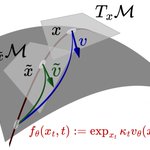
We present our latest work, accepted to NeurIPS 2025: 𝗥𝗶𝗲𝗺𝗮𝗻𝗻𝗶𝗮𝗻 𝗖𝗼𝗻𝘀𝗶𝘀𝘁𝗲𝗻𝗰𝘆 𝗠𝗼𝗱𝗲𝗹 (RCM), a mathematically rigorous extension of consistency models (CMs) to Riemannian manifolds, utilizing the covariant derivative and its Christoffel symbols. (1/6)


We rigorously prove the equivalence between Riemannian consistency distillation (𝐑𝐂𝐃), where a pre-trained model is distilled, and Riemannian consistency training (𝐑𝐂𝐓), where a model is trained from scratch, relying on the key property of the covariant derivative. (5/6)
1
114
RCM variants consistently and significantly outperform the Euclidean CM baseline in the few-step generation setup on various Riemannian manifolds on high-dimensional tori, spheres, and the 3D rotation group SO(3). Check out the details at arxiv.org/abs/2510.00983. (6/6)

104
Chaoran Cheng (🛫NeurIPS 26 Syndey) retweeted

🧬 ProteinZero: Towards the Self-Evolution Era of AI-based Protein Design
Can protein language models (PLMs) self-evolve through pure Online RL like DeepSeek-R1-Zero? YES!
Today, we introduce ProteinZero: the first framework that enables scalable, automated, and continuous self-improvement of protein inverse folding models. It achieves SOTA performance with significant improvements across every key metric: structural accuracy, designability, thermodynamic stability, and sequence diversity.
🚀 1. Zero-Supervision Self-Evolution
ProteinZero achieves fully autonomous evolution through online reinforcement learning. This eliminates the need for carefully-curated preference datasets, which are often costly to generate in-house. Instead, the model continuously improves by learning from experience with its own generated outputs.
⚡ 2. Enabling Online RL with Highly Efficient Proxy Rewards
Our efficient proxy rewards make online protein RL feasible for the first time:
◦ Novel fast ddG predictor: 236-760× faster than traditional methods (e.g.,FoldX).
◦ Enables complete RL training on CATH-4.3 in under 3 days on a single 8×GPU node.
These fast reward models make us the FIRST to successfully introduce online RL algorithms with multi-objective optimization to protein generative models, democratizing RL fine-tuning for the broader research community.
🔥 3. Overcoming "Mode Collapse" for Stable Optimization and Diverse Design
Online RL-finetuning of generative models is prone to "mode collapse"—a catastropic drop in diversity that lead to failed model training while limiting viable candidates for downstream experiments. We propose a novel remedy that PREVENTS mode/entropy collapse with embedding-level diversity regularization, which proves to be more effective than existing methods using Hamming distance. Our recipe enables stable and continuous improvement across extended iterations while improving the diversity of designed proteins.
🎯 4. Multi-Objective Optimization Miracle
ProteinZero simultaneously achieves significant improvement on multiple key metrics in protein design and generalizes well to held-out, out-of-distribution (OOD) backbones in CATH4.3:
◦ Designability: Improved TM-score 0.812->0.867 (0-150 aa) and 0.824->0.862 (150-300 aa), and improved PLDDT 79.983->82.326 (0-150 aa) and 83.783->84.154 (150-300 aa).
◦ Thermal Stability: FoldX ddG improved −20.878->-24.924 (0-150 aa) and −27.145->−32.805 (150-300 aa).
◦ Sequence Diversity: Increased 0.281->0.306 (0-150 aa) and 0.305->0.331 (150-300 aa).
◦ Sequence Recovery: Improves from 0.574 to 0.590 (0-150 aa) and from 0.570 to 0.580 (150-300 aa).
◦ Overall Success Rate (scRMSD < 2Å and FoldX ddG < 0) boosts from 84.45% to 90.13% (0-150 aa) and from 86.38% to 91.19% (150-300 aa), representing a 36-48% reduction in design failures against SOTA methods(e.g.,ProteinMPNN, InstructPLM).
🌟 5. Improving Sequence Design on Complex Structures and Functional Proteins
ProteinZero transforms unstable natural proteins into stable designs, with demonstrated cases achieving 233-858% stability improvements while maintaining >0.95 TM-scores. It particularly excels at challenging proteins: β-barrels, membrane proteins, long-chain proteins, and complex structures - expanding the accessible protein design space.
🧠 6. Accelerating AI-based protein design
ProteinZero establishes a critical step toward AI systems that accelerate drug discovery, vaccine development, and enzyme engineering. As models continuously self-evolve, we're entering an era where designing therapeutics for rare diseases and environmental enzymes can be achieved in days instead of years, empowering researchers worldwide to tackle pressing biological challenges.
Paper: arxiv.org/pdf/2506.07459
Breakthrough: First stable, scalable online RL for protein design
#ProteinDesign #OnlineRL #AI #Biotechnology #Research #Science #AIScience #CompBio


Check out our new work on finetuning flow matching models without model collapse! Thanks @FanJiajun67938 for the great work!

🔥 AI Models Now Can Self-Evolve Without Model Collapse: Our ORW-CFM-W2 method fine-tunes flow matching models like SD3 with NO human datasets! First-ever online RLHF for flow models with theoretical controllable convergence! 👇 jiajunf3.github.io/orw/ #rl #ICLR25 #iclr
2
214
Our latest work, "Statistical Flow Matching (SFM)," will be posted in tomorrow morning's poster session at NeurIPS 2024. We have updated the results with a better DiT-based model. Check it out at poster 2401! Also check out our code at github.com/ccr-cheng/statist….
#NeurIPS2024


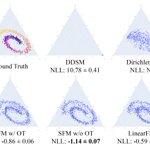
(1/4) Can we unleash the power of Riemannian Flow Matching on discrete generation? We introduce “Statistical Flow Matching (SFM)”, a novel FM framework on the manifold of parameterized probability measures inspired by information geometry. Check it out at arxiv.org/abs/2405.16441


