

საქართველოს ცენტრალური საარჩევნო კომისია / Election Administration of Georgia
7 Levan Pirtskheliani St.
Joined August 2016
- Tweets793
- Following1.4K
- Followers2.8K
- Likes91
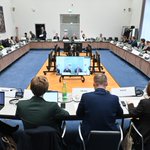





“Protecting the Online Election Campaign Space: Going Beyond Regulation” was the central topic of a working meeting organised by the Organization for Security and Co-operation in Europe Office for Democratic Institutions and Human Rights (@osce_odihr ). The meeting was attended by Giorgi Kalandarishvili, Chairperson of the Central Election Commission (CEC) of Georgia, and Tamar Kapanadze, Head of the CEC’s International Relations and Protocol Division.
The event comprised two working sessions. During the first session, participants discussed countries’ preparedness to combat disinformation and safeguard electoral integrity, as well as the importance of promoting media literacy. The second session focused on assessing experience in applying existing codes of conduct during online election campaigns and the results achieved.
The working meeting provided delegates from OSCE participating States, representatives of election administrations, election experts and civil society representatives with an opportunity to discuss key issues and possible measures beyond the scope of regulation in relation to the conduct of election campaigns and efforts to counter emerging threats, disinformation and manipulation.
The CEC Chairperson Giorgi Kalandarishvili participated in the panel discussions, sharing the experience of the Election Administration of Georgia.
“The international working meeting once again demonstrated that OSCE participating States face largely common challenges, particularly those related to digital disinformation, manipulation and their consequences. It also showed that the approaches employed by the Election Administration of Georgia to combat disinformation are broadly in line with those applied by other countries. This demonstrates that the Election Administration makes full use of all available means to provide the public with accurate and verified information, thereby contributing to safeguarding the electoral environment and ensuring that voters receive reliable information,” Giorgi Kalandarishvili stated.
As part of his official visit, CEC Chairperson Giorgi Kalandarishvili also met with Alexander Maisuradze, Ambassador Extraordinary and Plenipotentiary of Georgia to the Republic of Austria and Permanent Representative of Georgia to the Organization for Security and Co-operation in Europe (OSCE) and other international organizations based in Vienna. The parties discussed matters related to the ongoing visit, as well as opportunities for the Election Administration to engage and participate in various international projects. The meeting was also attended by Ekaterine Zodelava, Envoy Extraordinary and Plenipotentiary of Georgia to the Republic of Austria, and Tamar Kapanadze, Head of the CEC’s International Relations and Protocol Division.
The working meeting was held on 10 November in Vienna, the capital of Austria. Giorgi Kalandarishvili and Tamar Kapanadze participated in the event at the invitation of the OSCE Office for Democratic Institutions and Human Rights (OSCE/ODIHR).


The Chairperson of the Central Election Commission (CEC), Giorgi Kalandarishvili, met with the Ambassador Extraordinary and Plenipotentiary of the Republic of Turkey to Georgia, Mustafa Türker Arı.
During the introductory meeting, the parties discussed current election issues. Giorgi Kalandarishvili briefed the Ambassador in detail on the activities carried out during the 2024–2025 general elections, the challenges facing the agency, and future plans.
As the CEC Chairperson noted during the meeting, the Election Administration carried out complex operations during the last general elections and successfully implemented election electronic technologies. He also spoke about disinformation as a key challenge facing the institution and shared the agency's strategy in this direction with the Ambassador.
During the meeting, the two sides discussed strengthening cooperation and future prospects in this area.
Giorgi Kalandarishvili noted that providing objective information to international partners, including the diplomatic corps, and exchanging perspectives remains a priority for the Election Administration. Moving forward, the CEC will maintain active cooperation with the Embassy of Turkey.
The meeting took place at the Central Election Commission on November 5.


55
The Central Election Commission (CEC) of Georgia has once again confirmed its compliance with the requirements of the international quality management standard ISO 9001:2015 for election management and successfully passed the international surveillance audit. To assess the quality management system, the audit was conducted in two stages. An internal audit was carried out on 24 July 2026 by an auditor from Management Systems LLC, followed by a remote surveillance audit on 2 September 2026 conducted by the international auditor LL-C (Certification) Czech Republic a.s. The CEC successfully passed both audits and retained its ISO 9001:2015 international certificate.
According to the international auditor, among the strengths and advantages of the Georgian Election Administration’s Quality Management System (QMS), particular emphasis should be placed on its ability to operate effectively in a complex and changing environment: “Despite political fluctuations, attempts to spread disinformation, and information pressure, the Election Administration effectively fulfils its constitutional obligations to the Georgian people.”
As part of the audit, the documented management system was assessed against high professional standards. It was confirmed that the organisation’s management system is capable of meeting the requirements of the relevant standards and achieving the outcomes expected of accredited certification, as outlined in the ISO-IAF Communiqué on Accredited Certification.
According to the auditor’s assessment, the organisation meets and properly implements the requirements of its management system and is capable of ensuring the continuous delivery of services in compliance with customer requirements and applicable laws and regulations, with the aim of enhancing customer satisfaction.
This conclusion is based on an assessment of the level of fulfilment of individual standard requirements, as confirmed by the compliance matrix included in the audit report. The audit objectives have been successfully achieved.
The audit once again confirmed that the CEC’s core areas of activity—including its strategic goals and objectives, ongoing activities and projects, services provided, performance monitoring and reporting mechanisms—comply with all applicable quality management standards. This demonstrates that quality management is an integral part of the Election Administration’s day-to-day operations and institutional development.
The ISO standard is one of the most widely recognised international frameworks for quality management. It helps organisations systematically improve their performance, manage processes effectively, ensure transparency and provide customer-oriented services.
It is worth noting that, for the CEC, maintaining the international quality management standard demonstrates not only effective internal management but also a high level of accountability and transparency towards the public. This further confirms that the Election Administration operates in accordance with international principles and best practices.
The CEC first obtained ISO certification in 2019, confirming that its quality management system and business processes fully complied with the requirements of the international standard ISO 9001:2015. Furthermore, the Central Election Commission of Georgia was the first election administration among the Eastern Partnership countries to obtain this certification.
The renewed confirmation of compliance with the requirements of the international standard marks another important milestone for the CEC in its ongoing quality management, institutional development and continuous improvement of its operations.

Representatives of the Central Election Commission (CEC) of Georgia and the Supreme Election Commission (SEC) of the Autonomous Republic of Adjara observed the parliamentary elections held in the Republic of Serbia. CEC members, Dimitri Javakhadze and Giorgi Chikaberidze, along with SEC Chairman Paata Keshelava and Nestan Nakashidze, Head of the SEC Public Relations Department, monitored the Early Parliamentary Elections in Belgrade, the capital of the Republic of Serbia.
Delegation members monitored the voting process across several polling stations. As international observers, they observed the opening of polling stations, the voting process, and the closing of the polls.
As part of the official visit, members of the Georgian delegation, alongside representatives from Election Administration bodies of various countries, met with Marko Janković, Vice President of the Electoral Commission of Serbia, and commission member Marija Jovanović, with whom they discussed key electoral issues. They also held a meeting with Veljko Perović, a member of the Electoral Commission of Serbia.
The international observation program took place from October 23 to October 27, while the Early Parliamentary Elections in the Republic of Serbia were held on October 25.
Representatives of Election Administrations from various countries participated in the international observation program.


70
A delegation from the Central Election Commission (CEC) of Georgia participated in the 7th General Assembly and International Conference of the Association of World Election Bodies (A-WEB), held in Manila, Republic of the Philippines, from October 12–16, 2026.
Within the framework of the event, leadership and delegates from electoral management bodies across multiple jurisdictions deliberated on the advancement of electoral processes, prevailing challenges, and the exchange of international best practices. The meetings assembled more than 100 delegates representing nearly 50 countries.
The key discussion topics included modern approaches to election administration, technological innovations, strengthening trust in electoral processes, challenges facing democratic processes, and access to reliable information for voters.
CEC Chairpeson, Giorgi Kalandarishvili actively participated in the proceedings and professional discussions of the General Assembly and International Conference. He shared the experience of the Election Administration of Georgia with the participants and discussed common challenges and future collaboration opportunities with foreign colleagues.
CEC Chairperson, Giorgi Kalandarishvili and Head of the CEC Office/Legal Department, Giorgi Santuriani also held working meetings with representatives of Election Management Bodies from various countries and international partners. During these meetings, the parties discussed opportunities to deepen professional relations, exchange experience, and enhance future cooperation, including participation in international election observation and professional missions, programs, and initiatives.
Special emphasis was placed during the international conference on electoral technologies, reinforcing public confidence in digital solutions, and the integrity of electoral processes in the context of the rapid development of artificial intelligence and digital technologies.
As part of the visit, representatives of the Georgian delegation attended a live demonstration of electoral technologies. They were briefed on the technical capabilities of the displayed systems and their practical implementation within electoral procedures.


Elene Bobokhidze, a representative of the Strategic Communications Department of the Central Election Commission (CEC), participated in the OSCE Human Dimension Conference. The event was supported by the OSCE Office for Democratic Institutions and Human Rights (ODIHR).
Over the course of several days, conference participants discussed a wide range of issues, including democratic institutions and elections, the judicial system and rule of law, freedom of expression and media, gender equality, and other key topics.
On October 12, during the session dedicated to democratic elections, the CEC representative highlighted Georgia’s experience.
In her address, she discussed the elections held in 2024–2025, the practical experience gained in utilizing electronic voting technologies, the challenges associated with disinformation, as well as the current and future activities of the Election Administration of Georgia.
The conference took place in Warsaw from October 5 to October 15. Representatives from OSCE participating States attended the event, spending several days deliberating on issues related to human rights, democracy, the rule of law, and fundamental freedoms.


57
Representatives of the Central Election Commission (CEC) of Georgia observed the general elections held in the Federative Republic of Brazil. Ketevan Dangadze, Head of the Strategic Communications Department, and Tamar Kapanadze, Head of the International Relations and Protocol Division of the same Department, observed the elections in Brasília, the capital of Brazil.
The CEC representatives participated in the International Guests Program at the invitation of Brazil’s Superior Electoral Court (TSE). On election day, they observed the opening of polling stations, the conduct of voting, and the vote-counting process. They also familiarized with the use of electronic technologies in the electoral process.
As part of their official visit, the CEC representatives met with the President of Brazil’s Superior Electoral Court and other officials of the institution. During the meetings, they received detailed information on preparations for the elections and the logistical arrangements involved in their organization.
The first round of Brazil’s presidential elections was held on 4 October. Voters also elected the Vice-President, state governors, senators, and members of the Chamber of Deputies. The second round of the presidential election is scheduled for 25 October.


1
75


Polling stations have opened, voting has begun Today, by-elections for the municipal representative body the Sakrebulo are taking place.
The by-elections are being conducted under a majoritarian system in #Vani, #Tsalka, #Dmanisi, and #Akhmeta municipalities, where voters will elect four majoritarian members across these local councils.
Polling stations have opened and voting is underway. A total of seven polling stations are open across all four electoral districts for the by-elections, including four in Tsalka. As a reminder, polling stations are open in Akhmeta (in the village of Kasristsqali); Dmanisi (between the villages of Velispiri and Ganakhleba); Tsalka (in the villages of Imera, Bareti, Sabechisi, and Livadi); and Vani (in the village of Pereta).
The total number of registered voters is 2,225. A total of 50 voters have submitted requests to the Election Administration to vote using a mobile ballot box.
Seven majoritarian candidates nominated by two political parties are registered for the elections. Candidates from the political subjects 'Georgian Dream' and 'Strong Georgia - Lelo' are registered in Dmanisi, Tsalka, and Vani, while only a 'Georgian Dream' candidate is registered in Akhmeta.
It is worth noting that the electoral process is being monitored by 56 observers from 7 local organizations, while 187 representatives from 8 media organizations are covering the process. We urge voters registered in the respective majoritarian districts to be active and take part in the elections.
We would also like to remind you once again that upon arriving at the polling station, voters must present a Georgian citizen ID card or a Georgian citizen passport. Voting continues until 8:00 PM.
At polling stations where voting is conducted electronically, the registrar will hand the voter a specially designed frame-envelope along with the ballot paper. At an electronic precinct, the voter must use a special marker to color in/mark the inner space of the circle next to only one preferred candidate, and place the ballot into the vote-counting machine beneath the slot cover using the frame-envelope. Voting is secret. Photography and video recording inside the voting booth are prohibited.
We would also like to remind you that the CEC Contact Hub: 2 51 00 51 will be operational throughout the day. Additionally, the Media Center will function continuously, providing media representatives and stakeholders involved in the electoral process with access to information on matters of interest.

103
On the occasion of the International Day of Older Persons, representatives of the election administration congratulated older citizens on this day.
The election administration places particular importance on hearing the experiences, recommendations, and views of older generations on electoral matters. Highlighting this importance and respect, as well as raising awareness among older voters, supporting their participation in the electoral process, and familiarising them with available services were the objectives of the activities carried out by the election administration today to mark the International Day of Older Persons.
To mark the occasion, Central Election Commission (CEC) Chair Giorgi Kalandarishvili, together with CEC Spokesperson Natia Ioseliani and representatives of the administration, visited the International Humanitarian Union “Catharsis” in Tbilisi and presented its beneficiaries with symbolic gifts. During the meeting, Giorgi Kalandarishvili spoke with the organisation’s beneficiaries about important election-related issues, heard their views, and learned about their experiences of participating in elections.
In addition, to mark the International Day of Older Persons, CEC Chair Giorgi Kalandarishvili, Deputy Chair Giorgi Sharabidze, and CEC Spokesperson Natia Ioseliani visited older voters living in Tbilisi and the village of Tserovani — 97-year-old Tina Giorgobiani and 101-year-old Levan Jashi. They congratulated them on the occasion and, as a token of respect, presented them with commemorative documents and symbolic gifts on behalf of the election administration.
Communicating with voters of different age groups and supporting their active engagement has been and remains one of the key priorities of the election administration.


1
84
A blood donation campaign was held at the Central Election Commission. CEC Chair Giorgi Kalandarishvili, along with representatives of the CEC Office and District Election Commissions, voluntarily donated blood for patients in need.
The blood donation campaign was organized in cooperation with Natalia Kvantaliani Central Blood Bank LLC, which supplies around 80 clinics in Tbilisi and the regions.
Election Administration staff have been regularly participating in blood donation campaigns for many years and, in cooperation with various blood banks, contributing to replenishing blood supplies.


The Election Administration continues active preparations for the October 3 by-elections. The diagnosis and final software configuration of the electronic electoral technologies have been completed at the CEC’s operational and warehouse facility. As part of the preparations, 8 electronic voting and vote-counting machines, 9 voter verification devices, and 7 tablets have been prepared for the elections, 3 of which are designated for polling stations where voting will be conducted using the traditional method.
The CEC’s logistics team has already delivered the electronic electoral technologies to the District Election Commissions in accordance with the established schedule. In turn, the District Election Commissions will deliver the technological equipment to the respective Precinct Election Commissions on the day before the polling day.
A total of 7 polling stations will be opened for the October 3 by-elections. Of these, voter verification and vote-counting machines will be used at 4 polling stations.


38
Kristina Tolordava, an employee of the International Relations and Protocol Division of the Strategic Communications Department of the Central Election Commission (CEC) of Georgia, participated in an international conference.
The conference, titled “2026 Summit: Resilience, Cooperation and Electoral Integrity – Elections in the 21st Century,” was held in Mexico City, the capital of the United Mexican States. The three-day conference focused on key topics including “Regional Challenges and Solutions: Elections in a Changing Environment”; “21st-Century Electoral Challenges, Disinformation and Digital Violence”; “Natural Disasters and Health Risks”; “Political Violence”; “Artificial Intelligence and Technologies”; “Artificial Intelligence, Human Development and Elections,” as well as other important issues.
The conference was organized by the National Electoral Institute of the United Mexican States and brought together representatives of election management bodies and international organizations from various countries. The conference featured active and interactive working group sessions.
Kristina Tolordava actively participated in the work of a working group that addressed issues related to political violence and citizen engagement. She also contributed to discussions on matters related to electronic technologies, sharing Georgia’s experience in the successful introduction and use of electronic technologies during the 2024 elections.
During the session “Natural Disasters and Health Risks,” she presented Georgia’s experience of conducting elections in 2020 amid the COVID-19 pandemic.
Kristina Tolordava participated in the conference, held in Mexico City on 23–25 September, at the official invitation of the National Electoral Institute of the United Mexican States.


64
Ballot papers have been printed for the October 3 by-elections of representative bodies of municipalities (Sakrebulos).
The ballot papers designated for the Precinct Election Commissions in Vani, Akhmeta, Dmanisi and Tsalka were printed in Tbilisi at “Favorit Style”.
A total of 2,450 ballot papers were printed, of which 1,750 are designated for polling stations where voting will be conducted using electronic technologies, while 700 ballot papers are designated for polling stations where voting will be conducted using the traditional method.
CEC Spokesperson Natia Ioseliani observed the ballot printing process on site. According to her, the ballot papers were printed in full compliance with the relevant standards.
The ballot printing process at the printing house was monitored by the Financial Department of the Central Election Commission (CEC), while the Election Technology Support Team of the Election Process Management Department checked the compatibility of the ballot papers with electronic vote-counting machines.
The Central Election Commission will deliver the ballot papers to the respective District Election Commissions within the timeframes established by law.


83
The Chairperson of the Central Election Commission (CEC), Giorgi Kalandarishvili, met with representatives of international organizations and diplomatic missions accredited in Georgia. The meeting was opened by Giorgi Kalandarishvili, who provided a detailed overview of current electoral issues and the preparations underway for the October 3 By-elections.
The CEC Chairperson briefed participants on the registered electoral subjects, observer organizations and media outlets, as well as the relevant registration deadlines. He also spoke about the procedure for appointing members of election commissions and noted that training for members of district and precinct election commissions is currently actively underway.
During the meeting, the CEC Chairperson also highlighted the ongoing activities of the election administration, including meetings with young people and educational activities conducted across the regions. According to him, more than 5,000 young people have participated in meetings held through various projects implemented in cooperation with different institutions.
Giorgi Kalandarishvili also highlighted the impact of disinformation on society and the electoral process. He presented the election administration’s strategy for countering disinformation and introduced the CEC’s new website, disinfo.cec.gov.ge, which was developed considering an international experience.
The CEC Chairperson also presented the election administration’s journal, “Elections 360 Degrees,” to the participants of the meeting. He noted that the publication offers readers objective, impartial and professionally prepared content in both Georgian and English and is available in both print and digital formats. The journal has already been translated into the languages of ethnic minorities and will be published in the near future.
The meeting with representatives of international organizations and diplomatic missions accredited in Georgia was held today at the CEC. The meeting was also attended by CEC Deputy Chairperson Giorgi Sharabidze, Head of the CEC Office/Legal Department Giorgi Santuriani, Head of the Strategic Communications Department Ketevan Dangadze, Head of the Election Process Management Department Eka Tsabashvili and Head of the International Relations and Protocol Division Tamar Kapanadze.


72
The Deputy Chairperson of the Central Election Commission (CEC) participated in the Regional Forum. Organized by the International Foundation for Electoral Systems @IFES1987 , the Regional Forum was held remotely for the regions of the Americas, Asia, Europe, the Middle East and North Africa.
At the Forum, the Deputy Chairperson of the CEC discussed Georgia’s experience. In his remarks, he elaborated on disinformation as one of the major challenges of our time. Giorgi Sharabidze also presented to participants the strategy employed by Georgia’s election administration to combat disinformation. He further provided a detailed overview of the strategy and methodology for detecting disinformation, as well as key findings.
During the meeting, representatives of election administrations from various countries and international organizations also discussed election administration, promoting an inclusive electoral environment, and enhancing the transparency and credibility of the electoral process. They also shared recommendations and experiences in these areas.
It is noteworthy that the International Foundation for Electoral Systems (#IFES), in cooperation with international organizations and election administrations from various countries around the world, is preparing to hold a Global Summit. The main theme of the Summit is “Resilience, Cooperation, and Integrity – Elections in the 21st Century”. The Regional Forums, held in July and August with the participation of representatives from various countries, form part of the preparatory work for the Summit.

58