






Pinned Tweet
👷Surviving the AI Capex Boom👷
Big Tech's AI buildout is transforming markets but history suggests caution. What should investors do?
🤖 AI Investment Boom
🚂 Echoes of Past Booms
📉 Rising Capex Firms Underperform
🏭 Magnificent 7: The New Utility?
🔎 Finding AI Early Adopters
🌊 Value Investing: Navigating Hype Cycles

Kai Wu retweeted

Warren Buffett made over $100 billion on Apple.
What did he see that traditional valuation models missed?
I sat down with @ckaiwu of Sparkline Capital to unpack that lesson, and why AI's next big opportunity may be the companies using it, not building it.
youtu.be/oisYFBuLFSI

Kai Wu retweeted

The AI boom is following the same pattern that led to the collapse of the internet and railroad buildouts.
Most investors are not ready for the fallout.
I sat down with quant @ckaiwu to walk through how the AI market rally could end, the outlook for hyperscalers and chip names, why he doesn't like picks and shovels stocks, and where he sees the best opportunities today.
Kai is one of the smartest investors in the industry and he has been ahead of the AI trade every step of the way.
TIMESTAMPS:
0:00 - Most stocks are crashing
3:27 - Bearish on AI boom
5:50 - 3 stages of AI buildout
8:17 - Circular financing
11:46 - Do Anthropic and OpenAI have moats?
17:06 - $2 trillion AI lab IPOs
18:25 - Chips and boom-bust cycle
22:51 - Avoid picks and shovels
25:10 - Lessons from historical disruption
29:18 - Best opportunities today
34:05 - 2 stocks with moats
37:58 - Picking stocks with AI
41:17 - Follow Kai
Kai Wu retweeted

“Even if you have the information and it's reliable, its valuation implications are not as clear cut as something financial and tangible.”
On the latest Intangible Economy, @aedmans joins @ckaiwu to explore what markets fail to value:
✅ A public list whose stocks outperformed over 28 years
✅ Why Costco paid double the wages—and analysts criticized it
✅ Why publishing an investing edge doesn’t necessarily erase it
✅ What employee satisfaction, patents, and customer reviews reveal
✅ The difference between a cheap stock and an undervalued business
✅ Finding your edge through knowledge, endurance, and independence
Kai Wu retweeted

phew, glad I'm more of a Sparkline Analytics bro thnx to @ckaiwu
app.sparklinecapital.com/


Kai Wu retweeted

Incredible new investment tool via @ckaiwu
ETF screener
Fund comparisons
Compare a fund to its own history
and my favorite...analyze a random fund!
RIP to dozens of websites
app.sparklinecapital.com/
🔭 Sparkline Analytics: A New Lens 🔭
Do you have the tools to spot the crowded AI bets and stale value tilts hiding in your portfolio?
🛠️ Built for Fund Diligence
📉 AI Infrastructure Unwind
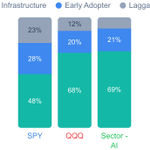
🤠 Adopter-Infrastructure Frontier
😢 Value's Lost Decade
🧩 Building Factor Portfolios
🦁 Intangible Value in the Wild

8/ Intangible Value in the Wild 🦁
So we went hunting, screening the universe of ~3,500 equity funds using both holdings- and returns-based filters to find those with this elusive factor exposure.
🔗 app.sparklinecapital.com/scr…

9/ Full Paper 📚
Blog: sparklinecapital.com/post/sp…
PDF: blog.sparklinecapital.com/wp…
Explore the app 🔭: app.sparklinecapital.com/?sr…
Kai Wu retweeted
“The returns always come later than people thought.”
@verdadcap joins @ckaiwu on the latest Intangible Economy to discuss:
✅ How 40%+ of private equity became software
✅ Why recurring revenue may not be the moat investors thought
✅ Private credit vs. private equity
✅ Whether AI CapEx is becoming a crowded bet
✅ Why being right about AI may not mean being right on the investment
✅ The old-school value opportunity Dan sees in Japan
Is AI demand sustainable? How quickly will it diffuse through the economy? And where will the economic value ultimately accrue?
To help answer these questions, @azeem joined me on The Intangible Economy for a deep dive into the state of the AI economy.
Spotify: bit.ly/4vDnBbx
Apple: bit.ly/4wew9GR
YouTube: bit.ly/4pC9z8W

Kai Wu retweeted

Highly recommend this interview by Kai Wu of Sparkline Capital (one of my favorite researchers) and Professor Damodaran on valuations and AI, SpaceEX, the big market delusion, and lots more
youtube.com/watch?v=vWx3kQuB…
Kai Wu retweeted

We can finally say AI isn't killing jobs.
A new paper from me, @tryramp, and @RevelioLabs uses firm-level spend and workforce data across 21K U.S. businesses to measure AI's impact on jobs.
Firms that adopt AI heavily grow headcount 10% over two years following adoption. Low adopters see no statistically significant change.

Kai Wu retweeted

How to keep AI spend flat while token usage grows exponentially: Not with friction and spend alerts. With better defaults, routing, and caching.
Better Defaults (not Usage Caps) – Engineers can choose any model they want, but defaults matter. We’re experimenting with defaulting to open weight models like GLM 5.2 and Kimi 2.7 through our LLM gateway, while still encouraging engineers to choose the right model for the task. 91% of our employees were never hitting their usage caps, so instead of lowering caps and driving up alerts, we're moving to cheaper defaults. Note that code reviews use a diversity of models, so they can check each other's work.
Better Routing – In our custom harnesses, we preprocess prompts and route to the best model for the job, considering cache hits and model pricing. For instance, you may want a frontier model for planning, but not for execution where they can be overkill. Ultimately, humans shouldn't be choosing models - AI can automate this task.
Better Caching – Cache misses are the easiest way to drive your cost up. All of our requests are cache aware, so we’re reusing a warm cache wherever possible. For example, our cache hit rate went from 5% → 60% in LibreChat once properly implemented.
Keep Context Lean – Start fresh sessions when switching tasks. Scope file context narrowly. Disconnect unused tools. Don't just compact. The goal isn't fewer tokens used, it's fewer tokens wasted.
Better Visibility – Our engineers can use as many tokens as they want, from whatever model they want, but we’ve made usage visible – and the more you spend on AI, the more impact we expect.
The goal isn't to suppress usage. It's to build the infrastructure that makes exponential growth sustainable.
Putting this into practice has cut our AI spend nearly in half, while our token usage continues to grow.
