






ElCabron retweeted

🚀 Version 2.0.24 live : New unlimited username & email search, the OneQuery API, and Noimosiny as a new data partner.
🆓 Free, unlimited username and email search
Powered by Consensus (OSINT Experts Society's open-source tool), it combines 19 lookup projects (Maigret, WhatsMyName, Sherlock, Holehe and more) into one search, and standardised results. Over 9,000 sites supported.
🔌 OneQuery API - Every Major OSINT API-Data Provider in one.
Run a single API-Query across 100+ premium data services (Epieos, FaceCheck.ID, PIPL, OSINT Industries, IntelX, Dehashed and more). One standard response. Included in a standard subscription. We do the heavy lifting.
🤝 Noimosiny joins as a data partner
Reverse email lookup across 250+ platforms, including ones most sources miss (TikTok, Strava, Etsy, AliExpress). Now a module in Email Intelligence.
👉 Try the free search: usersearch.com
👉 API : lnkd.in/e6rDDsW2
👉 Consensus project: osint.ngo/tools
#OSINT #OSINT4Good #DigitalInvestigation #CyberSecurity #OpenSource #API #UserSearch


ElCabron retweeted

prowler v5.50.0 — Prowler is the world’s most widely used open-source cloud security platform that automates security and compliance across any cloud environment. Connect your agents now and build on the Agentic Cloud Defender. ktp.sh/EsWnPqFg3p

ElCabron retweeted

Comunidad GRATUITA de Inglés para Devs
Recursos propios y curados
minicursos
rutinas a tu ritmo
práctica en vivo
30 lugares gratis y para siempre
Yo pongo los recursos; tú, las ganas de participar
Escribe "comunidad" y te mando la invitación por DM


ElCabron retweeted

Security skills for AI coding assistants and agentic systems
github.com/RedHatProductSecu…

ElCabron retweeted

Learn AI agent security in 5 days.
Mon: HiddenLayer
hiddenlayer.com/research/how…
Tue: AIGoat MCP labs
github.com/AISecurityConsort…
Wed: Alice on bytecode
alice.io/blog/poisoned-pytho…
Thu: Wiz Black October
wiz.io/blog/black-october-fo…
Fri: arXiv 2610.37734
arxiv.org/abs/2610.37734
ElCabron retweeted

(Automated) Pentesting is already dead
I found it interesting how many people misunderstood and ignored the context of my earlier post here, which was about (Tenzai) securing a $75M seed round, and more specifically AI powered automated penetration testing. I’ve been doing a wide range of pentests & audits (over 400 gigs) for about 22 years now. So I know a thing or two about it. But I still consider automated pentesting dead. Not in the way you might have thought though. I initially wrote a longer draft, but eventually folded and let Gemini shorten and polish it, because why not? :)
Why Automated Pentesting is Dead
It’s dead in the same way that running automated tools like Nessus and delivering 50-page reports were already dead 10 years ago. The new era of AI-powered automation is reviving that exact, low-value approach.
I’m not against AI—it will get better. I’m occasionally paying over $1k/month for tokens myself. It’s already working for many things, but it’s not yet scalable for efficient pentesting. Not because tokens are too expensive (they’ll get cheaper) or models aren’t reliable (they’ll improve, XBow is an example). It’s dead for two interconnected reasons:
The Problem of Noise and Fatigue
The same way old Nessus reports filled with tens or hundreds of valid findings were ignored, this new era of AI-generated issues will also be ignored. Right now, a report might have 2-3 golden findings. Soon, AI minion agents will tear your network apart and deliver 100 perfectly valid and severe issues.
If you’ve done quarterly tests against Fortune-50/500 customers for half a decade and delivered similar results over and over, you know what I mean. Remediation prioritization and fatigue are a serious issue. You eventually realize that what we sell (hacking, tests, security) is not the priority of money-making corporations. It's an obligation, often for compliance reasons, among other things.
Don't judge a CISO for archiving your all-red report and fixing only five issues by next day, week, month, year. Your “critical finding” is simply a business decision. The way it works is more like: “Will it cost us $1M if exploited?” If the answer is no, it’s not categorized, prioritized, or handled as critical, because doing so initiates a complicated chain of internal actions that itself costs time and money. So in many cases the reason pentests are not efficient is not due to lack of proof, but lack of business priority. You don’t need a functional PoC (human or LLM generated) to address that. A shell (vs plain text finding) on a system that inherently is not business critical in an infrastructure, will not magically make it a priority. This is a big promise deliverable by AI automated pentest startups. It sure works, and they can make it rain shells, but that won’t solve any problem that’s not already been addressed by typical pentests.
The Real Bottleneck
The security industry has just started giving customers a break from all that automated testing report noise by focusing on deep, manual labor research. It's finally the norm to deliver just half a dozen findings that really matter—not some HSTS header missing nonsense. I’m just hoping that the new wave and era of AI powered automated testing will not bring back those now-just-more-accurate Nessus or Core Impact reports. Ah, I forgot to mention; we have already started, enjoyed and wrapped up an era focused on automatic finding,exploit based validation and reporting of vulns. I’m not saying where we’re heading is the same, but it looks too damn similar. Just way more reliable and way cooler than a python script reasoning with an IF loop, whether to sling an SMB1 exploit or not. Does that mean we should stop finding and reporting things this way? Not really.
The biggest issue isn't the accuracy of results. Well, it was, for a period in the mid 2000s. but we got better at it and tools were improved. It's that the receiving end of these automations and reports are not automated. The pipeline and people who handle those findings have not improved as much as the tools have. It doesn’t matter how many critical issues are found and exploited; they are still handled by humans, treated as business decisions, and reviewed case-by-case.
Black-box testing is inefficient
Delivering 50 valid findings via Nessus, Burp Scanner, or their LLM-powered equivalent is simply not efficient. A black-box test is inherently inefficient nowadays because it’s not finding and reporting problems at their core and root. It just finds and reports symptoms that resurface over and over. Ever logged in to an enterprise’s Qualys or Tenable vulnerability management platform? It’s not a pretty scene, I can tell you! That is peak automated pentesting results at scale!
For as long and as many times as you repeat a black-box pentest, you will find new and repetitive issues. Don’t believe me? Ask Fortinet. They still consistently deliver you SQLi, CMDi and vanilla mem-corruption patches on a monthly basis, all year and every year. All found and exploited via black-box testing by your favorite APTs. Yes, that's also a form of testing. They just don’t deliver their findings to the vendor. Fortinet is hardly an isolated case and vendor. If it was meant to be fixed this way, Bug bounty platforms and similar businesses would not be doing so well. They print money, for themselves and hunters, relying on the fact that for over two decades we as an industry have failed to properly and fundamentally fix some of those issues. And btw, if a company has actually followed the proper (security) maturity path before they expose themselves to Bug Bounty platforms, it means that they have already gone through multiple rounds of all sorts of pentests.Yet people still find good stuff, a lot of them actually! Let’s not go down the “we were aware of the issue” or duplicate rabbit holes there. Moreover, if AI based automated testing is so good and the future (well, it is the future), it begs the question of why are they getting banned to operate autonomously on bug bounty platforms? Is it the noise? Are these platforms monopolizing “the market” for their own future agent implementations?
The Efficient Way: Security Engineering
Ok, what’s the more efficient way of doing things then? I’m glad you asked. Security engineering is the very short answer.? Check in with any respected pentesting and consulting shop. You will find the majority of their customer engagements are not black-box tests.
Typical consulting shops prefer white-box audits—reviewing your code, configurations, infra-as-code, or cloud security posture. They basically sell security engineering as a service.
The idea is to deliver the most bang for the buck in the shortest time possible, often a week or two. People don’t hire them for low-hanging fruit; they hire them to go deep. They find logical issues or complicated chains of problems that have an unexpected impact. Their JIRA is likely already full of findings from their own automated tools.
Interestingly, if you review some of their reports, PoC or actual demonstration of successful exploitation is absent in those security engineering focused reports. The proof is already in the code. Exploitation is a redundant and time consuming task with no real added value for the customer. In Red Team engagement? Absolutely! But in pentests, not really.
Statistically, and from personal experience, you find more and better vulnerabilities when you can read the code or reverse-engineer the system, compared to blindly poking something exposed over the network. You focus on key components and narrow down to the root cause. When you notice a pattern, you stop reporting individual cases and write about the nature of the repeated insecure practice. You put your finger on the root cause in the code. If you’ve got time and the customer is also capable of consuming it, you may also deliver long-term detection and mitigation solutions. A fuzzing harness, a CodeQL query, a CI/CD change recommendation, etc. You explain to them the variant analysis playbook. Fill up that Executive Summary section! Typical security engineering workflow. You know the drill. THAT IS MORE EFFICIENT! It lasts beyond your two weeks of pentest, and it can actually reduce work on the customer side in the long run.
In contrast, typical black-box pentests can be summarized in a few sentences: Patch your stuff, update your dependencies, audit your passwords, don't get phished, and follow hardening guidelines. Then fix this, this, this, this, this, this, this, and this. You’ll be good, until next year, when we come to redo the test and tell you the same things again, in our updated report template and with slightly improved language.
AI + SAST: The Real Game Changer
This is where things are actually starting to look bright. We have never been so efficient and reasonably reliable at scale at studying, understanding the code and finding issues in the code and config!
We’ve gone through multiple iterations of SAST (Static Application Security Testing) and DAST (Dynamic Application Security Testing) solutions. They scaled up, but so did their false-positives and the human resources needed to review the results. CodeQL, Semgrep, and similar tools have gotten much better and are now part of most engagements because they work well when fine-tuned.
So how is AI-powered SAST different from AI-powered automated pentest? In the case of classic (automated) pentests, we had a semi-working solution that scaled but didn't solve root causes—it pointed out symptoms at scale. In the case of AI-powered SAST, because of the nature of white-box tests and how good models are becoming at understanding code, they can dig deep at a very reasonable cost and time: find the root cause of issues, find all variants of it, produce a Proof of Concept, and, as the cherry on top, also deliver a patch for it! That still needs some human intervention, but the value is immense.
We have token-eating monsters at Google, OpenAI, and other places doing exactly that. Many have experimented with similar pipelines at home, winning at a 10x, 50x, or 100x ROI in potential bug value compared to the cost of used tokens. Compare that to the black-box approach: “I sent 100 requests at this endpoint, after a few hours of poking blindly, to confirm a SQLi. Here’s an OWASP link and a Python PoC. To save tokens, I leave it to you and your developers to find the other 100 variants of this issue.”
Turns out with $200 worth of tokens you can either bang your blackbox testing agent around until it finds a few bugs remotely and exploit them and call it a win, or spend the same amount of money and a fraction of time to find, triage, exploit, variant analysis, patch and report a dozen of them by consuming code.
These token-eating monsters will, and have already, create their own chain of bottlenecks and noise problems. Most of you have probably heard or participated in one revision of the FFMPEG vs Google AI debate. But on the bright side, we already have a (mostly) functional solution for that. It is less freakish to let an LLM send a pull request, than letting it manage your network infrastructure and wipe a database or two on its way.
Conclusion
Please don’t be mad at me when I say pentesting, in the classical form we know it, even with an AI engine swap, is dead.
It’s not completely dead. Different testing approaches should still co-exist, and bug bounty platforms will keep growing. But at the end, if we measure the outcomes, especially with the trajectory that AI-powered SAST and DAST is going, it will be very hard for the black-box approach to catch up in terms of long-term efficiency and impact.
In 2025, after watching all sorts of crazy feats APTs pull off, if you’re still trying to answer the question of whether your network can be hacked, you need a wake-up call. The answer is ALWAYS yes. You’re in a much better state if the question is more about HOW, on a case-by-case basis, which is the typical black-box focus. But if you’re aiming for a more long-term and effective approach to identifying and fixing issues, black-box (automated) testing is probably among the least efficient ways to get there.
Knowing that we’re doomed to get breached one way or another doesn't make those tests irrelevant. It just means it's better to focus on what happens after a breach and improve there instead. LLM-powered SOC? Token-eating XDRs? AI-powered deployment following security best practices? And just when I was about to wrap up this draft, Google announced their Agentic SOC! That should mean something, looking at the direction they are taking.
Whatever is coming down the pipe, I’m curious about it. I just wouldn't put my money on LLM agents running Nmap and blindly slinging payloads until one sticks. If they automatically identify the target, fetch a local copy to reverse or audit, find a bug, and then exploit it (Hello XBow)? Hell yeah! I’m in for that. But then again, isn’t that sliding into the SAST side of things?
As a bonus data point, I asked ChatGPT to review the entire history of OWASP-TOP10 for as long as it has been a thing. Apparently bug classes just swap ranks. New ones occasionally emerge, but they never disappear! How many more pentests and exploits do we need to teach people how to properly handle ../../.. ?


ElCabron retweeted


We built Control Room, a central system to track model workloads across our research infrastructure and stop them quickly when safety or security concerns arise.
It connects every research inference workload, including agentic sampling for model training and evaluation, data processing, and more. This works together with our misalignment monitoring systems, and halts model output within 35 seconds of a decision to intervene to stop or pause a job.
Control Room is just one part of our holistic approach for safe frontier model training and deployment.
openai.com/index/control-roo…

ElCabron retweeted

Do You Wonder How Chinese APT and other hackers are able to penetrate our mobile networks and eavesdrop on our communications as well as track our locations?
The first step is to build your own 4g/5G Mobile Bast Station!
Part of our Signals Intelligence and Subscriber Pro training packages
hackersarise.thinkific.com/b…

ElCabron retweeted

That's f*cking alarming.
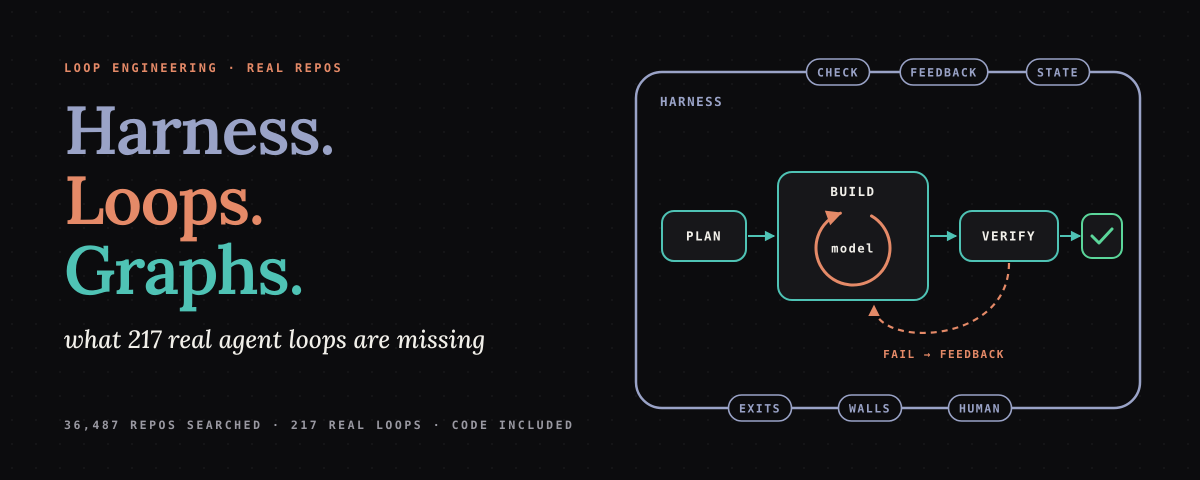
A study of 217 AI agents left running alone found only 76 had anything checking their work.
The rest just trust the AI when it says it's done.
One prompt fixes that in Claude Code:
step 1 → paste the prompt below into Claude Code on Opus 5.5
step 2 → give it any task in one line, like fix the signup page
step 3 → before it starts, it sets up a check for what done really means
step 4 → Claude can't change that check, so it can't just say it's finished
step 5 → if the check fails, it tries again and remembers what didn't work
step 6 → it stops when the check passes, after 10 tries, or when it's stuck on the same error
step 7 → your phone gets a message saying it's done or where it got stuck
Find the full prompt below.
Then read the article below on what the rest of those agents are missing.


ElCabron retweeted

this PDF is a f*cking cheat code for anyone running coding agents
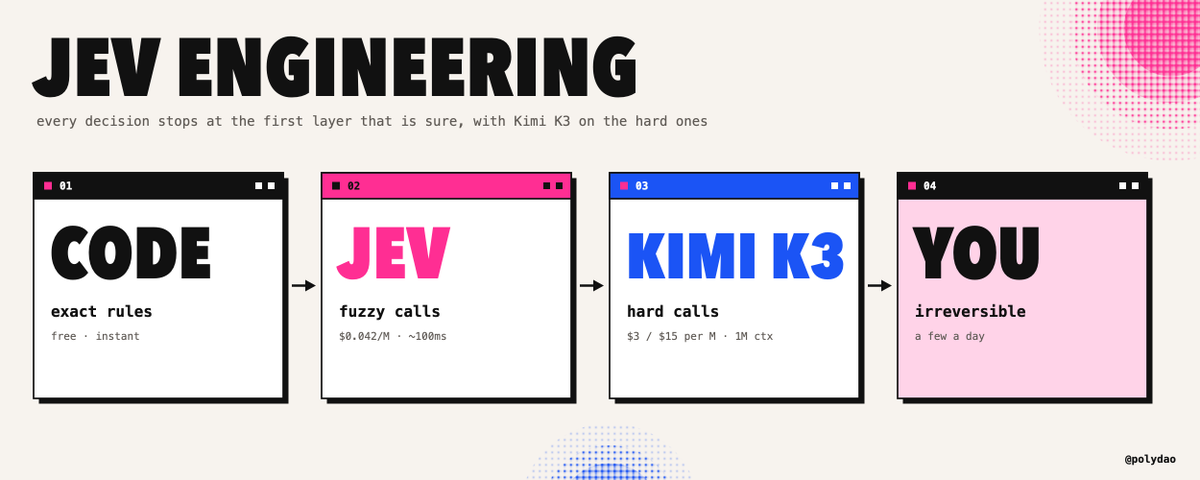
Diogo Almeida, founder of Jev and co-author of InstructGPT, published a PDF on building a Jev harness
the promise:
> up to 200x faster
> up to 400x cheaper
the speed and the cost both live in the harness around the model
how to use it:
> drop the PDF and the article below into Claude Code or Codex
> let it rebuild its own setup
one evening of work, and your agent runs on a harness few teams have 👇

ElCabron retweeted

119𝐆𝐁+ 𝐆𝐎𝐎𝐆𝐋𝐄 𝐃𝐑𝐈𝐕𝐄 — 𝐀𝐋𝐋 𝐏𝐀𝐈𝐃 𝐂𝐎𝐔𝐑𝐒𝐄𝐒 🚨
𝐌𝐢𝐬𝐬𝐞𝐝 𝐢𝐭 𝐥𝐚𝐬𝐭 𝐭𝐢𝐦𝐞? 𝐈’𝐦 𝐝𝐫𝐨𝐩𝐩𝐢𝐧𝐠 𝐢𝐭 𝐚𝐠𝐚𝐢𝐧. 👌
This vault helped agencies close $9K+ clients using proven systems.
Inside the Drive:
📁 AI & Automation
📁 Ethical Hacking
📁 Cybersecurity
📁 Prompt Engineering
📁 Google Cloud
📁 Machine Learning
📁 DevOps + CI/CD
📁 Docker & Kubernetes
📁 Blockchain
📁 Power BI
📁 React + Node
📁 Cloud Security
📁 Linux
📁 Pen Testing
📁 Data Analytics
📁 Data Science
📁 Big Data
📁 SQL
📁 Tableau
📁 Python
📁 AWS
📁 Java
Everything organized. Everything premium. 119GB+ value.
Get it:
✔ Follow @Aiden_Tech_AI [MusT]
✔ Like & RT
✔ Comment “ NEED ” To Get Auto DM.
⚠️ No follow = No Access ⚠️

ElCabron retweeted

👇👇👇
Cairn: github.com/oritera/Cairn
CyberStrike: github.com/CyberStrikeus/cyb…
PentAGI: github.com/vxcontrol/pentagi
CyberStrikeAI: github.com/AIPentest/CyberSt…
PentestGPT: github.com/GreyDGL/PentestGP…
PentestAgent: github.com/GH05TCREW/pentest…
AutoPentester: github.com/YasodGinige/AutoP…
VulnBot: github.com/KHenryAegis/VulnB…
RedAmon: github.com/samugit83/redamon
MAPTA: github.com/arthurgervais/map…
Strix: github.com/usestrix/strix
Shannon: github.com/KeygraphHQ/shanno…
BugTraceAI: github.com/BugTraceAI/BugTra…
Nebula: github.com/BerylliumSec/nebu…
hackingBuddyGPT: github.com/IPA-Lab/HackingBu…
HexStrike AI: github.com/0x4m4/hexstrike-a…
CAI, now archived: github.com/aliasrobotics/CAI


Beyond #Artex, what other #offensive #AI frameworks should the cybersecurity community be watching?
A few on my radar:
🔹 CyberStrike
github.com/CyberStrikeus/cyb…
🔹 Cairn
github.com/oritera/Cairn
🔹 PentAGI
github.com/vxcontrol/pentagi
Have you tried any of these? Let me know!
ElCabron retweeted

5 resources for AI builders worth bookmarking 👇
1. modulify.ai/templates — 100+ free website templates
2. wonderlist.design — Premium Figma designs
3. wedoflow.com — 1,300+ unique pages
4. landdding.com — 170+ visual techniques
5. motionin.design — Motion sections & inspiration
Save these for your next project.
ElCabron retweeted

Open Check
3.4+ million companies in database
Search by company name, LEI, National ID or person name (with year of birth filter).
Get ownership network, risk signals, subsidiaries, connected people, history of changes and more.
opencheck.world/
Tip by @the_OSINT_rack

ElCabron retweeted

50 Websites Google Doesn't Want You to Know About
1.) 12ft.io — Bypass paywalls
2.) libgen.is — Millions of free textbooks
3.) github.com/oxylabs/web-ap… — Web API skills for AI agents and developers
4.) alternativeto.net — Find free app alternatives
5.) justwatch.com — Find where any content is available
6.) archive.org — Access archived web pages
7.) gutenberg.org — 70,000 free classic books
8.) pdfdrive.com — Free PDF downloads
9.) openculture.com — Free courses from top universities
10.) wolframalpha.com — Solve math problems instantly
11.) photopea.com — Free Photoshop in your browser
12.) squoosh.app — Compress images for free
13.) remove.bg — Remove image backgrounds
14.) cleanup.pictures — Remove objects from photos
15.) unscreen.com — Remove video backgrounds
16.) carbon.now.sh — Turn code into art
17.) ray.so — Stylish code screenshots
18.) shots.so — Create product mockups
19.) smartmockups.com — Create mockups without Photoshop
20.) haveibeenpwned.com — Check for data breaches
21.) virustotal.com — Scan files for malware
22.) privnote.com — Send self-destructing messages
23.) temp-mail.org — Disposable email addresses
24.) file.io — Temporary file sharing
25.) archive.ph — Save web pages
26.) similarsites.com — Find alternative websites
27.) radio.garden — Listen to radio stations worldwide
28.) everynoise.com — Discover music genres
29.) tunefind.com — Find songs from TV shows
30.) musicforprogramming.net — Focus music
31.) mynoise.net — Custom focus soundscapes
32.) coffitivity.com — Cafe sounds for productivity
33.) elicit.org — AI academic paper assistant
34.) consensus.app — Search scientific research
35.) connectedpapers.com — Visualize academic paper connections
36.) semanticscholar.org — Free academic search
37.) scispace.com — Understand academic papers
38.) summarize.tech — Summarize YouTube videos
39.) phind.com — AI search for developers
40.) regex101.com — Test regular expressions
41.) codebeautify.org — Format code
42.) jsonformatter.org — Format and read JSON
43.) explainshell.com — Understand terminal commands
44.) raindrop.io — Manage bookmarks
45.) downdetector.com — Check website outages
46.) tineye.com — Reverse image search
47.) fast.com — Check internet speed
48.) smallpdf.com — Edit PDFs
49.) ilovepdf.com — Merge and split PDFs
50.) 10minutemail.com — Temporary email addresses
The internet is much bigger than what Google shows you. 🌐
If you’d love to see more content like this, don’t forget to follow @Arina_sharmi for more AI magic. 🚀

ElCabron retweeted

AI agents can do more than send one prompt to one model.
In this course, Mumshad teaches you the basics of LLMs, workflows, tools, and agent loops.
You'll build agent personalities, use structured JSON outputs, add guardrails and human approvals, and more.
freecodecamp.org/news/ai-age…

ElCabron retweeted

🚨 BU, YAPAY ZEKÂ KULLANAN HERKES İÇİN BİR ALTIN MADENİ
Mevcut en büyük açık kaynaklı prompt kütüphanesi. Eskiden Awesome ChatGPT Prompts olarak biliniyordu.
Güncel veriler:
GitHub'da 175.000'den fazla yıldız
22.000'den fazla fork
Tamamen ücretsiz ve açık kaynaklı
Topluluk tarafından oluşturulmuş ve oylanmış prompt'lar
Kategoriye göre arama
Sana faydalı olanları koleksiyonlarda saklayabilirsin
Kendi sunucuna kurma seçeneği (prompt'ların dışarı çıkmasını istemeyen takımlar için ideal)
ChatGPT, Claude, Gemini, Grok veya herhangi bir modelle uyumlu.
Gerçek değer, prompt'ları kopyalamakta değil.
Asıl değer, gerçekten işe yarayanların nasıl yapılandırıldığını incelemekte ve o mantığı kullanarak kendi prompt'larını oluşturmakta yatıyor.
github.com/f/prompts.chat
