

Orca in the stock market. Tech analyst reviewing & analyzing big tech and AI. Just a poor investor.
The Bottom of the Ocean
Joined January 2025
- Tweets153
- Following87
- Followers95
- Likes170
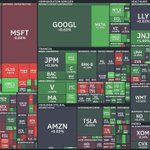


US Market Commentary | 9.2.2026
1. Wednesday US stocks rebounded for the first time in three days as oil rolled over.
The S&P 500 rose 0.46% to 7,666.60, ending a three-day slide, while the Dow gained 0.56% and the Russell 2000 1.13%. That small caps led the rebound means strength returned to the spot most pressed by yields. As the rise in Treasury yields that had weighed on the market steadied and the oil rally lost momentum, risk assets finally caught their breath.
2. The trigger for the rebound was, of all things, oil.
Oil, which had passed 90 dollars the day before, topped out and stopped rising. Infrastructure Capital's Hatfield said the key variable is oil, and that today's modest rally was possible precisely because oil had rolled over. Energy Secretary Wright said more than 17 million barrels of crude passed through Hormuz on Monday, the most since the war began. Trump too stressed the strikes on Iran would not last long and that the US controls the strait.
3. From the Fed too came a voice to calm the market.
New York Fed President Williams said evidence is emerging that inflation is steadily slowing as the impact of tariffs fades, and that rising energy prices are not spilling into other services prices. He added that there is, for now, no clear signal that a September rate hike is needed. It softened, a touch, last week's hawkish Warsh. Still, the futures-market probability of a September hike remains 67%, far above the 35% before Warsh's speech.
4. Yet the real force behind the rebound was the AI demand beneath it.
$DELL jumped 16% on a solid outlook. And after the close, $AVGO said it would double its AI-chip revenue two years running, to about 115 billion in fiscal 2027 and 230 billion in 2028. CEO Hock Tan said AI-chip demand now far exceeds the company's ability to supply. It is exactly what Nvidia's Jensen Huang meant by supply being the bottleneck.
5. Broadcom's numbers are the definitive proof of my long-held view.
Custom-chip demand from Google, Anthropic, OpenAI and Meta is rising fast, and in 2027 Anthropic is expected to pass Google as the top customer, with OpenAI next. I have read backlog, deposits and commitments as the answer that demand is real. After Micron's deposits, Nvidia's commitments, and yesterday Dell's 95-billion backlog, today Broadcom's custom-chip outlook confirmed that answer again. AI demand is now hard to refute.
6. Still, cracks showed above it too.
Credo Technology($CRDO ) plunged 20%, unable to meet a raised bar despite positive results. After Marvell yesterday, the risk borne by names running only on a high bar appeared again. August private payrolls rose 38,000, below expectations and the lowest since January, as hiring cooled from the spring. September, historically the weakest month for stocks, adds a seasonal burden.
7. Even so, the fundamentals held firm.
The Fed's Beige Book said economic activity grew modestly over the past two months, led by data-center demand. Edward Jones's Kourkafas said the market is regaining its footing after a hard start to September, and that seasonal weakness merits caution but is not enough to derail the uptrend. Nationwide's Hackett noted positioning and sentiment have reset, valuations are reasonable, and the earnings trend remains solid.
8. In the end, Wednesday was a rebound day when oil rolled over and AI's real demand was proven again.
As the oil and yields pressing from above retreated, the AI demand beneath pushed the index up. What remains is Friday's jobs report and next week's inflation data. If those readings back Williams's dovishness, the rebound continues; if oil jumps again, Warsh's hawkishness revives. Oil set the day's direction, but prices will set the week's.
■ How I read the market
Wednesday was a rebound day when oil rolled over and AI's real demand was proven again. As oil, which had passed 90 the day before, topped out and the 10-year steadied at 4.78%, the S&P rose 0.46% and ended a three-day slide. Williams saying there is no clear signal for a September hike, softening Warsh, added to it. I read today as a day oil set the direction, but I see the real force of the rebound as the AI demand Dell and Broadcom proved. Broadcom's 230-billion 2028 outlook, and demand exceeding supply, are the evidence. I keep the axis of strength on chips with proven AI demand and on small caps given room by steadier yields, while treating names running only on a high bar like Credo, an oil rebound, and seasonal weakness as risks from above.
■ Positioning
As oil and yields steadied, small caps and growth pressed by rates got room, but add only after confirming that calm holds. In AI, keep names with real demand proven by orders and outlook, like Dell and Broadcom, at the core, while separating names running only on a high bar like Credo and Marvell, which can wobble even after results. If oil heads back toward 90, hawkishness revives, so keep the energy hedge and gold. As ADP slowed, confirm the direction of Friday's jobs, and keep cash on hand for September's seasonal weakness. As for scenarios, if jobs and prices cool, the rebound continues; if oil climbs again or prices run hot, the correction resumes.
■ What to watch
- Oil and Hormuz: whether oil retreats further from its high, or heads back toward 90.
- Friday's jobs: whether the August report, after ADP's slowdown, backs Williams's dovishness.
- AI real demand: whether custom chips and data-center demand keep showing up in results after Dell and Broadcom.
- The high-bar risk: whether more names, like Credo and Marvell, get caught on a raised bar despite good results.
- Fed signals: where the 67% September hike probability tips between Williams's dovishness and Hammack and Waller.

1
4
326
US Market Commentary | 9.1.2026
1. Tuesday US stocks fell deeper, dragged down by oil.
The S&P 500 fell 0.71% to 7,631.47 and the Nasdaq 100 fell 1.29% to 29,077.22. The Dow lost 0.79% and the Russell 2000 1.23%, a wider and deeper drop than yesterday. As strikes on Iran continued, oil jumped again, and that oil pushed prices and yields up and pressed stocks down. On the second day geopolitics shook prices, the market set down some of yesterday's calm.
2. The trigger was strikes that did not stop.
US Central Command said it was striking Revolutionary Guard facilities inside Iran. President Trump said the strike was retaliation for Iran's attempt to lay mines in Hormuz and its earlier attack on a base in Jordan, warning of further strikes if Iran hit back. He went so far as to say Iran would cease to exist if it retaliated again. A situation that had gone quiet for weeks as the administration shifted to economic pressure returned to fire.
3. Oil cleared, in a single day, the 90 dollars I had asked about yesterday.
WTI jumped 5% to 90.68. Yesterday I wrote that we should watch whether oil headed toward 90 dollars, and that line was pierced within a day. The worry that surging oil would prod inflation and push the Fed toward a hike drove the 10-year Treasury yield close to 4.80%. Gold, by contrast, pressed by high rates and a strong dollar, fell again to 4,375. The chain in which oil pushes prices and prices push yields turned harder this time.
4. This was just the combination for a market to pull in its horns.
Baird's Mayfield called Friday's hawkish Warsh plus the oil rise from the Iran strike a perfect combination for a market trading near record highs to turn risk-averse. Forex.com's Razaqzada saw rising oil raising the risk of reigniting inflation and the odds of policy turning tighter still. Evercore's Guha noted Warsh would watch closely how higher oil feeds inflation expectations and bond yields.
5. Yet after the close, an entirely different picture emerged.
Dell, on surging AI-server demand, raised its fiscal-2027 revenue outlook by 25 billion, from 167 billion to 192 billion dollars. Second-quarter revenue was 47 billion, up 58% from a year earlier, its AI-server backlog stood at 95 billion dollars, and AI-server orders over the last 12 months reached 130 billion. The stock jumped more than 8% after hours. Even as geopolitics pressed the index, real demand for AI was growing larger beneath it.
6. $DELL numbers are another piece of evidence for my long-held view.
I have read backlog, deposits and commitments as the answer that demand is real. After Micron's deposits and Nvidia's memory commitments, today Dell's 95-billion backlog confirmed that answer again. Money locked up in advance means revenue already booked. Even as geopolitics and yields shake prices from above, the demand beneath does not vanish overnight.
7. Single names each wrote their own story outside the index.
$AAPL rose on news it would change CEOs, from Tim Cook to @johnternus , putting leadership for the AI era on a new test. Palo Alto, in a record quarter, stressed that AI is a structural growth driver for security, and Credo cleared results while making optics its second growth axis. Even on a day oil pressed the index, earnings and catalysts split single names on their own.
8. In the end, Tuesday was the day oil pressed the index but AI's real demand was confirmed again in Dell.
Above was pressed by geopolitics and yields; below was firm with real AI demand. The weight still rests on oil and prices. Private payrolls and the Beige Book Wednesday and the August jobs report Friday follow, and if oil holds at 90 the hawkish Warsh hardens and the correction lengthens. If the strikes ease and oil retreats, the real AI demand Dell proved becomes the axis of a rebound.
■ How I read the market
Tuesday was the day oil pressed the index but AI's real demand was confirmed in Dell. As strikes on Iran continued, WTI passed 90 and the 10-year neared 4.80%, and on risk-aversion the S&P fell 0.71% and gold dropped to 4,375. I read today as a day when geopolitics and yields pressed from above but AI demand beneath grew larger. That Dell after the close raised its outlook to 192 billion and posted a 95-billion backlog is the proof. The decisive variables are persistent oil and this week's prices and jobs. I keep the axis of strength on energy and on the AI supply chain whose real demand is proven by Dell and its backlog, while treating oil at 90, yields at 4.80%, and risk-off sentiment as risks from above.
■ Positioning
As oil passed 90 and pushed yields up, hold energy and narrow rate-sensitive growth to names proven by earnings and orders like Dell. Even as risk-off deepened, guard against selling everything into fear, since AI's real demand was confirmed again in Dell. Stay wary of ultra-long duration as the 10-year hit a year-to-date high and oil prods prices, but watch gold's drop as a chance to rebuild the hedge. Lighten consumer and airline names pressed by oil. As for scenarios, if this week's jobs and prices run hot and oil holds at 90, the correction lengthens; if oil retreats, room opens to rebound with AI's real demand as the axis.
■ What to watch
- Oil and Hormuz: whether the strikes spread and oil stays above 90, or transit normalizes.
- The 10-year yield: whether a yield near 4.80% climbs toward 5%.
- AI real demand: whether Broadcom on Wednesday extends the warmth after Dell's 95-billion backlog and 192-billion outlook.
- This week's labor: whether Wednesday's private payrolls and Friday's jobs report back Warsh's hawkishness.
- Global yields: whether a worldwide yield surge, with Japan's 10-year topping 3% for the first time in 30 years, presses risk assets.

3
250
US Market Commentary | 8.31.2026
1. Monday US stocks fell, their prices shaken by geopolitics arriving from outside the market.
The S&P 500 fell 0.33% to 7,686.14 and the Dow fell 0.70% to 53,185.90. The Nasdaq 100 rose 0.08%, essentially flat, and the Russell 2000 slipped 0.54%. As the armed clash between the US and Iran reignited over the weekend, oil and yields jumped together, and stocks and bonds came under downward pressure side by side.
2. The trigger was a military clash, reopened after a month.
On Sunday US forces struck Iran's Larak Island, which the US said was preparing to lay sea mines in the Strait of Hormuz. Iran retaliated with missiles at a US base in Jordan, though most were intercepted. It was the first direct exchange of fire between the two since late July. President Trump branded Iran a failed state and left the door open to further strikes, and Treasury Secretary Bessent foreshadowed new secondary sanctions each week.
3. The clash promptly pushed oil and yields up together.
US crude jumped 3% to pass 86 dollars. As energy costs prodded inflation, the 10-year Treasury yield hit 4.75%, its highest since January 2025. That the clash dashed hopes for normalized transit through the Strait of Hormuz put a war premium back on oil. The chain in which oil pushes prices and prices push yields turned again in a single day.
4. Yet the equity reaction was calmer than expected.
The S&P fell only 0.33%, and the Nasdaq 100 actually edged higher. Recalling that the S&P fell nearly 9% from its high when this conflict first flared in the spring, today's decline is light. The market has learned, meeting the same shock a second time. Year-to-date, both US and international equities are still clearly higher. The path in the Middle East is uncertain, but firm profits and steady activity are holding up the floor under prices.
5. On top of geopolitics sat Warsh's hawkishness from Friday.
The echo of the chair reaffirming his resolve to bring inflation down added weight to yields again today. Oil-driven prices and Warsh's hawkishness pointed the same way, toward pushing rates higher. Money markets now price a 65% probability of a September hike, above the odds of a hold, nearly double the 35% of a week ago. Trump kept up pressure from the other side, saying he respects Warsh but that US rates are too high.
6. Single names were shaken outside geopolitics too.
Edison International plunged 23%, its worst drop since April 2001, as a California wildfire-response bill dropped a liability-shield clause, raising fears of damages. Tesla, by contrast, rose ahead of a Cybercab launch event in Austin, Texas on Thursday. Even as geopolitics pressed the index, individual catalysts split the fortunes of single names on their own.
7. Beneath it, the memory landscape shifted once more.
Yesterday I noted the counterpoint that Kioxia's expansion raises oversupply worries, and today that counterpoint took shape as China's CXMT began producing HBM3E. China stepped further toward self-reliance in AI chips. My point from yesterday, that even if demand is real, price becomes another story if supply grows just as fast, turned into an actual event within a day. I read demand through commitments and supply through expansion news like this.
8. In the end, Monday was the day geopolitics shook prices but stocks held.
Even as oil and yields jumped together, the learned market did not break badly. The weight now passes back to the macro. This is a week of labor data: job openings Tuesday, private payrolls Wednesday, and the August jobs report Friday, where the market sees 65,000 new jobs and a 4.2% unemployment rate. Perversely, strong jobs could be bad news by raising hike expectations. With Warsh viewing the economy as at full employment, the real crux is prices.
■ How I read the market
Monday was the day geopolitics shook prices but stocks held. On the US strike on Iran's Larak Island, oil jumped 3% to 86 dollars and the 10-year hit 4.75%, a year-to-date high, and stocks and bonds fell together. Yet the market, having learned from spring's 9% drop, took this clash calmly, with the S&P down just 0.33%. I read today as a day when geopolitics and Warsh's hawkishness pushed rates up together, but equities showed resilience. With oil-driven prices and Warsh pointing the same way, the weight now passes to this week's labor and inflation data. I keep the axis of strength on energy, real assets, and names proven by earnings, while treating persistent oil, the 10-year nearing 5%, and the memory-supply variable made concrete by CXMT as risks from above.
■ Positioning
As geopolitics pushed oil and yields up, hold or add energy and real assets, and narrow rate-sensitive growth to names proven by earnings. But as equities showed learned resilience, guard against over-selling into geopolitical fear. Recognize the burden on ultra-long duration as the 10-year hit a year-to-date high and September hike odds rose to 65%, and be selective in consumer names pressed by the oil spike. On memory, weigh demand's commitments against supply's expansion, reflecting the price pressure from CXMT's self-reliance. As for scenarios, if this week's jobs and CPI run hot, a hike hardens and the correction extends; if prices cool, room opens for a rebound beyond geopolitics.
■ What to watch
- Oil and Hormuz: whether the US-Iran clash spreads and oil heads toward 90 dollars, or transit normalizes.
- The 10-year yield: whether the year-to-date high of 4.75% climbs toward 5%.
- This week's labor data: whether Tuesday's openings and Friday's jobs back or reverse Warsh's hawkishness.
- September hike odds: where the 65% hike bet and the real crux, August CPI, tip.
- Memory supply: the price pressure from CXMT's HBM3E production and China's self-reliance.

3
2
400
US Market Commentary | 8.27.2026
1. Thursday US stocks rose, but what rose was not the market, it was tech.
The Nasdaq 100 gained 1.43% to 29,641.56 and the S&P 500 rose 0.72% to 7,730.99. Yet the S&P 500 equal-weight index, which gives each name the same weight, fell 0.3%. That the index rose while the equal-weight fell means a few names pulled the index up while more names fell. The advance was narrow.
2. At the center of that narrow rise was Nvidia, from the night before.
On its outlook for 70% revenue growth in fiscal 2028, $NVDA surged 8.7% in the regular session. The force of a single name pushed the Nasdaq 100 up 1.4%. Yesterday's answer, that AI demand has not yet bent, was confirmed in price today. But that warmth did not heat the whole index.
3. The echo came from software.
$CRM jumped 22.6% and $CRWD 20.5%. Both posted strong results and solid guidance, leading a rally in software. The earnings season is near its end, and with 96% of S&P 500 companies reported, 86% have beaten expectations by an average surprise of 27%. Beyond chips and into software, earnings were broadly firm.
4. Yet earnings being broadly good and the advance being broadly shared were two different things.
That the equal-weight fell says money crowded into a few tech names rather than the whole market. Vital Knowledge's Crisafulli said that as often happens when tech surges, the tech sector is pulling in capital from other parts of the market. Moderna falling 4.6% on a plan to issue 2 billion in convertibles, and HP dropping nearly 3% on PC weakness, showed the warmth was uneven.
5. Where the voices diverged was, of all places, the Fed.
Kansas City Fed's Schmid said that with inflation still above target, current rates are not restrictive, and Cleveland's Hammack said the Fed should act to contain price pressure. Boston's Collins, by contrast, called current rates modestly restrictive, showing the gap. As the hawkish voices grew louder the 10-year yield rebounded to 4.68%, and the market's gaze moved to Warsh's Jackson Hole speech on Friday.
6. The macro, if anything, gave those hawks weight.
Initial jobless claims came in at 203,000, below expectations, and continuing claims fell to 1.78 million. The unemployment rate at 4.1% sits at the level the Fed views as full employment. With the jobs mandate largely met, the Fed's eye turns to prices. July wholesale inventories at 1.3%, far above the 0.2% expected, also reflected an economy not yet cooling. It is a picture of a firm economy and high rates moving together.
7. Beneath it, the money aimed at AI spread across the supply chain.
SanDisk will invest 31 billion dollars with Kioxia in a Japanese memory plant, and Micron will add 10 billion to US AI research. Marvell widened its custom-silicon deal with Google and posted record second-quarter revenue. After Nvidia's memory commitments jumped to 279 billion yesterday, today money was locked up in advance across memory and design. The proof that demand is real gained another day's evidence.
8. In the end, Thursday was the day Nvidia lifted only tech.
Earnings were broadly good but the advance was narrow, and that narrowness was the day's character. What remains is Warsh on Friday. For the narrow rally to widen, the Fed must light the path of rates and give the rest of the market room to breathe. Earnings have already answered, and the macro is firm. The last question now is what path Warsh offers in the face of still-high inflation.
■ How I read the market
Thursday was the day Nvidia lifted only tech. Nvidia surged 8.7%, pushing the Nasdaq 100 up 1.43%, and Salesforce and CrowdStrike jumped into the 20s, but the S&P equal-weight fell 0.3%. I read today not as the advance but as its quality: the index rose while the breadth was narrow, and the warmth crowded into a few tech names. The season was broadly firm, 86% beating on 96% reported, but that broad earnings has not yet become a broad advance. I keep the axis of strength on chips and software proven by earnings, and on the memory supply chain whose real demand is confirmed by investment like SanDisk and Micron, while treating the narrow rally and the rebounding yield as variables pressing from above.
■ Positioning
As the advance is narrow, pick names proven by earnings rather than chase the crowded tech. Keep Nvidia, software, and supply chains like Marvell and memory, where AI investment is confirmed in real revenue and commitments, as the core. But as the equal-weight fell, do not over-concentrate in one sector, guarding against a reversal of the narrow crowding. As yields rebound and Fed hawks grow louder, stay wary of ultra-long duration and keep gold as a hedge. As for scenarios, if Warsh on Friday is firm on prices but clear on the path, room opens for the advance to widen beyond tech; if he only surprises hawkish, the narrow rally could reverse.
■ What to watch
- Warsh at Jackson Hole: what rate path Friday's speech offers for high inflation. It decides the direction of the narrow rally.
- The breadth: whether the equal-weight rebounds and the advance widens beyond tech.
- Yields and prices: whether yields climb past 4.68% after firm claims and above-forecast inventories.
- Memory investment: whether SanDisk's 31 billion, Micron's 10 billion and Marvell's Google deal turn into memory's real demand.
- The Fed gap: where the balance for the September meeting tips between the hawkish Schmid and Hammack and the cautious Collins.

2
279
US Market Commentary | 8.26.2026
1. Wednesday's regular session ended mixed, but the answer the market waited for came after the close.
Through the day the S&P 500 slipped 0.02%, essentially flat, and the Dow fell 0.21% while the Nasdaq 100 rose 0.05%. A wait ahead of the inflation data pinned the indexes down. Then after the bell, $NVDA , the name the market had called this week's test all week, reported. In after-hours the stock rose 4%.
2. Nvidia's answer cleared the raised bar and then some.
Second-quarter revenue was 96.2 billion dollars, up 106% from a year earlier and a record, and adjusted earnings per share came in at 2.22, above the 2.09 expected. Data-center revenue, the core, was 89 billion, and third-quarter guidance of 108 billion topped consensus. Five of the last six reports had seen the stock fall the next day, a sign of how high the bar sat, but this time it cleared the wall.
3. Yet what mattered most today was not a number but a single sentence.
Jensen Huang said fiscal 2028 revenue would grow about 70%, well above the 45% the market had penciled in. The reason mattered more. Half the business is growing 100% a year, he said, but supply cannot keep up, so delivery is capped at 70%. The limit is not demand; it is supply. It flatly reversed the worry, held in some corners of the market, that AI investment would slow.
4. Look into what that supply is, and memory appears again.
Commitments to secure the components and capacity needed over the coming years jumped from 119 billion the prior quarter to 279 billion in a single quarter, more than doubling. And most of that increase was tied to procuring memory. I have written that if OpenAI's losses are the question, deposits and commitments are the answer, and today Nvidia's commitments confirmed that answer again. The hardest proof that demand is real is that money has been locked up in advance.
5. The evidence of scale followed.
Nvidia will add 2 million more GPUs to Amazon's infrastructure through fiscal 2029, and put up to 105 billion dollars of guarantees behind an Ohio data center for OpenAI. Revenue per gigawatt rises by generation, from 18 billion for Hopper to 25 billion for Grace Blackwell to 40 billion for Vera Rubin. Nvidia is moving from a company that builds and sells GPUs to one that connects capital, finance and infrastructure.
6. The daytime theme was inflation, of a different grain than the night.
July personal consumption expenditures prices rose 3.7%, above expectations, while the core came in at 3.3%, in line. On confirmation that prices remain high, the 10-year yield rebounded to 4.65% and the dollar firmed, and gold, which had set records through yesterday, pulled back to 4,656 dollars. The trade betting on a weaker currency caught its breath for a day. eToro's Kenwell said inflation is still too high to relax, pointing to Warsh's Jackson Hole speech on Friday.
7. It was not only Nvidia that answered with earnings.
Salesforce, CrowdStrike, Synopsys, Okta and HP all beat expectations. Across software, security and chip design, the benefit of AI showed up broadly in results. Still, the risks remain. Customers like OpenAI are working on their own chips, US and Chinese rules are blocking the China business, and a surge in memory prices pulls fourth-quarter margins briefly into the 71% range. The name of the worry is no longer vanishing demand, but delayed supply and margin.
8. In the end, Wednesday was the day Nvidia answered the question the market had asked.
Demand has not yet bent, and the bottleneck is not demand but power, memory and wafers. The daytime inflation pushed yields up and pulled gold back, but the nighttime Nvidia rebuilt the case for AI demand. What remains is Warsh on Friday. Just as the invoice comes even when prices are suppressed, the next step comes only when supply keeps up with strong demand. This week's last question is how Warsh prices the speed of that step.
■ How I read the market
Wednesday was the day Nvidia cleared the test. The regular session was flat on inflation caution, but after the close Nvidia posted 96.2 billion in revenue and a 70% growth outlook for 2028, rising 4% in after-hours. I read the core of this print not as a number but as a direction: the limit is supply, not demand, and most of that supply is memory. Commitments jumping to 279 billion prove that demand in price. The name of the risk has changed too. It is no longer that demand vanishes, but that supply expansion lags, margins are pressed by memory prices, and financing risk creeps in. I keep the axis of strength on Nvidia, on memory whose real demand is proven by commitments, and on the supply chain, while treating inflation and yields as variables still pressing from above.
■ Positioning
Because Nvidia answered, this is not the place to doubt AI demand and cut weight. But as the risk has moved from demand to supply, so does the axis. Add memory whose real demand is proven by commitments and deposits, and names that hold the bottlenecks of the supply chain, from power to wafers. Keep Nvidia as the core, but watch the self-chip effort, China rules and the fourth-quarter margin pressure with your eyes open. As inflation topped expectations and yields rebounded, stay wary of ultra-long duration, and keep gold's pullback as a chance to hold the hedge. As for scenarios, if Warsh on Friday is firm on prices but clear on the path, add growth; if he surprises hawkish, narrow into gold and defense.
■ What to watch
- Warsh at Jackson Hole: what policy path Friday's first speech offers for still-high inflation. The week's last variable.
- Nvidia's memory commitments: where the jump to 279 billion and the fourth-quarter margin pressure pull memory's real demand and price.
- Inflation and yields: whether the yield rebound and dollar strength after PCE 3.7% carry gold's pullback further.
- Self-chips and China: whether OpenAI's own chips and US-China rules actually crack Nvidia's long-run demand.
- The supply bottleneck: how fast power, memory and wafers unclog, which decides whether 70% growth is delivered.

1
4
204
US Market Commentary | 8.20.2026
1. Even the Treasury's bond buybacks could not stop yields from rising.
Thursday US stocks fell. Even as the Treasury said it would buy back more long-dated bonds, the 10-year yield rose to 4.70%, past even the level before the buyback was announced. The S&P 500 fell 0.87% and the Dow 1.32%. The intervention with which the government tried to press rates down did not last a single day. That an intervention which does not fix the root cause cannot hold, the market proved in a day.
2. The intervention failed because it touched the symptom, not the cause of the illness.
EP Wealth's Phillips said the buyback is not a cure for what ails the bond market, and that structural factors beyond the Treasury's control are at work. Siebert's Malek said investors welcomed the intervention at first, but the relief did not last because it does not solve the root cause of rising yields. As long as the structure of fiscal deficits, growing bond supply and AI-driven borrowing stays unchanged, the size the government buys cannot hold rates down.
3. On top of that, oil lit the fire again.
As President Trump warned Iran of economic war and Treasury Secretary Bessent foreshadowed the strongest sanctions ever, Brent jumped as much as 3.4% intraday to a four-week high. WTI passed 86 dollars. Oil presses the market two ways. One is by pushing prices up and holding yields high; the other is by thinning the consumer's wallet directly. Today it was the second that broke, in the biggest name.
4. $WMT plunged 9.2%.
As gasoline prices rose, consumers cut spending, and same-store sales and the outlook fell short. As Walmart, the weathervane of consumption, wavered, consumer staples and discretionary fell with it. For days the market waited for consumption to fill with earnings the time the government bought, and the first answer was consumption pressed by oil. The bill for high oil has begun to arrive at corporate results and the consumer.
5. The market's fear now looks past 5%, to what comes after.
Bloomberg said the focus has moved past whether the 10-year breaks 5% to how much faster it climbs after breaking it. When yields rise 60 to 90 basis points in a month, risk sentiment tends to break sharply, and there is a precedent in September 2023, when crossing 4.5% led to near 5% within a month. The market is wary of 5% by month-end and 5.25% before the midterms. If Warsh's Fed keeps only watching, the fear grows that it may have to hike far more steeply later.
6. Still, the economy was rather solid.
The August Philadelphia Fed manufacturing index beat expectations by a wide margin, and the Leading Economic Index turned to a six-month gain for the first time in four years, signaling no recession. Jobless claims are low too. Today's decline came not because the economy is weak, but because it is solid enough that rates will not fall. A strong economy and high rates moving together is an unfamiliar combination. Whether earnings are strong enough to bear it is the next question.
7. And AI's real demand showed its true face again today.
$MU CEO Mehrotra said AI has changed the structure of memory demand, breaking it out of the boom-bust cycle. Data-center customers are demanding 50% more memory than Micron can promise, and 2027 supply will be tighter than this year, he said. Micron signed five-year take-or-pay contracts with more than 16 customers and secured 22 billion dollars in deposits. If OpenAI's profit is still a question, Micron's deposits are the answer. Even within AI, the model that stands on debt and the substance that stands on deposits divide.
8. In the end, Thursday was the day the government's intervention was erased in one day.
Yields rose back, oil struck the consumer, and fear looks past 5%. Yet beneath it the economy was solid, and Micron's deposits proved again that AI's real demand is genuine. Yields that rise even as the government presses them, and earnings that shake but do not break. The tug-of-war between the two decides the next direction. Tomorrow the purchasing managers' index, which lights both prices and growth, is due. The place the intervention was erased, the fundamentals must now hold on their own.
■ How I read the market
Thursday was the day the government's intervention was erased in one day. Even as the Treasury said it would increase its bond buybacks, the 10-year yield rose back to 4.70%, past the pre-buyback level, and the S&P fell 0.87%. I read this as the market's answer that an intervention which does not fix the root cannot hold, because the structure of deficits, bond supply and AI borrowing is unchanged. On top of that, Trump's economic-war warning on Iran pushed oil to a four-week high, and consumption pressed by that oil broke in Walmart's 9.2% plunge. Fear now looks past the 10-year crossing 5%, to the acceleration after. Still, the economy is solid, and Micron, with 22 billion in deposits and tighter 2027 supply, proved AI's real demand is structural. The decisive variable is whether earnings can bear these high rates. I keep the axis of strength on gold and real assets and on memory proven real by deposits, while separating consumption pressed by high oil and names whose profits are far off.
■ Positioning
As the government's intervention was erased in a day, drop bets that lean on falling rates and fit the phase of high rates persisting. Keep guarding against ultra-long duration, and keep the gold and real-asset hedge as fiscal and oil support gold. As oil has begun to press consumption, lighten discretionary and keep oil-benefiting energy. In AI, hold the memory proven real by deposits and long-term contracts like Micron, but separate the model whose profit is far like OpenAI and the debt-funded names by their rate burden. As for scenarios, if tomorrow's PMI is solid and rates stay below 5%, hold the earnings tape; if oil jumps further or rates break 5%, narrow into gold, energy and defense.
■ What to watch
- The 10-year at 5%: whether yields break 5% and accelerate further. The fear that dominates the market now.
- Oil and Iran: whether oil rises further on Trump's economic-war warning and next week's sanctions announcement.
- Consumption: whether other retailers' outlooks, after Walmart, confirm consumption pressed by high oil.
- Micron and memory: whether 22 billion in deposits and the 2027 supply shortage lead to memory strength.
- The PMI: whether tomorrow's reading cements the combination of a strong economy and high rates.

4
278
US Market Commentary | 8.18.2026
1. Semiconductors led the decline as US stocks fell a third straight day.
Tuesday the Nasdaq 100 dropped 1.68% and the S&P 500 fell 0.69%. The long yields that had climbed for days finally bit the growth stocks most vulnerable to them, and AI and semiconductors led the way down. Money moved from growth into defensives like health care and consumer staples. That semiconductors, which had been holding the market up, turned to lead the decline marks the weight of the day.
2. There are two reasons growth stocks are the most vulnerable to rates.
First, growth stocks buy the profits of a distant future, so when rates rise the present value of those future profits is cut. Second, growth costs money, and when rates rise the cost of raising that money grows. AI fits both. Its profits lie mostly in the distant future, and its investment stands, in large part, on debt. So in this phase where the 30-year sits at its highest since 2007, AI and semiconductors were hit first.
3. And today, cracks began to show inside AI.
OpenAI's second-quarter revenue grew 18% from the first, but its losses deepened, and ahead of its IPO it moved further from profitability, it was reported. The small-reactor stocks that had soared on AI-power hopes plunged, and only the short sellers smiled. Anthropic is said to be opening a credit line of more than 10 billion dollars ahead of its listing, and last week the Wall Street Journal said Big Tech's actual AI spending is 3 trillion dollars more than it appears. The story the market has held for weeks was that AI demand is real. That demand is still real. But what showed today is the other side: that the demand has not yet turned into profit, and the investment stands on debt.
4. The economic data today were actually weak.
July housing starts missed expectations, pending home sales fell 2.3%, and industrial production came in below forecast. Usually when the economy is weak, rates fall and support stocks; but today, even with soft data, long yields stayed high. It is a bad combination: the economy cools while the price of money stays expensive. That is because what holds rates up is not the strength of the economy but fiscal, oil and supply. When growth slows while the discount rate is high, growth stocks are pressed from both sides.
5. The Middle East hardened further, and gold caught its breath.
President Trump said the US is in no negotiation or dialogue with Iran, and that no talks are scheduled, fully reversing last week's tone of progress. A repositioning of US forces in the Gulf is under discussion, and a ship was struck again in Hormuz. Oil held around 85, keeping the inflation worry alive. Meanwhile the gold that had risen for days stepped back to 4,389. In a phase where the dollar rose and rates stayed high, the gold that had run ahead took some profit. The fiscal worry has not vanished, so gold's one-day retreat does not change the trend.
6. Still, this is not a collapsing market but one turning defensive.
Money left growth and moved into defensives like health care and consumer staples. Home Depot beat on earnings and sales and reaffirmed its full-year guidance, showing the consumer still holds. Navellier said that with earnings and margins at records, stocks remain attractive, and Yardeni said the Treasury market is not yet in panic. The three-day decline is not a rout but a rotation, from what ran ahead into defense.
7. Now the market faces three tests.
How much the Fed's July minutes, due Wednesday, cement the case for a hold; whether the retail results from Walmart and Target reconfirm the strength of the consumer; and above all, whether Nvidia's earnings hold up the AI rally again. Since semiconductors were hit first today, Nvidia's numbers become the next trial of whether AI demand still justifies high rates and valuations.
8. In the end, Tuesday was the day the semiconductors that had held the market up were hit first by rates.
The story that AI demand is real and the story that its investment is not yet profit but debt collided for the first time before rising rates. The economy cools while money is dear; earnings are strong while the discount rate is high. Which wins, this week's Nvidia and retail earnings decide. In the place where price stepped back first, it is now the numbers' turn to answer.
■ How I read the market
Tuesday was the day semiconductors were hit first by long yields. The long yields that had climbed for days finally bit the growth stocks most vulnerable to them, dropping the Nasdaq 100 1.68% and taking the S&P down a third day. I read this as the rate rise that began with fiscal spreading to AI and growth. Growth stocks buy distant future profits and their investment stands on debt, so when rates rise both the present value and the funding cost worsen. On top of that, OpenAI's deepening losses and the plunge in small-reactor stocks revealed, beside the story that AI demand is real, the other side that it is not yet profit. But it is not a collapsing market. Money moved into defensives and Home Depot beat, so the three-day decline is rotation, not a rout. The decisive variables are long yields and this week's $NVDA earnings. I keep the axis of strength on names proven by earnings and real demand, while separating the debt-funded high multiples and the names whose profits are still far off by their rate burden.
■ Positioning
In a phase where rates sit high, trim high-multiple growth that leans on distant profits and debt, and shift weight to names backed by earnings and cash flow and to defensives. With oil holding at 85, keep energy, and keep guarding against ultra-long duration. In AI, hold the memory whose demand is proven in revenue and prices, but judge names with deepening losses like OpenAI or funded by debt only after Nvidia's earnings. Gold stepped back for a day, but with the fiscal worry remaining, keep the hedge. As for scenarios, if Nvidia and retail earnings come in strong, earnings beat rates and I re-add growth; if even earnings wobble, I narrow into defensives, cash and energy.
■ What to watch
- Nvidia earnings: whether AI demand justifies high rates and valuations. The next trial of this AI rally.
- Long yields: whether the 30-year stays at its highest since 2007, and whether the 10-year rises to a worrying level.
- FOMC minutes: whether the July minutes cement the case for a September hold, or a hawkish voice remains.
- Retail earnings: whether Walmart and Target, after Home Depot, reconfirm the consumer's strength under high rates and high oil.
- AI's profits: whether OpenAI's deepening losses and the plunge in small-reactor stocks spread into the risk that demand is real but profit is far.

3
253
US Market Commentary | 8.17.2026
1. The fear moved from the Fed to fiscal.
Last week the market took comfort that cooling inflation meant the Fed would hold in September rather than hike. Yet on the week's first trading day, long-term yields surged instead. The US 30-year Treasury yield spiked to 5.31%, the highest since June 2007, and the 10-year rose to 4.73%. The S&P 500 fell 0.52%, and the Nasdaq 100 slipped back below 30,000. In the place the inflation worry receded, a bigger worry named fiscal stepped in.
2. It is a strange thing. If inflation cooled, why do yields rise?
The answer is that what rose is not the short rate the Fed sets, but the long rate the market sets. The 2-year, which the Fed steers, stayed quiet. The hike fear really has lifted. What rose is the 30-year and the 10-year, the rates that price the nation's debt and the distant future of inflation. Miller Tabak's Maley said that with last week's inflation coming in well, the persistence of high long-term yields is a burden on investors. The worry named the Fed has eased, but the worry beyond it has risen into price.
3. Three things pushed long yields up.
The first is fiscal. The US budget deficit for July was 432 billion dollars, the largest monthly shortfall since March 2021. Ameriprise's Saglimbene said investors are increasingly worried about rising debt and the lack of fiscal discipline. The second is supply. Investment-grade corporate bond issuance reached a record 145.2 billion dollars in August, and when bonds flood the market, prices fall and yields rise. The third is oil. As talks with Iran stalled again, oil is stirring inflation once more.
4. What lifted oil again is Iran.
President Trump said he would not extend the memorandum signed in June and expiring Monday, and even threatened to bomb if Oman interfered. An Iranian official countered that if diplomacy failed, they would shift to an offensive posture. The oil that had fallen last week when Vice President Vance spoke of progress turned direction again in four days. WTI rose 2.6% to 84.95, and Brent is around 91. When oil rises, the inflation worry revives, and that worry loads back onto long yields. Fiscal, supply and oil tangled together to push the long end up.
5. Gold prices that worry again. Gold rose again to 4,473.
The gold that broke last week as inflation cooled rose again this week, for the different reasons of fiscal and oil. Only the name of the worry changed, from inflation to fiscal; the flow of money into real assets is the same. The more the suspicion grows that the country must print more money to pay its debt, the more gold, on the opposite side of paper money, rises. Gold has changed clothes from an inflation hedge to a fiscal hedge, and is rising again.
6. Yet even in a falling market, semiconductors were strong.
Word that Anthropic's second-quarter revenue topped 11.5 billion dollars, up sharply from a year earlier, along with DRAM spot prices rising for an 18th straight week, lifted AI and semiconductor sentiment. $MU rose 4% and $AMAT 5.5%. Since $SNDK said last week that NAND prices would not fall, the real demand for memory has produced fresh proof every week. Along with energy, lifted by oil, semiconductors were one of the few places that rose in today's down market.
7. But a new shadow overlays that strength.
The Wall Street Journal said Big Tech's actual AI spending is 3 trillion dollars more than it appears, and in the private-credit market bad loans and defaults are rising. Apart from whether AI's real demand is genuine, it means that vast investment stands, in large part, on debt. And the long yields that rose today raise the cost of exactly that debt. The debt of the deficit and the debt of AI hang together on the same line of long-term rates. Citadel diagnosed this yield surge as the market's worry about a Fed and fiscal authority hesitant to tighten.
8. In the end, Monday was the first day of a new phase, one where yields rise even as inflation cools.
The worry named the Fed has passed, and now the worries of fiscal, oil and debt climb up along long yields. Earnings are still strong, but rising yields cut the present value of those earnings. This week bring retail results from Home Depot, Walmart and Target. The story that moved from inflation to consumption is now tested by whether the consumer can bear high rates and high oil. Which wins, strong earnings or rising yields, decides the next direction.
■ How I read the market
Monday was the first day of a new phase, one where long yields rise even as inflation cools. As the 30-year spiked to 5.31%, the highest since 2007, the S&P fell 0.52%. I read this as the market's fear moving from the Fed to fiscal. That the short rate the Fed sets stayed quiet while the long rate rose says the cause is not a hike fear but fiscal deficits, corporate issuance and oil. July's deficit was 432 billion, the largest since 2021, and with Iran talks stalled again oil rose to 84. That gold rose again to 4,473 says the name of the worry changed from inflation to fiscal while the flight into real assets stayed the same. The decisive variable is long yields. Still, beneath it semiconductors were strong: DRAM's 18-week climb and Anthropic's revenue surge proved memory's real demand again. I keep the axis of strength on the semiconductors proven real and the energy that benefits from oil, while separating the debt-heavy names whose funding rising yields squeeze.
■ Positioning
In a phase of rising long yields, keep guarding against ultra-long duration, and weight oil-benefiting energy and demand-proven semiconductors over rate-sensitive high-multiple growth. As fiscal and oil together push gold up, keep or raise the gold and real-asset hedge. In AI, hold the memory whose real demand is proven in revenue and prices, but separate the debt-funded spending and the names exposed to private-credit stress, mindful of the rate burden. As for scenarios, if this week's retail results hold firm, strong earnings beat yields and I hold the broad market; if consumption cracks, rates and slowing spending combine and I narrow into defensives, cash and energy.
■ What to watch
- Long yields: whether the 30-year rises further from 5.31%, as fiscal, oil and issuance keep pushing. It is the variable that dominates the market now.
- Oil and Iran: whether oil climbs above 85 amid the collapsed talks and Trump's bombing threat.
- Retail earnings: whether Home Depot, Walmart and Target show the strength of the consumer under high rates and high oil.
- Semiconductor demand: whether DRAM's 18-week climb and the strength of Micron and Applied Materials continue through the rate burden.
- AI's debt: whether Big Tech's hidden spending and private-credit stress spread into risk as yields rise.

1
3
222
US Market Commentary | 8.13.2026
1. The week-long verdict is in. The hike fear has lifted, and gold, its proof, finally broke.
After yesterday's CPI, producer prices cooled today too. July PPI was flat month over month and 4.7% higher year over year, down from June's 5.5%. With both prints cooling together, the odds of a September hike fell from 39% to 30%, and the S&P 500 rose 0.65% to a fresh record. The Nasdaq 100 climbed 1.15% past 30,000. Yet today's real signal is not the index but gold. The gold that rose all week fell today to 4,407.
2. Why does gold falling matter? For a full week, gold was this market's lie detector.
Gold rose last week because the Fed was caught unable to cut for inflation and unable to hike for weak labor. On Monday, as oil surged and added to the inflation worry, gold set record after record; even yesterday, on a day inflation cooled, gold rose instead and priced the relief as only half. But today, as PPI cooled too and oil fell as well, gold finally stepped back. That the gold which had risen for days changed direction is the market's verdict that the faint scent of stagflation has thinned.
3. It was not inflation alone that broke gold. Oil fell too.
Vice President Vance said there had been progress in talks with Iran, and that discussions were underway to clear mines in Hormuz and guarantee safe passage for ships. With the stated top priority being to maximize oil shipments through Hormuz, oil fell to 81. The supply risk that had fed the inflation worry for four days moved, for the first time, toward release. After labor, now prices too, both pressures that had squeezed the Fed from either side began to ease.
4. But in the place the hike fear lifted, a new question stepped in. Short rates fall, while long rates rise.
The Fed-sensitive 2-year yield fell to 4.15%. The hike fear has lifted. Yet the 30-year Treasury auctioned today at 5.216%, the highest level in 25 years. Short rates fall with the Fed, while long rates rise under the weight of fiscal deficits and bond supply. The worry named the Fed has eased, but the worry named fiscal is growing instead. The risk ahead may not be a hike, but the lengthening deficit.
5. Beneath the index, the sorting grew as sharp as a blade.
SanDisk surged 12% after its Investor Day, guiding that NAND prices would barely fall through 2028 and that gross margin would reach 80%. The real demand we have tracked for weeks through deposits and long-term contracts, the company confirmed in its own numbers. Micron and other memory names rose with it. Cisco, by contrast, fell 8.4%, its worst in six months, as its AI data-center revenue outlook failed to clear the raised bar, and Cerebras fell another 12% on disappointing results. Beneath a record index, the side with real demand and the side that missed the bar split in opposite directions.
6. And on that very record day, the biggest bet against it grew larger.
Michael Burry, adding to yesterday's Nvidia and Oracle, widened his shorts today to Micron and Nebius. The very names the market buys at records, he sells. SanDisk's numbers saying the real demand is genuine and Burry's bet that the valuation above it is expensive collided head-on on the same day. And there is one more new variable. US Bank's Merz said we must watch how Kevin Warsh, the new Fed chair, reads these prints and how he responds. The hand that sets rates has changed.
7. The macro scale tilts to a hold. But the dissent inside the Fed remains.
Barkin said the cooling signals give ample grounds to hold, while adding that if price pressures entrench, the Fed may have to tighten again. Hammack questioned whether the slowdown would last and reaffirmed his call to hike. The majority leans to hold, the minority to hike. GDS's Smith said inflation still runs well above 2%, but the oil-led price surge since the Iran war is settling. The fear of a hike has lifted, and the scale now shifts to hold versus cut.
8. In the end, Thursday was a day the week's verdict ended in relief and set a record.
With both prints cooling, oil falling and gold breaking, the inflation worry that began last week cleared a hurdle. But into that place stepped the lengthening deficit, the sharpness that sorts the names, Burry's opposition, and the question of a new chair. The verdict is in, but the market is already naming the defendant of the next trial. Tomorrow brings retail sales. From inflation to consumption, the story moves on.
■ How I read the market
Thursday was a day the week's verdict ended in relief and the S&P set a record. After yesterday's CPI, PPI cooled too, the odds of a September hike fell to 30%, and the Nasdaq 100 passed 30,000. I read this as the hike pressure that squeezed the Fed from both sides being released. The decisive proof is gold. The gold that rose all week broke today to 4,407, and with progress in the Iran talks oil fell to 81, so the supply risk that had pushed prices up began to ease. But into the place the hike fear lifted stepped three questions: the fiscal one, with short rates falling while the 30-year sits at a 25-year high; the sorting, with SanDisk up 12% while Cisco falls 8.4%; and Burry, who widened shorts on a record day, and Warsh, the new chair now setting rates. I keep the axis of strength on memory proven real like SanDisk, while separating names that missed the bar and those running only on valuation. The next story moves from inflation to consumption.
■ Positioning
With the hike fear lifted and rates lower, weight growth and the broad market, but split short rates from long. Fed-sensitive short duration has improved, but with the 30-year at a 25-year high, treat ultra-long duration as a fiscal risk. Weight memory on the NAND strength and real demand SanDisk confirmed, while filtering out by results the names that missed the bar like Cisco and those whose margins broke like Cerebras. As gold and oil both fell, lighten the inflation hedge, but keep a thin tail hedge while the Iran talks are still in progress. As for scenarios, if tomorrow's retail sales hold firm, the earnings-led tape continues and I widen into growth and consumer names; if consumption cracks, I narrow into real demand and cash generators.
■ What to watch
- The 30-year and fiscal: whether the Fed eases while the 30-year stays above 5%. The next risk may be fiscal, not a hike.
- SanDisk's NAND: whether the guidance that prices hold through 2028 spreads to Micron and peers. It is the confirmation of real demand.
- The sorting: whether Cisco's and Cerebras's misses and SanDisk's strength keep splitting.
- Burry and Warsh: whether Burry's Oracle, Micron and Nebius shorts spread, and how Kevin Warsh, the new chair, reads the data.
- Tomorrow's retail sales: in the story that has moved from inflation to consumption, whether spending holds up the earnings-led tape.

4
246
US Market Commentary | 8.12.2026
1. The verdict a week in the waiting arrived. Inflation cooled as expected, and the box opened only halfway.
July core CPI came in at 2.5%, the lowest since March 2021. After last Friday's weak jobs, inflation cooling too pulled the odds of a September hike from 50% before the print to 40%. The S&P 500 rose 0.26% back toward a record, and the Nasdaq 100 jumped 0.74%. The rate-hike fear that pressed the market these past days went out on a single inflation report.
2. But the box did not open fully. What opened is one door, the labor side.
What cooled today is demand-driven inflation. Shelter rose just 0.1% for a second month, and the three-month annualized core rate fell to 1.6%, below the Fed's 2% target for the first time. Yet the supply-driven door, oil, is still shut. Hormuz remains closed, and oil sits at 83 turned to 82. eToro's Kenwell said this print raises conviction that inflation has peaked, but warned that if oil breaks 100 again it becomes a more serious threat. Principal's Seema Shah said that while Hormuz stays closed, the upside risk to inflation remains the market's biggest worry. Demand cooled, but supply is still on fire.
3. Gold prices that half-relief. On a day of comfort, as inflation cooled, gold rose again to 4,469.
Normally when inflation cools, gold, the inflation hedge, loses its footing. Yet today gold rose instead. A Fed going patient with inflation still at 3.4% and oil at 82 means real rates stay low. Gold knows the box is not locked but is still a box. That gold has not left the neighborhood of its record for days is proof this relief is not complete.
4. In the end, the story of these past days resolved all at once today.
Last week gold pointed at a Fed that could not hike because of the labor wall; Monday oil pushed that box toward the price wall; Tuesday the market held its breath before the verdict. And today the verdict came. Inflation cooled and the labor door opened, but oil still blocks the price door. Morgan Stanley's Zentner said one more inflation print comes before September, and unless it differs sharply, the Fed will likely hold. The fear of a hike has lifted; what remains is the scale between holding and cutting.
5. Beneath the index, the real demand flagged yesterday exploded.
$CRWV , up after hours yesterday, surged 19% today, and $NBIS jumped 34%. $SMCI rose 19% on guidance above estimates. To yesterday's question, whether demand raised on leverage is real, backlog and earnings answered yes. Nvidia's partner Foxconn also grew second-quarter net income 35%. The substance that waited in the daytime was proven in price today.
6. And on that very day, the sharpest counter-signal appeared.
Michael Burry expanded short positions on Nvidia, Palantir and Oracle. On the very day AI infrastructure exploded, he bet against the valuation and circular financing stacked on top of it. That real demand is genuine and that the price above it is expensive are two different things. On the same day CoreWeave rose 19%, Cerebras plunged 15.7% as hardware revenue fell unexpectedly and margins collapsed to 14%. Even within AI, the side with real demand and the side whose margins are breaking split like a blade. Burry's short pushed that sorting to its extreme.
7. The macro picture converges on a patient Fed.
With inflation in line, the 10-year yield barely moved at 4.688%. Northlight's Zaccarelli said the most important thing in this print is that inflation is not reaccelerating, and that combined with weak jobs, the Fed has room to wait. Still, that oil held at 82 even as EIA crude inventories rose sharply against expectations means the Hormuz supply risk weighs more than the build. The room to be patient has opened, but that room holds only as long as oil lets it.
8. In the end, Wednesday was a day the week's verdict ended in a half-relief.
Inflation cooled, the labor door opened, and stocks returned toward a record. But the price door oil blocks, the longing gold points to, and the bet Burry placed all remain. Tomorrow the producer price index comes. If it cools too, the half-open door opens a little more; if oil rises again, today's relief is reversed. The verdict is in, but the sentence is not yet final.
■ How I read the market
Wednesday was a day the week-long verdict ended in half-relief. As July core CPI hit 2.5%, the lowest since March 2021, and matched expectations, the odds of a September hike fell from 50% to 40% and the S&P returned toward a record. I read this as the labor door of the Fed's box opening. But it is not full relief. What cooled is demand-driven inflation, while the supply-driven risk, oil, sits at 82 with Hormuz closed. That gold rose again to 4,469 even on a day inflation cooled prices this relief as only half. The decisive variables are oil and tomorrow's PPI. If producer prices cool too, the door opens further; if oil heads toward 100, today's relief reverses. I keep the axis of strength on names proven real like CoreWeave, while separating the circular financing Burry shorted and the names, like Cerebras, whose margins are breaking.
■ Positioning
With the hike fear lifted, weight the growth and broad market that benefit from falling rates, but separate the names proven by backlog and earnings from those running only on valuation and circular financing. Treat the pullback in earnings-backed names like CoreWeave and Nebius as a chance to re-add, while filtering out margin-breaking hardware like Cerebras by results. With oil stuck at 82, keep energy, and keep the gold hedge as gold prices this half-relief. As for scenarios, if tomorrow's PPI cools too, widen the re-add into growth and the broad market and extend duration; if oil rises again, narrow into gold, energy and real demand and cut duration.
■ What to watch
- Tomorrow's PPI: whether producer prices cool to open the door further, or oil bleeds in to shut it again. The second session of the verdict.
- Oil and Hormuz: whether the blockade persists and oil heads above 82 toward 100. The trigger of supply-driven inflation.
- Gold: whether gold, up to 4,469 even on a day inflation cooled, climbs further. It prices this relief as only half.
- Burry's short: whether the Nvidia and Oracle shorts spread as a circular-financing worry, or CoreWeave's real demand blocks it.
- The AI sorting: whether CoreWeave and Nebius's substance and Cerebras's margin collapse keep splitting.


2
359
US Market Commentary | 8.11.2026
1. The day before the verdict, the market held its bet.
Tuesday US stocks fell without a single big event. The S&P 500 closed down 0.32% at 7,728.20. As Iran reaffirmed it would keep the Strait of Hormuz closed until its demands were met, oil rose back to 83 dollars, and gold stepped back from its record to 4,426. Above all, tomorrow's inflation print pinned the market's feet. This wait, in which prices could neither rise nor fall, is the whole of the day.
2. The reason for the wait is that prices ran here on hope.
Two hopes lifted the market these past two weeks. One was that a deal with Iran was near; the other that inflation would cool and the Fed would drop its hikes. Today both hopes were asked for proof. Interactive Brokers' Torres said investors had waited weeks for a deal, and that for yields to fall further and the rally to continue, visible progress is needed. Prices that rose on hope alone hold their breath before the evidence.
3. First, the hope named Iran took another blow today.
When Pakistan said the US and Iran had drawn close to a deal, oil dipped briefly, but as Iran reaffirmed the blockade, it climbed back to 83. Iran's Revolutionary Guard said that if threatened again, energy, power and internet infrastructure would be at risk, and the US military fired on a ship trying to break the blockade. The words of a nearing deal and the reality of a hard standoff crossed several times in a single day. The hope is in the headlines; the reality is in the oil.
4. And today, the sharpest signal came from $NVDA .
Nvidia, which yesterday announced a 500 billion dollar AI financing platform, gave back all of its early gains today and closed roughly flat. Meanwhile Apollo Global, which agreed to supply that money, rose 6.2%, and Blackstone rose in the 4% range. The side that spends the money stood still, while the side that lends it rose. With AI's returns not yet proven, the market chose the financiers who collect fees and interest regardless of the outcome over Nvidia, which bets on that outcome. The one who takes the toll got paid before the one who builds the road.
5. Is the lender rising a signal of comfort, or of warning?
Read kindly, it means 9 trillion dollars of private capital is flowing into AI infrastructure as a new asset. Read harshly, it means AI's cash flow is still a promise while the money is already raised on leverage. Set against last week's private-credit bad-loan ratio at a five-year high, this picture in which the toll-taker smiles carries one condition: the road must not close. Only when real demand repays that debt does the structure hold.
6. And after the close, that real demand offered proof again.
$CRWV rose 12% on second-quarter revenue up 112% and a backlog reaching 104 billion dollars, and $SMCI jumped 9.8% on guidance above estimates. CoreWeave signed contracts to lease even the aging A100, a 2020 chip, out to 2029, and has already secured 4.2 gigawatts of power. Selling prices is sentiment and stacking a backlog is real, so what waited in the daytime was the sentiment in front, not the substance behind. The ground for believing the debt can be carried came, as it happened, after the close.
7. Meanwhile the day's decline was concentrated in a narrow place.
Google fell 3.8% and AppLovin nearly 6%, dragging the index down. Google has fallen on four of the last five sessions since announcing its AI reorganization. The question from weeks ago, that not capital or contracts but people can be the pressure point of AI, is turning into price. The Russell 2000, by contrast, rose 0.32%, so the shallow flow of money from tired large-cap growth into the broad market continued today as well.
8. In the end, Tuesday was a day of held breath, one before the verdict.
Prices came this far on hope, and now that hope waits for two proofs: tomorrow's inflation, and Iran someday. If prices cool, the Fed's box opens and the wait turns to relief; if oil pushes them sticky, the box locks toward the price wall. The substance CoreWeave showed overnight holds the floor, but the direction above is set by a single print tomorrow morning. The silence before the verdict is broken only by the verdict.
■ How I read the market
Tuesday was a day of waiting, one before the CPI. Prices ran here on two hopes, an Iran deal and cooling inflation, and now that hope waits for proof. The sharpest signal was that Nvidia stood flat after raising 500 billion while Apollo and Blackstone, which supply the money, rose. I read this as the market, before AI's returns are proven, choosing the lender over the builder. The toll-taker got paid first. But that structure holds only if real demand repays the debt, and overnight CoreWeave's 104 billion backlog proved that substance again and held the floor. The decisive variable is tomorrow's CPI. If core cools, the Fed's box opens and the wait turns to relief; if oil pushes it sticky, the box locks toward the price wall. I keep the axis of strength on names proven real by backlog and long-term contracts, while separating the growth raised on leverage and the names where people became the pressure point.
■ Positioning
The day before CPI, hold the big bets. Treat the pullback in names whose real demand is proven by backlog, long-term contracts and power deals as a chance to re-add, but separate the demand raised on leverage and the names, like Google, where people became the pressure point. With oil up to 83, keep energy, and stay wary of long duration against a renewed rise in rates. As gold stepped back from its record, keep the hedge but do not chase. As for scenarios, if tomorrow's core CPI cools, widen the re-add into growth and the broad market and take the benefit of falling rates; if oil pushes it sticky, narrow into gold, energy, real assets and real-demand cash generators, and cut duration.
■ What to watch
- Tomorrow's CPI: whether core cools to 2.5% and opens the box, or oil bleeds in to revive the hawks. This week's verdict.
- Nvidia vs the financiers: whether Apollo and Blackstone keep leading. It is a signal of the market pricing AI as fees, not returns.
- Real demand: whether CoreWeave's 104 billion backlog and its A100-to-2029 contracts get bought again after the dip.
- Iran and oil: whether oil climbs above 83 amid the hard standoff, and whether the nearing-deal headlines become reality.
- Google: whether the weakness persists after the AI reorganization. It is the risk of people becoming AI's pressure point.


2
356
US Market Commentary | 8.10.2026
1. On Friday the market turned bad jobs into good news. On Monday, oil questioned that bet.
Last week the market bet that as labor cooled, the Fed's hike moved away. Then on Monday oil jumped more than 6%, WTI past 82 dollars and Brent past 87. The ember of inflation flared up again not from labor but from oil. The 10-year yield jumped back to 4.705%, and the S&P 500 closed down 0.06% at 7,753.11. Friday's relief was put to the test three days on.
2. Oil is dangerous because it strikes exactly the weak point of the logic that bad jobs are good news.
Last week's inflation worry was sticky services, the demand side. Demand-driven inflation cools when labor cools. But oil is supply-driven. Iran's talks stalled and the Houthis struck a Saudi refinery, tightening crude supply; it did not rise because the US economy ran hot. Supply-driven inflation does not ease even as jobs cool. It is instead the very face of stagflation, growth cooling while prices climb. So a single drop of oil erases the relief of a single labor report.
3. The Fed's box tilted this time toward the price wall, and that wall found a voice.
Cleveland's Hammack, a hawk with a vote, said current rates do not restrain the economy enough and it is now time for several hikes. The rate alarm that last week's bad jobs was believed to have switched off, oil and the hawk switched back on. E*Trade's Larkin said the jobs report eased fears of a September hike, but if this week's inflation does not slow as much as expected, those fears could return in force.
4. Gold prices that pressure. The gold that set a record at 4,401 on Friday set another at 4,448 on Monday.
That gold rose even as rates jumped back says that only the wall changed while the box stayed the same. Last week the side that could not hike because labor was weak bought gold; this week the side that cannot cut because oil pushed prices up buys it. The wall changed, but the Fed trapped inside is the same. Gold's record run over two straight sessions renews, day by day, the depth of that entrapment in price.
5. Beneath the index, a new question opened over the nature of AI demand.
Nvidia announced a 500 billion dollar AI infrastructure financing platform with six Wall Street firms, including Goldman, BlackRock and Blackstone. Jensen Huang said compute is revenue, and that Nvidia's chips have become an investable asset class that generates returns on their own. Rather than take on its own debt, Nvidia draws on a 9 trillion dollar pool of private capital so customers can build AI factories, a clever structure. Yet on this largest-ever demand-funding news, Nvidia fell 2.9%.
6. Why did the stock drop on the largest funding news? Because the structure changes the nature of the demand.
The real demand we saw through last week was the deposits of SK Hynix and SanDisk, cash customers put down in advance, demand that need not be repaid. But 500 billion dollars is leveraged money lent by third parties. Even Huang said the startups would prove their profitability within a few months, so the profit is still a promise while the funding is already raised. On the same day, private credit's bad-loan ratio hit a five-year high. Demand proven by deposits and demand propped by leverage are different animals, and the market priced that difference.
7. Within semiconductors too, the direction of money split the names.
$INTC announced a 15 billion dollar equity raise and fell 4%. Unlike SK Hynix, whose customers put down cash, Intel must issue its own stock to fill the gap. The side that takes in deposits and the side diluted by a raise are the two poles of semis. Meanwhile Micron said supply is tight past 2027, with 2027 tighter than 2026, and $MSFT said it would expand its own Maia chip, 30 to 40% cheaper than $NVDA . The memory shortage lengthens, and the shadow of in-house silicon falls on Nvidia's margins.
8. In the end, Monday was a day Friday's relief was tested by oil.
That supply-driven inflation can neutralize a cooling in labor, the market confirmed all at once through oil, gold and the hawk's voice. Still, that the index fell only 0.06% says this is caution, not yet fear. The judge is this week. If CPI and PPI cool, the box opens and the record run continues; if oil-driven inflation bleeds into the data, the box locks toward the price wall. Between Friday's relief and Monday's caution, this week's two inflation prints decide the next direction.
■ How I read the market
Monday was a day an oil-driven supply shock tested Friday's relief. As WTI passed 82 and Brent 87 and the hawk Hammack called for hikes, the rate alarm that last week's bad jobs had switched off came back on. So I read the Fed's box as having tilted this time toward the price wall, not the labor wall. The decisive difference is the source of inflation. Last week's worry was demand-driven prices that cool with labor; this week's threat is supply-driven oil that does not ease even as jobs cool. That gold set records two days running says only the wall changed while the Fed stays boxed. Still, a 0.06% dip is caution, not fear. I see a phase where the uptrend holds but leadership narrows, and the judge is this week's CPI and PPI. I keep the axis of strength on names proven by earnings and real demand, while building up the gold and energy hedge alongside.
■ Positioning
Since this is a phase where gold bids whichever wall the box tilts to, raise the gold and real-asset hedge first. As oil rose on a supply problem, add to energy, but respect the renewed jump in rates and stay wary of long duration. In AI, keep the memory and storage whose real demand is proven by deposits and cash generation, but separate the demand raised through leverage, like the 500 billion, and the names diluted by equity raises, like Intel. With private credit's stress signal overlapping, check the balance sheets of growth propped by credit. As for scenarios, if this week's CPI and PPI cool, widen the re-add into growth and the broad market; if oil-driven inflation bleeds into the prints and stays sticky, narrow into gold, energy, real assets and real-demand cash generators, and cut duration.
■ What to watch
- This week's CPI and PPI: whether headline and core cool to open the box, or oil bleeds in to lock it toward the price wall. This week's judge.
- Oil and Iran: whether WTI at 82 and Brent at 87 climb further amid stalled talks, or the Jones Act waiver and economic pressure calm them.
- Gold: whether gold, at a second straight record of 4,448, climbs further. A rising gold as rates jump prices the depth of the box.
- Nvidia's 500 billion: whether AI demand raised through leverage is as sturdy as deposit demand, and whether cracks spread as private credit stress overlaps.
- The hawk's voice: whether Hammack's call to hike spreads to other Fed officials, and whether oil takes their side.
🤖 Made with AI


2
512
US Market Commentary | 8.7.2026
1. Bad jobs became good news. And yet gold, on that good news, set a fresh record again.
When July nonfarm payrolls fell by 23,000, well short of the 80,000 gain expected, the market cheered instead. It meant the Fed's rate hike had moved further away. Rates fell and the S&P 500 set a fresh all-time high. Yet on the same day, gold set a record again at 4,401 dollars. Stocks rose on the good news, and gold rose too, and that divergence is the whole of the day.
2. Take the bright side first: for two weeks what pressed the market was the Fed.
The 30-year threatened 5% and hawks called for hikes. Friday's weak jobs turned that alarm off. As the labor market cooled faster than expected, hopes grew that the Fed would lean toward a September hold rather than a hike. The software and growth names that rates had pressed down led the way up. The fearsome ceiling of rates stepped back a pace.
3. But the logic of bad jobs as good news stands on one condition.
The labor market must cool without collapsing. eToro's Kenwell said this report was weak enough to ease the Fed's burden but not bad enough to signal an economic collapse. The moment that fragile balance breaks, good news turns bad again. For now the slowdown is relief; one step worse and that slowdown becomes fear.
4. Gold prices that fragility.
That gold set a record even as rates fell points to a Fed trapped in a box. Too-weak labor to hike, too-sticky inflation to cut. The services price index still runs above 70. Normally, when rates fall the cost of holding gold falls and gold rises. But that stocks are at a record and gold, the safe asset, is at a record too means the market is buying relief and unease on the same day. In a phase where growth cools while inflation lingers, gold becomes the shelter for money that can hide fully in neither stocks nor bonds. In the stagflation of the 1970s gold ran that way. But this is not the double-digit inflation of then, so for now it is a scent, not yet the illness. A Fed that can neither raise nor lower, and the inflation caught between, is what makes people buy gold. Gold's rise over these past days reveals here what it was. It is the faint scent of stagflation.
5. Still, the box is not yet locked.
Labor is cooling but not collapsing, and prices are sticky but not soaring. Goldman's Rosner said the next inflation print will be the final judge, and Morgan Stanley's Zentner said that if prices come in hot, a cooler labor market may not be enough to silence the calls to hike. So one next inflation number decides whether this box locks or opens. Friday's relief is a bet that the print cools.
6. Beneath the index, the sorting of earnings continued.
Atlassian jumped 35% as results and guidance beat, while The Trade Desk fell 22% on a single revenue outlook that missed. Even with 85% of reporting S&P 500 companies beating, far above the post-1994 average, a single line of guidance saved or killed a stock. In a market that has already priced good results, beating estimates is not enough; a stock rises only if it raises the next quarter higher. Yesterday's A has become today's baseline. The discipline of the raised bar, running since last week, is still alive.
7. The weekend was a quiet tug of war.
Trump, rather than strike Iran at once, chose to press with the economy and dial the level down, and oil steadied at 75 dollars. But Iran said direct talks with the US were impossible, demanding the blockade lifted, sanctions removed, and reparations. Calm oil is relief for prices and rates, but the longer the talks drag, the more temporary that relief. Meanwhile Trump pushed critical-mineral independence, pledging billions for batteries, copper and rare-earth magnets. The front line of supply chains widened from chips to minerals.
8. In the end, Friday was a day that turned bad jobs into good news, and the weekend a quiet time that carried that relief along.
But the warning gold left with a fresh record stands. If the next inflation print locks the box, good news turns bad; if it opens it, the record run continues. Stocks rose on relief, and gold is buying, in advance, the price of that relief.
■ How I read the market
Friday was a day bad jobs became good news. As July payrolls fell 23,000, hopes that the Fed's hike had moved away pulled rates down and lifted the S&P to a record. The rate alarm that pressed the market for two weeks turned off. So I read this phase, with the rate ceiling stepped back, as favorable to growth. But gold setting another record cannot be waved off. That gold rose even as rates fell is a signal that the Fed is boxed, unable to hike because of labor and unable to cut because of prices. It is the faint scent of stagflation. The decisive variable is the next inflation print. If prices cool, the relief of a September hold extends the record run; if they stay sticky, hawks revive even with cooler labor, and the box gold points to locks. I keep the axis of strength on quality growth that benefits from falling rates and on the names proven in earnings, while building up the gold hedge alongside.
■ Positioning
With the rate ceiling stepped back, weight the quality growth and software that rates had pressed, but separate the ones that raised guidance, like Atlassian, from the ones whose outlook cracked, like The Trade Desk. Watch too the memory and storage whose real demand is confirmed by deposits and long-term contracts. But respect the Fed's box that gold points to with its record, and rather raise the gold and real-asset hedge. With oil steady at 75, lighten energy, but keep a thin tail hedge since Iran refused direct talks. In line with Trump's critical-mineral push, add copper and rare earths as policy-favored materials to the watch list. As for scenarios, if the next inflation print cools, widen the re-add into growth and the broad market; if prices stay sticky, narrow into gold, real assets and real-demand cash generators.
■ What to watch
- The next inflation print: whether core prices cool to cement a September hold, or stay sticky to revive the hawks. It is the lock on the box gold points to.
- Gold: whether gold, jumped to 4,400, climbs further. A rising gold as rates fall prices the Fed's bind.
- The direction of jobs: whether the 23,000 decline is a soft-landing slowdown or the start of a sharp downturn.
- The sorting of earnings: whether the raised-bar discipline, where a single line of guidance splits stocks like Atlassian and The Trade Desk, continues.
- Iran and oil: whether oil holds at 75 between Trump's economic pressure and Iran's refusal to talk.
🤖 Made with AI


1
3
311
US Market Commentary | 8.5.2026
1. AMD, SpaceX and SanDisk all beat estimates. And all three fell.
$AMD dropped 7%, $SPCX 13%, and $SNDK 5.3% after hours. Good results were sold. As the Dow set a record for a fifth straight day, in the tech names the old adage of selling the news came back to life. The S&P 500 touched an all-time high intraday and still slipped 0.17%, pushed down by tech weakness.
2. Why were good results sold? The answer is the bar.
SpaceX, with revenue nearly doubled; AMD, with data-center revenue above estimates; SanDisk, with data-center revenue up 103%, all sold off anyway. Because the market had already priced a number beyond those results. Even a real A falls short of the imagined A-plus. The selling came from the gap between the imagined and the real.
3. This is not a crack in the fundamentals but an overheating of sentiment.
Baird's Mayfield said the gains of recent days are historically rare and that sentiment has come strongly back. Prices ran too fast and too far ahead. Miller Tabak's Maley said a breather after the surge overlapped with sell-the-news. What rose sat down for a rest; it did not collapse.
4. Beneath it, demand for memory and storage is still boiling.
SanDisk signed long-term contracts in which customers put down 16.5 billion dollars in advance against default, and Western Digital is discussing supply deals running past 2029 to 2031. The real demand SK Hynix showed with deposits last week was confirmed again, this time in the ledger of a US storage company. The NAND market triples this year past 300 billion dollars, and allocation, rationing volume, continues past 2027. The stocks are tired; the demand is not.
5. So today's decline was locked in the tired tech names, not the whole index.
The Dow, in fact, set a record for a fifth day. Money left the tech that had run ahead and flowed into the broad market that had lagged. That Nvidia rose 3% on Musk's exclusivity while SpaceX fell 13% is a sorting of wheat from chaff within AI itself. While the narrow peak rested, the wide base held the index up.
6. The macro backdrop, meanwhile, eased favorably.
As July private payrolls slowed sharply to 44,000 and oil fell further to 75 dollars, the 10-year yield stayed quiet. The rate alarm that pressed the market last week grew quieter still. But gold surging to 4,300 dollars and Kashkari and Schmid still calling for hikes say the ember of inflation is not fully out.
7. There was also one new warning sign.
Google fell 4% on the departure of key AI talent, including Jeff Dean. It showed that not capital or contracts but people can be the pressure point of AI competitiveness. If the question so far was the ownership of chips, power and data, now a new axis is added, the people who handle all of it. Michael Burry said further gains are possible but the market is still in a risky zone.
8. In the end, Wednesday was a breather, a day even good results were sold.
Prices that ran ahead stepped back for a moment; demand did not break. That the Dow set a record for a fifth day is the proof. The next signal is whether this breather stays a healthy pullback, and whether Friday's jobs report holds up this strength.
■ How I read the market
Wednesday was a sell-the-news day, when even good results were sold. That AMD, SpaceX and SanDisk all beat and still fell is because the market had already priced a number beyond those results; a real A fell short of the imagined A-plus. So I read this decline not as a crack in the fundamentals but as an overheating of sentiment, prices run ahead. Beneath it, demand for memory and storage is still boiling: SanDisk's 16.5 billion in deposits and Western Digital's 2031 contracts confirm again the real demand SK Hynix showed last week. That the Dow set a fifth-day record is proof money moved from tired tech into the broad market. The decisive variables are whether this breather stays a healthy pullback, and whether the payrolls that slowed to 44,000 carry into Friday's report and hold rates low. I keep the axis of strength on the broadening market and the memory locked in by deposits and long-term contracts, while separating out the momentum that ran ahead.
■ Positioning
In a phase where good results sell, do not rush. Wait for the overheated momentum names to cool, and instead treat the pullback in memory and storage, whose real demand is confirmed by deposits and long-term contracts, as a chance to re-add. Weight the broad market and the rotation the Dow is leading. With payrolls slowing and oil down to 75, the rate burden lightens, but keep a gold hedge given gold's surge and the hawks' calls to hike. Check, name by name, the risk of people becoming the pressure point, as with Google's talent exodus. As for scenarios, if the breather is shallow and Friday's jobs soften gently, widen the re-add into the broad market and the memory pullback; if sentiment cools further or the hawks win, narrow into short duration and real-demand cash generators.
■ What to watch
- Sell the news: whether the drops in AMD, SpaceX and SanDisk are a healthy breather or the start of a sentiment unwind.
- Friday's jobs: whether the private payrolls that slowed to 44,000 carry into the report and hold rates low.
- Memory and storage: whether the deposits and long-term contracts of SanDisk and Western Digital get bought again as real demand after the dip.
- Gold and the hawks: whether gold jumping to 4,300 and the hike calls of Kashkari and Schmid relight the inflation ember.
- Google's talent exodus: whether people become the pressure point of AI competitiveness, and whether the idiosyncratic risk spreads.

4
571
US Market Commentary | 8.3.2026
1. Wall Street has a morning habit of checking two numbers: oil and the 10-year yield.
B. Riley's Hogan said that when both fall the market is fine, and when they rise it is never good. On Monday morning, both fell together. And so the market jumped broadly. The Dow closed at a record, the S&P 500 rose 1.48% to near its all-time high, and Amazon crossed 3 trillion dollars in market value.
2. What pulled both numbers down was oil.
When Trump withdrew the strike on Iran and announced talks to reopen Hormuz, WTI fell further to 80 dollars, and that decline eased inflation fears and pulled the 10-year yield down to 4.67% as well. The alarm that pressed on the bond market last week faded as oil dropped. On top of that, news that US manufacturing expanded at its fastest pace in over four years added to the gains.
3. The rally was broad, and earnings were its base.
Even the Russell 2000 rose 1.73%, and 86% of the S&P 500 companies that have reported beat estimates. The recoupment of AI spending that Microsoft and Amazon proved last week has now spread into strength across the index. Amazon, up 15% Friday, added 4.6% more to a record close, becoming the fifth company ever to cross 3 trillion dollars in market value.
4. But the base of this rebound is not solid.
The oil decline that held up today's gain rests on a detente with Iran, yet Iran keeps denying that deal. It says Hormuz stays as it is while US attacks continue, and that passage outside designated lanes is not allowed. One side calls it a handshake the other denies, so today's relief holds only while that handshake holds. The vital sign of oil improved, but its recovery depends on someone else's mind.
5. Beneath the index rally, a new question surfaced.
$PLTR raised its full-year outlook sharply as US commercial revenue jumped 149%. As the reason, CEO Karp cited sovereign AI. If a company hands its data and know-how to the leading AI firms, it ends up dependent on them and loses its own edge. He went so far as to say frontier models addict companies like a drug.
6. This warning reframes the question of the AI value chain.
If the question so far was chips versus hyperscalers versus apps, the one Palantir poses is who owns the data and the model. A company that rents a room in someone else's castle can be controlled at any time; one that holds its own castle cannot. Palantir's 149% growth shows real demand to hold one's own castle. But most companies still need the frontier model, so this is a matter of degree, not either-or. So the winner is not just one: those who build the frontier model and those who guard their own data on top of it can grow together.
7. Meanwhile the strength is broadening beyond tech.
JPMorgan sees a broad rotation, more than tech, leading the second half, and Morgan Stanley raised its Korea weighting and lifted its KOSPI target to 9,000. As the recoupment of earnings is confirmed and the tail of oil folds, money is spreading again from the narrow peak to the wider base. The Russell rising alongside the index is the proof.
8. In the end, Monday was a day the market jumped broadly as both numbers fell together.
But beneath that gain lies a handshake Iran denies, and above it the question of dependency Palantir posed. The next signal is whether oil stays low, and whether Friday's jobs report holds up this strength.
■ How I read the market
Monday was a day the index jumped broadly as the market's two vital signs, oil and the 10-year, fell together. The Dow set a record, $AMZN crossed 3 trillion dollars, and 86% of earnings beat, so the AI recoupment $MSFT and Amazon proved last week spread into strength across the index. So I read this broadening as bullish. But I watch two things. One is that the oil decline holding up today's gain rests on a detente Iran denies, so it reverses if that handshake breaks. The other is the question of dependency Palantir posed. Its 149% jump in US commercial revenue shows real demand for a sovereign AI that keeps companies from depending on the leading labs. The decisive variables are whether oil stays low and whether Friday's jobs report holds up the strength. I keep the axis of strength on the beneficiaries that proved recoupment and the broadening rest of the market, while watching, as a new axis, the owners that hold their own data, like Palantir.
■ Positioning
With oil down and rates lower, ride the broadening. Watch the beneficiaries proven in earnings, the rest of the market where the rotation is spreading, and the sovereign AI that holds its own data and model. But since today's rebound leans on the Iran detente, do not fully drop the energy and cash buffer; keep a thin hedge against oil rebounding. Separate out the names stretched on valuation and leverage, as last week's discipline demands. As for scenarios, if oil stays low and Friday's jobs hold, widen the re-add into the rotation and beneficiaries; if Iran re-escalates and oil rebounds, or jobs wobble, narrow into short duration and balance-sheet strength.
■ What to watch
- Oil and Iran: whether WTI at 80 falls further, and whether the Hormuz detente Iran denies hardens into a real deal.
- Friday's jobs: whether nonfarm payrolls hold up this strength, or labor-market softening shows.
- The 10-year yield: whether the rate, down to 4.67% on falling oil, keeps calming and the fear of 5% recedes.
- Palantir and sovereign AI: whether the 149% growth opens demand for companies to own their own data, and whether the fear of dependency on leading labs spreads.
- The breadth of the rotation: whether second-half strength broadens beyond tech as JPMorgan sees, and whether Morgan Stanley's KOSPI 9,000 gains traction.


3
309
US Market Commentary | 7.31.2026
1. This week the market answered whether AI demand is real. So the worry moved down a floor.
On Friday $AMZN added an encore to $MSFT answer from the day before. Cloud jumped 37%, proving the recoupment of AI investment. The fear of the spenders that shook the market last month was largely cleared by two days of earnings. And so the market's pressure point moved down, from whether demand is real to whether the plumbing of money that holds up that demand is sound.
2. Friday's gain was led by $AMZN .
Longbow's Dollarhide said CEO Jassy cleanly put to rest the worry that Amazon's spending was reckless, and Bernstein's Shmulik called it a Microsoft encore. The S&P 500 rose 0.7%. The answer Microsoft gave, that disciplined spending returns as profit, was confirmed once more within a day.
3. But that line of recoupment now split winners from losers clearly.
Apple fell 7.4% on a disappointing outlook, its worst drop since April 2025. Behind it lay a component shortage. The one that proved AI profit was rewarded; the one caught by supply limits with no monetization story was punished. Within the same big tech, the side that proved recoupment and the side that did not moved in opposite directions on the same day.
4. Yet bonds rose again on Friday.
The 10-year climbed to the 4.7% area, its highest since January 2025, and the 30-year set a fresh high since 2007. The perception hardened that Chair Warsh's firm words do not translate into credible policy, and to the three members who dissented for a hike, Barkin and Hammack added their own calls to hike. This time even the 2-year rose, so hike expectations spread beyond the long end across the whole curve. US Bancorp warned that as the 10-year nears 5%, it weighs on equity valuations.
5. But the weekend began to turn off one of those alarms.
When Trump abruptly cancelled a large-scale strike, saying a framework for a deal with Iran had been reached, Brent crude, up 25% over July, fell 7.3% early Monday to 81 dollars. One of the biggest forces pushing yields up was blunted over the weekend. But Iran denied that any deal had been reached. With one side saying it is off and the other saying it is still on, this alarm is not fully off but only fading, and can flare again at any time. Even so, oil did fall, so the upward pressure on rates has genuinely thinned by a layer.
6. In its place, a new alarm lit in another pipe of the basement.
Banks are buying crash puts to offload the collapse risk of leveraged ETFs, and at the center sit products tracking SK Hynix and Samsung. The neocloud CoreWeave raised its loan rate to 9.1%, and regulators warned on the complex circular structures of KKR and Apollo. Michael Burry again expanded his shorts on Micron and the semiconductor index. Beneath the answer that demand is real, the leverage and credit that hold up that demand began to creak.
7. So this was a week the market's pressure point moved.
If last month's question was whether AI demand is real, the question now is whether the financial plumbing that holds up the boom can bear it. While Microsoft and Amazon proved the demand upstairs, pressure is building in the basement pipes of leveraged ETFs, neoclouds and circular structures. But it is still rising water pressure, not a burst pipe. A warning, not a rupture.
8. In the end, where the old alarm of oil is fading, a new alarm of leverage and credit lit up.
Two things decide next week's direction: whether the oil relief pulls the 10-year back from 5%, and whether the pressure in the basement stays a leak rather than a break. Add to that the yen, where the US and Japan intervened jointly for the first time in 15 years, and a phase in which the world's rates and currencies shake together continues.
■ How I read the market
This week the market answered whether AI demand is real. After Microsoft, Amazon proved the recoupment of spending with 37% cloud growth, and last month's fear of the spenders largely cleared. But Apple's 7.4% drop on a component shortage revealed the loser that could not prove recoupment. So I stay favorable on the beneficiaries that proved recoupment, but see the market's pressure point moved down a floor: the worry now is not demand but the financial plumbing that holds up the boom. The weekend's 7.3% drop in oil on Trump's announced Iran deal, blunting one force pushing rates, is relief, but Iran denied that deal so the relief is incomplete, and the erosion of Fed credibility is structural, so even the 2-year rose and hawks are calling for hikes. And crash puts on leveraged ETFs, CoreWeave's 9.1% loan rate, and warnings on circular structures show pressure building in the basement pipes. The decisive variables are whether the oil relief pulls the 10-year back from 5%, and whether this leverage-and-credit pressure stays a leak.
■ Positioning
With AI recoupment proven, lead with Amazon and Microsoft and the memory beneficiaries of confirmed real demand, but, as Burry expanded his short, separate out the names stretched on valuation and leverage. In particular avoid leveraged ETFs, credit-tight neoclouds like CoreWeave, and products tangled in circular structures. Lead with balance-sheet-strong cash generators. With oil down sharply, lighten the energy hedge, but keep duration discipline and a gold hedge until Fed credibility is restored. As for scenarios, if oil relief pulls the 10-year back and the plumbing holds, widen the re-add into the AI-proven beneficiaries and oversold quality; if hawks push rates to 5% or the leverage-and-credit cracks widen, narrow into short duration, balance-sheet strength and cash.
■ What to watch
- Oil and Iran: whether Brent falls further from 81 dollars, and whether Monday's talks harden into a Hormuz deal.
- The 10-year yield: whether oil relief pulls 4.7% back from 5%, or the hawks' calls to hike win.
- The financial plumbing: whether the pressure in leveraged-ETF crash puts, CoreWeave's 9.1% loan, and the KKR-Apollo circular structures stays a leak.
- The spread of recoupment: whether Amazon's and Microsoft's AI profitability continues, and whether Apple's component shortage spreads as an industry supply constraint.
- The yen and intervention: whether yen weakness resumes despite the joint US-Japan intervention, and spreads into global rate instability.


3
928
US Market Commentary | 7.30.2026
1. Stocks threw a party, and bonds sounded an alarm.
The opposite of yesterday, stocks rebounded hard. $MSFT jumped 16%, its biggest daily gain since 2008, the Philadelphia Semiconductor Index surged 8.2%, and the Nasdaq 100 rose 3.36%, breaking a six-day losing streak. Yet on the same day the 30-year Treasury yield spiked to 5.2%, its highest in 19 years. While a party ran upstairs, an alarm rang in the basement. That divergence is the whole of the day.
2. Stocks partied because the micro gave an answer.
Microsoft, with Azure growth of 43% and cloud revenue crossing 100 billion dollars a year, answered the question that crushed the market yesterday: whether AI spending returns as profit. It was proof that disciplined spending pays off. On that alone its market value rose 450 billion dollars, the largest single-day gain for one stock on record. Samsung, reporting a 250-fold jump in chip profit and forecasting a shortage next year, poured fuel on the rally.
3. After the close, Amazon sealed that answer in numbers.
AWS revenue jumped 37% to 42.2 billion dollars, accelerating for a fifth straight quarter, with an operating margin of 39%. Free cash flow was still negative, but $AMZN spelled out why: server investment breaks even in under three years, data centers last more than 30 years, and 2027 and 2028 capacity is already largely booked. The trough of the J-curve I described weeks ago at Google showed, in Amazon's own ledger, its first upward slope. That the years after the break-even generate free cash flow proves in numbers that today's negative cash flow is not a prelude to ruin but the shadow of investing ahead.
4. So last week's fear of the spenders proves to have been overdone.
Before evidence that spending returns as profit, the dread that capex is simply cash burn lost its force. But not everyone was rewarded. Apple, with iPhone revenue above estimates, still fell 4% after hours as China sales and services disappointed. The one that proved recoupment and the one that did not, that line is still alive.
5. And yet the bond market did not come to the party.
The 2-year, sensitive to the policy rate, fell, but the 30-year spiked to 5.2%, its highest in 19 years. Yesterday's no confidence deepened by another day. The dollar broke below 100 and gold set fresh records. JPMorgan sees the Fed hiking in December. While stocks celebrated the micro, bonds priced the Fed's credibility steadily crumbling, a warning aimed at a central bank that cannot catch inflation.
6. This divergence is the whole of the market now.
Stocks voted on the micro of earnings, bonds on the macro of Fed credibility, in opposite directions. The trouble is that a higher long rate is, in the end, the discount rate on every asset. The 5.2% long yield did not stop today's party, but if it climbs higher it becomes that party's ceiling, and the high-multiple growth names that led this bounce hit that ceiling first. If the alarm in the basement grows loud enough, the music upstairs stops too.
7. Fortunately, the temperature of inflation ticked down.
June PCE inflation slowed from the prior month, and second-quarter growth cooled to 1.5%, though consumption and business investment held firm. If cooler prices calm the 30-year, the earnings-led rally can broaden. But if prices reattach or the bond vigilantes push 5.2% higher, the risen discount rate erases the micro's victory.
8. In the end, yesterday was a day the micro beat the macro.
Microsoft and Amazon proved the recoupment of AI spending, and the market celebrated it. But the 5.2% alarm ringing in the basement is still on. The real verdict is whether that alarm climbs up into the party.
■ How I read the market
Yesterday the micro beat the macro. Microsoft with Azure at 43%, and Amazon with AWS at 37% and the numbers of a sub-three-year server payback, 30-year data centers and 2027-28 capacity booked, answered the question of whether AI spending returns as profit. So last week's fear of the spenders was overdone, and semiconductors surged 8.2% to reverse it. I read this evidence of recoupment as grounds to stay bullish. But bonds did not come to the party. The 30-year spiking to a 19-year high of 5.2% and the dollar breaking below 100 mean the Fed's credibility eroded another day. The decisive variable is which way this divergence closes. As June prices slowed, if long rates calm the earnings-led rally broadens; if the vigilantes push 5.2% higher, the risen discount rate erases the micro's win. I keep the axis of strength on the beneficiaries that proved recoupment, Microsoft and Amazon and the memory Samsung confirmed with a 250-fold profit, while watching the ceiling of the long rate.
■ Positioning
With the question of AI recoupment answered, re-add the recoupment-proven beneficiaries that were oversold in the correction. Microsoft and Amazon, and the HBM and memory that Samsung's 250-fold profit and next-year shortage confirm, are the center. But with the 30-year up at 5.2%, keep yesterday's duration discipline. Do not rush the pure spenders yet to recoup or the high-multiple names whose growth wobbles, like Apple, and lead with the proven cash generators. With the dollar below 100 and gold at records, keep gold and energy hedges. As for scenarios, if cooler prices calm long rates, widen the re-add into semiconductors and beneficiaries; if the vigilantes push the 30-year higher or a December hike sets, narrow into short duration, value and gold.
■ What to watch
- Long rates: whether the 30-year climbs above 5.2%. The bond market sets where this party's ceiling is.
- Prices and the Fed: whether June's slowdown continues, and whether the December hike JPMorgan sees hardens in the market.
- The spread of recoupment: whether Microsoft's and Amazon's AI profitability carries into the next results, or Apple's weakness is the exception.
- The memory cycle: whether Samsung's 250-fold profit and shortage forecast carry into an HBM and memory rally.
- The stock-bond divergence: whether the micro's victory or the macro's alarm sets the next direction.


3
352
US Market Commentary | 7.29.2026
1. Short rates fell while long rates jumped to a 20-year high, on the very day the Fed held.
The S&P 500 fell 1.52% and the Dow dropped 2.19%, while the Nasdaq 100, down 11% from its record, entered a technical correction. The Fed neither raised nor cut, and yet stocks plunged. The reason is all in the split yield curve.
2. The Fed held nine to three, but the market did not believe the decision.
Three members dissented in favor of a hike, and Chair Warsh insisted the hold was not inaction and that the inflation target is only 2%. The words were firm. But the firmness was words, not action, and the bond market demanded action, not words.
3. That demand showed up as a steepening curve.
The 2-year, sensitive to the policy rate, fell 6bp to 4.23%, relief that no hike is coming now. But the 30-year jumped more than 10bp to its highest since 2007, a bet that if the Fed does not hike now, inflation runs hotter for longer. That the short and long ends split like this is a vote of no confidence the bond market cast on the Fed. DoubleLine's Gundlach called it the bond vigilantes warning Warsh to prove himself with action, not words.
4. Warsh took this rise in market rates as grounds for comfort.
He said the 42 days of rising rates since the last meeting had tightened financial conditions and reassured him of the Fed's capacity to control inflation. In effect he outsourced the tightening he should do to the bond market. But that comfort holds only while the market tightens as much as he wants. The moment the market demands higher rates than that, it becomes not comfort but a loss of control. Yesterday's spike in the 30-year showed that line.
5. And on that very day, oil relit the fire.
When Trump said he would strike Iran hard in response to its surprise attack on stationed US forces, WTI jumped again to 84.83 dollars. The inflation tail that had barely folded came back to life at the very moment the Fed let go. Gold surged and the dollar fell. The market's verdict that inflation will not be caught in time was stamped straight onto asset prices.
6. So yesterday's decline differs from the narrow semiconductor drops of recent days.
It was not just semiconductors; the Dow fell 2.19%. A higher long rate is the discount rate that pulls distant cash flows back to today, and when it jumps, every asset, chips or banks alike, cheapens again. The rotation that had broadened the bull market through last week did not work against the discount rate. It was a day the macro swallowed the micro.
7. In the micro, two big-tech names split exactly along the line of ROIC.
$MSFT , with Azure growth of 43% and cloud revenue crossing 100 billion dollars a year for the first time, signaled that its huge AI investment is paying off. $META , by contrast, raised its capex outlook, saw free cash flow collapse, and disappointed on guidance. The one whose spending returns as profit and the one whose spending does not, that line of recoupment split the two again.
8. In the end, yesterday was the day the market's phase changed.
If what shook the market for weeks was the micro of AI, that place is now taken by the macro of Fed credibility and long rates. It was not semiconductor valuation but the bond market's no confidence that pulled the index down. The real verdict comes Thursday, with PCE inflation, and with wherever long rates stop.
■ How I read the market
Yesterday's decline came from the Fed holding while the market disbelieved it. That the 2-year fell but the 30-year jumped to its highest since 2007, steepening the curve, is a vote of no confidence: if the Fed does not hike now, inflation runs hotter for longer. On top of that, Trump's strike remark relit oil to 84 dollars, so the inflation tail reattached the moment the Fed let go. This decline is therefore not a narrow semiconductor drop but a repricing of the whole market by a higher long rate lifting every asset's discount rate. I see the phase shifting from AI micro to rate macro. The decisive variables are where long rates stop and whether oil reattaches. If the bond vigilantes push the 30-year higher, the correction deepens; if the tightening Warsh outsourced to the market calms long rates, it pauses. In the micro, as Microsoft and Meta split along the line of recoupment, the divergence between beneficiaries whose spending returns as profit and spenders whose does not continues.
■ Positioning
With the phase shifted to rates, cut duration across the board. Trim the high-multiple growth that sells the most distant future, the spenders like Meta first, and shift weight to beneficiaries whose spending is proven in profit, like Microsoft, and to cash-generative, short-duration and value names. Keep gold and real assets as a hedge against damaged Fed credibility and inflation, and rebuild the energy buffer now that oil has reattached. Do not rush to buy the dip in semiconductors and AI until long rates stop, because the discount-rate headwind beats a micro rebound. As for scenarios, if long rates peak and oil calms, re-add the oversold quality growth in stages; if the vigilantes push the 30-year higher or Warsh's credibility keeps slipping, narrow into short duration, value, gold and cash.
■ What to watch
- Long rates: whether the 30-year climbs further from its highest since 2007. The vigilantes' pressure is the market's discount rate.
- Thursday's PCE inflation: whether core PCE justifies the Fed's hold or lends weight to the case for a hike.
- Oil and Iran: whether oil, rebounded to 84 dollars, rises further on Trump's strike warning.
- Warsh's credibility: with the market pricing a September hike at nearly 100%, whether the Fed closes the gap between words and action.
- Spenders versus beneficiaries: whether Meta's capex and cash flow or Microsoft's Azure results set the bar for Thursday's Apple and Amazon earnings.
🤖 Made with AI


3
217
US Market Commentary | 7.28.2026
1. The S&P 500 equal-weight index set a fresh record high, on the very day semiconductors fell.
The Dow rose 1.03% and the S&P 500 gained 0.21%, while the Nasdaq 100 slipped 0.98%. The indexes split. But that split is not the collapse of the bull market; it is its broadening. Money moved out of expensive semiconductors into traditional industry and the rest of the market, and as a result far more stocks rose than the headline index shows, lifting the equal-weight to a record.
2. This rotation has run for several weeks already.
Baird's Mayfield said this broad momentum unwind has lasted six to eight weeks and is closer to a technical feature of the market than to any change in fundamentals. First New York's Rai noted that the divergence between the S&P and the Nasdaq shows money rotating from semiconductors into other sectors, and that unless semiconductors and memory rise, the Nasdaq 100 cannot rise either. The index's weakness is a problem of leadership, not of the market.
3. Semiconductors fell because, after a record quarter, doubt grew over their valuation.
Apollo's Slok noted that as hyperscaler spending outpaces the growth of their cash flow, anxiety is rising over when that enormous capital investment will return as profit. On top of that came the aftershock of the circular-financing worry and China DUV. This is a phase in which even good results struggle against a high price.
4. And yet on that very day, the opposite evidence arrived from Korea.
$SKHY posted second-quarter operating profit of more than 60 trillion won, up 557% from a year earlier, a record high. Its DRAM average selling price rose 30%, and its next-generation HBM4 began volume shipment in the second quarter. The company sees 2026 DRAM demand rising in the mid-20% range. Nowhere was there a sign that demand had died.
5. What mattered most was the direction of the money.
$SKHY said it had signed long-term supply contracts with about ten major customers, backed even by deposits. The circular financing that shook the market yesterday was a structure in which Nvidia, the supplier, sends money out to its customers to manufacture demand. SK Hynix's contracts are the exact opposite. The customer pays first. Demand made by money going out and demand proven by money coming in are not the same. A deposit is a lie detector that reveals the demand is real, and the strongest rebuttal to the circular-financing doubt.
6. Even so, that record result did not clear the market's bar.
Revenue and operating profit came in below estimates, ironically because SK Hynix's heavy exposure to high-performance AI memory meant it benefited relatively less from the surge in ordinary memory prices. That even a record 557% falls short is a mark of how high the market's grading has become. Alphabet, then Intel, and now SK Hynix have stood on the same test. Under today's rule, even good results sell off if they fail to clear the raised bar.
7. The macro tail keeps thinning.
As the US held off attacking Iran, oil fell further to 79 dollars WTI, and the 10-year Treasury yield eased to 4.606%. The upward pressure on prices and rates fell together. But July consumer confidence came in below estimate at 90.8, a sign that the warmth of consumption is cooling, and Wednesday's Fed meeting still carries a 29% chance of a hike.
8. In the end, Tuesday was the day the bull market left its narrow peak for a wider base.
And in the middle of it, SK Hynix held out proof of real demand in the form of deposits. The rotation pressed the surface index down, but beneath it the market in fact broadened and demand was locked in by contract. The real verdict comes Wednesday, in the Fed's rate decision and the earnings of Microsoft and Meta.
■ How I read the market
Tuesday's split, the record highs in the Dow and equal-weight against the fall in the Nasdaq and semiconductors, is not the collapse of the bull market but its broadening. The momentum unwind of six to eight weeks is a rotation of positioning, not of fundamentals. So I stay favorable on the broadening index and the rest of the market, but wary of semiconductors until the doubts on valuation and circular financing lift. Yet yesterday SK Hynix offered a strong rebuttal to that doubt. Ten customers signing long-term contracts backed by deposits is, opposite to circular financing in which the supplier sends money out to customers, real demand in which the customer pays first. The direction of the money separates real demand from manufactured. The decisive variables are Wednesday's Fed and the earnings of $MSFT and $META . If the Fed holds and earnings prove capex converts to profit, the circular-financing doubt lifts and semiconductors steady; if it hikes or earnings fall short, the rotation quickens. I keep the axis of strength on the broadening rest of the market and on suppliers whose real demand is proven, like SK Hynix, by deposits and long-term contracts.
■ Positioning
Ride the broadening. Weight traditional industry and the rest of the market that proves itself in earnings, and the memory and HBM suppliers whose real demand is locked in by deposits and long-term contracts. Do not rush the pure spenders entangled in circular financing or stretched on valuation alone. With oil down further to 79 dollars, the inflation tail has thinned, so lighten energy exposure, but keep a cash buffer against the 29% risk of a Fed hike Wednesday and the softening in consumer confidence. As for scenarios, if the Fed holds and big tech proves monetization, re-add the oversold real-demand semiconductors in stages; if the Fed hikes or earnings fall short, narrow into the broad market, the asset-light and cash.
■ What to watch
- Wednesday's Fed: a hold favored against a 29% hike. If the hike is realized, the AI names most dependent on debt funding are pressed first.
- Microsoft, Meta, Apple and Amazon earnings: whether they prove capex converts to profit, evidence that the demand of SK Hynix and Nvidia is real.
- SK Hynix's deposit contracts: whether the long-term contracts and the HBM4 ramp harden into proof of real demand, and spread to other suppliers.
- The breadth of the rotation: whether the equal-weight index keeps setting records, and whether semiconductors find the strength to lift the index again.
- Oil and rates: whether oil, down to 79 dollars, keeps folding the inflation tail, and whether the Fed leans hawkish even so.


3
401
US Market Commentary | 7.27.2026
1. The index barely moved, yet semiconductors collapsed.
The S&P 500 rose 0.02%, flat, while the Dow gained 0.51% and the Russell 2000 0.62%. Even oil fell 8%. Yet the Nasdaq 100 slipped 0.32%, and that decline was locked entirely inside one box, semiconductors. $NVDA fell 5% and ceded the top market-cap spot to $AAPL , and $ASML dropped 6%. That this was an event for semiconductors alone, not for the whole market, is what the other indexes tell us.
2. The trigger was a report on China's lithography tools.
In the premarket the sector was strong, on easing tensions with Iran and reports that Nvidia would guarantee up to 250 billion dollars of OpenAI's data-center leases. But when The Information reported that a Chinese state-backed firm had begun mass-producing immersion DUV lithography tools, the mood flipped. ASML, Applied, Lam and KLA fell as much as 7% intraday, and that same day China's memory maker CXMT surged 466% on its trading debut.
3. But this trigger is not confirmed damage; it is a headline that needs confirming.
The Chinese firm plans to make about 5 tools this year and 20 by 2027. Against ASML, which shipped 131 immersion DUV tools last year, that is still tiny, and the performance and maturity fall short. To enter a real production line it needs years more to verify accuracy, reliability and compatibility. China's catch-up is closer to a recycled old story. The alarm sounded, but no fire is yet in sight. Still, alarms sometimes precede real fires, so a threat years out cannot be ruled out entirely.
4. Then why did an unconfirmed headline push the group down 7%? The answer is positioning.
Ahead of Wednesday's Fed meeting and the big-tech earnings, the market's cushion had thinned. Option and program selling piled on top, so even a small negative swung prices hard. Citadel's call for a surprise hike this week was less the culprit of the drop than a background condition that left the market reacting to bad news without a cushion. The trigger was DUV, the amplifier was positioning, the backdrop was rate anxiety.
5. One worry, though, I do not wave off. Circular financing.
Nvidia is pursuing more than 750 billion dollars of deals, its 500 billion partnership with SK Group plus a 250 billion OpenAI guarantee. It is a structure in which Nvidia itself invests in and funds the customers and projects that will buy its chips. What stands out is that this worry has spread from the stock into credit. Nvidia's five-year credit-default swap jumped by its largest amount on record, to 0.82%. It is the price of credit, not the mood of the stock, that has begun to price this vendor financing as a real risk.
6. This structure has a historical shadow.
In 2000 Lucent and Nortel lent money to the carriers that would buy their gear, manufacturing revenue, and when those customers collapsed they collapsed with them. Nvidia funding its customers' chip purchases resembles that precedent. But there is a limit. Those customers were thinly capitalized startups; today's are the best-cash-funded hyperscalers in the world. Same structure, lower odds of collapse than then.
7. So the two negatives carry different weight.
China DUV is a headline to confirm, to be taken lightly; circular financing is a question the credit market has begun to price, to be taken seriously. Nvidia ceding first place to Apple was the result of the two overlapping on one day. One is a recycled fear, the other a risk being freshly priced.
8. Meanwhile one macro tail folded and another grew.
As the US held off attacking Iran for a third day, Brent crude fell 8% to 88 dollars. The oil tail on inflation thinned. But Wednesday's Fed filled the space. The market puts a hold at 62% and a hike at 38%, and Citadel forecasts a surprise hike. As the oil tail folded, the rate tail thickened in its place.
9. In the end, the decline was not a collapse but a contained event.
An unconfirmed headline met a cushionless tape and concentrated in one box, semiconductors. The real verdict comes this week, in the big-tech earnings and Wednesday's Fed.
■ How I read the market
Monday's semiconductor plunge had China DUV as its trigger, option and program positioning as its amplifier, and Fed-hike anxiety as its backdrop. But the trigger is not confirmed fundamental damage; it is a headline that needs confirming, 5 tools against ASML's 131, years to qualify. That the index was flat while the Dow and Russell rose says this was a re-rating of semiconductors alone, not the market. So I read the equipment-stock panic as overdone. One thing, though, I do not wave off: circular financing. That Nvidia's CDS jumped by a record amount means the price of credit, not the mood of the stock, has begun to price 750 billion dollars of vendor financing as a real risk. The decisive variables are Wednesday's big-tech earnings and the Fed. If earnings prove capex converts to profit, Nvidia's demand is confirmed as not circular; if the Fed surprises with a hike as Citadel expects, the cushionless tape drops once more. I keep the axis of strength on the beneficiaries, but separate suppliers with clear end demand from names entangled in circular financing.
■ Positioning
Do not chase the equipment-stock panic driven by an unconfirmed headline; rather, put the oversold chokepoints, ASML and HBM, on the watch list. But trim names with heavy exposure to the circular financing the CDS flagged, and weight suppliers with clear end demand, like memory facing shortage into 2030, and the Apple-style asset-light. With oil down 8%, the inflation tail thinned, so lighten energy exposure, but keep long-duration expensive names and a cash buffer trimmed against the risk of a surprise Fed hike Wednesday. As for scenarios, if big-tech earnings prove monetization and the Fed holds, re-add the oversold semiconductors and equipment in stages; if the Fed hikes or earnings fail to justify the spending, narrow into the asset-light and cash.
■ What to watch
- Wednesday's Fed: a hold at 62% versus a hike at 38%. If Citadel's surprise hike is realized, the cushionless tape drops again.
- Big-tech earnings: whether Microsoft, Meta, Amazon and Apple prove capex converts to profit, evidence that Nvidia's demand is not circular.
- Nvidia's CDS and circular financing: whether the credit market's warning grows, and whether the off-balance-sheet burden of the 750 billion in deals spreads into the credit rating.
- The substance of China DUV: whether the 5-tool headline is confirmed by real production-line entry and performance qualification, or stays a recycled fear.
- Oil and Iran: whether oil, down to 88 dollars, rebounds if talks break down. Trump warned he could resume fighting if they fail.

2
287