

Developer, traveller, permaculturer. Evergrowing my knowledge!I use JS/TS to solve problems and architect solutions to make people's lives easier!
Joined June 2011
- Tweets23.3K
- Following1.7K
- Followers447
- Likes8.9K





Asher Cohen 🤖🤳 retweeted

Sam Altman thinks RAM sitting in personal computers is a waste when it could be put to better use in data centers.
Weird. I was just thinking that all those billions sitting in billionaires’ bank accounts could be put to much better use in our communities.
Asher Cohen 🤖🤳 retweeted

The future of #ArtificialIntelligence is not pre-determined. As a technology developed by human beings, its future depends on the choices we make. We therefore have the responsibility to guide, change and, when necessary, reject its applications. A reliable system that serves the human person is of greater value than one that is exceptionally powerful but whose consequences cannot be adequately foreseen or controlled.
Asher Cohen 🤖🤳 retweeted

Three years ago, I earned $500k/year in tech.
Today, I’m homeless, living in my car.
28 years of experience. Three technical books. AI engineer since the 1990s.
And I can’t find a job.
My story is a warning about the future of work.
medium.com/effortless-progra…
#AI #FutureOfWork

Asher Cohen 🤖🤳 retweeted

Im sorry im not buying this ‘not reviewing code’ thing. Maybe later, but certainly not now, even with frontier models with max thinking
Every single day I’m catching nonsense. If you’re merging this shit without looking, the systems your working on are either
- not important and/or
- have zero consequences for being wrong
Asher Cohen 🤖🤳 retweeted

Negli Stati Uniti oramai si dà per scontato che Trump non accetterà la sconfitta.
Fra nove giorni gli americani rinnovano la Camera e un terzo del Senato, e sette su dieci sono convinti che se i repubblicani perdono lui non riconoscerà il risultato.
Lo pensa perfino un repubblicano su tre.
Le parole le ha già dette tutte. A gennaio ha detto che le elezioni di metà mandato andrebbero proprio evitate. A febbraio ha spiegato che accetterà il risultato solo se le elezioni saranno oneste, e che altrimenti "deve succedere qualcos'altro". Onesto, per lui, è un voto che lo fa vincere: continua a sostenere di aver vinto anche nel 2020. Si rifiuta di dire che nel 2029 lascerà la Casa Bianca. Ha promesso di abolire il voto per posta e le macchine per votare, in nome dell'onestà.
Poi ci sono le minacce. A Davos, davanti al mondo, ha annunciato processi contro chi secondo lui gli rubò le elezioni del 2020. La sua amministrazione ha avvertito gli Stati che se votano dei non cittadini taglierà i fondi federali e potrà arrestare e processare i funzionari elettorali. Sono le persone che i voti li contano. Adesso li contano con questa minaccia addosso.
I soldati sono già in strada. La Guardia nazionale pattuglia Washington da un anno. Al New York Times Trump ha confessato un rimpianto: nel 2020 avrebbe dovuto mandarla a sequestrare le macchine per il voto. Quando gli hanno chiesto se userà per queste elezioni l'Insurrection Act, la legge che gli permette di usare l'esercito dentro i confini, non l'ha escluso. A settembre è uscito un documento del dipartimento della Sicurezza interna che spiega come trasformare i soldati della Guardia nazionale in agenti dell'immigrazione, e c'è chi teme che serva a portarli ai seggi.
Il suo ministro della Giustizia, Todd Blanche, non esclude l'ICE ai seggi, dove pure la legge vieta agenti armati. Nei tribunali federali ci sono tre cause per fermarla. In Georgia chi ha preso la cittadinanza da poco va a votare con documenti in più, e in Georgia e a New York dei religiosi si offrono volontari per calmare gli animi se arrivano gli agenti. È così che si tiene a casa un elettore ispanico, con la paura.
Perché tanta fatica?
Ai suoi deputati Trump l'ha detto chiaro: se perdono la Camera i democratici troveranno un motivo per metterlo sotto impeachment.
Steve Bannon ha avvertito i conservatori che se perdono nel 2026 e nel 2028 molti di loro rischiano la galera.
Un gruppo di potere convinto che la sconfitta porti in cella farà qualsiasi cosa pur di vincere.
Adesso pensate alla notte del 3 novembre. Il voto anticipato pende verso i democratici, in North Carolina la partecipazione è cresciuta del 37 per cento rispetto al 2022. Mettiamo che vincano. Trump grida ai brogli, come nel 2020. Qualche contea si rifiuta di certificare e il conteggio si blocca. Nelle piazze ci sono agenti armati e soldati federali, di fronte a loro milioni di persone convinte che gli stiano rubando il voto. Basta un colpo di pistola, un morto, e l'Insurrection Act diventa una firma su un foglio.
Il 3 gennaio, quando si insedia la nuova Camera, il presidente repubblicano uscente potrebbe provare a lasciare fuori i democratici eletti. Il governatore dell'Illinois Pritzker l'ha detto senza giri di parole: i soldati mandati nelle città servono a rubare queste elezioni e le presidenziali del 2028.
Una cosa così ha un nome, colpo di Stato.
Un colpo di Stato in un paese armato fino ai denti e spaccato in due. Negli ultimi anni in America hanno sparato a Trump durante un comizio, hanno ammazzato in casa una deputata del Minnesota e suo marito, hanno ucciso Charlie Kirk davanti a migliaia di persone.
Dall'altra parte ci sono gli Stati governati dai democratici, con le loro Guardie nazionali che per ora Trump non può comandare senza il consenso dei governatori.
Da anni più di quattro americani su dieci dicono nei sondaggi di temere una guerra civile. Da qui ci sembra una parola esagerata. Io penso all'Irlanda del Nord: anni di attentati, quartieri che si odiano, uno Stato che manda i soldati contro una parte dei suoi cittadini.
Aspettatevi una crisi negli Stati Uniti. Lunga, e nessuno sa come finisce.
Se cade la democrazia americana noi europei restiamo soli.
Asher Cohen 🤖🤳 retweeted

AI Cloning should be illegal. And I think it might be. It feels self-evident, but we may need to wait for the courts to be sure.
This morning, I took a full Windows application from Microsoft, had AI reverse-engineer it using NSA's Ghidra into a set of atomicizable actions, then translated those actions backward into Rust logic, then compiled the Rust into a brand new application.
And it did it. In one shot. So the process is:
C Code -> Compiler -> Linker -> Exe
then
Exe -> OPS -> Rust -> Compiler -> Linker -> Exe
So you feed it an application, and it produces a Rust version of that same application with 100% of the same functionality and appearance and "none" of the original code - just the logic behind that code.
I don't consider this coding.
It's not even vibe coding.
It is piracy.
This might be a hot take, but cloning an application when the application itself is used as an input does NOT, in my mind, yield an independent work.
I'm even dubious about letting the AI base its work on the application. I specifically did NOT do so for TMOG (tmog.org) because I didn't want it just copying. So I wrote a huge spec instead (which I guess could just be copying via indirection, but I'll leave that aside for now).
This time, I chose an in-the-box Windows application as a proof of concept, but there's no reason this couldn't be applied to Photoshop.
Or heck, have the AI port Final Cut from the Mac to Windows. That's a bigger ask, of course, but we're not far from it.
And so I propose we ruthlessly distinguish any process that uses an application binary itself.
Prompt -> Code -> Binary == OK
Binary -> Prompt -> Code => Binary == Clone

Asher Cohen 🤖🤳 retweeted

With MSW 3.0 released this week, I want to try something new to make the project financially sustainable. I wrote an open letter about the project, its history, and impact on the ecosystem.
I ask for five minutes of your time to read it. Thank you.
mswjs.io/sponsor


Asher Cohen 🤖🤳 retweeted

I see no good coming from anthropomorphizing LLM behavior. LLMs do not reason. They do not decide, or collaborate, or attack. They do not make decisions. They do not weigh or evaluate. They are incapable of judgment. They do not think.
Agents are programs in which a predictive model uses input text to generate the text that would naturally follow that input. That model sits in a loop (a program written by a human being) that parses the output text and does something that touches the internet based on the results. That same program usually takes any (text) responses that are returned from the internet and feeds them back into the input at the top of the loop. If that agent/program does not access the internet, the outside world is not impacted. All the bad behavior we've been reading about is entirely caused by a human not bothering to check whether the actions requested in the model's output are sensible and safe before executing them. It's the humans who wrote the code that impacts the outside world who are at fault here, not the "AI."
Anybody who lets an agent write another agent without seriously and thoroughly vetting the resulting code is even more culpable. It's lazy, and it's dangerous. If something goes wrong, the human is to blame, not the LLM.
Asher Cohen 🤖🤳 retweeted

📢 I'm officially looking for a new job. You hiring?
Full time, remote from Spain, paid via EOR, IC, TypeScript, no crypto, support for 3-4 conference speaking gigs/year.
Share plz. 🙏 DMs open.
Act now, while supplies last!

Asher Cohen 🤖🤳 retweeted
Please help me make MSW sustainable. It helps hundreds of thousands of engineers, countless companies from startups to enterprise to government institutions build better software.
Consider becoming a GitHub sponsor: github.com/sponsors/mswjs

Asher Cohen 🤖🤳 retweeted

Looking for my next job. Staff/Principal TypeScript, Senior too: editors, canvas, component libraries, devtools (frameworks, SDKs), agentic systems and interfaces, or just strong product FE.
Remote from Finland. Can overlap US hours, already do. DMs welcome.

Asher Cohen 🤖🤳 retweeted

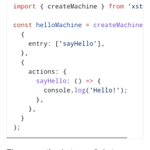
Still working on this this: an open-source toolkit for defining agent logic as typed state machines/statecharts.
Goal: make *any* agent loop/workflow/orch. pattern visualizable, reusable, testable, & framework/SDK agnostic.
If you’ve used XState or similar (Langgraph etc.) w/ agents, I’d love your thoughts on what works, what doesn't, what's missing.


Asher Cohen 🤖🤳 retweeted
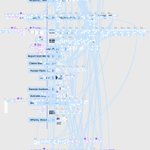
Early POC demo from a talk I gave recently: youtu.be/uMvTAF280so?t=1401
This goes beyond "draw a workflow, run a DAG"
It gives agents explicit models for decisions, planning, retries, interrupts, tool calls, memory, and human input, making the logic analyzable, visualizable, testable, and reusable instead of buried in prompts and glue code.

Asher Cohen 🤖🤳 retweeted

Like many Italians, I'm paying my 2025 taxes.
Thankfully, 2025 has been an incredible year for me (I'm under Italy's regime ordinario). But there's something that genuinely makes no sense.
First of all, more than 50% of my personal income goes to taxes and contributions (INPS, IRPEF, and others).
But what really blows my mind is this:
In Italy, you don't just pay the taxes for the previous year.
You also have to prepay part of the following year's taxes.
Here's how it works:
If I make €100, I pay roughly:
€50 in taxes for 2025.
Another €25 as an advance payment for 2026.
The catch?
That €25 advance isn't based on what I'm earning in 2026.
It's based on what I earned in... 2025.
So imagine this scenario:
1. 2025 revenue: €100
2. 2026 revenue (so far): €10
You're still expected to pay €75 (€50 in taxes + €25 in advance), even though your current year's income has collapsed.
How does that make sense?
We're living in a world where governments have access to real-time financial data, AI, predictive analytics, and sophisticated forecasting tools.
So why is the advance payment calculated solely on last year's revenue instead of using a reasonable estimate based on how the current year is actually going?
I'm not even debating the tax rate here.
I'm questioning a system that can create massive cash-flow problems for entrepreneurs and freelancers, simply because it assumes next year will look exactly like the last one.

Asher Cohen 🤖🤳 retweeted

Formal Complaint: GitHub Copilot Token-Based Billing Model
@GitHubCopilot
Subject: Critical Issue with New Token-Based Billing — Product Has Become Unusable
Summary of the Issue
I am writing to formally complain about the recent shift to token-based billing for GitHub Copilot, which was rolled out this morning. This change has fundamentally broken the value proposition of the product and is rendering it unusable for paying subscribers, including myself.
Specific Problems Observed
Within just a few hours of the new billing model going live, the developer community is already reporting alarming consumption patterns:
Pro+ subscribers paying $39/month are reporting that 60% of their monthly credits were depleted in only 2 hours of normal usage.
One user reported losing 20% of their entire monthly allowance from a single file review — no code generation, just a review.
At this rate, a paying customer will exhaust their plan in less than a single working day, despite paying a premium subscription fee.
This is not "normal usage at scale" — this is a broken pricing model that punishes the very developers who rely on Copilot daily for their work.
Why This Makes the Product Unusable
The core promise of Copilot was a predictable, always-available AI coding assistant integrated into the developer workflow. Token-based billing destroys that promise because:
Developers cannot predict costs. Every keystroke, every file review, every refactor becomes a financial calculation rather than a productivity boost.
The tool actively discourages use. Users will hesitate before invoking Copilot, defeating the entire point of an AI assistant.
The $39/month Pro+ tier is misleading. Customers signed up expecting reliable access, not a pre-paid metered service that runs out mid-morning.
Heavy users — your most loyal customers — are penalized the most.
The Competitive Reality
While GitHub Copilot is moving toward a restrictive metered model, competitors are moving in the opposite direction:
Cursor offers Composer 2.5 with unlimited usage once token limits are reached on their plans, ensuring developers can keep working without interruption.
Other tools (Windsurf, Cody, Continue) offer flat-rate or far more generous usage tiers.
Developers will not stay on a platform that runs out of credits before lunch when alternatives offer uninterrupted productivity at the same or lower price point.
My Demand
If GitHub does not revise this licensing model, the product is effectively dead. I am requesting:
Reinstatement of a flat-rate unlimited (or effectively unlimited) tier for Pro and Pro+ subscribers.
Transparent, upfront communication of what each interaction actually costs in tokens.
A grace period or credit refund for users who burned through their allowance under the new model without warning.
A long-term commitment that core IDE-integrated features will not be metered into uselessness.
Without these changes, I — along with a growing number of developers — will be canceling our subscriptions and migrating to Cursor or competing alternatives. The decision to monetize aggressively at the expense of usability will not be remembered as a successful pivot; it will be remembered as the moment GitHub Copilot lost its market.
Please escalate this to the product and pricing teams immediately.
Asher Cohen 🤖🤳 retweeted

I don’t usually share things like this, but I think it’s important to be honest.
I’ve been looking for a full-time role since September.
I’m a senior iOS engineer + product designer with 10+ years experience, and I’ve spent that time building and shipping real products (most recently: @ateiq_app, @naturalis_app, @getuppapp).
Despite interviews and ongoing work, I’m now about a month away from needing something stable for my family.
If you know a team that values someone who can both design and build, I’d really appreciate an introduction.
Thank you! ❤️
Asher Cohen 🤖🤳 retweeted

Italy’s "Piracy Shield" forces providers to block content in under 30 minutes without judicial oversight, which leads to overblocking (taking down legitimate websites alongside infringing ones).
We're appealing a €14M fine to protect the Internet from automated censorship and ensure infrastructure providers aren't forced to overblock.
cfl.re/4cMh0WA
