




nvidia doubled revenue in a year to $115.8 billion.
the part nobody's posting: customers now owe it $81 billion, up from $38.5 billion in january. that's 70% of a full quarter's sales sitting unpaid.
the ai boom is real. it's just increasingly on credit.

3
101
the faa just ground stopped every airport in the country.
official advisory: "due to extraordinary circumstances and for reasons of safety."
all departures frozen until further notice. inbound international flights handled case by case.
no reason given yet.

513
a 50% loss needs a 100% gain just to get back to even.
down 10%, you need +11%
down 25%, you need +33%
down 50%, you need +100%
down 80%, you need +400%
avoiding the big loss matters more than catching the big win.
1
78


The loan lives on the ledger. The credit check does not.
Most people hear "on-chain lending" and picture a robot bank that seizes your coins when a chart moves.
That is not what the XRP Ledger Lending Protocol is building.
The loan terms, the vault of pooled funds, and the repayment schedule sit on the ledger. The decision about whether you are a good borrower does not. That split is the whole design.
Three roles, no branch office
- Depositors put one asset into a Single Asset Vault and receive shares that track their claim.
- A loan broker creates the vault, picks borrowers, sets terms, and runs the loans.
- Borrowers take a fixed-term loan from that vault and repay on the schedule written into the loan.
The money moves on-chain. The underwriting stays off-chain. The broker does the credit work. The ledger records the result.
What the protocol refuses to do
This version does not run automated collateral or liquidations. Miss a payment and the loan enters a grace period. After that, the broker can mark it defaulted. There is no cascading wipeout machine watching a price feed. Credit risk is treated as credit risk.
First-loss capital: the broker goes first
The broker can optionally lock the same asset as first-loss capital. If a loan defaults, that buffer pays into the vault before depositors take the hit. It does not erase loss. It changes who eats it first. If the cover falls below the broker's minimum, the broker cannot issue new loans or collect fees until it is topped up. Skin in the game is a ledger rule, not a slogan.
The short version
A vault holds the money. A broker underwrites the borrower. The ledger enforces the loan. The broker's own capital burns first when things go wrong. No robot bank. Just credit, with the terms written where everyone can read them.
The Lending Protocol is still an amendment open for validator voting.
@XRPLF #XRPEducationMonth
Sources: xrpl.org Lending Protocol, Single Asset Vaults, XLS-66
2
5
124
amd is up 135% this year and still 22% off its high.
today google said its newest ai servers run on amd chips. stock +12%.
3
128
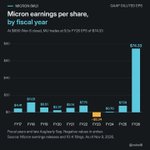
micron is 41% off its high at 10x earnings. in memory, a low p/e is a question, not a discount.
last two record years: fy18 eps $11.51, then $5.51. fy22 $7.75, then −$5.34.
fy26 was $74.33. new floor or another peak?

2
80

selling stocks for cash? check what’s left after inflation.
september’s 3-month t-bill yield: 3.94%
trailing inflation: 3.74%
gap: 0.20 percentage points, before tax.
cash can reduce market risk without doing much for purchasing power.

1
3
88
before you quit your job to trade, try withdrawing your rent from the account every month.
“profitable” looks different when the money has to leave.
1
48
