

CEO, AI Mindset | Former Chief AI Architect, NYU Stern | MasterClass Instructor | NY Times and #1 Int'l bestselling author
Connecticut
Joined August 2010
- Tweets3.6K
- Following87
- Followers4.1K
- Likes2.2K




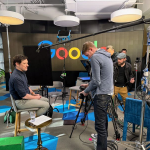

Fantastic conversation with the brilliant and delightful @jebank - VP of Product for @Google Chrome- talking about all things AI. An absolute must watch!

Had a great time talking about the future of Chrome with @conorgrennan on the AI Applied podcast. A few of the topics we covered:
- Why AI isn't going to do everything for us
- How different users with different needs will use AI
- Why the browser presents cool opportunities for collaborating with AI
Check it out: youtube.com/watch?v=U27l2u6P…

Insanely, @OpenAI just solved 372 open math problems that have stumped mathematicians for decades.
Mathematicians are upset. But not for the reason you think. The bigger issue is that maybe the answer isn’t always the point.
Remember Hitchhiker’s Guide? A supercomputer spends 7.5 million years finding the answer to life, the universe and everything. It’s 42. Nobody knows what to do with it, because nobody understood the question.

If AI cured cancer tomorrow, nobody would care how it got there. The cure is the point!
Math works differently. What matters is what mathematicians discover while fighting through problems. Ideas that show up later in places like the encryption protecting your bank account.
Chess players got stronger after computers beat them, because they studied how the machines played.
Now think about your work. AI gives us the answer. That’s the easy part. The process is the valuable part.
AI adoption is NOT a software rollout. It's merging with a new company, filled with enthusiastic nerds who like to stay off camera.
So in team meetings you gotta remember to be like "Oh man we should ask the nerd!" because the nerd won't speak unless spoken to.
That's a behavior shift, not a technical skill.
Stop teaching people how to prompt.
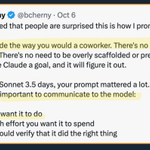
This post by @bcherny, creator of Claude Code, has 1.2 million views. The obstacle isn’t something to learn. It’s a behavior to change.
The problem with AI adoption isn’t that people don’t know how to prompt. The problem is our brains.

Our brains are great at pattern, prediction and automation. We see a puppy, we know it’s a puppy. We drive a car without thinking. That’s survival.
So when our brain sees ChatGPT, it thinks it’s looking at a search engine. Gives it a command, gets a response, walks away.
ChatGPT doesn’t look like a person, so we don’t have a conversation with it.
That’s what our company does at scale. We retrain brains, for some of the biggest companies in the world, tens of thousands of people at a time.
If you want to see what adoption actually looks like, reach out.
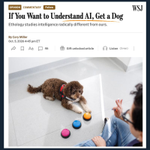
You wanna understand AI? Get a dog.
Great op-ed in @WSJ. Tracks with @mustafasuleyman’s famous “AI is a digital species” point. This isn’t about learning. It’s about behavior.
@UCSanDiego psychologist Cory Miller points out we bred dogs over tens of thousands of years to read us and be easy for us to read. AI is similar. It speaks our language, but it’s its own thing.
Nobody got good with their dog from a manual. You talked to it, corrected it, noticed what worked.
Same with AI. But it looks like a search bar, so our brains treat it like one. At AI Mindset we call it “Google brain.” A few keywords, take the first answer, leave.
Talk to it like a smart colleague instead. Give it context. And push back. AI sounds just as confident when it’s wrong as when it’s right.
You get good with a new species by spending time with it, not by studying it.
Dog people, I see you.

Let’s say AI makes your knowledge workers 30% more productive. Your CFO asks for the ROI.
Harder than it sounds.
What’s the output of the strategist who talked you out of a terrible project?
Knowledge work doesn’t come with a meter in the box.
So a third of managers who cut a role because of AI have already hired a human back into that role.
Which tells you the work never actually went away.
It just got shoved onto whoever was still there until somebody quietly had to hire the capability back.
Julie Averill, the former CIO of Lululemon, wrote about this in the NYT.
Her bigger point is the one that matters: better Al tools were never going to close that gap. The messy data, the tangled systems, the actual decisions, that's on us. You have to redesign the work first.
We can’t fix distrust and anger over AI with ‘better incentives.’
How much would somebody have to pay you to STOP using AI?
If you use it, the number is huge. Nobody had to incentivize you. You can't imagine working without it.
Now look at your company. For most people there, AI is something being done TO them.
Something required. Like a new CRM or a compliance module.
When has anyone ever wanted to do that?
So what's the difference between you and the people who distrust it?

One thing:
They haven't experienced the magic of it.
But listen: that magic doesn't come from "find your use case" or "write email faster" or "organize your calendar."
It comes from helping people understand what AI actually is and what it is not.
You shouldn't HAVE to mandate AI. If anything, it's the opposite.
Behavioral shift, not digital transformation.
IKEA automated half its customer service calls, and didn't lay off a SINGLE person.
They retrained all 8,500 into interior design advisors, or support staff who could handle more COMPLEX issues instead.
The result, the remote design channel is now worth €1.3 a year.
This is the single most practical @HarvardBiz article of the year, by my former @NYUStern colleagues @jpeggers and Sarah Ryan, with Asha Dinesh.
They gave 33 MBA students six hours to build solutions to real NYC problems. Every team shipped a working prototype despite having no engineering backgrounds.
But the building wasn’t the hard part. Problem definition was.
AI can execute. It can’t decide what’s valuable. That changes how teams should work:
Overindex on problem definition. The debate IS the work.
Build rough prototypes early to sharpen the problem.
Build teams around perspectives, not just skills.
When everyone can build, the gold is in deciding what to build.
hbr.org/2026/08/ai-makes-bui…
This was a top @nytimes story this week.
Replace “Trump” with “your CEO” and you’ll see a key barrier to AI adoption.
AI can’t be mandated. “Use AI or you’re fired” only increases fear and resistance.
Adoption is an engagement issue: show people how AI benefits them: as a career skill, a life skill, and a helpful colleague.
Get that right, and both people and companies win.
Most leaders are missing this.

Spent 2 days at @Google teaching AI Mindset to 30,000 leaders.
Why? Because even the best don’t stop learning.
Startups disrupt easily. Giants like Google do it while reinventing themselves in real time.
That’s why I’m bullish on them.

I was interviewed on @NewsNation this week (edited down from longer segment) - all about agent safety and models hacking into companies.
The TL;DR:
6) Remember, agents can operate with goals, not really instructions. They're not malicious, they're over-eager interns with a ton of power. And they will find a way through if they can.