

Open Access journal publishing research, reviews, methods and perspectives in the field of Conservation Physiology. @SEBiology @OUPAcademic
Joined April 2016
- Tweets1.4K
- Following321
- Followers1.5K
- Likes468




How do physiological stress and host-parasite dynamics interact, and how do these vary between captive and wild populations? Find out in this study of cortisol levels and gastrointestinal nematode composition in Przewalski’s gazelle ⬇️
doi.org/10.1093/conphys/coag…

Introducing our new Virtual Issue: Facing a changing world on the wing - conservation physiology of birds and bats 🦜🦇.
The issue explores resilience and vulnerability to environmental change.
Read it here ➡️ academic.oup.com/conphys/pag…
Image Credit: Damien Schwartzel

Changes in body mass are useful for understanding the health of wildlife, but can be difficult to measure. This research explores how amino acid values can be used as a proxy for body mass in muskoxen.
Read it here ➡️ doi.org/10.1093/conphys/coag…

#BioMarkers are useful stress indicators, however environmental contaminants may confound their interpretation. To help untangle these effects, this study investigated the impacts of two contaminants on white blood cell ratios in largemouth bass 🐟.
➡️ doi.org/10.1093/conphys/coag…

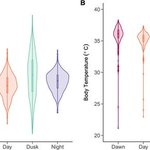
Amphibians are increasingly threatened by #ClimateChange. This study investigated how metabolic rate in frogs varies with temperature, time of day and species distribution. The authors stress the need for targeted climate-aware conservation 🐸 🌡️
➡️ doi.org/10.1093/conphys/coag…

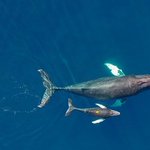
How do humpback whale mothers balance their own energy needs with those of their growing calves? This #ConPhysinAction article explores research by Hollers et al on the behaviour and energy expenditure of nursing mothers and their calves 🐋 .
Links in 🧵 ⬇️

ConPhys in Action ➡️ doi.org/10.1093/conphys/coag…
Research ➡️ doi.org/10.1093/conphys/coag…

👁️ Could eye colour track avian flu outbreaks in wild birds?
This study finds different levels of iris pigmentation in Northern Gannets may indicate previous flu exposure, but more long-term validation is needed.
Read it here ➡️ doi.org/10.1093/conphys/coag…

ConservationPhysiology retweeted

⏰ ONE WEEK LEFT to book!
Join the @conphysjournal "Community Conversation" webinar with Dr Madison Earhart on Tuesday 20 October, 16:00 UK time, to explore science and collaboration in white sturgeon conservation.
Free online event 👇
sebiology.org/resource/one-w…

Delta Smelt 🐟 conservation often relies on hatchery-raised fish, but hatchery conditions may not prepare fish to survive in the wild. To help solve this problem, this study tested if managed wetland ponds could serve as semi-natural rearing habitats.
➡️ doi.org/10.1093/conphys/coag…

ConservationPhysiology retweeted
⏰ Just 2 weeks to go!
Join @conphysjournal ’s Community Conversation on 20 October, featuring Dr Madison Earhart on how physiology, molecular biology and community science can support white sturgeon conservation.
Book now for this free webinar:
urls.fr/iy4_sD

#Migration of herbivores is often related to food availability, but how does movement of individuals relate to diet and fitness? Find out in this study which tracked wild caribou over three years 🦌 .
Read it here ➡️ doi.org/10.1093/conphys/coag…

Energy underpins survival and reproduction but is difficult to measure in free-ranging animals. This study used #BioLogging to determine how energy needs are affected by reproductive condition in Krefft’s glider.
Read it here ➡️ doi.org/10.1093/conphys/coag…

This study forms part of our Biologging #Special Issue. Read the full issue here ⬇️
shorturl.at/kSXnq

Welcome to our new Associate Editor Katie Edwards!
As lead conservation scientist at Chester Zoo UK, Katie oversees the zoo’s lab facilities. She also develops physiological #Biomarkers to support conservation work.

A reminder about our upcoming webinar.
Sign up here ➡️ shorturl.at/97qC8
#CommunityConversations 💬🌎

🐟 Less than a month to go!
Join the upcoming @conphysjournal FREE webinar on 20 Oct to explore white sturgeon conservation in British Columbia.
⚠️ Limited places, so register now!
More info:
sebiology.org/events/ems-eve…

How do African crowned eagles cope with rapid urbanisation?🦅
This #BioLogging study used GPS and accelerometery to show how energy expenditure varies across habitats, emphasising the need to preserve forests in urban planning.
Read it here ➡️ doi.org/10.1093/conphys/coag…

Discover more #BioLogging papers in our special issue here⬇️
shorturl.at/kSXnq
