

Interdisciplinary, peer-reviewed, open-access journal of population studies. Published by @bib_bund
Wiesbaden, Deutschland
Joined February 2019
- Tweets279
- Following140
- Followers607
- Likes268




Using migration data from 1991–2024 a new study finds that 🇩🇪German #mobility🧳has returned to pre-pandemic levels.
Despite remote work, migration is increasingly shifting toward #urban counties beyond the largest cities and not rural areas.
comparativepopulationstudies…
#poptwitter

🧵How do neighbourhoods function in immigrant settlement trajectories?
📍Evidence from 🇩🇰
🏘️A new lens on #neighbourhood effects, #mobility & #integration
The study introduces "sinks & sluices" to capture how places function for different immigrant groups
comparativepopulationstudies…

Rather than focusing only on neighbourhood characteristics, the geographies of settlement, stability & onward mobility are examined
The paper is part of the special issue “Migration Trajectories Across the Life Course”
#poptwitter

1/2
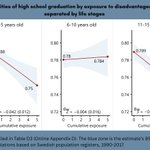
Neighbourhood disadvantage🏠 & education📚
Using 🇸🇪 registry data @M_Lecoursonnais @HaleyMcavay find:
Cumulative exposure to disadvantaged neighbourhoods is associated with lower chances of high-school graduation, with strong effects during adolescence comparativepopulationstudies…

2/2
Where children grow up matters — and when they are exposed matters too.
The paper is part of the @cpos_journal special issue “Migration Trajectories Across the Life Course”.

1/2
How does migration change as societies and places transform?🌍
New research using data from Nepal’s Chitwan Valley Family Study traces migration trajectories across 5 birth cohorts. The study shows growing differences between male and female migration:
comparativepopulationstudies…

2/2
Increasing international out-migration among men & rising stasis especially among women
The paper belongs to the special issue “Migration Trajectories Across the Life Course”, guest edited by Sergi Vidal, Aude Bernard, and Riccardo Valente
@never_minded @IUSSP @SociologiaUAB

🧵1/2
New research on the historical Netherlands (1850–1940) shows how #migration can be transmitted across generations. Parents’ and individuals’ migration experiences increased later internal #mobility. While family ties often acted as anchors to place.
comparativepopulationstudies…


🧵
The Nordic experience challenges a key assumption of the gender egalitarian #family model: greater gender equality has not translated into higher fertility. With Nordic fertility below 1.5, the promised demographic advantage has largely disappeared. So?
comparativepopulationstudies…

The debate continues. A rejoinder offers an alternative reading of the evidence and challenges the original article’s conclusions on gender equality, family formation, and fertility. Find it here:
comparativepopulationstudies…
🧵1/2
Andrea Monti & @EleonoraMussino show that people who expect to re-migrate are more likely to do so - but living conditions play a crucial role. Social ties, children, health or economic resources all shape whether people stay, return, or move onward
comparativepopulationstudies…

2/2
The findings highlight that #migration is not a one-time decision, but a dynamic process that unfolds along life trajectories and in response to changing circumstances.
The paper is part of the @cpos_journal special issue “Migration Trajectories Across the Life Course”

While Southern and Eastern Europe are both undergoing the Second Demographic Transition, they are following distinct structural pathways shaped by their unique contexts. Animated 3D scatter plots reveal these complex #demographic trajectories
comparativepopulationstudies…
#poptwitter

Comparing the🗺️fertility upticks of 2000 and 2021 reveals @HFDatabase:
▶️while the millennial increase was driven by first births across a broad age range,
▶️the pandemic uptick was mainly driven by women aged 30+ and second and higher-order births
#STFF
comparativepopulationstudies…

🧵1/2
#Migration histories matter
A recent @cpos_journal study shows (repeated) international migration is associated with poorer #MentalHealth in later life, highlighting the importance of a life-course perspective when analysing migration
comparativepopulationstudies…
@SHARE_MEA

🧵2/2
This article is part of our upcoming special issue “Migration Trajectories Across the Life Course”, guest edited by Sergi Vidal @never_minded, Aude Bernard, and Riccardo Valente
@IUSSP @SociologiaUAB

📊 How do causes of death change over time—and what does that tell us about health trends?
Our latest study visualises time- and age-specific shifts in disease roles across the US 🇺🇸, Denmark 🇩🇰 & Czechia 🇨🇿
#PublicHealth #MortalityTrends #MCD #poptwitter
comparativepopulationstudies…


A new study on 🇪🇸 fertility preferences shows that #fertility desire is mainly linked to age, religion, education & family background, while intention depends more on life-course factors like job stability, leaving the parental home & living with a partner
comparativepopulationstudies…
