

Head of Research @iotex_io | PhD @UWaterloo | Applied Cryptographer | Researcher | Entrepreneur
Joined November 2016
- Tweets176
- Following441
- Followers819
- Likes232





Based on the latest research from @AnthropicAI, the NIST standardized elliptic curves that have been widely used to secure Internet communications were generated randomly.
anthropic.com/research/ecdsa…

OpenAI's drop of 722 AI-generated math papers sparked alarm: could AI find classical breaks in cryptography's core math before quantum computers arrive? After a week of debate, Stanford's Dan Boneh and @a16zcrypto weighed in. Here's the state of play.

AI is getting better at solving hard math problems, especially given recent drops. But what does that mean for the cryptography that protects everything from private messages to healthcare to banking and crypto wallets?
Stanford cryptographer Dan Boneh, with @eddylazzarin, @SuccinctJT, @liz_harkavy, and @smc90, makes sense of the warnings sounded recently. They cover:
- what’s fact vs. assumption
- what’s new and what risks cryptographers have long prepared for
- where quantum computing doesn't (and does) fit
- opportunities for builders
Highlights:
00:37 – What sparked the most recent debate about AI and cryptography
01:35 – Signal vs. noise: What the math does and doesn’t tell us
05:29 – Why cryptography depends on open problems
09:25 – Why the stakes go beyond blockchains
10:43 – How AI could strengthen confidence in cryptography
13:50 – Considerations for users and institutions
20:10 – Where AI and quantum threats overlap
22:32 – Building systems that can change cryptographic methods
23:59 – Hash-based versus lattice-based cryptography
33:07 – Opportunities for builders, and better security tools
38:14 – What comes next if there were a cryptographic break?
Mitigation now:
• Users: change nothing, avoid panic moves
• Institutions: keep pubkeys off-chain (already standard) • Hybrid sigs: ECDSA + hash-based 2-of-2
• Labs: red-team standard crypto, disclose to industry and government first
🧵 AI just hit 89.3% accuracy predicting real-world events on Polymarket. Humans? 98.2%. But the gap isn't the story. The real story is what happens when crypto and AI finally merge—and why most builders are getting it completely wrong. 👇
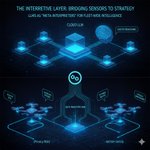
Studies show AI will exhaust public training data between 2025 and 2030. The next frontier? The private web—emails, health records, financial data. Crypto oracles paired with TEEs are the only path to unlock it without breaking privacy. 🔓
This IC3 survey is the clearest map yet of where crypto and AI actually intersect—and where the hype falls apart. Required reading for anyone building at this stack:
🔗 aic3.io/crypto-x-ai-survey.p… 📖