

Marine Paleo/Biologist; Asst Prof @Stockton_edu. She/her. Echinoderm, macroevolution, phylogenetics, biogeography, taxonomy. 🇧🇷🏳️🌈🏵
New Jersey, USA
Joined February 2017
- Tweets419
- Following0
- Followers235
- Likes510





Camilla Souto retweeted

How hard is it to do science in a language that’s not your first language? We quantified the severity of #languagebarriers for non-native English speakers when reading/publishing papers and attending/presenting at international conferences.
doi.org/10.1371/journal.pbio…
1/9

Camilla Souto retweeted

New paper by @PhilDavidson Great job, Phil! @GIGA_COS @uricels @NMNH
Near-Chromosomal-Level Genome Assembly of the Sea Urchin Echinometra lucunter, a Model for Speciation in the Sea academic.oup.com/gbe/article…

Camilla Souto retweeted

Extraordinary claims require extraordinary evidence. In our new @Nature paper, Darrin Schultz @conchoecia used the position of genes on chromosomes to show that ctenophores (comb jellies) not sponges are the sister-group to all other animals. nature.com/articles/s41586-0…

ALT Dan Rokhsar and Darrin wrote most of the first draft of the text, and Oleg Simakov and Dan laid the foundation for looking at these conserved blocks with their work on Ancestral Linkage Groups (ALGs). Darrin and I explored ways to visualize and interpret the results.
Camilla Souto retweeted

Our paper integrating fossils, genes, & development to deuterostome evolution has been published in its final form for Biological Reviews!
Check it out! @KNanglu @LenaDoesScience @csout0
dx.doi.org/10.1111/brv.12908

Camilla Souto retweeted

Studying reproduction in extinct organisms is challenging, and a fossil record of genitalia is very rare.
Luckily the penis bone (baculum) of mammals fossilizes sometimes.
I described this bone for an extinct subfamily of canids, the Borophaginae
doi.org/10.1371/journal.pone…


Camilla Souto retweeted

These are Phoronids, a small group of marine invertebrates that belong to the phylum Lophophorata. They are often referred to as "horseshoe worms" due to the shape of their lophophores, which are ring-like structures that encircle the mouth and are used for filter feeding.


Camilla Souto retweeted

Sea urchins are so 2010s, so I present to you the first phylogenomic study of sea cucumbers
biorxiv.org/content/10.1101/…

Camilla Souto retweeted

@csout0 yaiiii!! 🥳

Thanks to Dr. Cindy Looy, @ucberkeley & @ucmpberkeley a total of eight portraits made it into the exhibition. We're thrilled this spectacular collection will be returning to Berkeley permanently! You have helped us get closer to our $15,000 goal to establish an endowment fund!

Camilla Souto retweeted

sepkoski 0.0.1 is now on CRAN📦!
cran.r-project.org/web/packa…
The package is provided to support teaching exercises and an example dataset for function documentation.
Features include:
- Access to Sepkoski's compendium🐚
- Plotting Sepkoski's curve 📈
#CRAN #rstats #palaeobiology

Camilla Souto retweeted

In a particularly good week for me, our paper on the initial diversification of sea urchins, over 400 million years ago, is now available for free! Please check it out if you're interested in where and when #echinoids evolved. Or if you like the #Ordovician!

📢JSP Outstanding Paper Award for Vol. 19 has been awarded to @echinerd et al. for their paper: 'The Ordovician diversification of sea urchins: systematics of the Bothriocidaroida (Echinodermata: Echinoidea)'. Free access at tandfonline.com/doi/full/10.… @tandfenviro

Camilla Souto retweeted

Looking for something to read as you wait in line to cast your vote?
Look no further than our new paper in #PNAS exploring changing diversity in the Ediacara Biota!
pnas.org/doi/10.1073/pnas.22…

Camilla Souto retweeted

#WormWednesday I’m excited to share that our paper on Deuterostome origins is now out in Biological Reviews; @csout0 @LenaDoesScience @Davey_F_Wright and I survey the fossil, developmental, and molecular evidence for early deuterostome evolution: tinyurl.com/3etzhppv 🧵👇

Camilla Souto retweeted

IZ's @CastelloBrancoC featured in a Guardian piece on sponges and the deep sea habitat that @echinoblog dubbed "The Forest of the Weird" theguardian.com/environment/… “These kinds of environments with this diversity of sponges are more common than we used to think.”


Camilla Souto retweeted

The amount of megafauna which was lost in the Americas at the end of the Pleistocene was Immense. Here are just the sloths that went extinct between 17,000-4,500 years ago! 6 families, at least 22 genera and about 32 species!!! THINK ABOUT THAT!
This is still a WIP

Camilla Souto retweeted
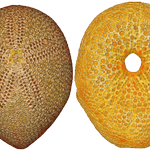
OH NEAT! A closeup of this heart urchin with the weird sea cucumber like tube feet! attn @csout0 !! #echinoday

Camilla Souto retweeted

If the photo yesterday was great, I think this video is even better. This hadal jellyfish, again, at 7396 (!) meters, is just beautiful watch. It floats in like a spaceship, but at 0:30 begins to thrust. It comes back around 1:00 to investigate the lander. Simply amazing.
Camilla Souto retweeted
!! This is something I've never seen before. An urchin- BUT its using some kind of sea-cucumber like feeding structures? modified tube feet? How weird! #echinoday