



PUNK OF THE DAY #7: Ian MacKaye
He turned down $millions to keep a $5 promise.
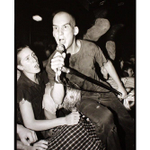
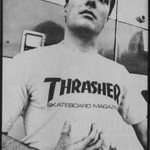
Ian MacKaye was a teenager in Washington D.C. when he started Minor Threat in 1980. They played hardcore, punk stripped to its fastest and angriest form. One of their songs was called "Straight Edge." Under a minute long. MacKaye was singing about his own choice: no drinking, no drugs. He had no idea he was naming a movement. Kids around the world started marking X's on their hands and building their lives around that one song.
When Minor Threat broke up in 1983, MacKaye started Fugazi. And Fugazi ran on rules the music business couldn't comprehend. Most shows cost $5, for 16 years. They turned down every major label offer, and the offers were enormous. They barely sold merch. They booked their own tours and ran their own sound. If the crowd got violent, MacKaye stopped the song mid-chord, refunded the offenders, and had them thrown out.
He also ran Dischord Records, the label he co-founded as a teenager with $600 from gigging, pressing a thousand singles by hand. Every record stayed in print. Every record stayed cheap.
The industry called it bad business. He called it the whole point.
Privacy is punk. 🖤
$PUNKZ
$CYPH

138
PUNK OF THE DAY #6: Eric Hughes
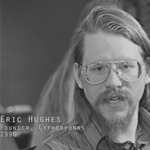
You've likely never heard of him. He wrote the document the entire cypherpunk movement runs on.
Cypherpunks were the cryptographers, programmers, and privacy fanatics of the 90s who decided your digital life belongs to you. They built the encryption the internet runs on. Bitcoin was born on their mailing list.
Eric Hughes was the one who gave them their creed.
He was a mathematician at UC Berkeley. In September 1992 he sat down with Tim May and John Gilmore and started the cypherpunks mailing list. Hughes ran it. He also built the first anonymous remailer, a server that stripped the identifying info off emails so people could speak without being traced. In 1993, the same year the White House pushed the Clipper chip, a government backdoor for every phone call, building that server was picking a fight.
On March 9, 1993, he published A Cypherpunk's Manifesto. Seven paragraphs. The first sentence: "Privacy is necessary for an open society in the electronic age."
He drew the line most people still blur. Privacy is not secrecy. A private matter is something you don't want the whole world to know. A secret is something you don't want anyone to know. Privacy is the power to choose what you reveal and to whom.
Then the punch. Governments and corporations will never grant you privacy. So stop asking. Build it yourself, with code. He closed with the line that became the movement's motto: "Cypherpunks write code."
Two months later he was on the cover of Wired, masked, one of three cypherpunks staring down the camera.
He never got famous. He wrote the creed, built the tools, and let everyone else take the credit.
Privacy is punk. 🖤
$PUNKZ
$CYPH

64
PUNK OF THE DAY #5: Poly Styrene
In 1977, a 19-year-old with braces on her teeth started a band and named herself after cheap plastic.
Marianne Elliott-Said became Poly Styrene, frontwoman of X-Ray Spex. A mixed-race woman leading a punk band in 1970s London. Nobody else on those stages looked like her.
First single: "Oh Bondage Up Yours!" Opening lyric: "Some people think little girls should be seen and not heard, but I think: oh bondage, up yours!"
The 1978 album, Germ Free Adolescents, was about consumer culture eating people alive. "The Day the World Turned Dayglo" was about conformity. "I Am a Cliché" was about the media manufacturing your identity and selling it back to you. She wrote that in 1977. No internet. No data brokers. Just television and billboards, and she already saw where it was going.
She quit the band in 1979, at the height of it. Joined the Hare Krishna movement and stepped out of public life. No image to maintain, no audience to perform for, nothing left to sell.
She stayed out of the spotlight for most of her life after that. Died of breast cancer in 2011, age 53. Her daughter made the documentary "Poly Styrene: I Am a Cliché" years later.
She would not be a product. That was the whole point.
Privacy is punk. 🖤
$PUNKZ
$CYPH

4
5
303
Zcash miners at $CYPH are earning ~$1,019/MWh right now.
The best Bitcoin miners: $126-180. AI data center hosting: ~$214.
So ZEC mining pays roughly 5-8x what BTC mining or AI hosting does. Well done @SinoCrypto!
Miners printing at these margins don't sell. They stack. Tight supply, rising price. $CYPH price goes up.
$PUNKZ

1
1
168
PUNK OF THE DAY #4: Timothy C. May
In 1988, an Intel physicist wrote a manifesto predicting encryption would make governments obsolete. Then he quit his job and disappeared into the mountains.
Tim May wasn't some fringe character. He was a senior scientist at Intel who solved one of the chip industry's nastiest problems (why radiation was corrupting memory chips). At 34, financially set, he walked away from all of it.
He then went on to write the Crypto Anarchist Manifesto, arguing that strong encryption would let people trade, talk, and organize completely outside government control. No permission, no surveillance, no middlemen. In 1992, he hosted the first cypherpunk meeting at his house. That living room birthed the world PGP came from, the world Bitcoin came from, this world.
His prediction, written before the web even existed: "Just as the printing press altered and reduced the power of medieval guilds and the social power structure, so too will cryptologic methods fundamentally alter the nature of corporations and of government interference in economic transactions."
May spent the rest of his life as a recluse in the Santa Cruz mountains, writing essays almost nobody read, watching his predictions come true one by one. He died in 2018.
He never voted his way to anything. Never asked. He just described the future and let the math do the rest.
Privacy is punk. 🖤
$PUNKZ
$CYPH

Bitcoin went from roughly $1,000 to roughly $20,000 in 2017. I think ZEC rhymes with its move to $15k.
Here's what happened on those dips.
- January: down ~33% on China exchange news ($1,150 → $775). Then up ~65% to the next top.
- March: down ~25% on the ETF rejection ($1,300 → $950). Then up ~215% to $3,000.
- June/July: down ~38% in the scaling civil war ($3,000 → $1,850). Then up ~170% to $5,000.
- September: down ~40% on the China ICO ban ($5,000 → $2,950). Then up ~165% to $7,800.
- November: down ~30% after SegWit2x was called off ($7,800 → $5,550). Then up ~255% to $19,800.
I think we are around the May 2017 timeframe.
ZEC sits around a $25B market cap. If the analogy holds, the violent middle chapters are still ahead, and so are the runs that followed them.
$320B was BTC's 2017 peak. The same multiple on ZEC is ~13x from here, ~$15K per coin.
Buy the dips, start taking profits above $10K.
In the meantime here's some Clash to help you enjoy the ride. youtube.com/watch?v=xMaE6toi…

PUNK OF THE DAY #3: Jello Biafra
In 1985, the US government & Al Gore's wife tried to put the lead singer of the Dead Kennedys in prison for a poster.
Jello Biafra tucked a poster of surreal art by H.R. Giger (the dude who designed the creature in Alien) inside a Dead Kennedys record sleeve. Tipper Gore's PMRC, the DC crusade that put "Parental Advisory" stickers on albums, got California to prosecute Jello for "distributing harmful matter to minors."
He faced a year in jail. The 1987 trial ended in a hung jury and the charges were dropped. But the legal bills nearly killed his indie label. The government didn't need to win. The process was the punishment.
Biafra kept going: free-speech activism, spoken-word tours, his label on his own terms. He also ran for mayor of SF in '79 on a platform that included mandatory clown suits for businessmen. He finished fourth.
Feds tried to cage Zimmermann for math (yesterday's post), and Jello for art. Different decade, same instinct: control what you see, hear, and say.
He never fit team blue or team red. Attacked the system from every angle, never asked permission.
Privacy is punk. 🖤
$PUNKZ
$CYPH

Back-of-the-napkin $ZEC forecast I sent a friend last month.
IMO… The primary buyer of ZEC is early adopter bitcoiners (who aren't full maxis, which have luckily been fading out). I'm in this category & ZEC is my primary holding. I’m including $CYPH here as it’s potentially high beta.
The 2017 bull run saw BTC hit $20k, which was a $320B market cap. ZEC currently sits at $25B market cap. If ZEC hits $320B, it would translate into roughly $15,000 per coin. That's a 13x return from here.
Note that BTC was only above $15k for 17 days. Timing the top is hard. If/when ZEC goes above $10k, you should start taking chip off the table. Even if that means you’re moving to dollars or stables.
Cash may be trash and you don’t have to sell it all. But you can’t live inside a BTC or ZEC. In the meantime, buy dips and hold $PUNKZ for $CYPH dividends.
2
2
126
PUNK OF THE DAY #2: Phil Zimmermann
In 1991, a software engineer named Phil Zimmermann wrote a program called PGP — Pretty Good Privacy — and gave it away free on the internet.
It let anyone encrypt their email so no government, no corporation, no eavesdropper could read it. Military-grade crypto, free, for everyone.
The US government lost its mind.
At the time, cryptography was legally classified as a munition — same category as missiles and tanks. Exporting it was arms trafficking. Zimmermann was put under criminal investigation for three years. He faced prison. For writing code.
So he did the most punk thing imaginable: he printed the entire PGP source code in a book.
Why? Books are protected speech under the First Amendment. You can ban exporting a "munition," but you can't ban publishing a book. MIT Press printed it, anyone could buy a copy, retype it, and the genie was out worldwide.
The government dropped the case in 1996. Never filed charges. They knew they'd lose.
Zimmermann didn't ask permission. Didn't lobby. Didn't vote harder. He wrote the code, shipped it, and dared the most powerful government on earth to stop math.
Team blue, team red — his enemy was anyone who wanted to read your mail. Still is.
"It's personal. It's private. And it's no one's business but yours." - Phil Z
Privacy is punk. 🖤
$PUNKZ
$CYPH

PUNK OF THE DAY #1: Joe Strummer (no relation)
In 1982, at the absolute peak of his fame — Combat Rock just dropped, "Rock the Casbah" climbing the charts — Joe Strummer vanished.
No note. No explanation. The Clash's management told the press he'd gone missing. Fans thought he was dead.
He was in Paris. Running a marathon.
Strummer had decided the fame machine was eating him alive, so he just walked away from it. Laid low, entered the Paris Marathon under the radar, finished the thing, and eventually wandered back like nothing happened.
This is the same guy who, a few years earlier, forced his label to sell London Calling — a double album — for the price of a single, by giving up the band's own royalties to cover the difference. He paid out of his own pocket so working-class kids could afford the record.
He didn't trust corporations. Didn't trust governments. Didn't trust the music industry, the press, or the celebrity machine — including his own place in it.
That's the thing about the real ones: they weren't team blue or team red. They were team "leave people alone and stop robbing everyone." Solidarity with the working class, hatred of corporate extraction, suspicion of all authority. Doesn't fit on a bumper sticker.
Privacy is punk. 🖤
$PUNKZ

The $PUNKZ manifesto:
Punk (1970s) & cypherpunk (1990s) are the same war fought with different weapons. And those ideals are coming back full circle
Punk (1970s): anti-authoritarian, DIY, distrust everything corporate and state-run. "Here's three chords, now form a band." "Question authority." "No future." The method was cultural — music, fashion, zines. Loud, public, confrontational. Destroy, provoke, refuse.
Cypherpunk (1992, a mailing list): the same distrust, pointed at the coming surveillance age. Eric Hughes' manifesto: "Privacy is necessary for an open society in the electronic age... We the cypherpunks are dedicated to building anonymous systems."
Mantras: "cypherpunks write code." "Privacy is the power to selectively reveal oneself to the world." The method was technological — PGP, remailers, and eventually Bitcoin. Satoshi dropped the whitepaper on a cypherpunk list in 2008.
Same DNA: don't ask permission, build the alternative. Punk's "form a band" and cypherpunk's "write code" are just different forms of poetry and expression to get your message and ideals out to the world.
The difference: punk was often nihilistic and anti-tech, left-anarchist, chasing an audience. Cypherpunk is constructive and pro-tech, politically mixed, chasing working code. One made noise. The other made tools. But both forms live on decades later.
Crypto is where they fused: punk's irreverence (memes, middle finger to Wall St) running on cypherpunk rails.
zcash:native is the purest cypherpunk project alive — shielded transactions fulfilling Hughes' 1993 vision.
$PUNKZ is the synthesis made explicit: punk's cultural rebellion, powered by actual privacy tech, styled with CryptoPunks art, paying holders in $CYPH
Privacy is punk.
1
55
Sid Strummer retweeted

Zcash was born from a cryptographic ritual so secretive that Edward Snowden participated in it anonymously
2013: Bitcoin researchers from Johns Hopkins create Zerocoin
a protocol designed to erase transaction history completely
the idea sounds simple, burn coins and recreate them anonymously
Bitcoin developers reject it
too dangerous, too experimental, months later Zerocash appears and introduces zk-SNARKs
a form of cryptography that hides
- the sender
- the receiver
- the amount
- the balances
But there’s a problem: the system needs a “trusted setup”
a secret master key is generated at launch if someone keeps a copy they can forge unlimited Zcash forever
2015: project abandons Bitcoin completely
Zooko Wilcox launches a standalone chain
October 2016: Zcash goes live
same 21M supply as Bitcoin but with optional hidden transactions
the ceremony:
- six people selected
- identities partially hidden
- hardware isolated from the internet
participants generate fragments of the cryptographic key, then destroy them forever
one participant reportedly uses
- Faraday cages
- air-gapped computers
- random travel routes
- physical destruction of hardware in the desert
the fragments become known as “toxic waste”
because if even one survives the entire system can be compromised forever
for years the sixth participant remains anonymous under the name “John Dobbertin”
2022: identity finally revealed
Edward Snowden
says he joined because Bitcoin’s transparency was a “huge flaw”
He literally participated purely for privacy ideology
2018: Sapling upgrade makes private transactions small enough for mobile devices
Zcash survives multiple bear markets while most privacy coins die or get delisted
2026: former Zcash leaders launch Zodl
a new $25M company backed by Paradigm, Coinbase Ventures and a16z
and today $ZEC is worth billions


7/ Crypto is where they fused: punk's irreverence (memes, middle finger to Wall Street) running on cypherpunk plumbing.
zcash:native is the purest cypherpunk project alive — shielded transactions fulfilling Hughes' 1993 vision.
1
15
$PUNKZ on stonks.fun.
The real cypherpunks mine Zcash, the Zcash DAT prints $CYPH, and $PUNKZ holders get paid. No VC allocation. No roadmap. No mercy.
Just yield with a mohawk.
Fucking buy some already.
1
2
81