

AI in Healthcare // Cardiothoracic Surgery Resident @stanfordctsurg // @nyugrossman and @BrownUniversity @BrownU_SwimDive alum // tweets my own
Manhattan, NY
Joined July 2018
- Tweets88
- Following481
- Followers286
- Likes966



Pinned Tweet
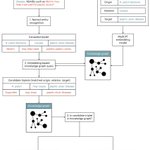
Excited to share our work, published with @SpringerNature @NatureMedicine exploring how we evaluate and verify the capabilities of #medical #AI systems with @ekoermann and colleagues @NYULangone @nyugrossman .
Full paper at nature.com/articles/s41591-0…

Daniel Alber, MD retweeted

🎉🫀Congratulations to four of our integrated residents—@KellyCHiga @AlexanderReedMD @GabeWeininger, and Jon Hochstein, MD—on receiving @NIH's highly competitive Ruth L. Kirschstein National Research Service Award F32 Postdoctoral Fellowship! ✨ Read more: ow.ly/lt5R50ZYxUI

Daniel Alber, MD retweeted

This is a good methodological thread on the debate over a new paper that suggests generalist models beat specialized medical AIs. (And a good overview of the challenges of benchmarking AIs in medicine)

Daniel Alber, MD retweeted

There has ALREADY been a lot written about NYU @openevidence @UpToDate Expert AI study but wanted to give my perspective as what counts for an "expert" in human-computer interaction these days. Especially when I see Twitter debates about item response theory. 🤣
A 🧵⬇️

For medical information, general AI frontier models (Google, OpenAI, Anthropic) outperformed specialized @openevidence and @UpToDate as assessed by 12 US clinicians, randomized and blinded to which model and extensive testing/benchmarks. This was not anticipated. @NatureMedicine
nature.com/articles/s41591-0…

Daniel Alber, MD retweeted

And yet, Mayo Clinic is an investor in OpenEvidence. What's the old saying?
People who live in glass houses shouldn't throw stones.

Rigorous evaluation of medical AI is good for everyone, and we welcome it. Counter to a half-dozen independent studies from institutions such as the Mayo Clinic that were highly positive on OpenEvidence—a lone paper now purports to show that generalized AI beats specialized clinical AI (@UpToDate, @openevidence). The paper has a massive undisclosed conflict of interest and irredeemable methodological flaws.
Behind the scenes: The study authors run a competing in-house medical AI at their hospital, and asked OpenEvidence for an API to power it — including rights to build a "competing product" with OpenEvidence's own API. OpenEvidence declined. Then, this paper coincidentally appeared.
Point-by-point, looking closely at the datasets used in the study, the disingenuous and fatal flaws become immediately apparent 🧵.

Daniel Alber, MD retweeted
There has been a push to use OpenEvidence AI for doctors. But this paper suggests general models are much better: “Frontier LLMs outperformed clinical AI tools in all three evaluations. Clinical AI tools performed comparably to auto-enabled Google Search AI Overview on the RCQ.”
For medical information, general AI frontier models (Google, OpenAI, Anthropic) outperformed specialized @openevidence and @UpToDate as assessed by 12 US clinicians, randomized and blinded to which model and extensive testing/benchmarks. This was not anticipated. @NatureMedicine
nature.com/articles/s41591-0…
Daniel Alber, MD retweeted

Medicine discovers the bitter lesson: frontier LLMs (here GPT 5.2, Opus 4.6, Gemini 3.1) outperform specialized "clinical AI" (e.g. OpenEvidence) in a blind test.
Even funnier that hospital IT are more likely to approve the *specialized* versions despite them being worse.

For medical information, general AI frontier models (Google, OpenAI, Anthropic) outperformed specialized @openevidence and @UpToDate as assessed by 12 US clinicians, randomized and blinded to which model and extensive testing/benchmarks. This was not anticipated. @NatureMedicine
nature.com/articles/s41591-0…
Daniel Alber, MD retweeted

For medical information, general AI frontier models (Google, OpenAI, Anthropic) outperformed specialized @openevidence and @UpToDate as assessed by 12 US clinicians, randomized and blinded to which model and extensive testing/benchmarks. This was not anticipated. @NatureMedicine
nature.com/articles/s41591-0…
Daniel Alber, MD retweeted

Happy to report that our work on building foundation models for Cardiac MRI has finally been published in Nature Biomedical Engineering! @natBME nature.com/articles/s41551-0…


I’m excited to finally showcase our work on developing a generalizable deep learning system for cardiac MRI. This is the culmination of over 3 years of research spanning my time as a postdoc in @HiesingerLab and now as a cardiac surgery resident at @pennsurgery, and I couldn’t be happier with the finished product. Weights to be released for academic use (coming soon!). All built with @pytorch and @pytorch_lightning.
Lots of really cool stuff to unpack, but here are few main results: Contrastive learning with cine-sequence CMR studies from multiple different views (short axis, 2-chamber, 3-chamber, and 4-chamber views) with long-form CMR free text reports is really hard. A good sign for us was how the video transformer embeddings evolved with each epoch. We train for about 600 epochs taking about 2 weeks.
In a zero shot fashion, the model can then do some really interesting things: separate out different diseases (ACDC dataset), and different genders, age groups, and ejection fractions (UK BioBank) with no explicit supervised instruction. No such behaviour with kinetics-600 initialized weights (see preprint)!
Finetuning over our system yields results superior to baseline approaches on downstream tasks of interest, with 10x and sometimes 100x less data. Here’s a quick figure showing how we achieve superior results for UK BioBank LVEF estimation with just 1% of the available data. Better yet, that same model when tested on a Kaggle dataset does exceptionally well (dashed line = kinetics-600 performance on left; lower is better!).
Focusing on some disease diagnosis tasks, we label a separate dataset of some 6000 individual patients. This is real-world representative unenriched dataset. Our methods show massive improvements in AUC compared to baseline methods. Validation set shown here, internal test set (Stanford / Medstar / UCSF), and external test set (UPenn) figures are in the paper.


Daniel Alber, MD retweeted
Hot off the press! ✨ New paper looking at a generalizable deep learning system for cardiac MRI🫀. Led by @StanfordMed @HiesingerLab researchers and collaborators.✨ @Penn @UCSF @rohanshad @cyrilzakka @dhamank24 @mrudangm14 @StanfordDeptMed @StanfordVasc ow.ly/L6UE50YyOiy

Daniel Alber, MD retweeted

I wrote an app using Google AI Studio that calculates how much oversized or undersized a TAVR valve is based on native valve area or perimeter. I know nothing about coding.


Daniel Alber, MD retweeted

Beyond thrilled to match at @ColumbiaCTSurg for Cardiothoracic Surgery!! This is an absolute dream come true, and I am so grateful for all my mentors who have supported me on this journey! @ArnarGeirssonMD @mori_md @MarcPPelletier @YaleCardiacSurg

Daniel Alber, MD retweeted

Over the moon to be heading west to Seattle to join the @UWCTSurgRes family!
Grateful to my mentors @karamlou and @Dr_HaniNajm for fostering my passion for cardiothoracic surgery and for the privilege of caring for these patients.

Daniel Alber, MD retweeted

An absolute dream come true! I couldn't imagine a better team or place to train with! Unbelievably grateful and excited!
@pennsurgery #MatchDay2026 ❤️🫀


Daniel Alber, MD retweeted

Mom I’m going to be a heart surgeon! @UscCardiac back to LA I go! Unbelievable.

Honored to be joining the team @stanfordctsurg!

✨Congrats to our incoming @StanfordCTSurg integrated residents! 🎉 We're excited to have three new interns joining our program: Daniel Alber of @nyugrossman, Oluwademilade Tega of @ColumbiaPS, and Brandon Wesley of @StanfordMed - welcome to the team!🌲#WeAreStanford #Match2026

Daniel Alber, MD retweeted
✨Congrats to our incoming @StanfordCTSurg integrated residents! 🎉 We're excited to have three new interns joining our program: Daniel Alber of @nyugrossman, Oluwademilade Tega of @ColumbiaPS, and Brandon Wesley of @StanfordMed - welcome to the team!🌲#WeAreStanford #Match2026
At @nyulangone @nyugrossman, we get to build real-world healthcare AI from the ground up! Awesome work by the brilliant @lavenderjiang99 @ekoermann.


Daniel Alber, MD retweeted

#EditorsChoice This study performed left ventricular outflow tract modification in patients with an increased risk of systolic anterior motion. Read the results from Loulmet, Grossi, and coauthors👇
doi.org/10.1016/j.athoracsur…
#VisualAbstract


Daniel Alber, MD retweeted

Great paper by @kgrace_phil & co @nyulangone. State of the art review of cardiac xenotransplant.

This review explores the current advancements in xenotransplantation, ongoing challenges, and discuss its future potential in addressing the growing demand for donor organs in cardiac transplantation. @kgrace_phil @NYULangone @PedsLiverTxp @DanielWolbrom ahajournals.org/doi/full/10.…


Daniel Alber, MD retweeted

This review explores the current advancements in xenotransplantation, ongoing challenges, and discuss its future potential in addressing the growing demand for donor organs in cardiac transplantation. @kgrace_phil @NYULangone @PedsLiverTxp @DanielWolbrom ahajournals.org/doi/full/10.…