






Major depression often involves a measurable drop in cellular ATP production.
This matters because your struggle may be a metabolic crisis wearing a costume of meaning.
People with major depressive disorder frequently exhibit measurable mitochondrial dysfunction, including reduced ATP production, lower complex I and IV activity, and altered membrane potential. This deficit appears even in the absence of overt metabolic disease.
When cellular energy production falters like this, two things follow.
First, the relationship between stress and mitochondria is bidirectional. Chronic stress damages these cellular powerhouses, and damaged mitochondria actively amplify the body's stress response, creating a self-reinforcing loop that standard medications and talk therapy struggle to interrupt alone.
Second, the clinical focus expands beyond neurotransmitters. When low mood is paired with persistent fatigue, exercise intolerance, brain fog, and unrefreshing sleep, tracking markers like the lactate-to-pyruvate ratio, inflammatory cytokines, and resting heart rate helps pinpoint impaired oxidative metabolism.
Targeted additions that stimulate mitochondrial biogenesis, such as Zone 2 cardiovascular work and specific metabolic protocols, work directly on this cellular deficit.
Treating the underlying cellular substrate often unlocks responsiveness to every other therapy.
ultraskool.com/blog/depressi…

2
21
3 symptoms like brain fog, anxiety, and gut issues aren't permanent.
They are signs of a dysregulated vagus nerve that can actually be retrained.
When years of specialist visits yield normal test results, it is easy to assume these daily disruptions are simply who you are now.
The vagus nerve is the body's primary parasympathetic pathway for recovery, with about 80 percent of its fibers sending sensory data upward from internal organs to the brainstem. Once you realize this system is dysregulated rather than broken, two things follow.
First, your baseline is retrainable because this pathway is exceptionally plastic. A nervous system running half a step too hot is not a permanent state, and lasting structural changes typically consolidate within four to eight weeks of steady practice.
Second, effective retraining relies on simple physiological cues rather than expensive gear. Slow nasal breathing with a six- to eight-second exhale informs the brainstem that threat is gone, allowing the parasympathetic system to take over.
Targeted physical habits reinforce that shift. Sustained humming after meals engages the laryngeal muscles innervated by the nerve, while a brief cold splash on the face activates the diving reflex to quickly settle an overactive sympathetic state.
Five minutes of focused practice done three times a day consistently outperforms large, sporadic efforts. Small, steady inputs give the nervous system the exact repetition it needs to reset its baseline.
The full breakdown is worth a read.
vagushub.com/getting-started

2
24

🔘🫁🔘"La Covid Persistente pulmonar se asocia con una desregulación de la inmunidad mediada por células T que puede estar relacionada con la autoinmunidad".
@fitterhappierAJ
📊Canadá, R Corea, Australia
publications.ersnet.org/cont…

1
34
Más sobre que todo no es por la proteína S
🧬🔘🧬LA PROTEÍNA ORF8 REPROGRAMA LOS MACRÓFAGOS PARA POTENCIAR LA INFECCIÓN SARS2 EN PULMÓN
🧵1⃣🇺🇸Artículo de numerosos investigadores de múltiples centros de EEUU
@fitterhappierAJ
science.org/doi/10.1126/scia…

1
28
⬜️🫁⬜️ARABIA SAUDí. SECUELAS PULMONARES DE LA INFECCIÓN SARS2: DISFUNCIÓN, RADIOLOGÍA Y CLÍNICA
🧵1⃣Artículo de 3 investigadores de Inaya Medical Colleges, King Fahd Central Hospital, Jazan Univ
frontiersin.org/journals/phy…

1
46
You are likely well aware of the internal vibration phenomenon—that subjective humming often dismissed as anxiety but deeply rooted in the dysautonomic and neuropathic architecture of the body.
You already recognize that when vagal tone drops, the body speaks in a language of resonance rather than simple pain. You understand that the "washing machine in the chest" is the physiological reality of a system struggling for orthostatic equilibrium. You’ve tracked how these flares correlate with stressors, confirming the internal volume knob is governed by more than conscious thought.
You accept that damage to unmyelinated C fibers creates a disconnect in how sensory information is filtered across the nervous system. You know that mast cell degranulation releases mediators that modulate nerve excitability and vascular tone. You’ve seen how clinical dismissal occurs despite the pathology of cerebral hypoperfusion being well-documented.
What you are experiencing is the specific signature of mast cell mediators lowering firing thresholds while small fiber neuropathy leaves signaling channels unbuffered. The internal tremor is the bio-electric fallout of the limbic system reclassifying baseline somatic noise as an active threat during hypoperfusion. It is the manifestation of a nervous system that has lost its ability to dampen its own oscillations. This resonance is the sound of the neural gatekeeping mechanism failing to filter the body's natural frequency.
The vibration is the sound of a system that has lost its dampening, a precise neurological marker of dysautonomia that demands an autonomic workup rather than a psychiatric referral.
vagusskool.com/blog/internal…

1
42


The inflammatory reflex serves as the primary neural circuit for regulating the innate immune response. Vagus nerve stimulation (VNS) activates the cholinergic anti-inflammatory pathway, a mechanism where the release of acetylcholine binds to alpha-7 nicotinic acetylcholine receptors (alpha7nAChR) on macrophages. This specific binding suppresses the production of pro-inflammatory cytokines, including TNF, IL-1beta, and IL-6, without inducing systemic immunosuppression.
Chronic systemic inflammation is a confirmed driver in the pathogenesis of rheumatoid arthritis, Crohn's disease, and various neurodegenerative pathologies. Clinical data, notably from the research of Kevin J. Tracey, has demonstrated that modulating this circuit can significantly reduce disease severity in patients who remain refractory to conventional biologics.
The transition from invasive surgical implants to non-invasive focused ultrasound (FUS) targets the same splenic and vagal pathways. Splenic ultrasound leverages the neuro-immune axis to achieve cytokine suppression with high spatial precision. This allows for the activation of the inflammatory regulatory response without the surgical risks or hardware complications associated with traditional VNS leads.
Harnessing this endogenous regulatory system provides a targeted alternative to systemic anti-inflammatory drugs. Research into specific ultrasound parameters continues to refine the dosage and frequency required to maintain long-term immune homeostasis in chronic conditions ranging from treatment-resistant depression to cardiovascular disease.
Full breakdown of these mechanisms and their implications for ongoing practice is covered in the classroom analysis.
skool.com/vagus/what-actuall…

1
44

Resumen para pacientes de #LongCovid #MECFS y @PAIS en vivo de la Conferencia @ISLCPAIS desde Ámsterdam el 29-08-2026 de 15,00 a 17,30 horas.
Enlace. ⬇️ ⬇️ ⬇️
islc-pais.org/program/patien…

1
24
🔹▪️🔻"Elevated IL-6, IL-1beta, TNF-alpha, and IL-10 levels indicate persistent immune dysregulation, supporting the view that post-COVID-19 is a chronic inflammatory state with clinical effects".
@fitterhappierAJ
1
37

📖 Nuevo artículo sobre el Síndrome de Taquicardia Ortostática Postural (POTS): una revisión
ja.ma/46g9BKC

37
🦠Tuviste #COVID y ahora tienes:
➡️Tinnitus
➡️Perdida d audición
➡️Vertigo
➡️Mareo
PREGUNTAS Y RESPUESTAS
Abro 🧵


EL EJERCICIO FÍSICO/ACTIVIDAD FÍSICA SE RELACIONA CON LA REDUCCIÓN DEL ENVEJECIMIENTO OVÁRICO
¡¡¡A leer, zagales!!!
Link en mi bio
o
waltersport.com/investigacio…

🟢⚪️🔵ARABIA SAUDITA: IMPACTO A LARGO PLAZO DE LA COVID19
🧵1⃣Artículo de 3 investigadores de centros de Arabia Saudita y EEUU
mdpi.com/2077-0383/15/15/590…


1
31

30 to 40 percent of people see no results from traditional medication —
and a single nerve connecting your brain to your heart might be the reason why.
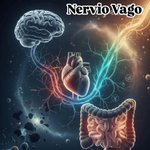
The vagus nerve is the tenth cranial nerve that connects the brainstem directly to the heart, lungs, and digestive system to regulate vital functions. It acts as the primary regulator of the parasympathetic nervous system, managing rest and healing.
High nerve tone allows the body to recover efficiently from stress. If that tone weakens, the system remains stuck in chronic sympathetic activation, or the fight-or-flight response.
This persistent high alert triggers systemic inflammation and sleep disruption. These shifts alter mood-regulating neurotransmitters, creating an environment where depression becomes rooted.
Medications often fail because they ignore this underlying physiological cycle. Vagus nerve stimulation works differently and has been FDA-approved for treatment-resistant cases since 2005.
Roughly one in three patients who do not respond to drugs see significant improvement with this approach. This confirms that supporting internal regulatory pathways is essential for mental health.
You can strengthen this tone through interventions like slow deep breathing and movement. Practices such as the 4-7-8 technique or cold showers trigger the nerve to initiate a recovery state.
Even five minutes of humming or time in nature helps shift the body away from stress. These habits offer a no-cost way to lower inflammation and improve biological resilience.
The rest is worth a read.
vaguscure.com/blog/vagus-ner…

46