

cities & complex systems | founder @getlayerxyz | former city architect @cityoftirana | thoughts https://nitter.cf/t.co/o7woizaioE
Tirana
Joined July 2009
- Tweets3.7K
- Following1.6K
- Followers3.2K
- Likes7.2K






Joni Baboci retweeted

Four hundred fireflies, each blinking at its own slightly different pace, start as random sparkle.
Each one nudges its rhythm toward the flashes it sees. Below a critical coupling nothing happens; above it a crowd suddenly locks, and the whole field blinks as one. The switch is a phase transition, like water freezing.
The model was written down by Yoshiki Kuramoto in 1975 for chemical oscillators. Real fireflies do it too: along some Southeast Asian rivers, thousands of males flash in unison, and early reports of it were doubted for years.
The same maths describes pacemaker cells in the heart and the moment a concert hall's applause turns into clapping in time. In theory the switch sits at K = 1.0 (grey curve), and the crowd needs a little time to follow it.
Joni Baboci retweeted

I'm now building an "improvements" feature into all of my personal vibecoded applications: a freeform text input that's hooked up to an agent that yolo implements whatever is submitted.
It's an interesting experience -- the activation energy barrier to sanding any rough edge or implementing any new feature becomes extremely low. Someone else who uses one of the applications I created has already implemented 150 improvements over the course of a few days. This pattern feels like a new kind of tool -- liquid software? -- and every application that doesn't have this feature now has a slightly rigid and anachronistic flavor. Why can't I just tell it how I want it to be different?
Now, it's not obvious to me how this pattern can or should scale. Does it become unmaintainable after a while? (Maybe model intelligence improvement outstrips my feature appetite such that it's fine?) How does collaborative software work in this model? Can software designed this way be secure and reliable?
Whatever the larger questions about broader deployment, it definitely works great in a personal context. It reminds me a little of the visions of Lisp/Lisp machines, Smalltalk, and HyperCard -- systems that the user can take control of and modify. Those visions never quite worked, though: the vast majority of software today is not end-user modifiable in any useful way. So, while this "liquid" affordance is a very small touch, the way it changes one's relation to the software feels a bit transgressive and empowering in a Lickliderian and Engelbartian way.


Joni Baboci retweeted

This is the least surprising graph in the world if you understand how gradient descent works.

Joni Baboci retweeted

Technical moats are mostly over at this point. If you’re building something that is meant to be durable, the only moats now are:
• Proprietary data
• Network effects
• A physical component
Apparently they tried the model on about 8,000 problems. So, right now it “merely” solves ~5% of the longstanding open mathematical problems that it’s asked about, the problems that communities have spent years on, after a single 3-hour attempt on them.
scottaaronson.blog/?p=10169

Joni Baboci retweeted

This guy re-created all the adobe apps with opus-5.5, ported them to rust, and opensourced them
something really cool is happening

Readers added context they thought people might want to know
These projects are partial open-source Rust reimplementations of Adobe apps (built rapidly with AI agents), not complete recreations; their READMEs and roadmaps document many missing features and features still in development.
github.com/storytold/phot…
github.com/storytold/vect…
github.com/storytold/vect…
github.com/storytold/film…
github.com/storytold/film…
github.com/storytold/ligh…
getartcraft.com
Housing has become less like shelter and more like the stock market. The price of a home is increasingly driven by the expected value of land, scarcity and future appreciation - not only by what it costs to build.

We need ownership and finance models that treat housing as long-term social infrastructure: cooperatives, mutuals, community land structures and other ways to share value without making permanent scarcity the objective.
A city cannot be broadly prosperous if access to it depends on winning an asset-price race.
From the archive, issue #20: thinkthinkthink.substack.com…


Good cities accumulate. They create history, grit. Durability is not the ability to remain unchanged; it is the ability to keep changing without losing what matters.

Joni Baboci retweeted

I want a futurism that feels like this. Like we've mastered nature and mastered the human-scale longed for ideals.
Not like flying plastic or plants on top of glass-plastic


Joni Baboci retweeted

This is pretty smart.

🚨 OBAMA ON AI: "If we are thinking about AI just in terms of how do we cure cancer or get better energy, you can do that without having agentic AI and having it just roaming free in the internet. The reason you are doing that is because you have to market a product that people will pay money for.
That’s a misalignment between what our society needs and the commercial imperatives that these companies are facing, not because necessarily they’re trying to do bad things, but because they’ve got to justify these valuations.
So, that’s one more reason why it is really important for us to have a competent government and a serious bipartisan conversation around this issue, and we have to do it fast. And I would encourage voters to pay attention to this. If somebody does not have a serious plan for how to deal with this, then they’re not meeting the moment, and you should probably look for somebody else."
Joni Baboci retweeted
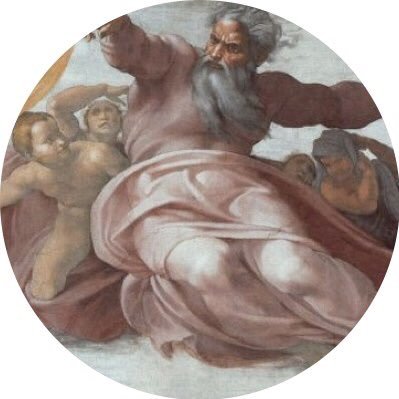
The repair doesn't have to be seamless or invisible. But it should be beautiful. A charming repair is worth more than a new replacement.

Özgün ahşap döşemede farklı tamamlama örnekleri. Venedik Bienalinde de farklı uygulamaları görmüştüm. #tamamlama #eskiyeni


Planners do not need to become ML engineers. They do need to know what algorithms can see, what data hides and where judgment enters. The useful future is professional companionship, not replacement.

