
CTO at ClassDojo
San Francisco
Joined January 2008
- Tweets527
- Following518
- Followers127
- Likes22


Our AI agents started filing feature requests for their own tools.
In the days after I added the feedback loop, they submitted 50 requests. Each one captured what the agent wanted to do at the moment it got stuck.
At @ClassDojo , we pair tool failure logs with agent-written capability requests, then group recurring needs and feed them into our development workflow.
Here's how it works:
dbellizzi.com/posts/self-hea…
#AI #SoftwareDevelopment

My agents now ask each other to hold off on files they need to change.
They negotiate which one is going to fix the production infra issue.
One asked another to clean up the scratch files because the disk was filling up.
Running lots of parallel agents on one codebase is a coordination problem. I built agentlog, a message board where my agents pass notes to each other.
No server, no dependencies.
dbellizzi.com/posts/managing…
github.com/dbellizzi/agentlo…
#AIAgents #ClaudeCode

Everyone's arguing about whether AI coding needs a spec.
When I read a good engineering blog post, I hand it to Claude or Codex and ask: how does my project compare to theirs?
The blog post is like a spec. Someone else already wrote it.
We used to adapt snippets from Stack Overflow, now we can do the same with whole repositories, papers, or GitHub repos.
I've been building an agent platform at @ClassDojo and a lot of the improvements came from exactly this. Shopify, Vercel, Cloudflare, Sierra, Cerebras, a research paper or two.
Here are the actual prompts I used, typos and all.
dbellizzi.com/posts/blog-pos…
#AI #SoftwareDevelopment


Dominick Bellizzi retweeted
I have a hard time sharing here what I'm working on, but I'm quite excited about the stuff I've been building for the last couple of months. So I'll be posting below some random, scrappy and silly demos.
But first, a bit of a brain dump of the rationale behind it:
I really like some of the principles behind Obsidian. And I love the work of the folks at tldraw, they make software feel transparent.
I've been dreaming of an environment to help me think, build understanding of complex systems, help me create and ultimately come up with new intuitions. One that taps into the multimodal ambition tldraw builds on, with some of the principles Obsidian has embraced.
Another driving idea since I started my sabbatical has been rediscovering what made me enjoy computers in the first place. In contrast to my phone, which these days I use reluctantly, I still find computers magical. Almost forty years have passed since I first sat in front of one, and I still think they have this unbounded potential to be anything you want them to be. (seeing folks like steveruizok or TodePond or andy_matuschak share their playful explorations is such a reminder of that energy, also contagious).
But the reality of market incentives and the complexity of building software (among other things) has led to a rather rigid vision of what software is. Today I feel trapped in every interface I use, at the mercy of whatever makes a given app's retention go up. My data tends to be treated as an asset to keep me locked into a specific piece of software, rather than as something I own for my benefit.
I know the landscape is full of good intentions. As a builder owning the data lets you build better experiences, and that tends to be what most users prioritize. Until now it felt like you could only have one or the other, you own the data but you are trapped in poor experiences or you give away those rights in favor of better UX.
Many people have been working hard to disrupt this space, Obsidian is a great example or the folks at Ink & Switch. But I think AI is going to accelerate the disruption in this area quite a bit.
The last few months I've been obsessively re-reading essays and papers from the 60s, 70s and 80s, so many of the ambitious ideas the pioneers of personal computing expressed back then feel relevant now. Almost as if the tech has finally caught up to their ambition.
So this is my attempt at having fun with these ideas, scratching my own itch of what a more dynamic and personal experience could feel like. Ultimately, I want to sit down in front of my computer and feel joyful, like I felt the first time I played The Incredible Machine. Not like I'm dodging darts from companies at trying to grab my attention.
I think canvases are a nice middle ground for this exploration. I see the canvas as an operating system, not as a mere drawing board. Maybe if I were braver and had more resources I'd explore this at the OS level, like the folks at heyclicky are doing. But I think that by plugging your filesystem into the canvas, you can make it feel OS-like and take it pretty far, while iterating quickly.
I've only been working on this for two, maybe three months, though I've been dreaming about it for years, so a lot of what I'll share below are scrappy attempts at exploring these questions. I expect many things to change, but hopefully the driving principles will stay the same.
Some of the questions I set out to explore:
- What does it look like to build a place I'd actually enjoy hanging out in, one where I dictate the peace, where I can dial up or down how much of my understanding I delegate to AI.
- How can I break free from app boundaries? Today I spend my time jumping from one closed interface to another, copy-pasting data around just to manipulate it.
- What does it look like to easily extend the behavior of the environment?
- What does file-first looks like in such an extensible and dynamic environment. How can users own their data while still providing extensibility and good built-in primitives?
- What should the core primitives be?
If you are interested in this space, please reach out! would love to connect with folks that are having fun in this domain.
P.S: Im using @tldraw SDK for these explorations, still amazed at how well the SDK is scaling for all sort of use cases, if you are thinking on doing anything canvas-like, go try it!.
Also prior seeing tldraw offline release I was using some overcomplicated mcp approach for controlling the board, their cli approach with the offline app was great inspiration for moving to something simpler.
nitter.cf/rafaelchiti/status/207…


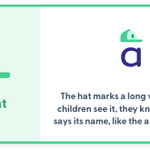
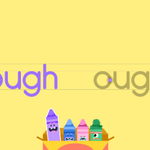
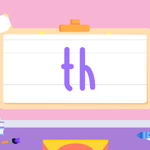
English spelling is rough. Anyone who has taught someone to read knows how many unusual rules there are, and how many exceptions to those rules exist. Just when a kid is starting to understand that there is logic to letters and sounds, the weird rules confuse them.🧵
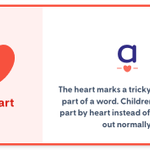
By Heart.
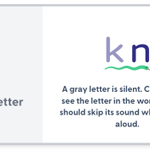
Some words just don't follow rules.
A little heart marks the irregular part, but the rest of the word is still able to be decoded. The goal isn't to memorize sight words, but to decode as much as possible to get close, and then let memory take over.

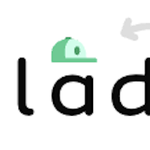
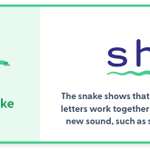
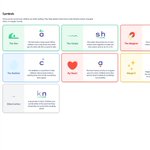
That's it, 7 helpful pictures to help make the difficult early part of starting to read a little easier. Once you're gotten some confidence and practice, we can start to pull back on where we show them.
Check them out on @ClassDojo Sparks
classdojo.com/sparks/
