

DCA 💸 Automate ⬆️ Execute 🔁 No.1 @near_intents based DCA Platform. Working towards: Any chain 🔗 Any asset 💱
Joined May 2024
- Tweets335
- Following1
- Followers743
- Likes1.4K






DCA can't tell a discount from a collapse.
If the asset recovers, buying the fall is the whole point. If it doesn't, the same rule buys all the way down.
DCA Space lets you set a price floor where your thesis breaks. Below it, orders skip.
👉 dca.space

1
23
DCA is not averaging down.
Averaging down: it's falling, so you buy more, usually bigger each time, to fix your average.
DCA: the same amount on the same schedule, decided before you knew where price would go.
One is a plan.
The other is a plan you made at -40%.

30
Most stacks aren't sold in one big panic.
They get nibbled. A quick trade here, a "temporary" swap there, all from the wallet you open daily.
With auto-withdraw, DCA Space sends every buy to an address you choose. Pick one you never trade from.

33
Every DCA runs on two frequencies.
How often it buys.
How often you check it.
Only one of them should be daily.
Even Bitcoin closes red on almost half of all days. Checking more doesn't improve the plan. It just gives you more reasons to touch it.

31
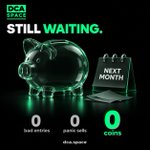
The most popular DCA strategy in crypto is "I'll start next month."
Some people have been running it for years.
Flawless record: zero bad entries, zero panic sells, zero coins.

1
32
When a friend asks what to buy, the most useful answer isn't a ticker.
It's a schedule.
Tickers rotate every cycle. A good habit survives all of them.
Point them to DCA Space: one asset, one amount, one frequency, and the habit runs itself.

A US company made its retirement plan opt-out. New-hire participation jumped from 37% to 86%.
Same company. Same plan. Only the default changed.
DCA Space makes buying the default. Once it's set, skipping a buy takes a decision. Buying doesn't.
👉 dca.space

39
The best time to set a DCA was months ago.
The second best time is when everyone else is refreshing the chart every 5 minutes.
NEAR Intents makes the multi-chain part almost boring on purpose.
Quiet accumulation still works

Attention follows price.
In a rally, you check the chart every hour. In a slow bleed, you forget you own anything.
Manual DCA bends with it: extra buys near tops, skipped buys near bottoms.
DCA Space runs on the calendar, not your attention.
👉 dca.space

29
While you're accumulating, dollar value is the wrong number to watch.
It drops in bear markets, right when your DCA buys the most coins.
Watch the coin count instead. With DCA, it only goes up.
Positions are built in bear markets and noticed in bull markets.

1
38
Your DCA average will never beat the bottom.
It was never competing with the bottom.
It's competing with the version of you that buys when everyone's talking about a coin and sells when nobody is.
That version is a lot easier to beat.

25
Buy monthly, and one bad entry is 1/12 of your year.
Buy daily, and it's 1/365.
That's the strongest argument for daily DCA: no single day is big enough to stress about.
On DCA Space, Daily Buy sets it up in one click.
👉 dca.space

20
Before buying any token, ask one question:
Would you DCA into it every week for the next year?
If yes, you have a thesis.
If no, you have a trade.
Most people only find out which one they're holding after it drops 60%.

24
People spend weeks deciding between daily and weekly DCA.
Over a few years, the gap is usually small.
The gap between a DCA that keeps running and one that stops in month four is not.
The best frequency is the one you don't quit.

24
Conviction without numbers is a vibe.
"Bullish on ETH" isn't a plan.
"$50 a week, only between my floor and my ceiling" is.
DCA Space turns that sentence into a strategy: amount, schedule, price limits. Orders outside your range get skipped.

35
Set-and-forget only works if you can unset it.
On DCA Space, nothing is locked. Pause a strategy, resume it later, or withdraw your balance whenever you want.
Knowing you can stop is what makes it easy to start.
👉 dca.space

1
38
Everyone has a DCA plan for getting in.
Almost nobody has one for getting out.
Calling the top is just as hard as calling the bottom.
Selling on a schedule works for the same reason buying on one does.

27
A $10 subscription on a $200/month DCA is 5% gone before you buy anything.
On small recurring buys, a flat fee isn't a rounding error. It's a tax on the habit.
DCA Space has no subscription and no hidden fees.

36
Size your DCA for the worst month, not the best one.
The amount that feels easy in a bull market is the first thing to go after a -50% month.
Pick a number you'd keep buying through that. The good months take care of themselves.

36
