

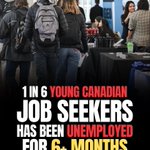






Finding a job is taking longer than ever for many young Canadians. 🇨🇦📉
According to Indeed's Q3 2026 labour market report, 16.5% of unemployed Canadians aged 15 to 24 have been out of work for at least 27 weeks, one of the highest levels in 30 years.

The cost of groceries in Canada has nearly doubled since 2002. 🛒🇨🇦
According to Statistics Canada, $100 worth of groceries in 2002 would cost approximately $198 today, representing a 98% increase.
Source: Statistics Canada

B.C. could be on the verge of a $100-billion energy boom as its incoming Conservative government prepares to expand natural gas production. 🇨🇦🛢️
Do you think expanding natural gas production will strengthen B.C.’s economy? 👇

Keeping the heat on is becoming a financial struggle for young Canadians. 🏠🇨🇦
A new HomeStars report reveals that 1 in 5 Canadians aged 18 to 34 have borrowed money or used credit to pay an energy bill, while 42% are worried about affording heat this winter.

A new study is raising questions about how Canada evaluates the skills of newcomers entering the country.
Should Canada place greater emphasis on language proficiency when selecting skilled immigrants? 🤔
Source: C.D. Howe Institute
#DebunkCanada #Canada


According to a new analysis from the Canada Mortgage and Housing Corporation (CMHC), Canadian housing prices have risen faster than those in most comparable developed countries since 2005.

According to Dalhousie University’s latest Canadian Food Sentiment Index, 32% of Canadians reported dipping into savings or borrowing to afford food, up four percentage points from last year.

Over the past 24 years, inflation has eroded approximately 41% of that money’s purchasing power.
That means $10,000 saved in 2002 would have the buying power of roughly $5,900 today, despite the dollar amount remaining unchanged.
Source: Statistics Canada, Consumer Price Index

Canada’s economy is showing more signs of slowing down. 📉🇨🇦
According to Statistics Canada, real GDP remained essentially unchanged in August, marking the second consecutive month of stalled economic growth.

Canada’s economy is showing more signs of slowing down. 📉🇨🇦
According to Statistics Canada, real GDP remained essentially unchanged in August, marking the second consecutive month of stalled economic growth.

Canada’s housing market could be facing even more pressure as interest rates begin climbing again.
The Bank of Canada has raised its benchmark interest rate to 2.5%, marking its first hike in three years, with further increases possible if inflation remains elevated.

For the first time since 2023, the Bank of Canada is raising interest rates. 🇨🇦📈
The central bank has increased its benchmark interest rate by 0.25 percentage points to 2.5%, as rising inflation puts renewed pressure on the Canadian economy.

How financially literate are Canadians compared to the rest of the world? 🇨🇦💰
A new global study by Remitly ranked Canada 22nd out of 27 countries, with Canadians answering an average of 75.5% of financial literacy questions correctly.

The dream of owning a home is slipping further out of reach for Canadians. 🏠🇨🇦
A new Habitat for Humanity survey of more than 30,000 people across 22 countries found Canada ranked last for optimism about homeownership.

After seven consecutive meetings holding rates at 2.25%, the Bank of Canada is under growing pressure to raise borrowing costs. Financial markets are pricing in an over 83% chance of a hike, while RBC economists expect a 0.25 percentage point increase.
Source: Reuters

More than 1 in 3 Canadian employers surveyed have cut jobs in the past year. 📉🇨🇦
According to Littler’s 2026 Canadian Employer Survey, 35% of employers reported layoffs or workforce reductions, while 46% paused or reduced hiring.

According to RBC’s 2026 Home Ownership Poll, aspiring first-time buyers now expect to purchase their first home at age 41, compared to an average age of 29 for existing homeowners when they first bought.

Alberta Premier Danielle Smith says the proposed Pacific Link Pipeline is progressing through the federal approval process, with plans to follow the existing Trans Mountain corridor.
Source: Harvard Media News

Canada spends more on health care than almost every other high-income country with universal coverage, yet ranks near the bottom for essential medical resources. 🇨🇦
According to a new Fraser Institute report, Canada ranks 30th out of 32 countries for doctor availability.

