

🇨🇦 Your one-stop-shop for all things Canadian energy.
Canada
Joined March 2017
- Tweets10K
- Following3.4K
- Followers4.5K
- Likes15.3K







A B.C. First Nation is challenging Ottawa’s decision to fast-track a major new oil pipeline to the West Coast 🇨🇦
Cheam First Nation has filed a Federal Court challenge seeking to overturn the Pacific Link pipeline’s national interest designation, arguing that the federal government failed to provide sufficient project information and adequately consult the community before making its decision.
The proposed pipeline would transport up to 1 million barrels of oil per day to Canada’s West Coast, with Ottawa aiming to complete the regulatory process by September 2027.
Prime Minister Mark Carney has pledged extensive Indigenous consultation and a minimum 10% equity stake for communities along the route.
The challenge raises questions about balancing faster energy development with Indigenous rights and consultation requirements.
Should major energy projects be fast-tracked before consultations are complete? 👇
Source: Reuters, November 2, 2026
#Canada #OilAndGas #Pipelines #CanadianEnergy #DebunkInc

Vancouver’s new Green Party mayor, Pete Fry, is looking to bring back restrictions on natural gas in new buildings.
Fry’s 2026 election platform includes a pledge to reinstate the city’s natural gas ban as part of a broader effort to reduce emissions from new housing.
The move would reverse the direction taken under former mayor Ken Sim, whose council voted in May 2026 to roll back restrictions on natural gas in new developments.
The Green Party also plans to restore Vancouver’s Sustainability and Climate Office, expand access to solar energy and support cleaner building technologies.
The proposed changes could reignite debate over energy choice, construction costs and Vancouver’s climate goals.
Should new buildings be allowed to use natural gas, or should Vancouver prioritize electrification? 👇
Source: Green Party of Vancouver, 2026 Election Platform
#Vancouver #NaturalGas #EnergyPolicy #BritishColumbia #DebunkInc

A new oil export terminal proposed for Prince Rupert, B.C., could ship up to 250,000 barrels of Canadian crude per day to Asian markets. 🇨🇦🛢️
Strathcona Resources plans to transport oil by rail to the proposed terminal, potentially opening a major new export route in less than two years.
The project could increase Canada’s current oil exports from B.C.’s coast by nearly 50%, helping diversify trade beyond the U.S., which currently receives about 90% of Canadian oil exports.
However, the proposal would require an exemption from Ottawa’s 2019 oil tanker ban along northern B.C.’s coast. The plan also faces opposition from Indigenous communities, environmental groups and provincial leadership.
Should Ottawa make an exception to the tanker ban to expand Canada’s oil exports? 👇
Source: Bloomberg
#Canada #OilAndGas #CanadianEnergy #BritishColumbia #EnergyExports

Guyana has built a $5.5-billion oil fund, while Canada has no equivalent federal fund 🇬🇾🇨🇦
Despite being one of the world’s major oil producers, Canada takes a very different approach to managing its resource wealth.
Guyana’s Natural Resource Fund collects revenues from oil production, helping finance infrastructure, healthcare, education and long-term economic development.
The fund is also designed to protect the country against fluctuations in oil prices and preserve wealth for future generations.
Canada does have provincial funds, including Alberta’s Heritage Savings Trust Fund, but no comparable national fund dedicated to saving oil revenues.
Should Canada be putting more of its resource wealth aside for future generations? 🤔
Source: Government of Guyana, Natural Resource Fund
#DebunkCanada #Guyana #Canada #OilAndGas #CanadianEnergy


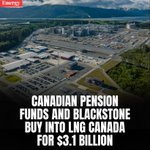
Some of Canada’s largest pension funds are investing billions into the country’s LNG industry. 🇨🇦
Blackstone has announced a $3.1 billion investment alongside CPP Investments, OMERS, IMCO and PSP Investments to acquire a 49.9% non-controlling stake in a Mitsubishi subsidiary connected to LNG Canada.
The investment gives Canadian pension funds exposure to one of the country’s largest energy infrastructure projects, while Mitsubishi retains control of its stake.
LNG Canada’s proposed Phase 2 expansion would double production capacity to 28 million tonnes annually, positioning the facility among the world’s largest LNG export terminals.
The deal signals growing institutional interest in Canadian natural gas infrastructure as global energy demand continues to rise.
Should Canadian pension funds be investing more in major energy projects? 👇
Source: Blackstone, November 2, 2026
#LNGCanada #CanadianEnergy #NaturalGas #LNG #Blackstone

With B.C.’s Conservatives coming to power, is Canada finally ready to unlock its resource wealth—or will politics keep holding us back?
Let us know what you think 👇
#DebunkInc #CanadaOil #Canada

Kuwait and Canada are both major oil-producing nations, but they’ve taken very different approaches to managing their resource wealth. 🛢️🇨🇦
Kuwait began investing its oil revenues in 1953, building a sovereign wealth fund now estimated at roughly $1 trillion. Meanwhile, Canada has no equivalent federal fund, although Alberta established its Heritage Savings Trust Fund in 1976.
The difference raises an important question: Should Canada be investing more of its oil revenues for future generations? 🤔
Sources: Kuwait Investment Authority, Government of Alberta
#DebunkInc #OilCanada #Canada


U.S. electric vehicle market share has dropped from 12% in 2025 to approximately 6% in 2026. ⚡🇺🇸
The decline follows the removal of federal EV tax credits and changes to fuel-economy regulations.
Despite slowing sales, nearly 2,000 new public charging stations have been added this year, as companies continue investing in EV infrastructure.
Will EV demand recover, or is the market losing momentum? 🔋
Source: illuminem

The cost of filling up in Canada has changed dramatically over the past two decades. ⛽🇨🇦
According to Statistics Canada data, the amount of gasoline that cost $50 in 2002 would cost approximately $134 today, a 168% increase.
Fuel prices are shaped by global oil markets, domestic production, refining capacity, transportation costs and taxes.
And the impact extends well beyond the gas pump. Higher fuel costs can increase shipping, transportation and operating expenses across the economy. 📈
With Canada being one of the world’s largest oil producers, what should be done to keep fuel affordable for Canadians?
Source: Statistics Canada
#Canada #CanadianEnergy #OilAndGas #GasPrices #EnergyIndustry

U.S. oil giant ConocoPhillips is cutting jobs across its Canadian operations. 🇨🇦🛢️
The Houston-based energy company has confirmed that both employees and contractors will be affected, although it has not disclosed how many positions will be eliminated.
The announcement comes as ConocoPhillips continues a broader restructuring aimed at reducing costs and streamlining operations following its acquisition of Marathon Oil.
Last year, the company announced plans to reduce its global workforce by 20% to 25%, with the restructuring expected to be completed in 2026.
ConocoPhillips says the changes are intended to improve efficiency and position the company for future opportunities.
What do these job cuts signal for Canada’s oil and gas industry? 👇
Source: Reuters via EnergyNow
#Canada #ConocoPhillips #OilAndGas #CanadianEnergy #EnergyIndustry

Canada’s $33-billion LNG expansion is turning to China for the massive steel modules needed to build the project. 🇨🇦🏗️
Despite Canada being a major exporter of steelmaking coal, LNG Canada says domestic fabrication yards lack the capacity to manufacture the large-scale modules required.
The decision highlights a growing challenge for Canada’s energy sector: developing major resource projects while relying on overseas manufacturing for critical infrastructure.
The expansion represents a significant investment in Canada’s LNG industry, but it also raises questions about how much of that spending will benefit Canadian workers and manufacturers.
Should Canada be investing more in domestic manufacturing to support major energy projects? 👇
Source: Ship Management International News
#Canada #LNGCanada #CanadianEnergy #NaturalGas #Manufacturing

B.C. could be on the verge of a major energy expansion under its incoming Conservative government. 🇨🇦⚡
Premier-elect Lorne Doerkson has outlined plans to double the province’s natural gas production within six years and triple it by 2035, while attracting billions in new LNG investment.
With LNG Canada planning a major expansion and additional export projects advancing, industry leaders see an opportunity to unlock new investment, create thousands of jobs and strengthen Canada's position in global energy markets.
The proposed Pacific Link oil pipeline could also gain momentum as B.C. and Alberta look toward closer cooperation on energy development.
But reaching these ambitious targets will depend on major investment, regulatory approvals and market demand.
Could B.C. become one of Canada's biggest energy growth stories? 👇
#BritishColumbia #CanadianEnergy #LNG #NaturalGas #OilAndGas #CanadianEconomy #EnergyInvestment

A six-figure salary doesn’t stretch nearly as far as it once did in Canada. 🇨🇦💸
According to an inflation-adjusted comparison, earning $100,000 in 1980 would be equivalent to nearly $386,000 today.
Over the past four decades, rising prices have dramatically changed the purchasing power of Canadians’ incomes.
From housing and groceries to transportation and everyday expenses, maintaining the same standard of living now requires significantly more money.
While $100,000 remains a significant salary, its value looks very different than it did in 1980.
Do you think $100K is still enough to live comfortably in Canada? 👇
#Canada #CanadianEconomy #Inflation #CostOfLiving #PersonalFinance

Canada already supplies roughly 8% of the world’s steelmaking coal exports, and a proposed Alberta mine could help increase that share 🇨🇦
Northback’s Grassy Mountain project aims to produce 2.5 million tonnes of steelmaking coal annually, primarily for export to Asian markets.
A study commissioned by the company estimates the project could generate $2.2 billion in government revenue over its lifetime, while supporting jobs and economic growth.
The project still faces environmental concerns and regulatory hurdles, with production targeted for 2030 if approved.
Could projects like this strengthen Canada’s position in global resource markets?
#Canada #Alberta #CanadianEnergy #Mining #SteelmakingCoal


Just days after B.C. voted in a Conservative majority, a $1.26-billion energy deal has been announced 🇨🇦🛢️
On October 26, Ovintiv announced its acquisition of Logan Energy, as B.C. prepares for a major shift in its approach to oil and gas development.
Incoming Premier Lorne Doerkson has pledged to double the province’s natural gas production by 2032, reduce regulatory barriers and encourage more investment in the energy sector.
The timing is notable, although there’s no indication the election result caused the acquisition.
With a new government promising to expand energy production, could B.C. be entering a new era of oil and gas investment? 👀
#BritishColumbia #CanadianEnergy #OilAndGas #NaturalGas #EnergyInvestment

Canada’s West Coast oil tanker ban is back in the political spotlight. 🇨🇦🛢️
Federal Conservatives are pushing to repeal the law that restricts large crude oil tankers along northern B.C.’s coast. Their argument? The ban limits Canada’s ability to export oil to overseas markets and secure better prices.
Bill C-264 would remove the moratorium, but it wouldn’t automatically approve new pipelines or tanker terminals. Those projects would still face separate regulatory and environmental reviews.
Should Canada reconsider its tanker restrictions to expand oil exports, or maintain them to protect B.C.’s northern coast? 👀
In photo: Pierre Poilievre
#Canada #BritishColumbia #CanadianEnergy #OilAndGas #TankerBan Pipelines EnergyExports DebunkInc

A Trans Mountain executive is stepping into a key role as B.C. prepares for a new government. 🇨🇦
Premier-elect Lorne Doerkson has appointed Kim Henderson to lead the Conservative government’s transition team. Henderson previously served as B.C.’s top public servant and has advised Trans Mountain Corporation since 2022, becoming its interim vice-president in October 2025.
Her experience spans major project development, oil and gas, mining, forestry and Indigenous negotiations. She will lead the transition on a volunteer basis while taking unpaid leave from Trans Mountain.
With someone closely connected to Canada’s energy sector helping shape the transition, what could this mean for B.C.’s approach to major projects? 👀
#BritishColumbia #BCPolitics #TransMountain #CanadianEnergy #OilAndGas MajorProjects DebunkInc

B.C.’s premier-elect Lorne Doerkson. is proposing a major expansion of the province’s natural gas industry. 🇨🇦
The Conservative leader says he wants to triple natural gas production, a move that could significantly increase B.C.’s energy output and export capacity.
The proposal raises questions about the infrastructure, investment and regulatory approvals needed to support an expansion of that scale.
Could tripling natural gas production reshape B.C.’s energy future? 👇
#BritishColumbia #NaturalGas #CanadianEnergy #LNG #EnergyIndustry BCPolitics DebunkInc
Should Canada increase immigration right now, or focus on improving housing affordability and employment opportunities first?
Share your thoughts below. 👇
#Canada #CanadianImmigration #HousingAffordability #CanadianEconomy #JobsInCanada #ImmigrationPolicy
🤖 Made with AI

The economic divide between Canada and the United States has more than doubled over the past 25 years 🇨🇦🇺🇸
A new Fraser Institute report found that the gap in inflation-adjusted GDP per person grew from $10,766 in 1999 to $23,757 in 2024.
Productivity is another major concern. Between 1999 and 2025, U.S. labour productivity increased by 67.9%, compared to just 26.7% in Canada.
Business investment is also falling behind. For every dollar invested per worker in the U.S., Canadian businesses invested just 54 cents in 2024, down from nearly 90 cents in 2007.
The report highlights growing challenges for Canada’s competitiveness, investment climate and long-term economic prosperity.
What needs to change for Canada to close the gap?
#Canada #CanadianEconomy #UnitedStates #EconomicGrowth #DebunkInc
