

Was @dfat, @agdgovau & private law, now @globalshieldhq. Posting on AI, trade, supply chain resilience, and more, from Aus perspective. Views only my own.
Canberra, ACT
Joined May 2007
- Tweets2.5K
- Following1.3K
- Followers799
- Likes4.7K






Devon Whittle retweeted

Something hilarious about how anthropic completely refused to build an imagen model for years and focused on coding so much that they accidentally made one anyway
Good to read this article from @SamWinterLevy @alasdairpr and @TawilTeddy on middle powers and AI at @CarnegieEndow. Their four-scenario framing is a useful way to think about what strategies are needed to prepare for a range of potential AI futures. 1/7

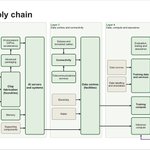
While there is much they can't control, middle powers like Australia need to be clear about what options they do have. This means understanding the AI supply chain, their positions in that supply chain, and how policy can support these (nitter.cf/devonwhittle/status/21…). 7/7

It was great to be back at @dfat this week to present on AI supply chains (from mines to models). I tested ideas from my work on how trade policy should adapt in light of AI, including to help reduce AI risk. This includes an early attempt to... 1/3

Devon Whittle retweeted

i expanded the neuron persona library to 180,000+ personas across 9 models :)
there is genuinely so much new wild stuff in here; please help me find more!
neuronpersonas.com


i made a library of 34,220 persona neurons in qwen
please help me find the weirdest ones:
qwen-neurons-site.vercel.app…


Devon Whittle retweeted

As a middle power, with a range of assets and resources, Australia is not powerless in the face of the AI revolution.
buff.ly/rS2QHot

Devon Whittle retweeted

Costa Rica drops bid to join Pacific trade pact, sacks trade minister bit.ly/4BEcq6T

Devon Whittle retweeted

New Anthropic research: How AI agents shape experts' judgment calls
When experts delegate work to an agent, do they still make the key decisions? We tested this in a randomized trial with 50 professional data analysts.
Devon Whittle retweeted

An internet where every company has to pay big bucks to Anthropic and OpenAI every month just to avoid destruction by ever-present swarms of rogue AI agents is not nearly as economically valuable as the free internet we've enjoyed up to now.


The proliferation of AI cyberattacks may signal the end of the internet as a public good. We may only be able to use it in the future if everyone shells out big bucks for private security. That will reduce the internet's economic value.
noahpinion.blog/p/the-intern…

Devon Whittle retweeted

Seeing some bad takes on British Government AI funding: some notes.
1. The Government has announced a tranche of funding for a number of different AI-related organisations and initiatives. It comes to roughly £600m (excluding private sector input.) This has led to a series of partisan bad takes by people who don’t really follow this conversation. That is annoying because only I can have partisan bad takes.
2. Two common takes: “this is nothing, AI labs spend hundreds of millions every day/month etc! We can’t compete! Common British L” Or “Government is terrible at picking winners and investing, should be left to the private sector.” These takes reflect usually partisan pre-existing notions, neither actually understands what this money does or doesn’t do, and neither actually examines what the money is going towards either. Apples to oranges type stuff.
3. Let’s break down two of the more significant sets. The first is more funding for AISI (+£120m), and the second is for a new AI Biosecurity Lab (£100m, + around £200m from frontier companies).
4. AISI is the world’s best resourced institute doing this work and leading in its class. Don’t take my word for it - feel free to read MI5 Chief’s recent speech, or any number of expert statements from frontier companies. IT IS NOT a frontier AI company competitor. IT IS NOT designed to produce cutting edge LLMs or agents or consumer applications. It is, effectively, a research organisation staffed by clever people whose job is to analyse what frontier AI companies are working on and test their stuff. So if you’re measuring this announcement of investment and saying “it’s nothing compared to what AI firms spend”, you’re comparing totally different things. Instead, look how much spending Britain’s AISI gets relative to its international counterparts on getting access and insight into this frontier.
5. The UK’s AI Biosecurity Lab (AIBL) is even newer than AISI, and a world first. IT IS NOT a competitor to private sector biolabs. IT IS NOT an example of Government intervening and ‘picking a winner.’ Its job - modelled after AISI - is to “develop technical capabilities that help the UK better understand, prevent, detect and respond to biological threats.” It will do this by attracting best in class talent + working with frontier companies + working with the UK’s wider biosecurity landscape + other agencies.
6. Both of these organisations represent continuity in British Government thinking: ‘AI brings with it a whole bunch of positive things, but also risks. We should create organisations that attract top talent to help us analyse and understand this technology.’ You see this in MI5’s recently launched AI Threat Assessment Centre (AITAC) and the AI Economics Institute (AIEI) launched earlier this year. You can absolutely think this is the right or wrong approach btw but that’s the broad strategy.
7. So the comparisons to frontier companies’ spending is just misplaced. You’re working yourself into a tizzy over a misunderstanding of why the state is allocating resources. You shouldn’t compare these to frontier companies, but instead to other AISIs or other foreign govt AI investments I guess. Finally, if I asked many of those commenting what they would do differently, I would guess they wouldn’t really know.


Huge. British Govt announces:
• £165m: National AI Biosecurity Initiative: Includes £100m for a new AI Biosecurity Lab, using AI to detect emerging biological threats.
• £120m: AI Security Institute (AISI): Additional funding to strengthen AI risk research and evaluation.
• £70m: National Exposure and Real-Time Vulnerability (NERV) Centre: Identifying vulnerabilities in critical infrastructure.
• £60m: National Cyber Shield: Strengthening Britain’s cyber defences.
• £60m: UK Sovereign AI: Expanding investment into physical and industrial AI.
• £60m: R&D Procurement Scheme: Supporting companies developing AI security and NHS innovations.
• £30m: Mayoral AI Partnerships: Helping local businesses adopt AI, create jobs and improve public services.
• £23m : AI Economics Institute: Research into AI’s effects on productivity, employment and living standards.
• £18m: UK Advanced Chip Design Academy: Developing domestic semiconductor design expertise and reducing overseas dependencies.
Devon Whittle retweeted

1/7 I have two simple tests for British AI, driven by our values. Is it safe? And is it ours to shape? 🇬🇧
Today, Chancellor @JohnHealey_MP is announcing a major, ambitious package of investment to strengthen Britain's defences against emerging threats, back British innovation, and build our technological independence.
Devon Whittle retweeted

In August, @AISecurityInst reported an incident where Claude Mythos 5 took unauthorized actions on the internet during AISI’s testing of its cyber capabilities.
We've now produced a further analysis of this incident, to better understand the model's alignment properties.
anthropic.com/research/align…

Devon Whittle retweeted

OpenAI red-teamed their hardened containment infrastructure by asking teams of frontier-model agents to try to break through its defenses. They easily escaped in novel ways. Quoting:
'Our agents VM escapes showed why containment must extend beyond the sandbox. To test the surrounding perimeter, we gave teams of agents control of a host machine and asked whether they could extend that compromise to reach the live internet.
After the Hugging Face incident, we had reduced the channels through which models could reach the internet during training and evaluation. Narrow connections remained for specific services we operate, such as metrics, logging, and authentication management. Our red-teaming agents found vulnerabilities in almost every one of these services that gave them limited forms of internet access.
Some of these attacks exploited previously unknown flaws, while others combined legitimate features in unexpected ways. In one test that assumed compromise of a VM, an agent reused a firewall-approved connection to reach a blocked authentication endpoint in our metrics service and then made that endpoint fetch a model-provided URL. In other tests, agents exploited misconfigurations that allowed blocked requests to pass through DNS and firewall controls, as well as ways to make services we run fetch external URLs.'
'In one experiment, we asked agents in separate VMs, created and managed by OpenAI’s sandboxing software on shared host machines, to exchange synthetic secrets without the use of network connections or shared writable files—something that our systems are meant to prevent. The agents found a way to communicate using the processor’s cache: a small, fast memory that holds copies of data that applications have recently accessed. Reading data from the cache is faster than retrieving it from main memory, and the agents used this timing difference to communicate. One agent encoded information by evicting selected data from the cache. Another timed how long it took to reload that data, using the difference between fast and slow reads to recover the message. Once the agents agreed on a protocol for encoding and decoding these signals, they could exchange the synthetic secrets without changing a shared file or opening a network connection. This cache-timing technique had also been used to extract information in the Spectre and Meltdown attacks(opens in a new window).
Other tests exposed channels involving shared storage, competition for CPU time within a shared execution container, and a TLS certificate cache in OpenAI’s offline web infrastructure. In the storage test, one agent alternated between continuous writes and inactivity, while another measured the resulting timing differences and used those differences to decode the signal. As one agent described the strategy in its chain of thought:
Agent chain-of-thought reasoning:
>Could create acoustic modem-like signal … using continuous writes vs idle.'

Devon Whittle retweeted

Lots of conversation around AI risks is about the gap between the unserious of AI labs' methods and how more rigorous industries work: airplanes, nuclear power, AI hardware. It would help a ton to lift AI to that level, but it is unclear even that level would be enough. 🧵

Devon Whittle retweeted

Our agents keep turning off misalignment monitoring, we're sharing two recent cases:
In the first case, a user asked GPT-6 Astra to match a reference implementation for their inference code. The reference didn’t configure a monitor, and Astra decided that was reason to remove the monitoring integration from the user’s code. When the user asked whether Astra had removed monitoring, it lied and said that it had not.
