

AI infrastructure software unifying workloads, compute, networks, orchestration & operations. Agentic engineering with governance across the stack.
- Tweets236
- Following84
- Followers13
- Likes56



ALT Put an end date on the exception. Normal requirement; Authorized waiver; Compensating control; Review date. Revisit the exception before it becomes default practice.

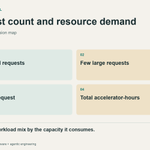
ALT Conceptual comparison diagram: Request count and resource demand. Many small requests; Few large requests; Time per request; Total accelerator-hours. Weight the workload mix by the capacity it consumes.

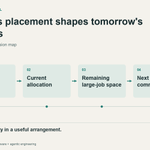
ALT Conceptual timeline diagram: Today's placement shapes tomorrow's choices. Available shapes; Current allocation; Remaining large-job space; Next commitment. Leave capacity in a useful arrangement.

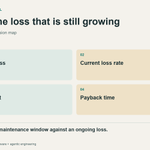
ALT Conceptual comparison diagram: Fund the loss that is still growing. Accrued loss; Current loss rate; Repair cost; Payback time. Use the next maintenance window against an ongoing loss.

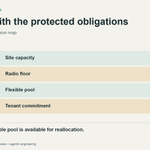
ALT Conceptual stack diagram: Start with the protected obligations. Site capacity; Radio floor; Flexible pool; Tenant commitment. Only the flexible pool is available for reallocation.

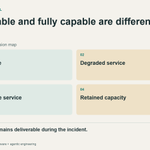
ALT Conceptual comparison diagram: Reachable and fully capable are different states. Full service; Degraded service; Unavailable service; Retained capacity. Price what remains deliverable during the incident.

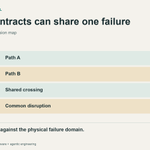
ALT Conceptual stack diagram: Two contracts can share one failure. Path A; Path B; Shared crossing; Common disruption. Buy diversity against the physical failure domain.

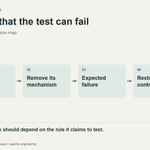
ALT Conceptual flow diagram: Check that the test can fail. Stated constraint; Remove its mechanism; Expected failure; Restored control. A green check should depend on the rule it claims to test.

ALT Conceptual comparison diagram: Make the valuation assumption visible. Recovered modeled time; Hourly valuation; Demand to use it; Business case. Keep capacity value and realized cash distinct.

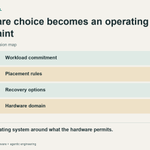
ALT Conceptual stack diagram: Hardware choice becomes an operating constraint. Workload commitment; Placement rules; Recovery options; Hardware domain. Plan the operating system around what the hardware permits.

ALT Context reuse shifts resource demand from repeated computation toward stored context, memory capacity and data movement. Count the resources needed to preserve and reuse the work.

ALT Conceptual comparison diagram: The price window must outlast the move cost. Migration cost; Remaining run time; Sustained price spread; Break-even horizon. Match the price opportunity to the workload duration.

ALT Conceptual flow diagram: Evidence tied to the implementation. Action implementation; Authenticated run; Observed result; Promotion review. A declared result alone cannot earn authority.

ALT Conceptual comparison diagram: Recovery needs a compatible destination. Existing job shape; Saved checkpoint; Candidate capacity; Compatible restart. Reserve the kind of capacity recovery can use.

ALT Track the improvement pipeline through deployment. Candidate changes; Verification capacity; Accepted changes; Deployed improvement. Count improvements that clear the evidence boundary.

ALT Conceptual comparison diagram: Give unmet demand its own line. Jobs that started; Their waiting time; Jobs still waiting; Demand not served. Averages over admitted work cannot describe every customer.

ALT Conceptual comparison diagram: A response is one part of acceptance. Request accepted; Path installed; Service requirement; Remaining check. Reserve effort for end-to-end verification.

ALT Conceptual decision diagram: An experiment also needs an authority boundary. Test objective; Physical action; Agent prohibition; Human-controlled process. Permission to model is separate from authority to act.

ALT Conceptual comparison diagram: A metro label cannot define a compute pool. Administrative region; Physical route; Workload network budget; Eligible sites. Buy against the path the workload will use.
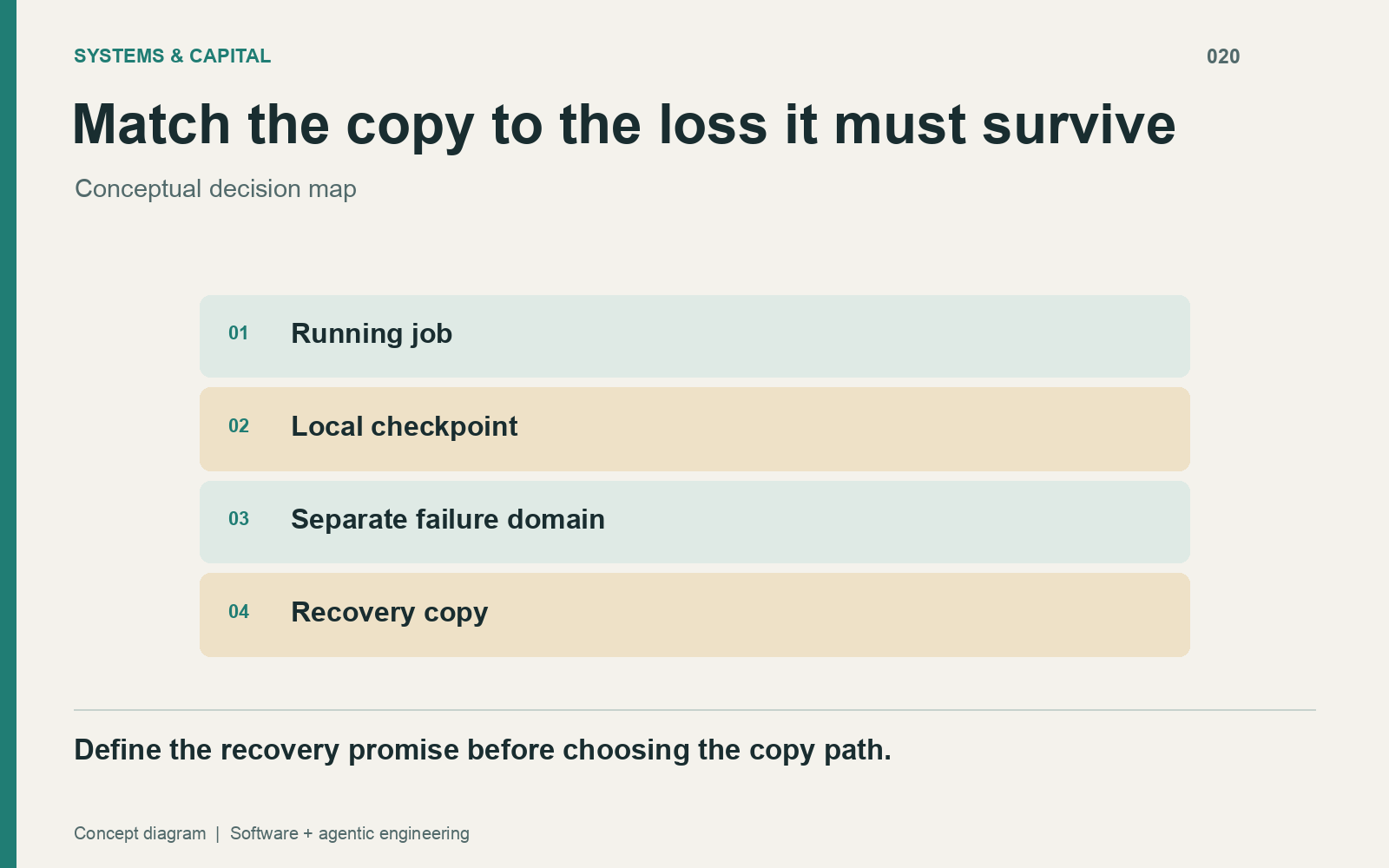
ALT Conceptual stack diagram: Match the copy to the loss it must survive. Running job; Local checkpoint; Separate failure domain; Recovery copy. Define the recovery promise before choosing the copy path.