






Emily Watson retweeted

A few friends asked me privately whether Turkey has a smaller-scale $NBIS.
It does—but let’s not rush to call it “Turkey’s Nebius.”
I see $TKC as an old telecom company quietly changing its engine. It once sold connectivity. Today, it operates around 50 MW of data center capacity and is working with Google Cloud on a local Cloud Region in Turkey.
Nebius sells AI compute globally, competing on GPUs, power and time-to-compute. Turkcell’s strengths are local data sovereignty, low latency and regional cloud infrastructure.
Nebius is like a global compute wholesaler. Turkcell is closer to the company controlling the local reservoir and pipelines.
It may sound less exciting, but AI still needs data centers, networks, electricity and local compliance. This looks like a traditional telecom asset with the potential to be repriced by #AI.
Sometimes the best opportunities are old businesses whose assets suddenly become much more valuable.


Emily Watson retweeted
$MRVL’ye baktıkça Jensen Huang’ın bu şirkete yaklaşımının diğerlerinden biraz farklı olduğunu daha fazla hissediyorum.
Mart ayının sonunda $NVDA, dönüştürülebilir imtiyazlı hisseler aracılığıyla Marvell’e 2 milyar dolar yatırım yaptı ve şirketi NVLink Fusion ekosistemine daha derinden dahil etti. Marvell özel XPU’lar ve scale-up ağ çözümleri sağlayacak; iki şirket ayrıca silikon fotonik alanında iş birliği yapacak.
Zaman çizelgesini geriye doğru uzattığımızda tablo daha da ilginç hale geliyor. NVIDIA, Ekim 2025’ten bu yana Nokia’ya 1 milyar dolar, Lumentum ve Coherent’a ayrı ayrı 2 milyar dolar, Marvell’e ise 2 milyar dolar ayırdı. Corning ile yaklaşık 3,2 milyar dolara ulaşabilecek ticari bir anlaşma yaptı ve Ayar Labs’in finansman turuna da katıldı.
NVIDIA’nın yaptığı şey, #AI altyapısının bir sonraki aşaması için bağlantı katmanını güvence altına almak gibi görünüyor. Lazerler, optik bileşenler, fiber, CPO, özel silikon ve scale-up ağ teknolojilerinin önemi giderek artıyor.
En güçlü kamuoyu desteği ise Marvell’e geldi. Jensen Huang şirketi “bir sonraki trilyon dolarlık şirket” olarak tanımladı ve hisse o gün %25’in üzerinde yükseldi.
Ardından Marvell zirveden %40’tan fazla geriledi. Bu tablo önemli bir şeyi gösteriyor: NVIDIA’nın desteği bir şirketin sektördeki konumunu doğrulayabilir, ancak değerleme ve piyasa döngüsü risklerini ortadan kaldıramaz.
Bundan sonra asıl önemli olan, Marvell’in bu desteği özel AI çipleri, optik bağlantılar ve scale-up ağ çözümlerinde gerçek gelire dönüştürüp dönüştüremeyeceği. Bu, trilyon dolarlık tahminlerden çok daha belirleyici olacak.

AI infrastructure may create regional winners that look very different from today’s global leaders.
Local data rules, latency and existing network assets could give companies like $TKC a larger role as regional AI capacity expands. #AIInfrastructure

A few friends asked me privately whether Turkey has a smaller-scale $NBIS.
It does—but let’s not rush to call it “Turkey’s Nebius.”
I see $TKC as an old telecom company quietly changing its engine. It once sold connectivity. Today, it operates around 50 MW of data center capacity and is working with Google Cloud on a local Cloud Region in Turkey.
Nebius sells AI compute globally, competing on GPUs, power and time-to-compute. Turkcell’s strengths are local data sovereignty, low latency and regional cloud infrastructure.
Nebius is like a global compute wholesaler. Turkcell is closer to the company controlling the local reservoir and pipelines.
It may sound less exciting, but AI still needs data centers, networks, electricity and local compliance. This looks like a traditional telecom asset with the potential to be repriced by #AI.
Sometimes the best opportunities are old businesses whose assets suddenly become much more valuable.
69
Emily Watson retweeted
Kurumsal bir analist değilim; sadece yıllardır ABD yarı iletken sektörüne ve yapay zekâ altyapısına odaklanan bireysel bir yatırımcıyım.
ABD piyasalarında ilk yatırımlarımı yapmaya başladığımda ben de her acemi gibi çok hata yaptım: Her haberi okuyor, gündemin peşinden koşuyor, tüm gün ekran başında yükselen hisseleri kovalıyordum.
Hisse yükselince tezimin doğru olduğunu sanıyor, düştüğünde ise her şeyi sorgulamaya başlıyordum.
Sürekli meşguldüm ama aslında sadece piyasanın hareketlerine tepki veriyordum.
Yarı iletken sektörünü sadece hisse fiyatlarına bakarak anlamanın imkânsız olduğunu zamanla öğrendim. Bu sektör uzun döngülerle hareket eder:
📌 Teknoloji değişir.
📌 Sermaye harcamalarının (CapEx) yönü değişir.
📌 Tedarik zincirinde arz sıkışıklığı ve kapasite darboğazları oluşur.
Eninde sonunda tüm bu değişimler gelirlere, kâr marjlarına ve değerlemelere yansır.
Bunu fark ettikten sonra odağımı tamamen daralttım.
Artık zamanımın çoğunu ABD yarı iletken şirketlerine ve YZ altyapısına ayırıyorum: GPU’lar, özel tasarım YZ çipleri (ASIC), HBM, DRAM, yarı iletken ekipmanları, sunucular, optik ağlar ve enerji altyapısı.
Artık bir hissenin yarın ne yapacağına değil, sektörün önümüzdeki 2-3 yılda nereye gideceğine odaklanıyorum.
Bu yaklaşım 2026’da benim için özellikle kritik hale geldi.
Zor bir piyasadayız: Faizler, değerlemeler ve sektör rotasyonları sürekli değişiyor. Kazananlar ile kaybedenler arasındaki makas giderek açılıyor.
Bu yıl yakaladığım en iyi fırsatlardan biri, piyasa coşkusunu takip etmek yerine sektörün temel dinamiklerine bağlı kalmam sayesinde oldu: Micron ($MU).
Yılın başında herkes #GPU’ları konuşurken benim kendime sorduğum soru basitti: GPU’lar hızlandıkça bellek (memory) teknolojisi buna yetişebilecek mi?
YZ sistemleri daha fazla HBM’e, daha fazla sunucu DRAM’ine ve daha yüksek bant genişliğine ihtiyaç duyuyor. Üstelik HBM üretimi, standart DRAM kapasitesini de tüketiyor.
Bellek, YZ yarışında destekleyici bir unsur olmaktan çıkıp ana darboğaz (bottleneck) haline gelecekti.
Piyasa HBM arzındaki sıkışıklığı ve DRAM fiyatlarındaki artışı fiyatlamaya başlamadan önce $MU tarafındaki fırsatı görmemi sağlayan şey işte bu araştırmaydı.
Önümüzdeki dönemde de en önemli sinyaller, hisse fiyatlarında görünmeden önce kapasite yatırımlarında, siparişlerde ve tedarik zincirinde ortaya çıkacak.
Burada kimseye "bugün ne al, yarın ne sat" demiyorum. Sadece yıllardır bu sektörü takip ederken öğrendiklerimi ve gözlemlerimi paylaşıyorum.
Eğer siz de yarı iletkenler ve YZ altyapısı ile ilgileniyorsanız, süreci birlikte takip etmek için hesabımı takibe alabilirsiniz. 🤝
$NVDA #AI


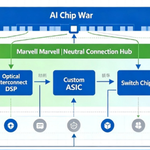
Marvell is becoming a key connection layer for AI
infrastructure. Its optical DSPs, custom ASICs and
switches help GPUs and in-house chips move data
across larger clusters. As those clusters grow, winning
the links around each compute socket may be enough.
$MRVL #AIHardware

67
Everyone wanted faster GPUs. Now the rest of the system has to catch up.
Bandwidth is becoming a much bigger part of the AI trade.
$NVDA $MU
The next constraint in #AI is taking shape around data movement.
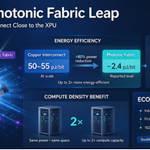
Compute performance has roughly tripled every two years, while interconnect bandwidth has increased by only about 1.4x. GPUs keep getting faster, yet moving enough data into them is becoming harder and more power-hungry.
#SK hynix’s CPO roadmap shows where this could lead.
Today, NVIDIA’s photonics work is centered on switches and AI-cluster networking. SK hynix is looking further into the system, toward optical links near the Memory interface. Its proposed architecture uses a photonic interposer to connect XPU resources with a shared Memory pool.
The near-term path still runs through 800G, 1.6T, 3.2T, HBM4 and high-end DRAM.
The longer-term opportunity reaches into silicon photonics, lasers, InP, CPO and 2.5D/3D packaging. These technologies could change how processors access and share Memory across large AI systems.
The timeline matters. Memory-side CPO remains a future architecture with major technical and commercial hurdles. I’m not assigning today’s valuation to a 2030 outcome.
I’ll use this account to track the companies, orders, capacity and earnings that show how quickly this transition is becoming real.
$NVDA $MU
#AIInfrastructure #DataCenters


48
Marvell now sits deeper in AI infrastructure through custom silicon, optical interconnect and Ethernet.
Google, Nvidia and Celestial AI widen the opportunity. Customer concentration, China exposure and Broadcom still leave plenty of risk.
$MRVL #DataCenterSpending

68
There is plenty to like about Micron’s AI exposure, although the old Memory risks have not disappeared.
HBM demand is real. The harder test is whether suppliers maintain discipline when new capacity arrives. That will decide how durable the $MU cycle becomes.

I started following $MU when the stock was trading around $350.
It has delivered plenty of surprises since then, but the reason it remains at the center of my Memory allocation is the company Micron could become over the next three years.
Demand for HBM, server DRAM and enterprise SSDs continues to grow with #AI server deployment.
HBM production is also consuming more leading-edge DRAM capacity. At the same time, Micron has signed multi-year strategic customer agreements with minimum volume and pricing commitments, giving the company greater visibility into future demand.
I spend less time trying to predict whether DRAM prices will rise another 10% or 20% next quarter.
The more important question is whether Micron can enter the next three years with a larger revenue base, a stronger competitive position and more durable earnings.
If these trends continue, Micron’s growth will extend beyond a single round of Memory price increases.
That is why MU remains one of my core positions in this part of the market.
Following the stock from around $350 has already included rallies, corrections and plenty of disagreement. Long-term growth investing requires looking past each short-term swing and asking whether the underlying business is becoming stronger.
My research and positioning will continue to center on AI infrastructure and Memory. I plan to stay with this story through its next stage.
#TechStocks #LongTermInvesting


148
Emily Watson retweeted

You call this investing?
Oracle $ORCL in June: a $700 billion company. Oracle today: $122, down roughly 50% in six weeks. From the September peak near $346, the stock has lost about 64%.
This is not a broken startup. It's a 48-year-old database giant. What broke is the balance sheet math:
– free cash flow: minus $23.7 billion
– capex: $56 billion, up 162% in one year
– net debt: $97.6 billion, and another $40 billion of financing announced
– S&P downgrade to BBB-, one notch above junk
– 21,000 jobs cut, headcount down 13%
Against that: a $638 billion order backlog, much of it resting on OpenAI's ability to pay. Record bookings, and the market sells anyway. Because a contract is a promise, and the debt is a fact.
When a company borrows against the future faster than the future can arrive, the stock stops trading on earnings. It trades on faith. And faith reprices in weeks, not years.
Quality means never having to hope your biggest customer finds funding.

Emily Watson retweeted

DO YOU AGREE WITH THIS? $400?? 215% upside?
Oracle $ORCL shares have plummeted 61% from their peak, trading at a low 16.2x forward P/E amid heavy debt, massive AI CapEx, workforce cuts, and concerns over key customer OpenAI’s financial woes and delayed IPO. Despite the risks, analysts at Jefferies and Guggenheim maintain $400 price targets...implying over 215% upside...citing Oracle’s strong AI supercluster pipeline, revenue backlog conversions, and superior architecture as reasons for a potential sharp V-shaped recovery. The stock is viewed as oversold and a patient long-term AI play.

Emily Watson retweeted

50% OF $ORCL BACKLOG IS OPENAI


Emily Watson retweeted

Under $140 $ORCL starts to look attractive but it’ll take 3 to 4 quarters to pay out

Emily Watson retweeted

Warren Buffett said, “Be greedy when others are fearful.” 🐐
Here are 5 stocks in fear but with an excellent long-term outlook. 👇🧵
$ORCL | $147 | Cloud Growth Leader🔥
• Close to Liberation Day Lows
• Fwd P/E: 18x
• PEG: 0.65

Emily Watson retweeted

Considering entering $ORCL again.
Here's why:
Brad Gerstner said last month that Anthropic and OpenAI combined were doing ~$80 billion in revenue. That puts OpenAI around $30 billion ARR, since Anthropic is reportedly near $50 billion.
If so, OpenAI is ahead of its own numbers. Its winter 2025 projection had FY2026 revenue at $25 billion.
That derisks $ORCL, whose backlog is 54% OpenAI, and makes the risk/reward attractive again at 18x forward earnings.


I haven’t been feeling very well for a few weeks like an old head…but seeing clips of @dk_music @ @joshgrider show at the @galleywinter listening room made me feel better bc it happened & pissed bc I missed it…dammit
2
191
🤙🏼👇🏼👇🏼

On the latest edition of @thecowrite podcast, the boys pay proper tribute to Charlie Robison.
Available at the link below or wherever your get your pods!
galleywinter.com/podcast

3
337
Emily Watson retweeted

🚨September 4th: FREE NRFI of the day⬇️
SF Giants vs CHC Cubs NRFI⚾️
Webb (21-7, 75%) vs Steele (21-4, 84%)*
*Represents 2023 NRFI statistics
•25.80 algo score💻
•92.11/100 grade📊
•(-110) DraftKings🧃
•2:20 PM ET🕑
🚨LIKE+RT+COMMENT to show LOVE🙏
