

Chief Success Officer @finalroundai @worktrialai
San Francisco, CA
Joined August 2015
- Tweets483
- Following1.4K
- Followers1.4K
- Likes1.4K
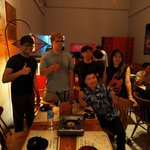


Pinned Tweet
Interviews are broken. resumes mislead.
We helped 100k+ people land jobs & scaled to $10M ARR. now we’re rebuilding hiring from scratch.
meet WorkTrial AI — where companies see the real work before they hire.
Unpopular boss opinion: you should put your team in an uncomfortable situation and watch how they react.
I know how that sounds.
But you learn more about someone when things go sideways than when everything's fine.
The quality of your team is determined by how they react when things don't go to plan, not when everything is running smoothly.
The problem is most bosses never see their employees outside of work.
Earlier this year, we hosted our first team onsite in Bali.
Having everyone all in one place for an extended period of time was a great way to see how people interact with each other in a foreign environment.
These are things you'll never get from an interview.
Overall everyone had a great time. But it made me realize something.
I think the best hiring strategy might be to run a mini Hunger Games, put your team in a semi-uncomfortable situation, then see how people react.
- who freaks out
- who blames someone else
- who keeps their cool and solves the issue
Call it a terrible opinion, but I think every startup founder needs to start doing some version of this.

1
11
289
Stop spending your event budget on swag.
Put your prospects on an IV drip instead.
I'm serious.
When we got our SF office, my original plan for the first floor was an IV drip bar. Free drips for prospects.
The reason was simple. We do B2B sales at Hellyeah AI. I need a prospect to actually sit with us for a proper hour.
Look at how attention works at most events:
- Give someone a branded water bottle: gets you about 5 seconds.
- Have a standard booth conversation: 30 seconds.
A typical IV drip runs 30 to 60 minutes. Nobody walks off to the next booth with a needle in their arm before it's done.
Your startup swag gets picked up and forgotten. If you really want uninterrupted quality time with the buyer, give them an IV drip.
They leave hydrated and happy.
You get to have a non-rushed convo with them about your product.
We didn't end up building our IV drip bar at Hellyeah, but I still think the first company to do it at a conference will out-pitch every booth.
Would you sit through a pitch for a free IV drip?
2
10
222
[This is my quant]
A founder I invested in recently hired Chinese interns to speak Mandarin loudly when some investors came to the office.
The interns were told to start speaking random nonsense, loudly.
Investor walks in: "Wow, you have a lot of engineers."
Founder: "That's Chen, his brother works at DeepSeek."
Investor: *visibly impressed* "Nice."
Founder: "We take pride in the talent density here at [startup]"
They raised a lot of money.
These are the lengths to which founders in the Bay are willing to go in order to get an edge over the competition.
And it's not Chinese founders pulling this trick. The ones I've seen are US founders who know how to play the fundraising game.
To a VC, having Chinese engineers from Berkeley, CMU or MIT on your team = +100 points. Even better if your technical staff won international math or programming competitions.
TL;DR - if you are fundraising, try hiring some Chinese staff in your office where visitors can see them.

9
166
My team advised me against saying this publicly, but here goes:
I think most AI founders aren't actually passionate about AI.
They're just resume-maxxing.
Building an AI startup is the sexy thing right now (and what makes VCs wet themselves from excitement), so that's what they're building.
In a different decade, these guys would be working in investment banking or law (back when those fields were the hot thing to do).
I know a founder who is a "T" fellow, raised $50M+ from Tier 1 VCs and dropped out of school to build an AI company.
And 3 years later, his team is down to just 2 people.
Right now he's actually traveling through Japan learning Qi-Gong, like Larry Ellison.
He told me he's been traveling the world for inspo.
If you think this story is fake, you're missing the point.
I don't think this founder did anything wrong by trying to build an AI company during a time when literally any idea - good or bad - gets funded.
But I think people who want to build companies should think much harder about WHAT to build.
Don't be that guy who read YC's latest "request for startups" list and then decides he wants his life's work to be "AI native services".
Be honest about why you're building in your space.
Is it because you love it, or because it's what gets funded in 2026?
4
10
234
Jensen Huang resigned as CEO of NVIDIA last Thursday.
When I heard the news, I sent him a $1M job offer.
He never replied.

A lot of entrepreneurship advice online is contradictory.
"Grind hard, but also make sure to rest."
"Be a visionary, but also don't lose your head in the clouds."
"Treat people well, but also fire fast and be ruthless."
After investing in many startups, I've realized that there are many paths to success.
What worked for one person may not work for another.
BUT...every great founder I know "spikes" super hard on at least one dimension.
- one is super aggressive
- another is super humble
- a third is obsessed with tech
You can be a successful manager in corporate if you're balanced, but you can't be a successful founder that way.
For example - Elon is known for being extremely demanding as a bOSS.
His biographer Walter Isaacson put it this way - he doesn't care about making the people around him feel good, he cares about the mission alone.
And what I've noticed is the best founders are all different in how they approach building, but share a common approach when it comes to outside opinions.
They don't care what other people think.
Just stick to the mission and don't give a f**k. Nobody can define you. And nobody cares about you.
1
13
208
I think I have finally cracked the code to raise money as an AI startup.
People are always talking about how you need to be "high signal" to attract investors.
For example:
- being a Stanford CS / MIT EECS dropout
- getting into a prestigious accelerator like YC
- Thiel fellow
- Winning IOI (programming) or IMO (mathematics) medals
Having any of these will dramatically improve your odds of getting looks from Tier 1 VCs like Sequoia, a16z, etc.
But I'm surprised nobody has talked about another signal I see every VC under the sun gravitating towards.
I'm talking about the founder + founding engineer combo.
- Caucasian founder + Caucasian founding engineer = $10M seed.
- Chinese founder + Chinese / Indian founding engineer = $3M seed.
- Caucasian founder + Chinese founding engineer = $100M seed.
Nothing screams high signal more than having an asian founding engineer who previously interned at Jane Street or Palantir in your team.
I've angel invested in a lot of startups, and in my experience VCs aren't stupid.
They know that a 30-minute meeting can't tell them enough about whether you'll build the next unicorn, so they pattern-match using proxies.
History is heavily skewed in favor of various groups that have dominated in the tech startup ecosystem over the last few decades.
So if you're raising right now - don't ignore the composition of your founding team.
1
9
247
4 months ago, I made one of the hardest decisions as a founder.
We completed a full restructuring of our customer support team, and took our AI customer support system from an internally built AI tool into a truly independent, production-grade system.
Today, 99.99% of customer requests can be handled by AI with speed, accuracy, and consistency.
This was a huge challenge, because we didn't want to sacrifice on quality.
The level of service that once required people to carry it, ticket by ticket, has now been systemized, automated, and productized. For the first time, our AI system is answering faster, better, and more precisely than humans.
HR is next.
Here's why I think it's going to be replaced by AI:
1. You can't measure its value: Hiring isn't tied to revenue, so it's easy to cut when a business isn't doing well. Nobody is there to defend it.
2. 80% of HR is operational: Résumé filtering, booking meetings, sending offer letters. AI does it faster and more consistently. A well trained agent can run onboarding, benefits, payroll, PTO, and compliance 24/7.
3. The part that can't be replaced by humans is done by leadership: The 20% that should still be handled by people - Culture, layoff conversations, hiring executives., etc. is mostly the founder's job anyway.
We already assess candidates on real work using Work Trial AI.
HR people and founders, would love to hear your POV.
6
12
428
Palantir has got to be one of the most prolific founder factories in existence.
I pulled 15 companies started by ex-Palantir employees.
The 11 with public valuations are worth more than $135B combined:
1. Anduril: Trae Stephens, Matt Grimm + Brian Schimpf ($61B)
2. Kalshi: Tarek Mansour ($40B)
3. ElevenLabs: Mati Staniszewski ($11B)
4. Peregrine: Nick Noone ($6.8B)
5. Decagon: Ashwin Sreenivas ($4.5B)
6. Addepar: Joe Lonsdale, Palantir co-founder ($3.25B)
7. Ironclad: Cai GoGwilt ($3.2B)
8. Sourcegraph: Quinn Slack + Beyang Liu ($2.6B)
9. Distyl AI: Arjun Prakash + Derek Ho ($1.8B)
10. Hex: Barry McCardel, Caitlin Colgrove + Glen Takahashi ($1.2B)
11. Cape: John Doyle ($900M)
12. Candid Health: Nick Perry + Doug Proctor ($120M Series D)
13. Chapter: Cobi Blumenfeld-Gantz ($100M Series E)
14. Partiful: Shreya Murthy + Joy Tao
15. Posterous: Garry Tan (acquired by Twitter)
Ex-Palantir pairs and trios started 6 of the 15.
And the pipeline isn't slowing down. After pulling every LinkedIn-visible person who left Palantir since 2021 using Crustdata (YC F24), there are 4,584 alumni, and 491 of them have started companies.
Many of the rest went straight to the frontier: 104 to OpenAI, 74 to Google, 53 to Anduril and 44 to Anthropic.
Palantir pioneered the forward deployed engineer model, where employees would spend years on-site, shipping software in front of customers. Today it's been adopted by many B2B software companies.
That model combined with a highly entrepreneurial culture led by Alex Karp likely contributed to so many alumni going on to start successful businesses.

2
11
445
People told us we were building a cheating platform when we launched Final Round AI, an interview copilot to help you land jobs.
Job seekers loved it and revenue grew super quick. Then companies started saying we were helping cheaters.
So naturally, we did what anyone else would do.
We built a tool to help the other side (the interviewers).
Work Trial AI isn't an anti-cheating tool. It's a job simulation platform that accurately assesses the quality of someone's work, even if they're using AI.
Every candidate has AI now, but companies are still interviewing candidates like it's 1990. Your hiring process needs to adapt.
This is how we hire at Hellyeah AI now:
1. Candidates do a small, real project in a simulated job environment created by Work Trial AI.
2. It runs from a few hours up to a few days, depending on the project and their availability.
3. It's a desktop recording - AI records and analyzes everything.
4. We make the final decision with evidence and facts, not gut feel.
Yes, it scares some people away.
That's fine - the candidates who accept are serious and we've found far better talent this way.
How are you evaluating candidates now that everyone has AI?
1
13
448
My CTO's personality type is the complete opposite of mine.
Jay Ma is structured and objective. Very engineering and systems minded.
I'm flexible and creative, and most of my decisions are spontaneous.
Clashing personality types can either go very well or very badly. We all know of "so and so" who had a co-founder conflict that destroyed the company.
Our relationship works because Jay is the voice of reason for some of my stupid decisions. He's stopped me from doing a lot of crazy things.
Does it drive me nuts sometimes?
Yes. It feels like telling Da Vinci he can't paint today.
But a lot of founding teams fight because their personalities don't fit.
Ours fits because they don't match. I push on moonshot ideas, and Jay makes sure we have stay grounded on what's possible.
@Doudoujay and the rest of the @hellyeah_ai team: @lwqconnie @lololalahaoran @anitawu001 @YChahahahaAI @MuvaniaJaya @Antiaefuj @MarcoFerna60597

College is a terrible investment for aspiring founders.
If you're 19 and want to build a company, do yourself a favor and drop out of school ASAP.
I say this as someone who has both completed a degree AND dropped out of another.
I finished undergrad at the University of Illinois. After that, I went straight into Yale School of Management for a graduate degree.
A year into Yale, I dropped out to "do my own thing".
If I could redo it all over though, I would leave even earlier - during undergrad.
I have nothing against higher education. But if you want to build a tech company these days, school is basically useless.
Most university computer science classes are still teaching Java while everyone else is building with AI. They also talk a lot about sustainability and DEI and very little about how to ship products people will actually use.
The only caveat is all of this assumes you already have an idea you can't stop thinking about. You've validated this idea, maybe even built a prototype and acquired some customers.
If there isn't, dropping out won't automatically solve your problem or give you an idea.
2
17
310
A bunch of my founder friends lost their soul to Y Combinator.
They entered it passionate about building a company.
Then came the question of what to build.
And then a YC partner tells them something like this:
"You're ex-Google, you should build a devtool. With your background you'll raise easily."
So then the founder, who originally wanted to build a dating app, gets told to build an AI devtool instead.
Or WORSE, they go build some random ai b2b saas because it's on the "request for startups" list, and a year later it's gone nowhere.
Let's be real lil bro, you're not passionate about building a vector database.
OK, maybe a few nerds genuinely are, and I respect them.
But most of the "AI agent for accounting" founders I meet don't care about accounting at all.
The YC partners have a list of categories that are hot and will get funded for sure, and they just mix and match founders to that list. Founder-market fit turns into a matching game. I've watched founders raise $10M and still have no effing clue what they're building. Most of them quit in a few mons and back to openai.
Most young founders would be much better off building in a space they're excited about, because that excitement and curiosity will keep you going when it starts to get really tough.
Disclaimer: I'm not anti-YC, I actually angel in a lot of YC startups. But if you need someone else to tell you what to build, money doesn't fix that problem.
Building @hellyeah_ai with @Doudoujay and team: @lwqconnie @lololalahaoran @anitawu001 @YChahahahaAI @MuvaniaJaya @Antiaefuj @MarcoFerna60597
Michael Guan retweeted

AI is making bad hiring signals look better.
A polished résumé. A fluent interview. A working demo. All easier to produce now.
The expensive question hasn't changed: can this person own the outcome after they join?
I've been rebuilding how we assess engineers at Hellyeah. My bet: the strongest ICs will increasingly need skills we used to associate with managers. Choosing the right work, giving useful context, reviewing delegated output, and knowing when to intervene.
That includes managing agents. It also includes not wasting another human's afternoon cleaning up their work.
9 companies approaching this problem:
@hackerrank / @rvivek — evaluating how candidates plan, build and review with AI. What predicts performance after the hire?
@CodeSignalCom / @TigranSloyan — AI-assisted skills assessments with interaction transcripts and replay. Which behaviors separate verification from lucky prompting?
@karat / Mohit Bhende — human-led interviews in an AI-enabled development environment. How do reviewers distinguish the engineer's judgment from the model's capability?
@MetaviewAI / @smagos — interview evidence and rubric-based screening. What makes a persuasive account of past work trustworthy?
@BrightHireAI / @BenjaminSesser — captured interview evidence plus AI screening. How do we improve the decision, not just speed up the screen?
@micro1_ai / @aliansarinik — AI interviewing and expert vetting, now within a broader human-data business. How do interview signals hold up when someone starts delivering work?
@mercor / @BrendanFoody — AI interviews and expert matching for work advancing frontier AI. What do actual assignments reveal that interviews miss?
@ashbyhq / @benjaminencz — the recruiting workflow and analytics layer. How do we connect the hiring hypothesis to what happens after someone joins?
@worktrialai / @dralaska_, my cofounder — building talent assessment around real work trials.
These aren't interchangeable products. An AI interviewer is not the same thing as assessing how a person works with AI.
My bar starts with a concrete 90-day outcome and the first hard decision someone must own. Domain knowledge can be learned. Fundamentals still have to survive a challenge.
Can they catch a plausible mistake, adapt when a constraint changes, and leave work another person or fresh agent session can continue?
That's the idea behind hellyeah/assessment, which I'm working on with Bharath, Wilson, and Josh.
Our own assessment has to earn its credibility after the hire too.
Which interview signal have you stopped trusting since candidates started using AI—and what replaced it?

Michael Guan retweeted

NEW FEATURE 🎬🧡
New in Hellyeah: video ad support for Performance Max campaigns.
We’re expanding the creative formats you can work with in PMax—and this release brings video into the mix.
Also shipped: a little polish where your team leaves feedback. Author comments now have improved Markdown styling, making formatted notes easier to scan and follow.
Built with the people who keep shipping: @Doudoujay @dralaska_ @anitawu001 @lololalahaoran @YChahahahaAI @lwqconnie @Antiaefuj @MuvaniaJaya @MarcoFerna60597
Go make some ads. 🎬

Michael Guan retweeted
We’re hiring like crazy at Hellyeah AI.
Our product helps companies generate millions in revenue with efficient, agent-led paid media campaigns. We're backed by top VCs and growing insanely fast.
Come work with us if you are:
1. A problem-solver who can hack any solution
2. Super curious and always on top of the latest in the GTM space
3. Great at context-switching at scale (ruthless at triaging / prioritization)
4. A great people manager who can apply the same mentality to a fleet of agents
5. Believe that B2B marketing shouldn't be boring
A few roles we're actively looking to fill right now:
- AI Engineer, Learn Engine: Intelligence & Optimization (SF): ordnl.link/3rHb5HT
- AI Engineer, Learn Engine: Platform & Simulation (SF): ordnl.link/WXfNJaa
- Senior Tech Product Manager (SF): ordnl.link/qzMKimO
- Founding AE (SF): ordnl.link/JW9F2At
- Senior BD Manager (SF): ordnl.link/IuRIfeQ
- Senior User Acquisition Manager (SF): ordnl.link/dwm2Qk7
- GTM Associate, Events & Partnerships (SF): ordnl.link/XFqVvxW
- Senior Algorithm Engineer, Quantitative AI Systems (Shanghai): ordnl.link/ztVpAbP
- UI/UX Designer (Shanghai): ordnl.link/dmOmiD3
- Performance Creative Designer (Seoul): ordnl.link/HiN24SW
Check out our careers page for more: hellyeahai.com/careers
If you're cracked at what you do, come build with us!
The team you'd be building with: @dralaska_ @lwqconnie @lololalahaoran @anitawu001 @YChahahahaAI @MuvaniaJaya @Antiaefuj @MarcoFerna60597 @Bharath_uwu @joshualocke100 @WilsonTseng8
