
La vida es breve, el arte largo, la ocasión fugaz, la experiencia confusa, el juicio difícil....
Buenos Aires, Argentina
Joined April 2014
- Tweets3.1K
- Following195
- Followers1K
- Likes2.5K


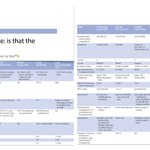



Una sesión muy buena para discutir y poner al día el manejo de la patología intersticial pulmonar en UCI
2
249


Puesta al día en SDRA. aparecen nuevos temas y muchos interrogantes. Lo bueno hay mucho por recorrer. Grabtrabajo de ESCIM

#ARDS @ESICM guidelines
🫁 definition
🫁 phenotyping
🫁 #HFNO
🫁 CPAP/NIV
🫁 low tidal volume MV
🫁 PEEP & recruitment maneuvers
🫁 prone positioning
🫁 neuromuscular blocking agents
🫁 extracorporeal life support #ECMO #ECLS #ECCO2r
#FOAMcc on @yourICM
🖇️ bit.ly/43J1OCe

5
428

Están todos invitados !! Webinar de ventilación mecánica.
redemc.net/webinarventilacio…


En NAC grave la hirdocortisona redujo la mortalidad!! Un gran trabajo q suma evidencia para que la hidro ortogonal sea standart en el manejo de las neumonias !

Among patients with severe community-acquired pneumonia being treated in the ICU, those who received hydrocortisone had a lower risk of death by day 28 than those who received placebo. Full CAPE COD trial results: nej.md/3yDx3kh
#ISICEM23
249
Movilización temprana...si o no ?
⏰ La definición no es clara aún. Los trials tienen diferencias notables en la definición.
📈📉 la desicion de HACERLO en la uti debe ser optimizando seguridad/ recuperación y minimizar riesgos
🖇️ rdcu.be/dbUBT

3
368
Muy buena revisión..el razonamiento fisiológico primero
Personalized noninvasive respiratory support for acute hypoxemic respiratory failure:
🫁 physiological rationale
🫁 clinical evidence
🫁 physiologically based patient‑targeted strategies
🫁 identification of treatment failure
#FOAMcc on @yourICM
🖇️ rdcu.be/daZ4t


Aerosolizazion de Antibióticos en ventilados en #UCI
💨 entrega al árbol traqueobronquial? fácil
💨 entrega a parénquima pulmonar infectado? difícil
💨 entrega clínica de ABTS en aerosol
💨 Revisión excelente!
🖇️ rdcu.be/datQH


El uso de propofol incrementa la mortalidad!!... error de tipo 2?....tal vez debemos revisar nuestros protocolos!! ccforum.biomedcentral.com/ar……


3
467
Nuevas de guías de neumonia de la comunidad ... importante x frecuencia y gravedad link.springer.com/article/10…
6
366
Muy buen hilo.. manejo de DVE

There are many people on this platform more equipped to answer this than I am, but I’ll try. My understanding is that, under normal physiologic conditions, the brain autoregulates & can tolerate changes in intracranial volume with little resultant change in ICP. But when the brain is injured, after a certain point, it cannot autoregulate (loses compliance), & now even small changes in volume create large changes in ICP. P2 loosely reflects this, I think? Someone taught me to think of P2 as the reflection of the arterial pulsation off of brain parenchyma: if the parenchyma is bouncy (compliant), the P2 wave returns normally. If the parenchyma is stiff (compliance lost), the wave bounces back more forcefully (amplitude of P2 increases & exceeds that of the original arterial pulsation P1).
I’m sure at least one physicist is reading this & cringing at my description of fluid dynamics?


1
207