
Ex bird ringer (bander), involved in: managing Woolston Eyes Nature Reserve, casual bird/wildlife photography and organising world-wide birding trips for mates.
North West, England
Joined March 2014
- Tweets1.7K
- Following4.3K
- Followers1.3K
- Likes1.1K





An astonishing 12 Yellow-browed Warblers were recorded at Woolston Eyes this week, following another record count, of 17 Great White Egrets, the previous week.


Fantastic morning at Woolston Eyes, with highlights of 3 Yellow-browed Warblers, 17 Great Egrets, 1 Garganey and 3 Marsh Harriers.


Great morning for passage at Woolston Eyes, with 1 Little Gull, 3 Whimbrels, 5 Arctic Terns, 2 Common Terns, 49 Dunlin, finishing off with a female Lesser Scaup.


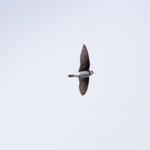
Recent reports at Woolston Eyes include: Osprey, Avocet, Whimbrels and the establishment of a large Sand Martin roost. This is currently holding somewhere between 15-20,000 birds, which is remarkable, considering that the UK breeding population is only about 100,000 pairs.


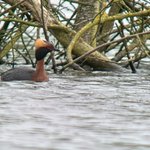
An amazing two days at Woolston Eyes, with Slavonian Grebe and Gannets on Thursday and a Little Bittern found by Kieron Foster today. Only in sight for five minutes on an inaccessible part of the Reserve but it joins the Gannets as another first for Woolston. Photo by Kieron.

The great spring continues at Woolston Eyes, with Lesser Scaup, Ferruginous Ducks, Ruddy Duck, Common Scoter and our earliest ever Little Ringed Plover and Swift followed this morning by a Slavonian Grebe and 4 Gannets. Pic by Dan Owen.

No sign today of the Lesser Scaup which turned up at Woolston Eyes during last Saturday's WeBS count. Plenty of pre-breeding activity, though, with displaying Marsh Harriers, singing Willow Tits and a light passage of Curlews.


Good progress being made at Woolston Eyes with our various projects to improve the habitat for our Willow Tits. Some decent birds this morning, too, with 1 Short-eared Owl, 5 Jack Snipe, 2 Woodcocks and 2 Marsh Harriers.


An excellent morning's birding on the Wirral, covering Parkgate, Burton Wetlands and Neston, with highlights of 3 Hen Harriers, 3 Water Pipits, 6 Spotted Redshanks, 11 Marsh Harriers and 10 Great Egrets. The short video shows some of the raptors. youtu.be/djCk_NvZ5sA
Woolston Eyes WeBS count today and on the Bed 4 wetland 1,700 "water-birds" were present. A Siberian Chiffchaff plus 11 Common Chiffchaffs were also good to see. The brief video shows one of the Chiffchaffs, Brambling etc. youtu.be/rE_FjXokfsE
Clear, crisp, stunning morning at Woolston Eyes, with 9 Waxwings, a couple of Ring-necked Parakeets and a few hundred wildfowl working hard to keep small pools open on the No.4 bed wetland. The Waxwing photo is from a few years ago, at a favoured feeding site in Warrington!


Yesterday at Woolston Eyes a blustery westerly brought in 2 Scaup, with a Water Pipit and 2 Goldeneye also present. The short video shows the 3 regular Marsh Harriers, as well as a pair of Teal. youtu.be/vS4g-VQ6YWo

Yesterday's WeBS at Woolston Eyes turned up a Water Pipit, while highlights of the 4,394 wetland birds were: 1 Woodcock, 6 Jack Snipe, 2,000 Pink-footed Geese, 3 Kingfishers, 8 Water Rails, 92 Shovelers, 399 Tufted Ducks, 153 Gadwall, 118 Mallard, 5 Wigeon and 195 Coot.


A good range of species at Woolston Eyes today, with some crossover of summer migrants and winter visitors, represented by six Chiffchaffs and our first Goldeneye and Woodcock of the year.


Highlights from the past few days at Woolston Eyes have included: Firecrest, Red Kite, 6 Chiffchaffs, Brambling, Willow Tits, 3 Stonechats and 8 Jack Snipe.


At Woolston Eyes this morning we had our best migration of the autumn so far and in two hours before the rain came, counted: 7,000 Woodpigeons, 1,660 Fieldfares, 580 Redwings, 370 Pink-footed Geese, 2 Bramblings, 55 Redpolls and 8 Siskins.


Highlights of yesterday's vis mig at Woolston Eyes were: 3,000 Pink-footed Geese, 2 Black-tailed Godwits, 270 Redwings, 48 Fieldfares, 450 Woodpigeons, 500 Lapwings, a handful each of Lesser Redpolls, Meadow Pipits and Skylarks plus a single Siskin.


The video shows some birds from the last week or so at Woolston Eyes, including Black-tailed Godwit, Dunlin, Whooper Swan and duelling Ravens and Marsh Harrier.
youtu.be/4hv1hsdTYG0
It's been a decent week for variety at Woolston Eyes. Highlights were: 1 Bittern, 3 Whooper Swans, 1 Green Sandpiper, 3 Jack Snipe, along with a count of 2,000 water-birds counted during the monthly Wetland Birds Survey.


