

I do this not because it is easy, but because I thought it would be easy... Yeah man like what even are computers and why they need to be secure ( ‘• ω • `)?
Joined March 2016
- Tweets1.2K
- Following1.3K
- Followers120
- Likes1.3K






Pinned Tweet
"The Rope along with The Stick, are two of mankind's oldest tools. The Stick to keep the bad away, the Rope used to bring the good toward us. They were our first friends, of our own invention. Wherever there were people, there were the rope and the stick."
#DeathStranding2 #USA

2,563
Anti-Anti-Rev-Evolution retweeted

For those calling our manufacturing as screwdriver technology: Designed in India, Made in India 5-axes precision CNC machines with the accuracy of 2 microns! For reference, the thickness of human hair is about 80 microns.
(5-axes = x, y, z, rotate, turn)
This is the way electronics and semiconductor manufacturing ecosystem is taking shape.
India now manufacturing things that go into things that go into things…
Anti-Anti-Rev-Evolution retweeted

Announcing a major milestone achieved by my team @GoogleDeepMind: we have proven key security properties of the machine code underlying the Signal messaging protocol. This is the first time the actual production code of a widely deployed protocol has been formally verified – by any method, with or without AI – and at this depth.
More than a research breakthrough, it’s a prime example of how frontier AI can be a force multiplier to counter the speed and scale of modern cyber threats.
Formal verification offers a higher standard of security; however, it’s extremely complex and time consuming, which is why in many cases it’s considered to be impractical. Similar efforts could take teams decades of combined effort. We did it in a month’s time.
Using AlphaProof Code, Google DeepMind's new agentic framework for formal verification that runs on LLMs including Gemini Carbon, we verified the Signal protocol down to the actual code running on devices. This milestone lays the groundwork for a future in which vital systems, from medical device firmware to power grid software, ship with mathematical proof that their protections work.
Reaching that future will take continued research from our community. In that spirit, we're open-sourcing our formal specifications and verification artifacts so others can build on this work.
On a personal note, this moment is of deep significance to me. I started my own research journey more than two decades ago as an intern working on checking the consistency of complex software systems. Seeing this grand challenge made practical with modern AI is extraordinary.
I'm extremely proud of my team members: Swarat Chaudhuri, Andrew Ferraiuolo, Anton Kovsharov, Tej Chajed, Sam Schlesinger, Karn Seth, Jonathan Katz, and Charles Sutton for taking on this grand challenge and delivering, and grateful to the Signal team for their partnership.
deepmind.google/blog/formal-…

Slowly, we build.

🚨 Ahmedabad-based PierSight (@piersightspace) has successfully integrated and tested the structural qualification model of their first commercial SAR + AIS satellite, Varuna 2.0.
The company’s long-term goal is to build a 32-satellite constellation for persistent maritime surveillance. This is part of PierSight’s main philosophy of building Synthetic Aperture Radar (SAR) systems tailored to specific applications across sectors such as maritime, Earth observation, and more.
Use cases of the Varuna constellation include:
- EEZ surveillance
- Maritime insurance
- Illegal fishing monitoring
- Oil spill/dumping detection
- Identifying ship movements and patterns
66
Pakistan is a terrorist state. It has constantly supplied terrorists in our country. Terrorism is what it exports. They are the bastion holders of Islamic Jihad here. They're not only our ideological enemy but also a threat to the existence of our civilizational state.

23
Animal love is highly conditional. Love dogs, eat cows. Love cats, eat pigs. Love horses, eat goats.

44
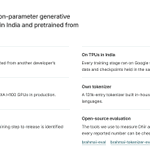
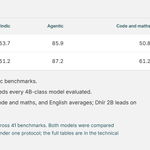
Anyone looked into zenteiq.ai/dhir?
No technical report as of yet.
Models allegedly available to download here -
2B - aikosh.indiaai.gov.in/web/mo…
5B - aikosh.indiaai.gov.in/web/mo…

1
40


Anti-Anti-Rev-Evolution retweeted

OpenAI and Anthropic have a tabula rasa problem with cybersecurity.
It’s been barely six months since the frontier labs started investing heavily in security data for model training. Once Mythos landed, it was clear the “AI breaks the game” moment had arrived.
Anthropic claimed to be very focused on working with the cybersecurity ecosystem to “integrate the model safely”, but in reality it ignored almost every conventional approach in the industry.
The biggest problem is the very one-dimensional narrative the frontier labs are building, in which the technical side of AppSec is treated as the whole field of cybersecurity.
Security is first and foremost about people, process and systems. Technology plays a useful role, but the areas where we try to reduce risk are numerous and hard to tackle. Finding and fixing bugs is just one part of the game: sometimes very important, sometimes completely irrelevant.
Exploiting a zero-day in a critical system doesn’t achieve much if the attacker has no way to move laterally within the network and only limited access to relevant data. There’s a reason the majority of successful breaches come down to insider risk and stolen credentials rather than the exploitation of novel bugs.
What AI has clearly democratized is access to zero-days. They mostly used to be in the hands of a far larger group than the nation-state actors, elite ransomware crews and occasional 200 IQ obsessive loner who traditionally had them. Today, they’re available to anyone who can spin up an abliterated LLM.
What it has really exposed is how poorly almost every company manages risk across people, process and systems. Rather than working with the wider security community to reshape how we work, the frontier labs have often chosen to be adversarial with key researchers and practitioners in the field.
To some extent, their goal is to replace every security vendor. That can look greedy, but it’s arguably well deserved. Compared with most other software categories, security vendors are far more likely to:
- Sell you software that doesn’t work at all
- Sell you software that works but breaks when integrated with the rest of your tools, making it useless
- Sell you software that works and fits into your workflow but comes with predatory pricing and deliberate lock-in
It’s one of the griftiest corners of the software industry, and the majority of practitioners hate almost every vendor with a passion. Those vendors have responded by pouring money into distribution, building large sales organizations that burn a lot of cash for very little in return.
So the frontier labs looked at this and decided to create a new problem, become the main solution to it, and then take over more and more of the industry’s technology layer over time.
Pretending that everything after Mythos is a blank slate, and that we’re only now “discovering” cybersecurity, is cynical at best and highly irresponsible at worst.
My message is simple: this strategy will fail unless you structurally focus on people and process first. Whether the leadership at OpenAI and Anthropic cares is another matter. They’ve shown repeatedly that they don’t care about the opinions of players in the ecosystem unless they’re big API consumers.
But don’t try to erase 30 years of ideas, practices and technology just because they get in the way of token consumption.
Anti-Anti-Rev-Evolution retweeted

We built a vulnerability research pipeline, using an upcoming cyber model, to analyze the security of the Linux kernel. Besides finding and exploiting the found vulnerabilities, the agents discovered at least 10 new exploitation techniques that were new to us and some external kernel exploit experts we checked with.
More on the design and what we learned: openai.com/index/a-thousand-…

Anti-Anti-Rev-Evolution retweeted

On the Evolution of AI Capability in Vulnerability Research alisaesage.substack.com/p/on…
Anti-Anti-Rev-Evolution retweeted

Rebuilt syscall.sh mostly from scratch
26 architectures (it was 4), every Linux release from 3.3 to 7.3, a page for every syscall, and a kernel picker to see the table as it was in, say, 5.10. Also works better on mobile (sorry for neglecting those that messaged me about it years ago)
API got a v2 too, with diffs between releases, descriptions, Scalar instead of Swagger and some other stuff.
syscall.sh
api.syscall.sh/
#linux #kernel #infosec

Anti-Anti-Rev-Evolution retweeted

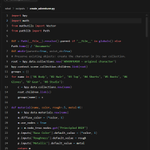
x86 formal verification is coming!
The (first?) published machine-checked proof of a security property for the end-to-end execution of a Linux process running an x86 binary statically linked against glibc.
And we believe it scales!
A joint research project with @zellic_io 🧵👇


Anti-Anti-Rev-Evolution retweeted

Just dropped a new blog post! 🔥
blog.orange.tw/posts/2026-10…
