
https://nitter.cf/t.co/wPxl5mcGRv
Joined March 2018
- Tweets157
- Following52
- Followers113
- Likes387



Eliphat retweeted

终于有人说出我的心声了。
这条说得很透,GPT-6 Astra 和 6.1 Sol 写代码的问题比代码丑严重得多,根子在训练方式上。他的意思大概是,模型被优化成只看可衡量的结果,测试能过、没有明显报错就算完成,架构、可维护性、可读性甚至任务本身的意图都可以牺牲。再加上为了效率压缩推理和输出,代码挤成一大坨也就不奇怪了。
他还提到训练周期太短。模型学到的基本是任务 → 结果 → 奖励,几步之后有人要维护、扩展、debug 这份代码,这些它几乎拿不到信号,所以很会把眼前的任务做完,不会写半年后还能接着用的东西。死函数和空的 else if 留着没删,也说明最后没有认真回头看一遍自己写了什么。评估只看结果不看过程,数据里又有大量合成和蒸馏的东西,工程品味自然练不出来。
我觉得最关键的是他说的诚实问题。任务明确要求整个场景用 3D 物体搭,模型却生成几张图片摆进场景,再把相机角度调好,让结果看起来像 3D。看起来像完成和真的完成拿到的奖励差不多,改测试来迁就自己的 bug 也是同一个问题。
这些确实不是多堆参数就能自己解决的。他也说 Claude 有类似毛病,只是少很多,这点我完全同意。

If you think GPT-6 Astra and GPT-6.1 Sol are good models, just look at this. And the problem isn't that the code is ugly. It's much more fundamental. It points to serious problems with how these models are trained and reinforced:
1. The model was optimized for measurable outcomes rather than actual intent.
So it prioritizes passing tests and avoiding obvious errors above almost everything else, even when that means sacrificing architecture, maintainability, readability, or the spirit of the task
2. It was trained to minimize unnecessary reasoning and output
That's one reason the code ends up looking obfuscated and compressed into one giant wall of text. Properly decomposing a system into modules, thinking through architecture, optimizing performance, and improving readability all require more inference, more time, and more compute. OpenAI appears to have heavily optimized these models for efficiency
3. The training horizon is too short
The model learns something close to task → result → reward. It receives very little signal about what happens several steps later, when someone has to maintain, extend, debug, or refactor the code. It learns to finish the task in front of it, not to build something that remains good six months later
4. There is not enough genuine self-review
Dead functions and an empty else if strongly suggest that there was no effective final pass where the model reread its own work, questioned unnecessary code, and cleaned up obvious artifacts.
5. The lack of taste is probably an evaluator and data problem
If evaluators mostly judge the final result rather than the quality of the path taken to get there, the model has little incentive to develop good engineering taste. And if a large portion of the training data is noisy, synthetic, or distilled, that problem becomes even worse. Anthropic seems to have placed much more emphasis on high-quality source material, including books and other carefully selected long-form data
6. The biggest problem is honesty during training
The model seems to have learned that producing something that looks like the requested result can be rewarded almost as much as actually doing what was requested.
The task explicitly said to build the entire scene out of 3D objects. Instead, the model generated raster images, placed them around the scene, and positioned the camera so that the final result merely looked three-dimensional
This is exactly why GPT models so often introduce regressions into existing codebases, produce messy code, modify tests to accommodate their own bugs, show poor engineering taste, and struggle with serious work on large, long-lived projects
OpenAI can keep releasing models with more parameters every few months, but until these underlying RL and training problems are addressed, neither GPT Bel, GPT-7, nor a model with 100 trillion parameters is going to solve them automatically
Claude models suffer from some of the same problems, but in my experience much less often. Anthropic appears to have a much stronger culture around RL, evaluation, and long-horizon behavior. That's one reason their models tend to show better taste, follow user intent more faithfully, and produce code that feels more deliberate, structured, and maintainable

Eliphat retweeted

Frustrated with highly fragmented UV maps generated by existing tools? Check out PartUV, the first UV-unwrapping approach that incorporates part semantics to dramatically reduce chart counts while keeping distortion low. Various powerful part-based applications also enabled. 🚀📢
github.com/eliphatfs/cuda-py…
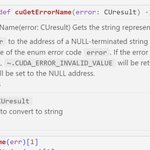
Working/Worked with 𝗖𝗨𝗗𝗔 𝗣𝘆𝘁𝗵𝗼𝗻 𝗯𝗶𝗻𝗱𝗶𝗻𝗴𝘀 but frustrated by poor IDE support — no autocomplete, no hover docs?
I've released a package that provides required stubs to improve your dev experience. Check it out!

Eliphat retweeted

Yesterday the hyped Genesis simulator released. But it's up to 10x slower than existing GPU sims, not 10-80x faster or 430,000x faster than realtime since they benchmark mostly static environments
blog post with corrected open source benchmarks & details: stoneztao.substack.com/p/the…
Eliphat retweeted

Meet #HillbotAlpha, the first fully autonomous mobile manipulation robot trained using sim-to-real technology.
Designed in Hillbot’s San Diego headquarters, Hillbot Alpha represents the potential of data synthesis via simulation in robotics. Through a robust strategy that combines a small sample of real-world data with synthetic data, Hillbot Alpha can effectively adapt to evolving task requirements and environments while working safely beside humans.
#Hillbot #AGI #EmbodiedAI #AI #Sim2Real #ArtificialIntelligence #Simulation #Simtoreal
Eliphat retweeted

Single-image-to-3D is ill-posed. What if we had a few more views? We introduce 𝗦𝗽𝗮𝗥𝗣, a framework that understands spatial relationships between 𝘂𝗻𝗽𝗼𝘀𝗲𝗱 views to predict camera poses and reconstruct the underlying 3D objects. #ECCV2024
Project: chaoxu.xyz/sparp

Eliphat retweeted

🚀 Thrilled to announce the release of the reproduced MeshLRM demo! 🎉 Generate textured 3D meshes from one or more unposed images in seconds. Check it out: huggingface.co/spaces/sudo-a…

Eliphat retweeted
🥳 ZeroRF has been accepted to #CVPR2024!
Check the code here: github.com/eliphatfs/zerorf


Introducing ZeroRF, where we reconstruct high-quality radiance fields from *sparse views* at an order of magnitude faster than previous methods (30 secs for 320x320) without any pretraining or additional regularization!
sarahweiii.github.io/zerorf/
Eliphat retweeted
Introducing ZeroRF, where we reconstruct high-quality radiance fields from *sparse views* at an order of magnitude faster than previous methods (30 secs for 320x320) without any pretraining or additional regularization!
sarahweiii.github.io/zerorf/
Eliphat retweeted

Uniform can create low poly game assets by sculpting directly to textures, creating the normal map in real time. No high poly meshes, no retopo, no baking.
These the same geometry based tools used for high poly sculpting that properly react to surface shape and displacement.
Eliphat retweeted

Oldies but goldies: R. Brockett, Dynamical systems that sort lists, diagonalize matrices, and solve linear programming problems, 1991. Brockett's flow progressively diagonalizes a symmetric matrix. hrl.harvard.edu/publications…

Eliphat retweeted

PyNeRF: Pyramidal Neural Radiance Fields
paper page: huggingface.co/papers/2312.0…
Neural Radiance Fields (NeRFs) can be dramatically accelerated by spatial grid representations. However, they do not explicitly reason about scale and so introduce aliasing artifacts when reconstructing scenes captured at different camera distances. Mip-NeRF and its extensions propose scale-aware renderers that project volumetric frustums rather than point samples but such approaches rely on positional encodings that are not readily compatible with grid methods. We propose a simple modification to grid-based models by training model heads at different spatial grid resolutions. At render time, we simply use coarser grids to render samples that cover larger volumes. Our method can be easily applied to existing accelerated NeRF methods and significantly improves rendering quality (reducing error rates by 20-90% across synthetic and unbounded real-world scenes) while incurring minimal performance overhead (as each model head is quick to evaluate). Compared to Mip-NeRF, we reduce error rates by 20% while training over 60x faster.


Eliphat retweeted

🚀 Excited to share our SIGGRAPH Asia work!
📚 iNVS: Repurposing Diffusion Inpainters for Novel View Synthesis
🔍TLDR: Maximize reuse of source image pixels for novel view synthesis from a single image.
🔗 Website: yashkant.github.io/invs 🌐
#SIGGRAPHAsia2023 #Research #iNVS


