






🤓💕🥺

I Will Always Love You: When a Song Left Dolly Parton’s Hands
There’s a small moment in the history of “I Will Always Love You” that I’ve always found more beautiful than any of the record-breaking numbers.
Dolly Parton was driving when Whitney Houston’s version of her own song came on the radio. At one point the emotion hit so hard she had to pull over because she was afraid she’d crash. “I couldn’t believe how she did that,” Dolly later said. She wasn’t just hearing another singer cover her song. She was hearing something familiar become something she no longer fully recognized.
What’s worth remembering is that “I Will Always Love You” was never written to be a pop power ballad. Dolly wrote it in the early 1970s, at the moment she decided to leave *The Porter Wagoner Show* and step out on her own. The song was a farewell to Wagoner—painful, but deliberately free of bitterness. Dolly’s own recording went to No. 1 on the country charts.
And one detail shows how clearly Dolly already understood the song’s value.
Elvis Presley wanted to record it. Dolly was thrilled at the thought of Elvis singing her song. Then Colonel Tom Parker demanded half the publishing. Dolly said no, even though the decision broke her heart. She knew she wasn’t just selling a song—she was giving away ownership of the most important copyright in her publishing company.
Looking back, that may have been one of the most important decisions in the song’s history.
Because nearly twenty years later, Whitney Houston arrived.
Kevin Costner pushed for “I Will Always Love You” in *The Bodyguard*, and the most important idea turned out to be the one that looked like the least: letting Whitney begin almost alone, with no band behind her. David Foster initially wanted to cut the a cappella opening. After hearing Whitney sing it, he realized there was no other way to start the song.
This is where the cover becomes a masterclass in arrangement.
That opening silence doesn’t just spotlight Whitney’s voice. It strips away everything that could protect or cushion the singer. No drums. No strings. No piano to create a sense of safety. Only tone, breath, pitch, and space.
Then the layers enter one by one. The vocal moves from restraint into power. A saxophone opens a different color. Then comes the key change near the end. According to analysis from Berklee, that modulation lifts the song a whole step, and it’s especially effective because Whitney’s voice almost leads the listener into the new key before the instruments fully follow.
It’s a familiar pop device—but here it never feels like a cheap trick designed to get a reaction.
It feels like the emotion has simply outgrown the old key.
And that, more than anything, is the difference between Dolly and Whitney.
Dolly sings the song like a goodbye someone might speak very quietly. Whitney sings it as if that same goodbye has been growing inside for years and can no longer stay contained. Same melody. Same story. Two completely different emotional rooms.
Whitney didn’t erase Dolly from the song.
She made listeners go back to Dolly.
The more you hear Whitney’s version, the more you appreciate the strength of the original writing: a melody simple enough to survive a total rebirth, and lyrics precise enough to keep their meaning when carried from country into soul, pop, and gospel.
In 1992, Whitney’s version spent 14 consecutive weeks at No. 1 on the Billboard Hot 100—a record at the time. But its success went far beyond the charts. It turned a song Dolly wrote as a professional goodbye into one of the definitive recordings of the person who sang it.
Then the story returned to Nashville.
Dolly has said that the money she made from Whitney’s version—estimated by Forbes at around $10 million in the 1990s—went toward buying a commercial complex in a predominantly Black neighborhood outside the familiar Music Row area. She gave it a name that almost summarizes the entire story: “the house that Whitney built.”
I like how the story ends there.
Not with a luxury car. Not with a mansion named after a hit. But with a piece of real estate in Nashville where Dolly said she wanted to be “with Whitney’s people,” people she also considered her own.
A song begins when one woman says goodbye to the man who helped shape her career.
Another woman takes it, changes the way the song breathes, expands its scale, and carries it to millions of listeners.
And in the end, the rewards of that version circle back to the city where Dolly first wrote the song.
Maybe that’s what makes “I Will Always Love You” special to me.
A great songwriter knows how to write a song.
A great artist knows how to make it her own.
But sometimes the real miracle comes afterward: the song becomes large enough that the writer can stand outside it, listen to someone else sing it, and still find herself inside it.
Dolly once said she wished she could have sung the song with Whitney. She also joked that Whitney would have outsung her for sure.
That comment feels pure Dolly.
No claim of ownership. No attempt to reclaim the spotlight.
Just a quiet smile at a song that traveled farther than anyone could have planned—and the recognition that, somewhere, it was still her little song.
1

🕊🕊

Dolly Parton casi chocó su automóvil la primera vez que escuchó a Whitney Houston cantar “I Will Always Love You”.
La canción había nacido casi 20 años antes, cuando Dolly decidió separarse profesionalmente de Porter Wagoner, el hombre que había impulsado su carrera.
Como él se negaba a dejarla marchar, ella escribió una despedida y se la cantó.
Porter terminó llorando.
Tiempo después, Elvis Presley quiso grabarla. Para Dolly era un sueño, hasta que su representante le exigió entregar la mitad de los derechos de autor. Aunque necesitaba el dinero, se negó.
Aquella decisión cambió su vida.
En 1992, Kevin Costner eligió la canción para “The Bodyguard” y Whitney Houston la convirtió en un fenómeno mundial. Dolly escuchó la versión por primera vez mientras conducía y tuvo que detenerse: estaba tan emocionada que temió sufrir un accidente.
“Tomó mi pequeña canción y la convirtió en algo enorme”, recordaría después.
La versión le generó cerca de 10 millones de dólares en regalías. Dolly invirtió parte de ese dinero en un complejo de oficinas situado en un barrio históricamente afroamericano de Nashville.
Lo llamó «la casa que Whitney construyó».
Dolly escribió la canción. Whitney la hizo volar. Y entre las dos crearon una despedida que el mundo nunca pudo olvidar.
Ahora las dos nos han dejado, pero juntas hicieron que una canción de despedida se volviera eterna.
1
22


Que película!
Que actores!
Y q tremenda frase 💔❤️🩹

"No quiero necesitarte, porque no puedo tenerte."
Hace 30 años, esta frase nos rompió el corazón y marcó una historia de amor eterna.
Su belleza y su dolor siguen susurrando al alma de quienes aún creen en el amor que pudo ser. 💔✨
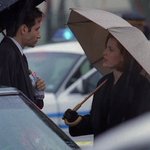
🎬: "Los puentes de Madison" (1995)
3