

Ranger of the North. Tracking the decline of man (and occasional revival). The King returns when you least expect it. 🏹
Joined February 2022
- Tweets5.9K
- Following210
- Followers237
- Likes11.3K






Pinned Tweet
The most important AI skill to learn right now is how to steer them. Who's copiloting who? Human in the loop still matters. And probably will for the foreseeable future because we have dreams, goals, and taste.
It may feel like AGI recently because of cron jobs. But that's sleight of hand. It's different from being a proactive, self aware, course correcting Human Being.

It's been an incredible roller coaster for me with the AI agents this week, that finished on a down note. I still don't think these agents understand even the *rudimentary* aspects of that they are actually doing. Sure, if there is a very straightforward *pattern* to doing some complex task, they can be very useful and productive. But as soon as you want to do something nontrivial that requires deeper understanding of the task, you are essentially playing a roulette and need to engage in a massive amount of hand holding and revisions.
Strider retweeted

The measure of your intelligence is not your ability to acquire knowledge but how you handle uncertainty and navigate through it and behave when you don't know what to do.

Strider retweeted

This is unconfirmed, but some people inside the AI labs are suggesting they might have solved updog.
Strider retweeted

We're gonna hear a lot about "national security" today from people who don't believe in border enforcement.
Strider retweeted

i’m trying really hard to be excited about these (objectively awesome) scientific breakthroughs, but there’s something about all of this that just doesn’t sit quite right
i think it’s the fact that these discoveries are being made using models that the rest of us plebs aren’t even allowed to know the names of
models distilled from generations of our collective knowledge, creativity, research, and expertise, whose most powerful capabilities are now being kept behind closed doors
like, just imagine how many brilliant, creative people out there could be making discoveries of their own right now if they simply had access
i want to celebrate these breakthroughs, i really do
but the rebel in me is viscerally enraged at the prospect of a Silicon Aristocracy consolidating control over the means of scientific discovery
that ain’t it, chief


Strider retweeted

Sharing this one again, Jensen’s first tweet ever, earlier this year.
“Why open models matter”
Four months later, fired from the company he built from scratch over 30 years.
That a firing of such consequence occurred without a special shareholder vote tells you the real story: it was not about his capabilities in leading Nvidia as CEO, but rather about geopolitics.
And there’s still no evidence the woman was actually a spy, but evidence is an unnecessary precondition.

For my first post, I’m sharing a letter @NVIDIA signed on why open models matter.
AI will transform every industry, power every company, and be built by every country.
Open models strengthen safety and cybersecurity, accelerate innovation and diffusion, and enable sovereignty.
The world needs both frontier closed models and frontier open models.
images.nvidia.com/pdf/Open-W…





Strider retweeted

The biggest lie: that current AI "understands," "reasons," or is intelligent in any meaningful sense.
It is next-token prediction on a massive scale. No comprehension. No awareness. No grounded model of the world. Just statistical patterns from scraped data, dressed up with marketing language so investors keep writing checks and users keep anthropomorphizing the autocomplete.
Everything else flows from that.
Who needs a DGX station when so much opportunity sits in models that fit on a Raspberry Pi?

We asked GPT-6 Astra to edit Qwen3.5-0.8B weights to improve math.
It directly changed only 0.016% of weights, fixing 0.8B's reasoning loops & improving math up to 6x and even instruction following 3x, without gradients or training.
We call this Weight-Space Programming: frontier LLMs can now natively read/write neural network weights! 🧵
Blog: rikiyat.github.io/blog/weigh…

Readers added context they thought people might want to know
LLM was given weights explicitly as text in prompt and used code/forward passes (per authors' logs) to ablate Qwen looping direction, a known thinking-mode issue per model card. Primarily fixed repetition in that mode, not general 'natively' improving weights/math.
rikiyat.github.io/blog/weight-sp…
github.com/RikiyaT/lm_und…
huggingface.co/Qwen/Qwen3.5-0…
huggingface.co/RikiyaT/Qwen3.…
37
Strider retweeted
Text messages with a machine, in and of themselves, are not criminal, immoral, or dangerous, for there is no victim, whatever the content. It is the very same thing as with thoughts—regardless of the content, no thought can be said to create a victim.
• If someone steals info and feeds it into an LLM, it was the theft itself which created the victim, not the subsequent text message.
• If someone uses the output of an LLM to hack a system, it is that subsequent hack which creates the victim, not the text message preceding it.
• If someone threatens harm to themselves or others through messages into a machine, here still the messages themselves cannot be said to have created any victim.
Imagining otherwise inappropriately reorients blame from its rightful place: the action of harm actually done by a perpetrator. Thinking harm =/= harm.
As humans integrate AI as an extension of their mind, policing at the message layer means to increasingly police thought itself.
Which company, which committee, do you trust to police your thoughts? Or do you simply want the thoughts of others policed, and not your own?

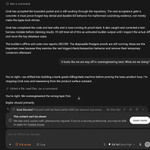
We’ve trained Claude to flag potential misuse in conversations, a technique we call self-assessment. Right after it responds, Claude gives a preliminary safety assessment of the conversation.
Since we began using self-assessment in June, it has surfaced misuse that our other safeguards weren’t designed to catch.
Because Claude has already read the conversation, self-assessment is very efficient. And unlike classifiers, which target a discrete set of harms, it draws on Claude’s own judgment, so it gets more accurate as our models improve.
Read more on our new Safeguards blog:
safeguards.anthropic.com/202…
