
Research Scientist, Gemini Team, Google Deepmind
Iceland
Joined March 2012
- Tweets197
- Following517
- Followers1.3K
- Likes348







Eirikur Agustsson retweeted

What a way to celebrate one year of incredible Gemini progress -- #1🥇across the board on overall ranking, as well as on hard prompts, coding, math, instruction following, and more, including with style control on.
Thanks to the hard work of everyone in the Gemini team and elsewhere at Google! 🎊


Big news on Chatbot Arena 🔥
The new @GoogleDeepMind model gemini-exp-1206 is crushing it, and the race is heating up.
Google is back in the #1 spot 🏆overall and tied with O1 for the top coding model!
Highlights (improvement since gemini-exp-1121 in parentheses)
- First place overall (2->1)
- Tied with GPT-4o-1120 after style control (4->1)
- Tied with O1 on coding leaderboard (3->1)
- First place on hard prompts (2->1)
Keep it up @GoogleDeepMind! The rate of progress is crazy. For analysis and to test the model, see below 👇

Eirikur Agustsson retweeted

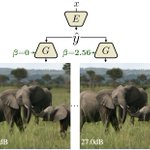
We build neural codecs from a *single* image or video, achieving compression performance close to SOTA models trained on large datasets, while requiring ~100x fewer FLOPs for decoding ⚡ #CVPR2024
c3-neural-compression.github…

Eirikur Agustsson retweeted

Finite Scalar Quantization: VQ-VAE Made Simple
paper page: huggingface.co/papers/2309.1…
propose to replace vector quantization (VQ) in the latent representation of VQ-VAEs with a simple scheme termed finite scalar quantization (FSQ), where we project the VAE representation down to a few dimensions (typically less than 10). Each dimension is quantized to a small set of fixed values, leading to an (implicit) codebook given by the product of these sets. By appropriately choosing the number of dimensions and values each dimension can take, we obtain the same codebook size as in VQ. On top of such discrete representations, we can train the same models that have been trained on VQ-VAE representations. For example, autoregressive and masked transformer models for image generation, multimodal generation, and dense prediction computer vision tasks. Concretely, we employ FSQ with MaskGIT for image generation, and with UViM for depth estimation, colorization, and panoptic segmentation. Despite the much simpler design of FSQ, we obtain competitive performance in all these tasks. We emphasize that FSQ does not suffer from codebook collapse and does not need the complex machinery employed in VQ (commitment losses, codebook reseeding, code splitting, entropy penalties, etc.) to learn expressive discrete representations.

Eirikur Agustsson retweeted

1/ Excited to share that our work on masked transformers for compression has been accepted at #ICCV2023! We show two things: a) how a simple transformer based architecture can lead to state-of-the-art image compression results: arxiv.org/abs/2304.07313

Eirikur Agustsson retweeted
I'll present this work on Thursday in New Orleans at #NeurIPS2022 !! See u there ☀️👾


Eirikur Agustsson retweeted
Will be presented at #NeurIPS! 🎉🎉🎉
Eirikur Agustsson retweeted

It’s surprising that in 2022, there remains little movement away from LaTeX toward a new language. It has some of the most unintuitive designs and syntax you’d expect in a language today.
Eirikur Agustsson retweeted

Excited to share "An Introduction to Neural Data Compression," presenting joint work with @YiboYang and @lucastheis. Our review article shows how generative models such as GANs, VAEs, and flows can revolutionize codec design and achieve unprecedented performance. (1/5)

Eirikur Agustsson retweeted

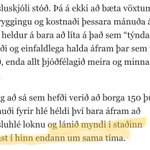
Muniði bara gott fólk: fasteignaverð, ekki frekar en hlutabréfaverð, á ekki heima í vísitölu neysluverðs (sem er notuð til að mæla verðbólgu).

Eirikur Agustsson retweeted
We just announced the 4th Challenge on Learned Image Compression at CVPR 2021.
3 tracks: lossy image compression (at three rates), video compression (2 second clips) and a perceptual metric track (predict the winners)
Check out our announcement here: groups.google.com/g/clic-lis…
Eirikur Agustsson retweeted

We're happy to announce that #CLIC2021 (Challenge on Learned Image Compression) is happening! Please check out compression.cc for more details, but the highlights are: 3 bitrates, video, perceptual metric evaluation!

Eirikur Agustsson retweeted

Thread: Named tensor notation (namedtensor.github.io/ w @davidweichiang)
Notation for deep learning is often ambiguous and dependent on informal clarification. We aim for a formal named notation that is explicit and self-documenting.
Feedback welcome: github.com/namedtensor/notat…


Eirikur Agustsson retweeted
📢We are releasing our arithmetic coder for @PyTorch as a stand-alone library. This is a generalized version of the code we used for our lossless compression papers, based on C++ for 🔥speed🔥. Wished this was available when I started my PhD :) github.com/fab-jul/torchac

Eirikur Agustsson retweeted
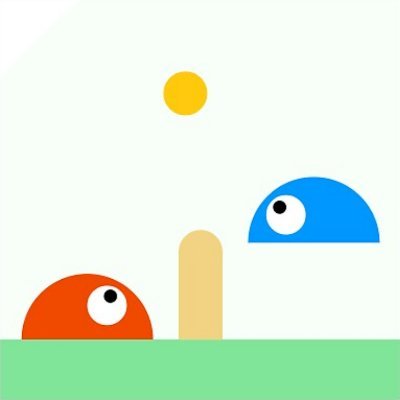
DeepSVG: A Hierarchical Generative Network for Vector Graphics Animation
Exciting work from @alxandrecarlier et al. Transformer-based hierarchical generative models learn latent representations of vector graphics, with nice applications in SVG animation.
arxiv.org/abs/2007.11301


DeepSVG: A Hierarchical Generative Network for Vector Graphics Animation
pdf: arxiv.org/pdf/2007.11301.pdf
abs: arxiv.org/abs/2007.11301

Eirikur Agustsson retweeted
Our group just released an arXiv paper that reviews Nonlinear Transform Coding approaches. We hope this will make the development of new end-to-end neural/learned compression methods easier to understand for those new to the field. arxiv.org/abs/2007.03034

Eirikur Agustsson retweeted

Our paper on interactive segmentation is accepted to ECCV 😄

Continuous Adaptation for Interactive Object Segmentation by Learning from Corrections (Poster)
By learning from corrections, our model improves as it is used. This leads to better performance on 8 datasets, spanning 3 domains.
arxiv.org/abs/1911.12709


Eirikur Agustsson retweeted

I have been fascinated by the possibility of communicating a continuous sample using a finite number of bits. The "reverse Shannon theorem" (Bennett et al., 2002) states that the number of bits required to send a sample is not much more than information contained in the sample.
Eirikur Agustsson retweeted
Excited to announce our brand-new arXiv paper "Towards reusable network components by learning
compatible representations": arxiv.org/abs/2004.03898
By making neural networks components compatible, they become like LEGO blocks that can be recombined and reused easily.


New short paper on arXiv. We explore if we can get networks trained on different tasks to produce compatible features, enabling to mix and match network components. Short answer: Yes, we can arxiv.org/abs/2004.03898

