

sometimes you wait almost half your life for your one moment to come.
Joined October 2025
- Tweets286
- Following96
- Followers1.1K
- Likes3.4K


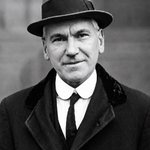
patrick stewart as lenin in the 1974 series fall of eagles: “don’t trust the liberals, they will betray you.”
soleil ô (1970) is a french film that explores the legacy of colonialism, racism, and the exploitation of migrant labor. it follows the everyday experiences of an african man in search of a better life in france, examining the individual’s existence within the social structure.
in the enemy zone, manual labor, which creates everything, is for the poor, the “stupid,” the “illiterate.” the less a person works, the more educated and civilized he is; the more he exploits others’ labor, the more he is respected and the higher his social status.

who can imagine a governor, a doctor, a general or a banker with calloused hands, his feet in the soil, sweating under the sun with the effort of hoeing? it would be though dishonorable, shameful, low.

marriage presents one side of the sexual life of the capitalist or bourgeois world; prostitution presents the other. marriage is the obverse, prostitution the reverse of the medal. if men find no satisfaction in wedlock, then they usually seek the same in prostitution.

carole boyce davies’s left of karl marx examines the political life of american marxist feminist claudia jones, her views on the exploitation of black working-class women, and her activities within the communist movement.

she therefore regarded the emancipation of black women as an integral part of the working class’s struggle for liberation and emphasized the role of the communist movement in this struggle.
qu qiubai; one of china’s marxist theorists of literature and culture, examined the relationship between revolutionary literature and the people in his 1932 essay the question of popular literature and art.

qu qiubai’s discussion thus raised a fundamental question: does the widespread popularity of a cultural form mean that it represents the interests of the people? the question of revolutionary culture was concerned not only with who was speaking.
john maclean, in his 1914 article “the war and its outcome,” examined the first world war in the context of the competition between the economic and political interests of the capitalist classes, setting out the class position of the working class towards the war.

maclean did not view the end of the war as separate from the political action of the working class and the reorganization of capitalist society; he also argued that a new economic war would follow in its aftermath.