

| BMLS🧪🧬🧫 | Public Health & research | CyberSecurity Tech | Chelsea FC 💙 | Real talk only |
kaduna
Joined April 2015
- Tweets5.2K
- Following956
- Followers372
- Likes9.4K





Pinned Tweet
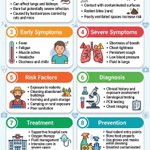
🦠TYPHOID FEVER is still a major health problem in many communities.
Most people only think “persistent fever” but it can affect much more than that.
A short thread 🧵👇

RT @PeterObi: SmartBallot : Torwards credible and Transparent Ballot
I have consistently believed that technology, combined with the crea…

Ezra FuNom, MLS. retweeted

NIGERIANS, GO AND VERIFY (7)
LIFTING THE VULNERABLE : ANAMBRA’S BLUEPRINT FOR POVERTY ALLEVIATION AND SUSTAINABLE EMPOWERMENT (2006–2014)
Economic growth that does not translate into improved living conditions for ordinary citizens is incomplete. This is one of our fundamental concerns with President Bola Ahmed Tinubu's government. Development must ultimately be measured by its impact on human lives, particularly those of the poor and vulnerable. This was underpinned by the Anambra Integrated Development Strategy (ANIDS). We believed that infrastructure, education, healthcare, agriculture, and social protection must reinforce one another. Poverty was not merely a shortage of money; it was also a lack of access to opportunities, productive resources, and the basic conditions necessary for a decent life.
Our poverty alleviation strategy, therefore, went beyond temporary handouts. It focused on restoring dignity, creating economic opportunities, and equipping vulnerable citizens with the means to become self-reliant.
Our approach attracted recognition beyond Anambra. In May 2010, Magnus Kpakol, then National Coordinator of the National Poverty Eradication Programme (NAPEP), commended our commitment to poverty reduction, declaring: “We are prepared to support you in the excellent work you are doing in Anambra State.”
1. POVERTY MAPPING: KNOWING WHERE POVERTY LIVES
We recognised that poverty could not be effectively addressed without knowing where it was concentrated and what caused it. We, therefore, undertook a poverty-mapping exercise to identify the most deprived local government areas and communities.
The exercise revealed that some of our poorest communities were also important food-producing areas. Their challenges included poor access to markets, agricultural inputs, electricity, water, and other economic opportunities.
Areas including Anambra West, Orumba South, Awka North, and Ogbaru required particular attention. The findings informed our development priorities, enabling us to direct roads, agricultural support, and social interventions toward neglected communities.
2. EMPOWERING WOMEN, WIDOWS, AND COOPERATIVES
We recognised that rural women, widows, and indigent households bore a disproportionate burden of poverty. Across the 21 local government areas, we provided financial assistance and productive support to thousands of beneficiaries.
Our administration provided financial assistance to support the establishment and expansion of small businesses and farming activities. We also introduced revolving loan schemes to promote enterprise development, economic self-reliance, and improved livelihoods.
We distributed productive equipment, including sewing machines, generators, ovens, cookers, hair dryers, shoe-making machines, and welding equipment. The objective was to help beneficiaries establish sustainable livelihoods rather than remain dependent on government assistance.
We also promoted access to microcredit and cooperative financing to enable small entrepreneurs to expand their businesses, improve their incomes, and create employment.
Our philosophy was simple: rather than merely giving people money to survive today, the government should help them acquire the means to earn a living tomorrow.
3. AGRICULTURE AND FADAMA: MAKING RURAL COMMUNITIES PRODUCTIVE
Agriculture was central to our poverty-reduction strategy because many rural households depended on farming.
Through partnerships with the Federal Government, the World Bank, and other development partners, particularly under the FADAMA programme, we supported farmers with finance and productive assets.
In November 2009, our administration disbursed millions to FADAMA Community Associations across the state. By October 2010, the National FADAMA office was commending Anambra’s commitment. Its National Project Coordinator, Buka Tijjani, represented by Charles Ugwuona, described Anambra as the leading state in the programme.
Ezra FuNom, MLS. retweeted
NIGERIANS, GO AND VERIFY (6)
SECURING LIVES AND PROPERTY: PARTNERSHIP WITH SECURITY AGENCIES
Peter Obi
In the preceding instalments, I explained how we approached governance under the Anambra Integrated Development Strategy (ANIDS), beginning with strengthening state institutions and investing in education and other critical sectors. Our conviction was that development must rest on strong institutions, capable human beings, and a secure environment.
No meaningful development can take place where lives and property are constantly under threat. Education, commerce, investment, and other productive activities can only flourish when people feel safe. This informed our approach to security. We understood that the responsibility of protecting lives and property could not be discharged through speeches and declarations alone. It required deliberate investment, effective coordination, and sustained partnership with the security agencies.
When we assumed office, Anambra faced serious security challenges. Armed robbery, bank attacks, kidnapping, and other violent criminal activities had created an atmosphere of fear. In 2006, I personally approached the then Inspector-General of Police, Mr Sunday Gabriel Ehindero, to seek urgent intervention. Following our appeal, the police authorities constituted a special team comprising experienced officers, including the late Haruna John, Alhaji Amusa Bello, and others, to confront the security challenges in the state.
We therefore made security a major priority of our administration, recognising that government must provide both the leadership and the resources required to enable security agencies to perform their duties.
EQUIPPING THE SECURITY AGENCIES
We believed that those entrusted with protecting our people must be adequately equipped. Accordingly, our administration, using funds from the security votes, provided over 600 patrol vehicles to various security agencies, including the Police, Army, Civil Defence, Customs, Immigration, NDLEA, Road Safety, Prisons, SSS, Navy, and community vigilante organisations.
Our support went beyond vehicles. We provided Armoured Personnel Carriers (APCs), armoured Hilux patrol vans, communication gadgets, repeater and linker stations, base stations, mobile vehicular radios, walkie-talkies, generators, and other logistical requirements. We also used the same security votes to provide financial support for their operations, including fuel, weekly allowances, and other essential needs of security personnel.
We paid particular attention to community security because we understood that effective policing must have a strong local presence. Again, using funds from the security votes, we provided billions of naira to the 177 communities in Anambra State to strengthen security in their respective areas. We directed traditional rulers and town union presidents to establish vigilante groups under police supervision, with the police providing uniforms for proper identification. We also contributed towards the payment of their salaries.
Additionally, we provided 250 patrol vehicles to communities across Anambra State. These vehicles were manufactured by Innoson Vehicle Manufacturing Company in Nnewi. Some towns received more than one, depending on their size and security needs. This initiative was also extended to universities and other large institutions in the state.
We also recognised that markets were particularly vulnerable because of the volume of commercial activities and the large number of people who visited them daily. Thus, in March 2014, we presented security vehicles to major markets in Onitsha and its environs. The beneficiaries included Bridge Head Market, Ogboefere Market, Building Materials Market, Ogidi, Onitsha Main Market, Marine Modern Market, Ogbaru Main Market, Ose Okwodu Market, Electronics Market, and the Amalgamated Market Traders Association.
Ezra FuNom, MLS. retweeted
NIGERIANS, GO AND VERIFY (2)
Building the Institutions of the State
Peter Obi
In Series 1, I explained the philosophy that guided our administration in Anambra State: governance as a public trust, anchored on character, competence, capacity, and compassion. I also introduced the Anambra Integrated Development Strategy (ANIDS), our comprehensive framework for achieving balanced and sustainable development across all sectors.
But a development vision, however noble, cannot succeed without strong institutions to drive it. Before the government could effectively deliver on its promises in education, healthcare, infrastructure, security, and other sectors, we had to first restore the machinery of government itself. We could not build a prosperous state on a cracked and unstable foundation.
This was why one of our foremost priorities under ANIDS was to rebuild, strengthen, and reposition the institutions of government. When I assumed office, the physical and administrative architecture of governance was in a deplorable condition. Our task was not simply to construct buildings but to restore the institutions, systems, and structures through which government could function effectively.
We therefore began systematically rebuilding the infrastructure of governance across the executive, legislature, judiciary, civil service, and local government system.
Restoring the Seat of Government
The Government House in Awka, the state capital, had been vandalised and burnt by reactionary forces in 2004. We therefore had to rebuild, re-equip, and furnish it, restoring its dignity and functionality as the seat of executive government.
In the same vein, we rehabilitated the Governor’s Lodge in Amawbia and constructed a new Governor’s Lodge in Onitsha. These investments were intended not merely to provide accommodation but to strengthen executive presence and facilitate effective governance across the state’s major administrative and commercial centres.
Strengthening the Legislature and Judiciary
We rehabilitated the Anambra State House of Assembly Complex in Awka, providing our lawmakers with a more conducive and decorous environment in which to discharge their constitutional responsibilities. We also provided legislators with vehicles to facilitate the effective performance of their legislative duties.
We recognised that a functioning democracy requires strong institutions, including an effective legislature and an independent judiciary, each operating within its constitutional mandate.
In strengthening the judiciary, we provided brand-new vehicles to High Court judges. This was the first time such provision had been made for them in the history of the state. We also provided vehicles to magistrates for the first time since the creation of Anambra State.
These interventions were intended to strengthen the administration of justice, improve mobility, and enable judicial officers to discharge their responsibilities more effectively.
Rebuilding the Civil Service: The Chief Jerome Udoji State Secretariat Complex
Before our administration, many Ministries, Departments, and Agencies (MDAs) operated from scattered rented apartments, while civil servants lacked a centralised and decent working environment. This untidy arrangement undermined coordination, efficiency, and the dignity of public service.
We addressed this situation by constructing the two-phase, ultra-modern Chief Jerome Udoji State Secretariat Complex, comprising Blocks 1 and 2. The project brought the MDAs together under one roof, improved administrative coordination, and provided civil servants with a more suitable environment in which to serve the people.
The complex was named after Chief Jerome Udoji, the first indigenous Chief Secretary (the equivalent of today’s Secretary to the State Government) of the Eastern Region during the First Republic. This was also a recognition of his contribution to public administration and the civil service tradition.
Ezra FuNom, MLS. retweeted

I’ve compiled the hard copy into a single 237-page PDF, just 31 MB. Enjoy! ❤️
drive.google.com/drive/folde…


Ezra FuNom, MLS. retweeted
HAPPY 70TH BIRTHDAY TO MY BROTHER AND FELLOW PARTNER IN SERVICE TO NIGERIA, RABIU MUSA KWANKWASO
As you mark your 70th birthday on October 21, I honour not only an accomplished public servant but also a very dear elder brother and partner whose life has been dedicated to serving our people.
With the passage of time, I have come to deeply appreciate the bond between us, the many conversations we have shared, and the common commitment to Nigeria that continues to shape our service. Your path through the legislature, the Federal Executive Council, the governorship of Kano State, and national public life represents decades of experience, duty, and meaningful engagement with the Nigerian people.
Turning seventy is not merely a significant milestone; it is a moment to look back with gratitude on a life devoted to service, the wisdom gained through experience, and the opportunities that remain ahead.
As we continue to hope for and work toward a better Nigeria, I remain grateful for our partnership and for our shared conviction that our nation can become a place where no child is deprived of opportunity, no family is left in poverty, and every Nigerian can live with dignity, security, and hope.
My dear brother, may God bless you with renewed strength, good health, wisdom, and many more productive years. May the years ahead be filled with peace, fulfilment, and the satisfaction of seeing the values we cherish take firmer root across our nation.
Warmest congratulations on your 70th birthday, Senator Rabiu Musa Kwankwaso @KwankwasoRM . I honour you on this special occasion and pray that the chapter ahead will be filled with abundant blessings and many more purposeful years. -PO


Ezra FuNom, MLS. retweeted

Dear friends, during some recent medical examinations, the doctors found a small, localized nodule in my lung. It was detected at a very early stage and is well-localized. The doctors believe that it is best to intervene, so, following their advice, I have decided to undergo surgery to remove it. The operation is already scheduled to take place in the coming days. I thank you for your spiritual closeness and entrust myself to your prayers.
Ezra FuNom, MLS. retweeted

I am Aisha Yesufu from FCT. I will vote NDC on 16 January 2027 and play the Osun Script to protect my vote: vote, stay, count, snap the result sheet. 2027 is not 2023. Learn the Osun Script and make your own pledge.
Vote & Mobilise for Peter Obi & Kwankwaso. #YouRigWeOsunYou #VoteNDC vote4obi.com/osun-pledge.htm…

Ezra FuNom, MLS. retweeted

Men that supports Chelsea are not just Men..... They are husband materials.✅💙💙
Ezra FuNom, MLS. retweeted
On the day I left office, I left more than US$150 million as the dollar component of my investment in Anambra State as governor. I hereby provide documents that can be verified with the various banks. Had it remained untouched, this investment was expected to provide Anambra State with approximately US$10 million in annual income.
Even if their assertion were accurate—which it is not—that Anambra owed US$123 million, the government could have used the US$10 million generated annually from my savings to reduce the debt. It has now been 13 years since I left office, which would amount to US$130 million. The debt should have been fully settled by now.
Had they retained the funds I left in the bank, including the compound interest on the principal and the additional income, the total would be approximately US$335 million today. If they had chosen to repay the US$92.35 million funding, the entire amount would have been covered, leaving approximately US$242 million to be reinvested. That sum would have generated about US$20 million annually for Anambra State.
Let me reiterate that, when I left office, I left Anambra State in a strong financial position—the strongest of any state in Nigeria—and I stand by that position.
Through this clarification, I wish to state categorically that I will neither engage nor trade words with anyone regarding my tenure in Anambra State. My focus will now be on issues affecting the suffering Nigerian masses, which is the reason for my presidential ambition.
A new Nigeria is POssible. -PO
Ezra FuNom, MLS. retweeted

Supporting local communities. 🫶
Chelsea Foundation is extending its #WrapUpWarm grants to @BaronsProject @vineyardcentre and @YorkRoadProject, helping each organisation to tackle homelessness within South-West London and Surrey.
Following on from his support in recent seasons, representatives met with Levi Colwill to explain how this funding will continue to deliver vital impact. 💙
chelseafoundation.chelseafc.…


Ezra FuNom, MLS. retweeted
Today, as I conclude my four-day working visit to the United States, I leave encouraged by the people I met, the conversations we shared, and the enduring hope I saw for a better Nigeria.
During the visit, I had the opportunity to engage with prominent personalities and exchange views on issues of importance to Nigeria, the United States, and our people, especially the future of our vast youthful population.
One of the most fulfilling parts of the trip was meeting young Nigerian professionals — doctors, lawyers, engineers, technology professionals, entrepreneurs, educators, and business leaders — who are excelling in their various fields while remaining deeply committed to a better Nigeria.
My message to them was simple: you are not outsiders to Nigeria’s future; you are an important part of it.
The knowledge, experience, and innovation of Nigerians in the diaspora are enormous national assets. We must build a country that welcomes their contribution and gives every Nigerian a meaningful opportunity to participate in our national development.
I shared with them my vision of a New Nigeria — a country where the son or daughter of a nobody can become somebody without knowing anybody; where your background does not determine your destination, and where hard work, competence, and integrity matter more than connections.
We must move Nigeria from consumption to production. We must invest in education, healthcare, and our people, support enterprise, create productive jobs, and build an economy that gives our young people genuine reasons to believe in their future at home.
Our young people should not have to leave Nigeria before their talents are recognised or their dreams become possible.
I was also pleased to engage with diaspora media, including NoireTV Network and Adeola Talks, where I shared my thoughts on building a more productive, secure, and prosperous Nigeria.
It was a fulfilling visit, but the work continues.
I look forward to continuing these conversations with Nigerians at home and across the world. Wherever we may live, we all have a role to play in building the Nigeria we desire.
Our challenges are great, but our potential is greater. We have the people, the talent, and the resources to build a country where opportunity is not determined by who you know or where you come from, but by what you can contribute.
That is the Nigeria we must build together — a Nigeria that works for everyone.
A New Nigeria is POssible. -PO
Ezra FuNom, MLS. retweeted
Debunking the Phantom Debts and Ecological Loan Fallacy
My attention has been drawn to trending claims by the Anambra State Government that my administration left behind inherited debts, including a ₦2 billion ecological loan, contractor liabilities, and unpaid salaries, gratuities, and pensions. This is completely false.
We systematically liquidated historical gratuities and arrears dating back several years, amounting to over ₦35 billion. At the point of handover, the state owed nothing in salaries, gratuities, or pensions, nor did we owe anything to any contractor for projects duly executed and certified.
The ₦2 billion ecological fund in question was released barely three months before the end of my tenure for the Oko/Umuchiana erosion crisis. Despite pressure to spend the money, I refused, insisting that it should be left for my successor because government is a continuum and the funds were tied to a specific project.
The money was therefore left 100 per cent intact in First Bank, in Account No. 2018779464, with a balance of over ₦2.13 billion.
It is important to stress that funds tied to specific projects or set aside for particular purposes were not even included in the over ₦75 billion in savings we left behind.
If anybody can establish anything to the contrary, I will stop campaigning. -PO
Ezra FuNom, MLS. retweeted
Yesterday, while in Washington, D.C., I had the privilege of meeting with a group of young Nigerian professionals — medical doctors and other healthcare professionals, educators, lawyers, engineers, technology experts, entrepreneurs and business leaders.
It was an engaging and encouraging conversation about Nigeria, the challenges before us, and the kind of country we must work together to build.
Our discussions centered largely on good governance and the urgent reforms Nigeria needs today. I reminded them that, important as our economic, political, and institutional reforms are, the most important reform Nigeria needs is the reform of leadership itself.
No nation can rise above the character, competence, capacity, and commitment of those entrusted with its leadership.
Nigeria is blessed.
We are not lacking in intelligent people. We are not lacking in natural resources. We are not lacking in hardworking and innovative young people. What we have lacked for far too long is leadership that genuinely puts the people first and treats public resources as a sacred trust.
We need leadership that strengthens our institutions, invests seriously in education and healthcare, supports businesses and entrepreneurs, creates jobs and opportunities for our young people, and gives every Nigerian a reason to believe that hard work can still lead to a better life.
Meeting these young Nigerians in Washington once again reminded me of the extraordinary talent our country has produced.
Across the world, Nigerians are making remarkable contributions in medicine, technology, engineering, law, education, business, and many other fields. Our diaspora should never be seen as people who have simply left Nigeria. They remain an important part of Nigeria and must be partners in rebuilding our country.
We must build a Nigeria where our young people do not have to leave their country in order to fulfil their dreams, and where those already abroad can confidently return, invest, contribute and participate in our national development.
That Nigeria is possible.
But it will not happen by accident.
It will require responsible and compassionate leadership, stronger institutions, prudent management of our resources, and, above all, citizens who refuse to give up on Nigeria.
I remain convinced that our greatest resource is not beneath our soil; it is our people.
If we get leadership right, we can get Nigeria right.
We must continue to believe. We must continue to work. And we must continue to demand a country that works for everyone.
A New Nigeria is POssible. - PO


