Fenil Doshi (@fenildoshi009) header
Fenil Doshi (@fenildoshi009) profile picture

PhD student @Harvard and @KempnerInst studying biological and machine vision | interpretability | object perception.

Cambridge, MA
Joined June 2017
Photo by Fenil Doshi (@fenildoshi009)Photo by Fenil Doshi (@fenildoshi009)Photo by Fenil Doshi (@fenildoshi009)Photo by Fenil Doshi (@fenildoshi009)Photo by Fenil Doshi (@fenildoshi009)Photo by Fenil Doshi (@fenildoshi009)Photo by Fenil Doshi (@fenildoshi009)Photo by Fenil Doshi (@fenildoshi009)Photo by Fenil Doshi (@fenildoshi009)Photo by Fenil Doshi (@fenildoshi009)
Excited to share that our paper has been accepted at #NeurIPS2025 ! Huge thanks to all my collaborators 🙌 Check out the details in the thread below ⬇️
🧵 What if two images have the same local parts but represent different global shapes purely through part arrangement? Humans can spot the difference instantly! The question is can vision models do the same? 1/15
1
9
90
11,779
Fenil Doshi retweeted
Excited to share what we've been working on since this summer- started in my internship at @MSFTResearch! Modern DNNs predict neural activity surprisingly well, but are black boxes. We introduce interpretable weight-space programming (iWSP) and ask: can LLM agents build predictive models of the brain directly in code, with no training or pretrained weights, so every feature stays transparent? 🧵 (1/6)
12
77
6
404
27,917
Fenil Doshi retweeted
Rules can also be conditional. On a frozen DINOv3, we ask a dog classifier to “rely on the tongue when it is visible, otherwise on the ears”. Both the condition and the parts come from the model’s own concepts, so no image was annotated. A Precise shaping of the classifier :)
1
4
2
55
4,255
Fenil Doshi retweeted
A science of post-training can be built on interpretability. Models know when they reward hack, and we see it, yet training ignores it. We propose Mechanistic Shaping: using the model’s own concepts to write training rules. In vision, DPO & RL, and its effects on monitoring 🧵
27
162
8
969
67,408
Fenil Doshi retweeted
Stanford Digital Brain Project has launched! We're hoping to make a seriously useful model of the human brain. Please come join us! news.stanford.edu/stories/20…
20
123
20
713
72,339
Fenil Doshi retweeted
Neural Thickets (@yule_gan @phillip_isola): add random noise to an LLM's weights, keep the best copies, let them vote. Reasoning jumps, no training. Why does it work? It's sampling in disguise. Swap noise on billions of weights for one random vector on the logits: same gains 🧵
18
57
10
527
41,927
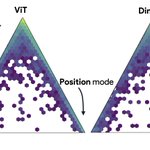
🟦 Vision transformers emergently learn to segment objects, but how? 100 years ago, Gestalt psychologists had the same question about people. In new work with @Mikey_Lepori, we take inspiration from Gestalt psychology to study how ViTs bind image patches into objects.
10
57
4
426
44,693
Fenil Doshi retweeted
Why? How did we ever get so lucky find meaningful neurons inside neural networks? We finally have a theory: arxiv.org/abs/2610.20851 🧵🧵🧵
interpretability might be the most important scientific problem in the world right now, as I don't think we can solve alignment if we don't know what we're building. I think I have good news about it. I co-authored early work in mechanistic interpretability at OpenAI and came away pessimistic, because neural networks appeared to fold into arbitrary tangled knots. years later, I started openai's first large-scale automated interpretability project, finding about 2% of neurons legible with the primitive tools we had with modern agentic tools and a much closer look, the picture looks totally different. the vast majority in models up to trillions of parameters are legible, and their circuits beautiful. many famous examples of tangled neurons turned out to be misunderstood. The roadblocks I expected mostly aren't there. I now think ambitious interpretability will be solved by the time we need it most, and possibly quite soon, as automated scientists keep improving. it may be a bitter lesson for interpretability: the simple thing, at absurd scale, works already-clean.goodfire.com/
8
34
5
335
23,665
Fenil Doshi retweeted
it’s been an enormous privilege and joy to watch @nickcammarata cook this up over the last year. week after week, experiment after experiment, he unraveled the tangled mess of our thinking about neural nets to reveal the truth. i never knew quite what to expect on our weekly walks. each conversation brought a torrent of new theories about the nature of AI, some conjectures teetering on the brink of madness, and others that seemed to cut through years of confusion with a single sentence. nick is one of the great scientists of our time. his intuition and research taste are out of this world, but what sets him apart is his unmatched ability to capture the essence of what something truly is, without being lost in the details. i would highly recommend you read his entire essay if you’re curious about AI. it’s long, but written beautifully. nick’s research makes me far more optimistic about the future of AI alignment. i hope that it can inspire the same for you.
interpretability might be the most important scientific problem in the world right now, as I don't think we can solve alignment if we don't know what we're building. I think I have good news about it. I co-authored early work in mechanistic interpretability at OpenAI and came away pessimistic, because neural networks appeared to fold into arbitrary tangled knots. years later, I started openai's first large-scale automated interpretability project, finding about 2% of neurons legible with the primitive tools we had with modern agentic tools and a much closer look, the picture looks totally different. the vast majority in models up to trillions of parameters are legible, and their circuits beautiful. many famous examples of tangled neurons turned out to be misunderstood. The roadblocks I expected mostly aren't there. I now think ambitious interpretability will be solved by the time we need it most, and possibly quite soon, as automated scientists keep improving. it may be a bitter lesson for interpretability: the simple thing, at absurd scale, works already-clean.goodfire.com/
11
38
4
774
31,603
Fenil Doshi retweeted
When Nick shared his work months ago, I was skeptical. I dug in with @CurtTigges and @nickcammarata to prove them wrong, building toy models with known DGPs, then bigger models, and ended up really convinced Beautiful work that changed how I think about interp 🥹 👑
interpretability might be the most important scientific problem in the world right now, as I don't think we can solve alignment if we don't know what we're building. I think I have good news about it. I co-authored early work in mechanistic interpretability at OpenAI and came away pessimistic, because neural networks appeared to fold into arbitrary tangled knots. years later, I started openai's first large-scale automated interpretability project, finding about 2% of neurons legible with the primitive tools we had with modern agentic tools and a much closer look, the picture looks totally different. the vast majority in models up to trillions of parameters are legible, and their circuits beautiful. many famous examples of tangled neurons turned out to be misunderstood. The roadblocks I expected mostly aren't there. I now think ambitious interpretability will be solved by the time we need it most, and possibly quite soon, as automated scientists keep improving. it may be a bitter lesson for interpretability: the simple thing, at absurd scale, works already-clean.goodfire.com/
4
8
222
5,282
Fenil Doshi retweeted
Check on your neurons “The canonical evidence of polysemanticity and superposition that convinced much of the field, including me, that networks pack concepts arbitrarily was misread”
interpretability might be the most important scientific problem in the world right now, as I don't think we can solve alignment if we don't know what we're building. I think I have good news about it. I co-authored early work in mechanistic interpretability at OpenAI and came away pessimistic, because neural networks appeared to fold into arbitrary tangled knots. years later, I started openai's first large-scale automated interpretability project, finding about 2% of neurons legible with the primitive tools we had with modern agentic tools and a much closer look, the picture looks totally different. the vast majority in models up to trillions of parameters are legible, and their circuits beautiful. many famous examples of tangled neurons turned out to be misunderstood. The roadblocks I expected mostly aren't there. I now think ambitious interpretability will be solved by the time we need it most, and possibly quite soon, as automated scientists keep improving. it may be a bitter lesson for interpretability: the simple thing, at absurd scale, works already-clean.goodfire.com/
1
2
30
1,348
Fenil Doshi retweeted
interpretability might be the most important scientific problem in the world right now, as I don't think we can solve alignment if we don't know what we're building. I think I have good news about it. I co-authored early work in mechanistic interpretability at OpenAI and came away pessimistic, because neural networks appeared to fold into arbitrary tangled knots. years later, I started openai's first large-scale automated interpretability project, finding about 2% of neurons legible with the primitive tools we had with modern agentic tools and a much closer look, the picture looks totally different. the vast majority in models up to trillions of parameters are legible, and their circuits beautiful. many famous examples of tangled neurons turned out to be misunderstood. The roadblocks I expected mostly aren't there. I now think ambitious interpretability will be solved by the time we need it most, and possibly quite soon, as automated scientists keep improving. it may be a bitter lesson for interpretability: the simple thing, at absurd scale, works already-clean.goodfire.com/
887
2,660
1,466
19,993
4,840,526
VLMs use pointer-like signals for spatial variable binding. But where does the binding actually happen? We find a dual mechanism: the vision encoder is the primary source of binding, with the LM backbone playing a secondary role.
3
18
4
76
8,048
DINOv2 has never seen a caption, and Qwen3 has never seen an image. We still aligned their embedding spaces without a single image-caption pair. It even works when the images and the captions come from different datasets. Project page: dominik-schnaus.github.io/un… ⬇️
83
361
85
2,407
248,737
Fenil Doshi retweeted
Leading AI models appeared to predict brain activity equally well… …until we asked them to synthesize images that precisely control neural firing, like these 👇 Across 25 neural sites, closed-loop experiments revealed striking hidden differences in model-brain alignment. 🧵
4
56
6
190
18,771
Fenil Doshi retweeted
I'm really excited about the possibilities this work opens up! It is an inventive way for parameter decomposition to get more for less. Great work by Antoine (@teleturnip)! (a @MATSprogram collaboration)
New paper: instead of decomposing a whole neural network, we only dissect the parts used on a task we care about. It's much cheaper, and gives mechanisms you can inspect, erase, or edit to change how the model behaves 🧵
3
1
82
4,555
Fenil Doshi retweeted
New paper! 🫡 We introduce Matryoshka Attribution, a new attribution method which uses gradient descent to find which parts of a neural network are responsible for a behaviour. MAttr is #1 on the Mechanistic Interpretability Benchmark by a wide margin (2.9× the runner up).
34
181
18
1,632
109,428
Fenil Doshi retweeted
"Why am I optimistic about interpretability? It's partly because I think we're starting to have really good traction - but also because I can imagine this incredible speedup." Catch our Chief Scientist @banburismus_ on the latest episode of @MLStreetTalk!
3
23
3
149
14,793
Fenil Doshi retweeted
🤖🧠NEW PAPER🧠🤖 (The result of an 8-year project!) LLMs seem very different from symbolic systems. Yet LLMs excel in symbolic domains (e.g., language/code/math). How do they do it? Our finding: LLM representations have implicit symbolic structure! Link in thread ⬇️ 1/n
44
270
40
1,374
213,545
Fenil Doshi retweeted
Are brains and artificial neural networks converging onto universal representations? There is a seductive idea making the rounds in NeuroAI / ML: train systems well enough, and they'll converge on the same representation of reality (i.e. unique world model). We have Thoughts™
6
25
3
136
14,546
Fenil Doshi retweeted
coverage of the silico launch from IEEE! you can read about it here: spectrum.ieee.org/silico-ai-… @camhberg is doing some incredible work on the platform and had a great quote: “Silico has been really helpful for operationalizing my research agenda and executing on it way faster than I would have expected,” he says. “I feel like I have basically become the PI and my research scientists and research engineers are AI systems.”
2
3
30
1,361