





FireHand retweeted

New essay out on the @multicoin blog, which is an evolution of our thinking on DeFi value capture
TLDR is in a world where software costs trend to zero, finance is one of the most obvious industries where moats will exist and DeFi is perfectly positioned

FireHand retweeted

Bigger picture thoughts:
If BTC is behaving more as a hard money SOV (not totally proven yet of course, but let's theorize) than a risk on asset then what does that mean for alts?
BTC started as an uncorrelated speculative asset. Institutions arrived in 2020 and it became a tech proxy, prone to big swings whenever risk assets dumped. Now it might finally be shifting towards hard money. The tech era wasn't really BTC's true identity. It was a phase driven by who the marginal buyer was.
There is an argument that we are setting up for the most sustainable alt coin cycle ever if BTC is not going to dump so hard with risk periodically, and has finally been accepted as a SOV by institutional money.
A calmer BTC that doesn't rug every time risk sells off would be a real tailwind for alts. Algos and bots will likely keep some correlation in place. But the more important point is that the best alts have already shown they don't need BTC's permission to go up.
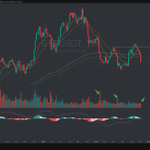
You can see when we look at TOTAL2, TOTAL3 and OTHERS that alts have in fact led BTC in breaking bullish market structure. I can't help but feel this is the market tipping its hand.
We have never had a better crop of select tokens that have PMF, revenue, expanding TAMs, and great tokenomics, as buybacks have become the standard. Their TAM is TradFi not just crypto. No previous cycle had this.
These are real businesses where the protocols are capturing and passing on the value to token holders, unlike any cycle we have seen previously, where almost all tokens were entirely a game of speculation and narrative.
For the most part these businesses are moving from crypto to simply becoming the new fintech. For the first time, crypto protocols are competing for TradFi flow, and winning some of it.
When more crypto speculation does return, it's a bonus. Revenue and multiples expand together.
Agentic trading is a free call option on top. If it scales over the next two years, it could add meaningful volume, fees and transactions to the leading protocols as well.
The world is still very underweight good alt coins.
I think it is likely people sell far too early, and have not got a mental model beyond "alts are all vapour", which was a very protective framework in the past, but simply does not apply to our present s-tier alt coins. I strongly believe we have a list of investable tokens for the first time ever.
So, in summary, we have a more stable BTC, not rugging so much with risk, a likely supportive macro environment in 27-28 (financial repression to control bonds aka debasement, strong economy, hikes done etc.), supportive regulatory regime, and the first cycle with real earnings behind the best tokens.
I am very bullish and very redacted in equal measures.

FireHand retweeted

20+ launchpads on Arc (chain not even public yet), and Solana regressing to PvP games and AI slop…
Yea, I’m comfy on Robinhood

My general investment philosophy for onchain is that you want to position yourself in ecosystems/assets that can not only capture flows and attention from crypto's current user base, but also have the ability to onboard net new users and capital to crypto.
It's for this reason that I remain primarily allocated to Robinhood Chain, as I don't think any other ecosystem comes nearly as close to RHC on that second point.


FireHand retweeted

ok since apparently this needs explaining:
get the girl before the money. your 20s are when everyone’s still dating for love and nobody has anything. once you’re rich you’ll never really know.
then get the money. as much as possible, as fast as possible.
then use the money to buy back your health before it’s too late. trainer, diet, doctors, ozempic, whatever.
love gets harder with money.
health gets easier with money.
few understand (apparently)

FireHand retweeted

A few things from today. The next decade is the super cycle. Same disclaimer as always. it will be volatile, it will be so over and we are so back many times. But ultimately, this is over a decade period. going to be the larget bubble in human history.
Japan committing multiple trillions to the AI buildout over the next decade. Other govs will do the same.
We are going to see more robots than humans 10 years from now. The robot buildout hasn't even started. These companies aren't even public yet. Robots are solving for the 59T labor problem that exists today. Avg hourly wage is around $38, robots can get the job done for under $3-4 over its lifetime.
There is still a huge energy need, the AI buildout isnt complete. It also is going to take years
We are going to see rapid advancements in medicine as a result of AI. Speeding up time to market, research, and finding new cures.
There are going to be many bubbles, and side bubbles inside the broader bubble and super cycle.
FireHand retweeted

If you're in Crypto and you're not bullish on Hyperliquid after reading this article you should really leave and go do something else.
colossus.com/article/beyond-…


FireHand retweeted

Young people wreck themselves because they expect life to be fair - they think something, somewhere, is supposed to balance out.
It doesn’t.
Where you’re born, who you’re born to…
Opportunities, interviews, timing - none of it is fair.
As a trader you get taught this quickly: the market doesn’t care about effort, time spent, or what you "deserve". It just is. Some days you get paid for doing nothing, other days you do everything right and still get clipped.
Accept it early.
Drop the expectation, look at things as they are, and play the hand you’ve got. That’s how you actually move forward.
FireHand retweeted

A lot of you still have to understand what it took me years to realize (and millions in roundtrips)
You're not a genius trader, you just have a large appetite for risk and willing to continually take bets in the best risk-on environment in the world
I wish someone would have screamed this at me years ago, it would have saved me a lot of turmoil.
FireHand retweeted

if your goal is to be consistent long-term you should focus on outperforming on downside
it sounds backwards but it’s really the only way to guarantee long-term success
it’s substantially easier to show the courage (and capital) to bid when you haven’t lost half your networth on every -10% Bitcoin move
a constant cycle of ‘the best loser wins’
if your goal is to go from broke to multi-millionaire in a month, ignore the above [and then come back to it later when that doesn’t work out].


FireHand retweeted

A question I’ve been asked a lot lately: Are memecoins here to stay as the dominant mindshare of the market? I've put together some thoughts on the topic and history on how we got here.
To start, I believe the following are the primary factors driving memecoin dominance:
1. Low amount of new innovation in the space despite consistent demand for new tokens (has crypto reached the limits of what it can do without introducing elements of centralization?)
2. Intentional removal of token utility means no limit to calculated valuations
3. Retail desire to put power back in their own hands
4. High user signup conversion on memecoin listings incentivizes exchanges to list many low quality tokens
To understand how long these factors are likely to last, let's dive into each of them with a bit of historical context.
Starting with some history on innovation in the space, we see an interesting progression of technical refinement which to some extent can be simplified to:
2016: Basic smart contract functionality; Eg., The DAO, Etherdelta
2017: Crypto For Everything. Eg., Tokens for dentists, tokens for taxis, etc.
2021: Crypto For Finance + NFTs. Eg., Lending, AMMs, DeFi, collectibles
2023: Infra. Eg., L1s, cheaper / faster txns, etc.
2024: Memes
At first this might all seem uncorrelated, but there’s actually a very clear progression of reduction in scope here. Over these years, the tech starts as a wild west where the possibilities are seen as endless, and with each cycle hones in on more and more specific utility, until it reaches a perceived limit of what can be done purely within the scope of a decentralized network without using non-decentralized elements. After this limit is somewhat reached in the 2021 cycle, we see a significant slowdown in interesting new dApps produced, and the market then begins focusing on improving the infrastructure instead. While infrastructure improvement can continue across many cycles, retail mindshare has a shorter attention span, and with no other innovation to be found it eventually defaults to memes. It's worth noting of course, that memes have always had significant attention; Doge for example, peaked at $80B market cap in 2021. The distinction though is of memes being the foremost trend focus.
This brings us to the second factor behind memecoin mindshare: theoretical valuations. It’s been a long running joke that the most valuable projects should never ship a real product, because then their valuation becomes immediately quantifiable. Except unfortunately, this isn’t even really a joke. DeFi in 2024 is a prime example of this: in an efficient market, investors will take less than 5 minutes to look at a project’s baseline, slap a 20x P/E on it, and decide it shouldn’t be worth a penny more. This is by far the largest reason that DeFi struggles to have a bull market again in the current cycle.
In 2021 we saw some projects cleverly design their tokenomics to be so complicated that few could tell what the real revenue actually was or whether the project was sustainable. This arguably led to some of the best ponzis of the cycle, but ultimately crashed hard enough that market appetite for opaque tokenomics hasn’t returned. So of course, for meme coins the solution is simple- throw utility out the window altogether, and the project is no longer quantifiable. Brilliant! Amusingly, memecoins this cycle that have attempted to add utility have often hurt their valuations by doing so.
The most straight-forward reason for memecoins dominating this cycle is of course the desire of retail investors to bring power back from VCs and institutions to the hands of the little guys. The reality of course, is that it’s only a slight shift in where the bulk of the profits end up going, and unfortunately it’s still not to retail. Instead, it’s a shift from VCs to “sharks” in the space. In essence, lean teams of incredibly efficient participants that understand how to corner the supply of a token, market it as organic, and repeat over and over. There are so many examples of this that I’m not even going to call out specific names.
A key component that makes this playbook so viable is that the market has unfortunately decided that market cap is a signal of legitimacy, which incentivizes cornering the supply of tokens to artificially prop valuations. Of course, the market goes back and forth in fighting this battle; solutions like Pump Fun were created to mitigate the ability to opaquely corner supply, which has led in turn to more sophisticated sniping and accumulation techniques being created, and the battle carries on. But ultimately, memecoins do end up putting a vast majority of profits in the hands of organized groups, while teasing the rare organic lottery wins to the average retail to keep the game appealing.
And finally, a discussion on exchange listings. I’m surprised I don’t see this talked about more, but exchanges are massively propelling the current memecoin craze due to the incentive structure they have in listing. In particular, listing teams want to list coins that will drive maximum user onboarding- ie., how many users will sign up and make their first deposit to the exchange as a result of a particular listing. Coins with wide distribution in new ecosystems do particularly well with this; for example, clicker games on TON were quoted to be bringing in several million new users per listing (a shockingly high number) in an in interview with Bybit’s CEO:
Popular memecoins tend to get wide distribution in small quantities since they’re easy to understand by casual retail; this results in high user signup /deposit conversion. But the incentives here are misaligned. For the listing teams it looks good- the numbers are high and it hits their OKR for a satisfactory performance review. But the reality is that many of these are low quality signups, and it often incentivizes listing low quality tokens to hit these numbers. Ultimately, it is very likely leading to a longterm degradation of listing quality and innovation in the space. I have some other thoughts on listing processes in general, but I’ll leave that for another post.
So with a better understanding of what brought us to this point, do I think the memecoin mindshare lasts? For at least the medium term, yes.
For memes to lose mindshare, we need to see an innovative new narrative that is truly crypto native (ie., not a centralized hybrid tech) with decent ponzinomics. And the unfortunate reality is that this is much harder to achieve now than it used to be. AI is the closest thing to this right now, but in most cases runs into the question of “why do we even need crypto for this?”. As mentioned in a previous post, I see there being a couple interesting bluechip exceptions to this. There are also a few DeFi projects in the pipeline that I consider to be interesting + innovative, and I have hopes could be the beginnings of a newer narrative down the line.
Cheers


FireHand retweeted

the trenches feel pretty cooked atm, gonna lay out some data and my thoughts because i need someone smarter than me to tell me how it gets resolved
> pump fun hit an ath in daily rev yesterday at $2.3m
> cumulative revenue is just under $80m
> 1,567,948 coins have been launched since inception
> 6000 in the last 24h
on the neiro launch day nearly $1b in volume on just a few coins
this is getting dangerously close to the bome/slerf top we had in march, except in an environment with far less free flowing capital and a HUGELY dispersed network of coins
popcat 40m
wif 125m
mew 270m
neiro/NEIRO/nEiRo 900m
bome 922m
slerf 2.2b
currently: number of coins > amount of capital needed to sustain growth
all while large chunks of solana are leaving the ecosystem every day to infra providers, insiders and the few lucky ones
the daily rate of extraction on solana is huge, anecdotally the trenches have been seeing pretty monster volumes across the board on new coins lately (multiple daily occurrence's of $20m+ in the last week) yet very few coins are able to break 9 figs
the shitcoin landscape has become hyper efficient, there used to a financial barrier to entry for launching a coin as the deployer needed to seed liquidity, now the cost comes from the trenches themselves as traders fill the bonding curve
every time a pump coin fills the curve the LP is burnt, another stream of sol leaving the eco everyday - there is $65m of locked solana sitting between just the bome and slerf LP's
the main beneficiaries of the current environment are:
> pump fun
> any trading bot (most charge 1%)
> people that launch coins
if you assume even 50% of current transactions are ran through a trading bot then nearly $5m went to infra providers just on the neiro launch day
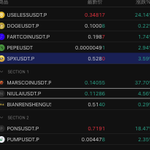
then you have countless coins where the top trader section on photon looks like this:
the result is a rolling selection of 5-10 coins above $10m but below $100m mcap competing for attention until the next cohort comes along and vamps it and the liquidity, a new meta every few days instead of every few weeks or months
basically solana is getting sucked dry and i'm trying to figure out what the end game is here
but all i can really see are two scenarios:
1. it becomes so efficient and the rotations so violent that nothing new can survive, traders lose so much money and hope collectively that we see an extended low cap bear market and a full reset
2. we see enough new entrants and capital that we flip back to 'amount of capital needed to sustain growth > number of new coins', strong coins prevail and the playing field levels out again


FireHand retweeted

区块链投资史就是 ETH 的扩容史,过去是,未来仍然如此
如果这个问题看不懂,那对扩容的核心逻辑根本就没有梳理清楚。有时候很感慨 VB 执掌的这艘巨轮是有多么的不易,我相信一切赞美之词用在 VB 身上都不为过。
$SOL 主导的单链也好,ETH 衍生的模块化也好,仅仅是路线之争,都是服务于 Mass Adoption 这一终极愿景。你在币圈小河小湖之中白刃相搏,远不如从 Web 2 世界带来一亿日活,希望你的基础设施能为此做好承接准备。
如此同时,非常不情愿看到的是,对这艘巨轮的修补工作如此艰巨/复杂/小心,更为致命的是坎昆升级对 ETH 带来的价值锐减,牺牲自我繁荣 ETH 生态,鲸落万物生。
坎昆的价值下放,Danksharding 的价值归拢,一放一收之间,可能也是 ETH 扩容之路不得已而为之的权宜之计。
非常期待 2027 年 ETH 的 Danksharding 带来的价值回归之路。


