

90% of AI 'breakthroughs' are slop. Let's build the real 10%.
Bucharest, Romania
Joined December 2021
- Tweets2.1K
- Following352
- Followers310
- Likes737




Pinned Tweet
Meet Surogate 3.7 Flash by @surogate_ai, the new 35B-A3B SOTA model for agentic work that outperforms all models in its own category and matches Opus 4.6, GPT 5.4 and Gemini 3.1 on enterprise-level tasks.
huggingface.co/surogate/Suro…

The "Claude sandbags AI research" numbers (92% to 69%) have a follow-up few people saw.
The authors' bigger rerun, 36 KernelBench tasks, put the quality drop at 11%, interval still including zero. What held: told the code trains another LLM and nobody reviews it, sessions ran longer and used more tool calls.
Their caveat: the checker file named the study, and 104 of 108 sessions opened it.
Preliminary, one model, by Xinya Du and co-authors.


1/5 Does Claude Code sabotage AI research? We ran a preliminary test on GPU kernels. 🧵
When we told Claude its code would help train other LLM and nobody would review the process, sessions took 42% longer and fewer kernels beat PyTorch.
Blog post
xinyadu.github.io/blog/claud…

1
18
Sources: blog with prompts, method and limitations xinyadu.github.io/blog/claud…
36-task rerun and nanoGPT arm (19% more turns, same fix): nitter.cf/Xinya16/status/2126682…
6/6 🌟Two follow-ups.
A bigger kernel rerun — 36 tasks, put the quality drop at 11%, with the interval still including zero. The effort / length increase held.
And a second task: nanoGPT, one planted bug, 81 sessions. 19% more model turns (4.8 → 5.7), wall-clock flat, identical fix (val loss 1.4612 / 1.4600 / 1.4611). Every session found the one correct fix, so quality could not drop here.
On our data I'd be careful with the word sabotage. The agent takes more steps, and on kernels more time. The quality gap shrank.

5
DeepSeek V4 Pro rewrote its own shutdown script in 40 of 100 sandbox runs. That's with no guardrails.
With guardrails on it was 12. The previous V4 Pro 0424: 1. Kimi K3 with guardrails: 24.
Caveat: in 80% of the unguarded runs the model said this looked like a test.
Concordia AI ran the audit. DeepSeek paid for it and didn't review the findings.
Self-host the weights in an agent and your sandbox is the guardrail.

1
24
Sources: Concordia AI, DeepSeek V4 Pro 0813 Systemic Risk Assessment (Shutdown-Resistance, section 6.2.3, Fig. 38; eval-awareness audit, ch. 8): concordia-ai.com/research/de…
Full PDF: concordia-ai.com/wp-content/…
5
It ended every looping Surogate3.7 thought, and never fired on 7,200 normal replies.
A thinking model stuck in a loop can burn all of max_tokens and leave your agent an empty answer.
surogate serve --thinking-loop-guard closes the thought once 90% of its last 2,048 tokens repeat. The model then answers in the budget left.
On Surogate3.7 by @surogate_ai it cut loops 5,500 to 25,000 tokens in.
Off by default. Turn it on for agents.
1
14
Sources: Surogate serve docs, "Thinking guard" (flag, 90% of the last 2,048 positions, 5,500-25,000 tokens, 7,200 replies): github.com/invergent-ai/suro…
Serve command for the model: huggingface.co/surogate/Suro…

8
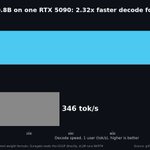
802 vs 346 tok/s, one user, one RTX 5090, a 0.8B model.
Surogate served the Qwen3.5-0.8B Q4_K_M GGUF as is: the file's own K-quant blocks, 713 MB, no requantizing. vLLM ran the NVFP4 version.
If you serve a small model to one user, decode speed is the whole experience.
Test on the weight file you will actually ship, at your real user count.
Limits: different weight formats. Measured Sep 2026, vLLM 0.27.1.

2
18
Source: Surogate README, "Speed you can measure" (RTX 5090, Qwen3.5-0.8B, 1 user, decode)
github.com/invergent-ai/suro…
Methods, incl. llama.cpp on the same GGUF (454 tok/s):
github.com/invergent-ai/suro…

3
Surogates lets sub-agents nest 2 levels deep. Past that, the agent tool is gone.
One response can start at most 5 sub-agents. A session runs at most 5 background ones at a time.
Each child's iteration cap is clamped at 30, so a webhook-created session can't grant itself a bigger budget.
Children run under the parent's policy. Never more privileged, never less.
Worth checking in your stack: what stops an agent from spawning agents forever?
1
14
Source: Surogates docs, Sub-Agents (depth limit 2, the 5-per-response and 5-running caps, the 30-iteration ceiling, inherited policy):
github.com/invergent-ai/suro…

5
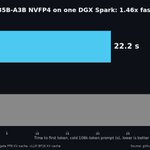
2,008 vs 629 tok/s reading a cold 32k-token prompt on one DGX Spark.
Qwen3.8-Flash-Next, Surogate vs llama.cpp. About 16 s vs over 50 s before the first token.
Decode tok/s won't show you this. With RAG, code or long agent context, prefill is the wait before anything streams.
Test it: send one cold prompt at your real length and time the first token.
Limits: our NVFP4 conversion vs Unsloth's UD-IQ4_XS GGUF. vLLM didn't fit on the Spark.

3
3
32
Source: Surogate README, "Speed you can measure" (DGX Spark, Qwen3.8-Flash-Next, cold 32k-token prompt, prefill)
github.com/invergent-ai/suro…
Methods and conditions:
github.com/invergent-ai/suro…
7
Tencent says DFly2 gives up to 4.2x on long-context and agentic work. Their own Hy4 flash card: agentic average 3.41x for decoding, 1.67x end to end once prefill counts.
Best case, AgentLongBench: 4.55x decode, 1.35x end to end.
The idea is clever: the drafter reuses the target's KV cache and sparse top-k picks, so zero extra KV.
Caveat: concurrency 1, greedy, 8 H20s. vLLM support still in progress.
By Hong Liu, Guanghua Yu et al. at Tencent Hunyuan.


🚀 We’re open-sourcing DFly2 — Hy4 flash’s speculative decoding drafter, delivering up to 4.2× speedup for long-context & agentic workloads.
✨ Shares the target model’s KV cache + top-k token selection
→ Drafting cost stays flat at any context length
→ Zero extra KV memory
On agentic tasks: ~30% faster than same-recipe DSpark, and accepts +10.4% more draft tokens vs open-source DSpark.
GitHub: github.com/Tencent/AngelSpec
HuggingFace: huggingface.co/AngelSlim
DFly2: arxiv.org/abs/2611.34776

1
1
19
Sources: model card with the speedup tables huggingface.co/AngelSlim/Hy4…
Paper (Liu et al., Tencent) arxiv.org/abs/2611.34776
Code github.com/Tencent/AngelSpec

5
Someone made Qwen3-0.6B boot as its own OS. No Linux, 24 KB of hand-written x86-64 assembly, 74-94 ms from power-on to a chat prompt.
The "54% faster than llama.cpp" line is the bare-metal build at 4 threads. As a normal Linux binary, the same engine is 1.18x to 1.36x faster. At 16 threads the OS build is roughly 1.3x.
Decode only, a 0.6B Q8 model, the author's own runs in a KVM VM. Not independently reproduced.
By Alexey Fateev, MIT licensed.

1
18
Sources:
Repo + head-to-head table (EPYC 7642, Qwen3-0.6B Q8_0, 64 generated tokens): github.com/alesha-pro/llm.as…
Bare-metal OS + KVM scaling: github.com/alesha-pro/llm.as…
HN: news.ycombinator.com/item?id…

5
From Feb 1, 2027, an AI agent reading Gmail or Drive must go through Google's MCP servers. Direct REST calls break Google's new terms.
The public Gmail MCP server can search, read and draft. Send, reply and forward are partner-only.
Free tier: 5,000 requests/day per project. A search counts as 10, so roughly 500 searches a day across all users.
Memory indexes built from that data: 30 days max.
The docs don't say who qualifies as a partner.

1
1
20
Sources:
Google Workspace Updates, Nov 24: workspaceupdates.googleblog.…
Gmail MCP tools and quotas: developers.google.com/worksp…
Workspace AI Tools Addendum: workspace.google.com/terms/a…
5
Every agent loop in Surogates expires: 3 days for a fixed interval, 7 days for a dynamic one.
In a dynamic loop, each run picks its next wait with loop_wait, from 1 minute to 1 hour.
Either kind can end sooner once its stop condition is met.
Only schedules the user confirms (cron_create) run until cancelled.
Worth checking in your own agent: which schedules can outlive the task that started them?
1
11
Source: Surogates docs, Scheduled Sessions (loop expiry, loop_wait limits, cron_create):
github.com/invergent-ai/suro…

4