

Research scientist @deepmindai. Co-lead of Gemini Diffusion.
London, England
Joined May 2017
- Tweets261
- Following213
- Followers845
- Likes443



Pinned Tweet
Super excited to share our latest model, DiffusionGemma 🚀
This is a step change in the quality / latency frontier and opens up for new research and applications.
Want to know how it works? @MaartenGr has an amazing visual guide with all the details
newsletter.maartengrootendor…


Sebastian Flennerhag retweeted

Deploying DiffusionGemma-Jev (djev) just got a lot easier. You can now spin up a Jev API-compatible endpoint on Google Cloud Run using a single command.
Performance is solid: ~35-60 ms for single step latency and batch@32 is ~100-123 requests/sec.
It's a straightforward way to experiment without needing your own GPU. Runs at roughly $3/hr and drops to $0 when idle.
Get the code and instructions here: github.com/taeold/djev-run
Sebastian Flennerhag retweeted
"DiffusionGemma as Jev" showcases the power of non-autoregressive architectures.
While Jev demonstrates the value of rapid decision models, running DiffusionGemma in this paradigm leverages canvas diffusion to evaluate structured choices in a single parallel pass:
⚡ ️Massive Parallelism: Denoises across an open canvas in a single step instead of sequential autoregressive token generation (~0.2s on a DGX spark).
🧠 Full Bidirectional Attention: Allows every option to attend to the full context concurrently, yielding well-calibrated decision distributions.
👁️ Multimodal Grounding: Inherits Gemma 4's spatial vision capabilities for complex visual and text decisions.
Read more about this approach here:
github.com/vllm-project/vllm…
nitter.cf/mmastrac/status/210037…
nitter.cf/mmastrac/status/210062…


We are delighted to give back to the community by releasing a technical report on DiffusionGemma.
It’s been great to see the many advances over the last couple of years and with this report we hope to help push the frontier further!

We just released the DiffusionGemma tech report. Text diffusion models open up a radically different part of the latency–quality Pareto frontier 👇
We hope the report makes it easier for researchers and engineers to understand the model, build on it, and create things we haven’t thought of yet.
None of this work happened in isolation. DiffusionGemma builds on years of amazing research from the text diffusion community, and we wanted the report to recognise that. We’re standing on the shoulders of giants❤️
Let’s keep pushing towards lower-latency, higher-quality LLMs together!


Sebastian Flennerhag retweeted

We just released the DiffusionGemma tech report. Text diffusion models open up a radically different part of the latency–quality Pareto frontier 👇
We hope the report makes it easier for researchers and engineers to understand the model, build on it, and create things we haven’t thought of yet.
None of this work happened in isolation. DiffusionGemma builds on years of amazing research from the text diffusion community, and we wanted the report to recognise that. We’re standing on the shoulders of giants❤️
Let’s keep pushing towards lower-latency, higher-quality LLMs together!
Sebastian Flennerhag retweeted

Trying to visualize the concept of diffusion in text models.
Instead of generating strictly left-to-right, the answer starts as noisy latent text, then gradually refines into stable words.
For the demo, I patched vLLM's DiffusionGemma sampler to trace denoise/commit events, canvas tokens, best guesses, and stability masks.
Conceptually: noise → refinement → commit.

Sebastian Flennerhag retweeted

450+ TPS for Gemma diffusion on 2x3090. 🚀🚀🚀
Recipe on club 3090 later today.
github.com/noonghunna/club-3…

Sebastian Flennerhag retweeted

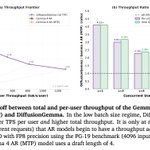
Diffusion Gemma: SOTA open-weights text diffusion model. Nearly matches the quality of AR Gemma 4 while being 4x faster in various settings!
Can't wait to see all innovations that will be stacked on top of this model by the creative AI/ML community.
Amazing work @bodonoghue85 @Nate_Keating @armandjoulin and team!

Sebastian Flennerhag retweeted

🚀 Meet DiffusionGemma — an experimental model that generates text up to 4x FASTER on selected GPUs.
By shifting away from traditional token-by-token generation, it unlocks hardware efficiency and pushes speeds past 1,000 tokens per second on a single GPU. ⚡🔥

Sebastian Flennerhag retweeted

mlx-vlm v0.6.3 is here 🚀
Day-0 support for TWO new models from our partners we work closely with:
🔥 @GoogleDeepMind DiffusionGemma — a genuinely new architecture. Instead of token-by-token, it generates 256-token blocks in parallel with bi-directional attention and iteratively self-corrects the whole block, image-generator style. 26B MoE, only 3.8B active, fits in 18GB quantized. Day-0 MLX support via our Google DeepMind partnership, with long-context prefill tuned and ready.
🔥 @cohere's North Mini Code 1.0 — a 30B MoE with just 3B active, running ~66 tok/s in BF16 before any compression. Day-0 on MLX thanks to our close collaboration with the Cohere team.
Get started today — install from source:
> uv pip install -U mlx-vlm
Then serve the model and point your favorite agent at it (pi, opencode, hermes, etc.):
uv run mlx_vlm.server --model MODEL-REPO
Model collection 👇🏽

Sebastian Flennerhag retweeted

Okay, even more interesting : DiffusionGemma is a “loopholed” diffusion model!
Discrete diffusion usually hits the sampling wall:
the model has a rich distribution over tokens,
then at each step, sampling crushes it into one hard token.
A lot of previously computed belief disappears. But DiffusionGemma keeps the previous logits alive.
So it denoises from the token
AND from the belief behind the token.
That’s the idea behind « Loopholed Discrete Diffusion», a paper I was playing with this week. Exciting to see this at scale !

So DiffusionGemma is a 26B uniform-state diffusion language model! Very interesting.
This might be one of the first open-weight releases of this kind at this scale. (Not forgetting @dvruette’s public 10B version)
Sebastian Flennerhag retweeted

1200 toks/s on H200 at bs=1 in vLLM
No exotic hardware or compromises needed 🔥

Congrats to @GoogleDeepMind on DiffusionGemma 🎉 A 26B diffusion language model on the Gemma4 backbone, and the first dLLM natively supported in vLLM.
It denoises 256-token blocks in parallel instead of generating one token at a time: 1200+ output tok/s at batch size 1 on a single H200 (FP8).
Built on model runner v2's ModelState plus the existing speculative decoding path, with minimal scheduler or runner changes. FP8 and NVFP4 checkpoints are on the @RedHat_AI hub. Thanks to the @GoogleDeepMind, @RedHat_AI, and @NVIDIAAI teams!
🔗 vllm.ai/blog/2026-06-10-diff…

Sebastian Flennerhag retweeted

Google’s new DiffusionGemma model is 4x faster as it can generate 256 tokens in parallel with its Bi-Directional Attention.
> 1000+ tok/s on a single h100
> 700+ tok/s on an rtx 5090
> 26B MoE, only 3.8B active, fits in 18GB vram
Sebastian Flennerhag retweeted

Really proud of our team's achievement here 🙏💖
Sebastian Flennerhag retweeted

Meet DiffusionGemma: An experimental open model exploring fast text generation, released under an Apache 2.0 license.
DiffusionGemma delivers up to a 4x speedup on standard accelerators. (1000+ tokens/s on a single NVIDIA H100, 700+ tokens/s on a GeForce RTX 5090).

ALT DiffusionGemma
Sebastian Flennerhag retweeted

Google just shipped something that breaks the fundamental assumption every LLM is built on.
Every language model you've ever used is a typewriter.
Token 1. Token 2. Token 3. Left to right. Always forward. Never back.
This isn't a design choice you can engineer around - it's the math.
Autoregressive generation is sequential by definition. You can't predict token 47 until token 46 exists.
The architecture physically cannot parallelize output. DiffusionGemma throws the typewriter out.
The core idea in one sentence:
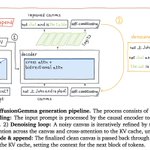
Instead of predicting tokens one by one, DiffusionGemma starts with a canvas of 256 random garbage tokens and iteratively denoises the entire block into coherent text - in parallel - over multiple passes.
Think of how image diffusion works.
DALL-E, Stable Diffusion, Midjourney - they all start with visual static and progressively resolve it into a clear image through repeated refinement.
DiffusionGemma applies that exact mechanism to text.
Pass 1: 256 random tokens → semi-coherent noise
Pass 2: semi-coherent noise → most tokens locked in
Pass 3: locked tokens provide context for the uncertain ones → everything resolves
Finally, a complete coherent 256-token block is formed
The tokens don't appear left to right. They emerge all at once, like a photograph developing.
Why this is 4× faster - and why it only works on GPUs:
This is the part that requires some actual mechanical intuition.
Autoregressive models are memory-bandwidth-bound during local inference.
Every time you generate a token, you have to load the entire model's weights from VRAM to compute that one token.
Then load them again for the next token. And the next. Your GPU's tensor cores - the actual computation units that can do billions of multiplications in parallel - sit mostly idle.
You're bottlenecked by how fast you can read weights from memory, not how fast you can compute.
DiffusionGemma flips the bottleneck from memory-bandwidth to compute.
When you're denoising 256 tokens in a single forward pass, you load the weights once and do 256× more computation with them.
You're now actually utilizing the tensor cores. The GPU is working instead of waiting.
This is why the numbers are: 1000+ tokens/second on an H100, 700+ tokens/second on an RTX 5090.
And this is also why there's a footnote that Apple Silicon users won't see the same speedup.
M-series chips use unified memory - the GPU and CPU share the same physical RAM.
They're fundamentally memory-bandwidth-bound in a different way.
The arbitrage DiffusionGemma exploits (cheap weights-to-compute ratio on discrete GPUs) doesn't apply.
The bidirectional attention thing is a bigger deal than the speed:
Every autoregressive model uses causal attention.
Token 47 can attend to tokens 1-46. It cannot attend to token 48 because token 48 doesn't exist yet when token 47 is being generated.
This is a cognitive constraint.
Think about filling out a Sudoku. You need to know what's in row 9, column 7 before you commit to a digit in row 1, column 3. The constraints are global.
Autoregressive models can't solve Sudoku well because they commit to each digit before seeing the rest of the board.
DiffusionGemma denoises with bidirectional attention - every token on the 256-token canvas can attend to every other token on the canvas, simultaneously.
Token 1 sees token 256 while being resolved. The whole block has full context about itself as it converges.
Unsloth fine-tuned DiffusionGemma on a Sudoku dataset.
The base model: 0% success rate. Fine-tuned: 80% success, in 12 denoising steps instead of 48.
The bidirectionality isnt just faster - it enables reasoning patterns that are structurally impossible for autoregressive models.
Same principle applies to: code infilling (you know what comes after the blank), closing markdown/JSON/HTML that was opened 200 tokens earlier, amino acid sequence generation where position 1 and position 300 constrain each other.
The self-correction mechanism:
Standard LLMs can't take back a token. Once it's generated, it's in the sequence.
If token 43 was the wrong word, you either regenerate from scratch or you live with it propagating errors forward.
DiffusionGemma evaluates the whole canvas simultaneously on every pass.
If a token's confidence is low - if the model isn't sure about position 43 given the emerging context around it - the sampler can re-noise it.
Replace it with a random token. Let it get resolved again on the next pass.
The model is literally correcting its own in-progress output. Not via rejection sampling or beam search, which are expensive add-ons.
This is baked into the generation loop.
The architecture: it's the Gemma 4 26B A4B backbone
This is important.
DiffusionGemma isn't a new model trained from scratch on some diffusion objective.
It uses the same 26B total / 3.8B active MoE architecture as Gemma 4 26B A4B - the same model from the original family that runs almost as fast as a 4B model while carrying 26B worth of knowledge.
The diffusion mechanism is a head on top of the existing backbone.
Which means:
It fits in 18GB VRAM when quantized. The same hardware that runs Gemma 4 26B A4B runs this.
It uses the same KV cache structure. For sequences longer than 256 tokens, once a 256-token canvas is fully denoised, it commits that block to the KV cache and initializes a fresh canvas for the next block - conditioned on everything before it.
This is called block autoregressive diffusion.
You get the parallel speed of diffusion inside each block, and the sequential stability of autoregressive generation across blocks.
What it's not:
Quality is lower than standard Gemma 4. Google says this explicitly. For production outputs where accuracy matters, use Gemma 4 26B or 31B.
The speedup is also specifically for local/low-concurrency inference.
In high-QPS cloud serving, autoregressive models batch thousands of requests together to saturate compute - the parallel decoding advantage shrinks because the batching already solves the utilization problem.
DiffusionGemma's edge is strongest when you're running one user, one GPU, locally.
What this is actually for:
Inline code editing where you need a suggestion in under 100ms.
Real-time collaborative writing where the model fills a paragraph as you type.
Constrained generation tasks where the output has global structure (code, formal proofs, structured data, biological sequences).
Rapid iteration on drafts. Any workflow where latency is the blocker, not quality.
This is experimental. Apache 2.0. Available now on HuggingFace with vLLM support, Hugging Face Transformers, and MLX.
The actual shift is:
For three years, making LLMs faster meant: better hardware, better quantization, speculative decoding with a draft model, more efficient attention kernels.
All of that is working within the autoregressive paradigm.
DiffusionGemma is asking whether the paradigm itself is the constraint.
The typewriter was never a law of physics. It was just the assumption nobody seriously challenged at this scale.
Now someone has.