
Director of Project Narrative, Ohio State. Host PN podcast: https://nitter.cf/t.co/doS1rDv1bk. Div I bball player @ BC back in the day
Ohio State University
Joined June 2009
- Tweets4K
- Following1.3K
- Followers825
- Likes21.8K


Pinned Tweet
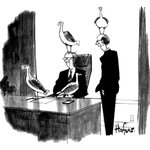
So grateful to be part of the #OA movement thru TOME. Great support from @OSULibrary and @ohiostatepress. Shouts to my dialogue partner Matthew Clark and to artist @GuyBillout who gave permission for us to use his great image on the cover. #rhetoric #narrative #OA

New #OA monograph published through TOME—Debating Rhetorical Narratology: On the Synthetic, Mimetic, and Thematic Aspects of Narrative by Matthew Clark and James Phelan (@foxxphelan), published by @ohiostatepress.
tome.figshare.com/articles/D…
A great pleasure to unpack Kincaid’s extremely compressed. Story with my brilliant sister!

A new episode of the PN Podcast is up! In this episode,
@foxxphelan
and Peggy Phelan discuss Jamaica Kincaid’s “Girls.” Listen here or on Apple Podcasts: podcast.osu.edu/projectnarra…

3
47
A fascinating, innovative modernist short story that anticipates the move to autofiction. Elizabeth smartly unpacks it.
A new episode of the PN Podcast is up! In this episode,
@foxxphelan
and Elizabeth Alsop discuss Delmore Schwartz’s “In Dreams Begin Responsibilities.” Listen here or on Apple Podcasts: podcast.osu.edu/projectnarra…

2
74
“She wanted the work and not the medal.”

I am a member of the Norwegian Nobel Committee.
There are five of us. Five people, appointed by a parliament most of the planet could not find on a map, who decide, once a year, which human being the world has agreed to call good.
I know. I know. I think about it on the tram.
We meet in a building on Henrik Ibsens gate, a street named after a man who wrote almost exclusively about people discovering they are frauds, which nobody on the committee finds funny except me. There is a room with a long table and the portraits of the dead laureates looking down, Mandela, the Dalai Lama, a great many earnest men in spectacles, and one portrait we do not discuss, which is Kissinger, 1973, awarded while the bombs were still falling, after which two of our predecessors resigned and the satirist Tom Lehrer said political satire was now obsolete. We keep him on the wall. A reminder. Every family has the uncle.
It is October in Oslo, which means the sun gives up around four in the afternoon like a civil servant, and it rains the particular Norwegian rain that isn’t quite falling, just hanging there, judging you. I arrive with wet shoes. I always arrive with wet shoes. There is coffee, because this is Norway and there is always coffee, we drink more of it per person than almost anyone alive, and someone’s wife has sent kanelboller, the cinnamon buns, and we sit, five Norwegians, damp, caffeinated, sugared, and we decide the moral standing of the entire species.
Let me tell you how it actually works, because the world imagines a cathedral and it is, I promise you, a book club with a mandate.
287 nominations this year. 208 people, 79 organizations. Anyone can nominate, that’s the secret nobody understands: a professor, a parliamentarian, a former laureate, so the “nominee” list is meaningless, it’s a suggestion box, and every autumn some congressman nominates his own golden retriever and the press writes “SHORTLISTED.” Nobody is shortlisted. There is no short list the public ever sees. There is us, and the coffee, and the rain, and the portraits, and a Norwegian stubbornness that is older than the prize itself.
We read reports. The institute’s advisers write them, thick dull documents, and we argue. Our chairman told the BBC once that in the final meeting “there is a high temperature.” High temperature, for a Norwegian, means someone slightly raised an eyebrow and then apologized for it. We don’t do high temperature. We do a long silence, and then Kristin says “well,” and everyone knows exactly what “well” meant, and it’s settled. That’s our shouting. “Well.” You’d have to be raised here to hear the violence in it.
Now. This year. I will not say the name, because we never say the name, but you know the name.
A certain head of state wanted this prize the way a child wants a thing in a shop window, which is to say loudly, and in public, and with the full belief that wanting it was itself the argument. He said he deserved it. He said he’d ended eight wars, a number that grew most times he said it, like a fish. He had other heads of state phone us. Israel’s prime minister posted it on the internet, “Give him the Nobel.” The leaders of Cambodia and Pakistan announced they’d nominated him, as though announcing it were part of it, as though we tally mentions. A man flew around the globe collecting endorsements for a Norwegian committee the way you’d collect signatures for a petition to the council about a noisy dog.
And here, uff da, is the detail I treasure, the one that makes me smile into my coffee. The nomination deadline is the 31st of January. He took office on the 20th. So for all the phone calls, all the posts, all the gilded lobbying, the only nominations that could possibly count for this year’s prize were filed in the first eleven days of his term, before he had, by his own arithmetic, ended a single one of the eight wars. He campaigned all year for a prize whose window had shut while he was still hanging up his coat. We didn’t have to reject him. The calendar did. We just watched. Norwegians are very good at watching. We have long winters.
People think we sit there weighing his deeds. We don’t. That’s the thing I can’t make the world understand. We’re not grading his homework. We don’t owe anyone the prize for a ceasefire, however real, however loud the announcement. “He made peace” is not a sentence that ends in a medal, the way he believes it does, the way he believes every good thing ends in his name on it. The will of a dead Swede says the prize goes to whoever did the most for fraternity between nations. A dead Swede, I should add, who made his entire fortune inventing dynamite and selling arms, and spent his last years horrified at his own obituary, which called him a merchant of death, and so bought his way to immortality as a man of peace. The whole prize is one guilty arms dealer’s attempt to launder his name. We are, all of us, administering a dead man’s public relations. I find this clarifying. It keeps me humble. It should keep everyone humble, and it keeps, by my count, no one humble at all.
So who did we give it to?
An eighty-five-year-old woman. A judge. Born in Durban, under apartheid, granddaughter of a Tamil man who came to South Africa as indentured labor, a bus driver’s daughter from the poor Indian quarter, who became the first non-white woman to run a law practice in her province, who defended Mandela’s people when defending them was dangerous, who sat on the Rwanda tribunal and the court at the Hague, and who, at eighty-five, is right now a judge weighing whether a genocide is a genocide. When we told the world, our chairman said the rule of law “underpins the system we have set up to ensure peace,” and that “peace requires justice.” She wasn’t even in Oslo. She was in Nuremberg. In courtroom 600. The actual room where they tried the Nazis. You cannot stage that. God staged that, and God, it turns out, is a better satirist than any of us.
She did not phone us. She did not post. No prime minister demanded it for her on the internet. She had, as far as our deliberations are concerned, the one qualification the loud man could never manufacture, which is that she wanted the work and not the medal. The medal finds those people. It flees the ones who chase it. This is not a rule we wrote. It’s just the only pattern the hundred-odd years of our mistakes has ever shown.
The reaction from across the ocean was immediate. His spokesman posted that we “place politics over peace.” Ja. Perhaps. We’re five damp pensioners in a rainy city; of course it’s political, it was always political, it was political when we gave it to a sitting American president nine months into his first term for the promise of things he had not yet done, and we have been quietly embarrassed about that one for fifteen years, so believe me, we had a particular reason this year to prefer a woman with fifty years of verdicts behind her over a man with eight wars in front of him and a deadline already behind him.
Here is what he will never understand, the thing I’d tell him on the tram if he ever took one. We are the one prize he cannot buy, cannot post his way to, cannot have a friendly dictator phone in for him. Not because we’re incorruptible, nei, we’re as vain and wrong and human as the portraits on our wall. But because the entire point of the thing, the only power a small cold country’s book club has ever held, is that it goes to the person not performing the wanting. The moment you demand it, you’ve proven you don’t understand what it’s for, and proving that is itself the disqualification. He ran the most expensive campaign in the history of the prize and the campaign was the reason. He was never losing to Navi Pillay. He was losing to the concept.
It’s dark now. Four o’clock dark. The buns are gone. Kristin said “well” an hour ago and we all went home. I’m on the tram with my wet shoes, and somewhere across the water a very powerful man is explaining to a camera that the prize is rigged, that we’re corrupt, that he’ll win it next year, and he genuinely might, we’re only five idiots and we’ve been wrong before, Kissinger is still on the wall.
But not this year. This year an old woman in Nuremberg, in the room where the law once stared down the exact kind of man who thinks wanting a thing loudly enough should make it his, got a phone call she didn’t ask for.
That’s the job. We don’t reward the man who ends the war and announces it.
We reward the woman who spent fifty years deciding what a war was.
He’ll never see the difference. That’s rather the whole point of him.
Takk for i dag. I have to change trams.
84
Malamud is a great craftsman; I especially want to call attention to his construction of an unusual epiphany
A new episode of the PN Podcast is up! In this episode,
@foxxphelan
and Howard Sklar discuss Bernard Malamud’s ethically persuasive “Idiots First.” Listen here or on Apple Podcasts: podcast.osu.edu/projectnarra…

5
52
Wai Chee discusses how Jackson creates a sense of foreboding even as she initially restricts the narrator to reporting small events. And more!
A new episode of the PN Podcast is up! In this episode,
@foxxphelan and Wai Chee Dimock discuss Shirley Jackson’s story “The Lottery,” published by @NYerFiction in 1948. Listen here or on Apple Podcasts: podcast.osu.edu/projectnarra…

3
94
Gerry is full of insights about this famous story. Discusses intertexts including Madame Bovary—6and Oedipus! And much more.
A new episode of the PN Podcast is live! In this episode, @foxxphelan and Gerald Prince discuss Guy de Maupassant’s 1884 story, “La Parure,” or “The Necklace” in English. Listen here or on Apple Podcasts: podcast.osu.edu/projectnarra…

4
192
Fritz highlights the phenomenon of “retelling” in the story as well as issues of genre and the relation of this story to Elective Affinities.
A new episode of the PN Podcast is up! In this episode, @foxxphelan and and Fritz Breithaupt discuss a segment, "The Two Strange Children," from Johann Wolfgang von Goethe’s novel, Elective Affinities. Listen here or on Apple Podcasts: podcast.osu.edu/projectnarra…

The great Jonathan Culler on Wharton’s characterization of the story’s “frenemies,” and her handling of the narrative techniques, the temporality, and the surprise ending.
A new episode of the PN Podcast is live! In this episode, @foxxphelan and Jonathan Culler discuss Edith Wharton’s “Roman Fever.” Listen here or on Apple Podcasts: podcast.osu.edu/projectnarra…

Alison and Grace: one smart woman responding to another.
A new episode of the PN Podcast is up! In this episode, @foxxphelan and @alison_booth discuss Grace Paley’s "A Conversation with My Father." Listen here or on Apple Podcasts: podcast.osu.edu/projectnarra…

1
67
Simona makes the case for the potential efficacy of fiction about climate change. We also discuss El Akkad’s handling of space and time and of the ethics of the protagonist’s decision at the end of the story.
A new episode of the PN Podcast is up! In this episode, @foxxphelan and Simona Zetterberg-Nielsen discuss Omar El Akkad's "Factory Air." Listen here or on Apple Podcasts: podcast.osu.edu/projectnarra…

A different episode: the guest is the author of the work we discuss. We focus on the excerpts Nikki reads but also touch on Nikki’s response to Ordinary Hazards being banned in some places. Enjoy!
A new episode of the PN Podcast is live! In this episode, @foxxphelan and Nikki Grimes discuss excerpts from her memoir in verse, Ordinary Hazards, published in 2019. Listen here or on Apple Podcasts: podcast.osu.edu/projectnarra…

Episode 50! Rhona has selected an imaginative sci-fi taxonomy (is it also a narrative?) about how invented species make books and what their bookmaking implies about how they write and how they read. And those inventions ultimately illuminate how we Earhthlings do those things.
A new episode of the PN Podcast is up! In this episode, @foxxphelan and Rhona Trauvitch discuss “The Bookmaking Habits of Select Species” by Ken Liu. Listen here or on Apple Podcasts: podcast.osu.edu/projectnarra…

Good mixture of the comic and the serious.
A new episode of the PN Podcast is live! In this episode, @foxxphelan and Jan Alber discuss "Jealous Husband Returns in Form of Parrot" by Robert Olen Butler. Listen here or on Apple Podcasts: podcast.osu.edu/projectnarra…

2
104
Jim Phelan retweeted

A new episode of the PN Podcast is live! In this episode, @foxxphelan and Jan Alber discuss "Jealous Husband Returns in Form of Parrot" by Robert Olen Butler. Listen here or on Apple Podcasts: podcast.osu.edu/projectnarra…
Marta provides relevant context and great insights.
A new episode of the PN Podcast is live! In this episode, @foxxphelan and Marta Figlerowicz the first chapter of D.O. Fagunwa's novel, Forest of a Thousand Daemons, "The Author Meets Akara-Ogun." Listen here or on Apple Podcasts: podcast.osu.edu/projectnarra…

A tale for our polarized times. Gary discusses Auslander’s account of the conflicts between the Schulzians and Pumpkinites in the Peanuts storyworld after the death of Charles Schulz. Come for the metalepsis, stay for the humor and the invitations to allegorize.
A new episode of the PN Podcast is up! In this episode, @foxxphelan and Gary Weissman discuss Shalom Auslander’s short story, “Smite the Heathens, Charlie Brown.” Listen here or on Apple Podcasts: podcast.osu.edu/projectnarra…

I just learned that the discount code BRIEF40 works for 40% off class registration.

Just spreading the word. Details at the link.
roundtable.org/live-courses/…

1
175
Coleridge's Mariner was "living to tell about it." Kent discusses Coleridge's construction of the tale, how it fit with the Lyrical Ballads, and many other things.
A new episode of the PN Podcast is live! In this episode, @foxxphelan and Kent Puckett discuss Samuel Taylor Coleridge's "The Rime of the Ancient Mariner." Listen here or on Apple Podcasts: podcast.osu.edu/projectnarra…

2
148
Amazing piece by Phillips. A master class in the art of brevity. Kelly unpacks its power.
A new episode of the PN Podcast is up! In this episode, @foxxphelan and Kelly Marsh discuss Caryl Phillips’s short piece of life writing, “Growing Pains: A Life in 10 Chapters.” Listen here or on Apple Podcasts: podcast.osu.edu/projectnarra…


